Mary Biggins had a complaint familiar to anyone who has watched a lunch break disappear in a queue. Delivery cost too much. Collecting food took too long. She liked the part where lunch arrived; the arrangements struck her as unnecessarily elaborate. She described herself as “impatient and cost-conscious,” a combination that gives a person plenty to notice in a city.
The observation became MealPal, the restaurant subscription business she co-founded with Katie Ghelli. Its premise gave customers a small assignment: choose ahead, then go and collect. Restaurants offered a daily dish. A customer could trade some spontaneity for a cheaper, quicker lunch. The walk was included, whether anyone chose to call it a feature.
Biggins had already helped build ClassPass, another business that put a membership between customers and local businesses. Read the two companies together and a particular interest emerges: the arrangements around ordinary purchases. She keeps returning to questions of price, repetition and convenience. What would make someone come back tomorrow? What would make the business serving them welcome the return?
There had been smaller ventures before the formal job titles. Biggins grew up among seven children, with an entrepreneurial father and a mother who made everything from dresses to birthday poems. She ran babysitting summer camps while in middle school, tried a vintage art auction in high school and sold T-shirts in college. Yet she recalled expecting a conventional career in a large company, working with numbers. The early enterprises make the eventual outcome look inevitable only from a distance. At the time, there was still a first job to accept and a professional life to work out.
A career begins before the app
Her professional training came through products and marketing. After studying government and religious studies at Colby College from 2001 to 2005, Biggins joined MBI, the company behind the Danbury Mint. Product work meant dealing with an idea through its commercial life. There were things to develop, offers to test and results to read. A good-looking concept still had to persuade someone to buy.
In 2009 she moved to Vistaprint, managing its Canadian business. Betterment followed in 2011, with Biggins as vice president of marketing. Those jobs put her in contact with different sizes of enterprise and different kinds of customer. They also gave her a working vocabulary more useful than the familiar instruction to have a brilliant idea: make an offer, measure the response, change something.
Jonathan Stein, Betterment’s founder, later described her as the company’s first marketing hire and credited her with building the marketing organization. That is a useful detail in a career usually compressed into two co-founder titles. Before she was asking restaurants to trust a new way of selling lunch, she had spent years learning how people respond to a proposition.
Leaving her first job had nevertheless frightened her. A mentor supplied encouragement on a sticky note: “Go!” Biggins kept it. The advice is admirably economical. It leaves room for the recipient to do the difficult part.
The customers who wanted to come back
ClassPass grew out of Classtivity, whose original booking service covered different kinds of classes. The early proposition did not produce the hoped-for transactions. A subsequent Passport offer let customers sample studios. That produced a more interesting difficulty: people liked exploring enough to want the introductory experience again.
Payal Kadakia, Biggins’s ClassPass co-founder, has described customers registering with additional email addresses to repeat the offer. To a system designed around a single trial, that looked like misuse. To a business trying to understand demand, it was also evidence. Customers were making an effort to keep access to variety. The product needed to accommodate that desire while giving studios a workable arrangement.
The subscription version launched in June 2013. Its importance to Biggins’s later career extends beyond the similarity between two company names. A marketplace has to earn repeat participation on both sides. An attractive consumer offer can create trouble for the supplier. Listening to what customers do, including inconvenient things, can reveal more than asking whether they like an idea.
- 2005MBI / Danbury Mint
Product management - 2009Vistaprint
Canadian business - 2011Betterment
Marketing leadership - 2013ClassPass
Subscription launches - 2016MealPal
Lunch service launches
One dish, many appetites
The lunch idea had an unglamorous point of reference: people buying prepared food at Whole Foods. Biggins noticed the habit and considered what restaurants could do with similar demand. The question took her into conversations with restaurant owners. For a customer, the problem was easy to describe. Understanding the kitchen required more listening.
Ghelli and Biggins developed MealPal around that other side of the counter. Restaurants had their own pressures during lunch, including the work involved in preparing different orders at once. Offering a single daily dish through the service let a kitchen repeat a task. Customers could still choose among restaurants. The variety sat across the network, while an individual kitchen kept its MealPal offering narrow.
There is a pleasing mismatch here. A customer experiences a selection of places to eat; each restaurant experiences a more limited order. The same arrangement can feel expansive from one end and manageable from the other. That helps explain why copying a subscription price alone would miss much of the idea. Someone still has to prepare the food.
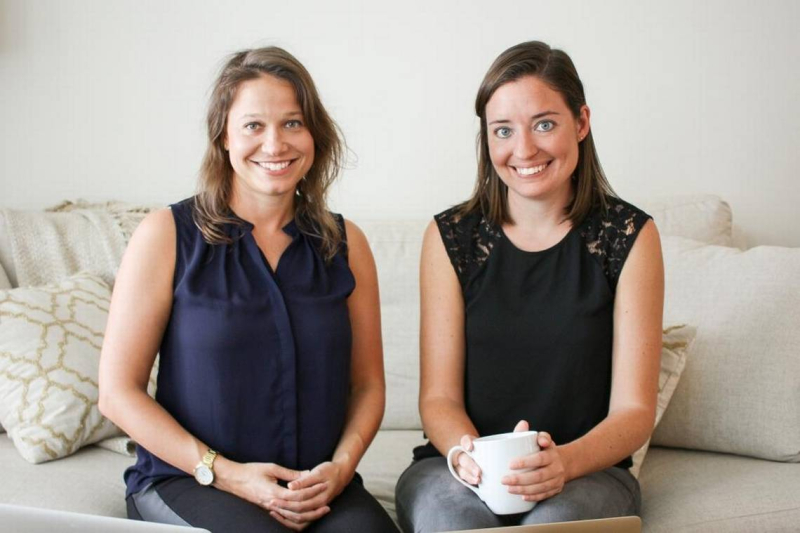
The company launched in Miami in January 2016. Biggins brought experience of a marketplace that had needed several attempts to find its shape. This time, the team pushed an early version into use quickly. That made the service available to the people whose decisions would determine whether the proposition worked: subscribers and restaurant owners.
Speed came with a bill. By August 2017, Biggins was explaining that the original product had struggled with more demand than expected. The company had assembled an engineering team, rebuilt its website and iOS app, and added Android. An early test can tell you that people want something. Delivering it repeatedly asks for a different level of care.
A diagram of the model, rather than a promise about every plan or location.
A lunch break travels
MealPal reached London in February 2017, its first market outside the United States. The international expansion mattered because lunch is both repetitive and intensely local. A useful restaurant somewhere in a city may be useless to a person with twenty minutes and an office on the other side of town. The service depended on nearby choices.
Comcast Ventures led the company’s $15 million Series A. Investor Daniel Gulati described the opportunity in pickup while much of the food technology business was concentrating on delivery. People could collect from nearby restaurants in exchange for a lower price. The customer’s willingness to make that trip was part of the commercial proposition, rather than an inconvenience to be engineered away.
In September 2017, MealPal announced a $20 million Series B led by Menlo Ventures, bringing announced funding to $35 million. It also introduced dinner pickup in New York. Those were distinct developments: capital to support expansion, and a test of whether a familiar lunchtime arrangement could earn a place later in the day.
By November 2017, Biggins was discussing a Paris launch with roughly 125 participating restaurants. Her explanation returned to density and advance preparation. Paris supplied crowded lunchtime venues; the service supplied a way to organize some orders before the rush. The international story still came down to a kitchen, a customer and the distance between them.
“Eat intelligently and affordably.”
MARY BIGGINS / ON MEALPAL, 2017
The three-song clock
Biggins’s own routines offer a smaller view of the same interest in repetition. In 2018 she described working to a playlist containing just three songs. Together they lasted about ten minutes. When the first track returned, she had a cue to consider what she had accomplished. Anyone sharing the room might have developed a rather precise sense of time, too.
She also described doing her best thinking in the morning and ending the day with English breakfast tea, milk and plenty of sugar. Miami, where she lived, offered a different pace from time spent at MealPal’s New York headquarters. These details belong to her account of that period, but they make the work easier to picture: some thinking needed room away from meetings.
Her interest in leadership included learning to support people whose expertise she did not share. Building a company gathers functions around a founder that the founder cannot personally perform. Helping those people find answers becomes part of the job. The person who likes quick decisions also has to learn when someone else knows more.
The next lunch still has to work
In January 2024, a Wharton Launch Pad episode featuring Biggins returned to the proposition of restaurant lunch for under ten dollars. The question remained recognizable years after launch. MealPal’s current website still puts savings and skipping the collection line at the center of its pitch. The offer has had time to become familiar; the daily decision remains a fresh one for each customer.
That is what makes Biggins an interesting repeat founder. Her businesses live among ordinary habits, where a clever introduction must eventually withstand repetition. People have to book again, collect again and decide that the arrangement deserves another place in their week. A launch can be celebrated once. Lunch has the impertinence to happen every working day.
Ask Biggins to compress MealPal and she has already supplied an answer: “Eat intelligently and affordably.” Four words leave considerable work for the company behind them. The most revealing part of her career is the attention she has paid to that work: the offer, the response, the supplier and the next attempt. Somewhere in that sequence, a customer gets a little more of the lunch break back.
Follow the conversation
Interviews, company announcements and conversations from the years discussed above.