Phil Sitter had a club, a stack of gold membership cards, and an Excel spreadsheet. In his German restaurants, people could pay for a stein, beer, and events. The arrangement had the pleasing simplicity of a good pub: give people a reason to belong, then give them a reason to return. Unfortunately, a spreadsheet makes a rather poor maître d’.
As the restaurants grew, keeping that relationship in order became a business problem. Sitter wanted a membership system that could travel beyond one room and one list of names. Software entered the picture through the service door. He had customers to look after and an increasingly unwieldy way of remembering them.
Today he is the founder and chief executive of RepeatMD, a company selling commerce and loyalty software. The settings have changed considerably. The question underneath his work remains familiar to anyone who has ever opened a restaurant: what happens after the first visit?
A German restaurant behind a car wash
Sitter’s route into business began far from the usual software apprenticeship. He moved from Vienna to the United States as a child. Restaurants ran through five generations of his family. By 2011, he and his father were opening King’s Biergarten in Pearland, Texas, behind a car wash. It is an address that gives the entrepreneurial imagination something useful to do.
A restaurant tucked behind another business cannot rely entirely on the passing glance. It needs a destination’s appeal and a regular’s affection. Sitter became absorbed in marketing. His later companies make more sense when viewed from that awkward bit of geography: first you have to persuade someone to find you; then you have to persuade them that finding you was worth repeating.
His restaurant career expanded to King’s BierHaus, KB Restaurant Group, and EggHaus Gourmet. The names retained a family resemblance even as the formats changed. There were German dining rooms and a breakfast venture; he was learning how different occasions could support the same underlying business of making customers feel welcome.
When EggHaus opened in Houston’s Heights in September 2018, its menu included kolaches, tacos, egg sandwiches, matcha, and coffee. Sitter had tested kolaches through pop-ups at the King’s locations before creating a place of their own. He wanted customers to stay and enjoy breakfast. Even the beer made an appearance in the kolaches. Family traditions can be remarkably adaptable when there is dough involved.
The progression matters because it puts a practical limit on the myth of the sudden reinvention. Sitter did not wake up one morning with an unrelated software idea. He had spent years dealing with rooms, menus, repeat visits, and the considerable distance between a happy customer and a predictable business.
The second shift began at nine
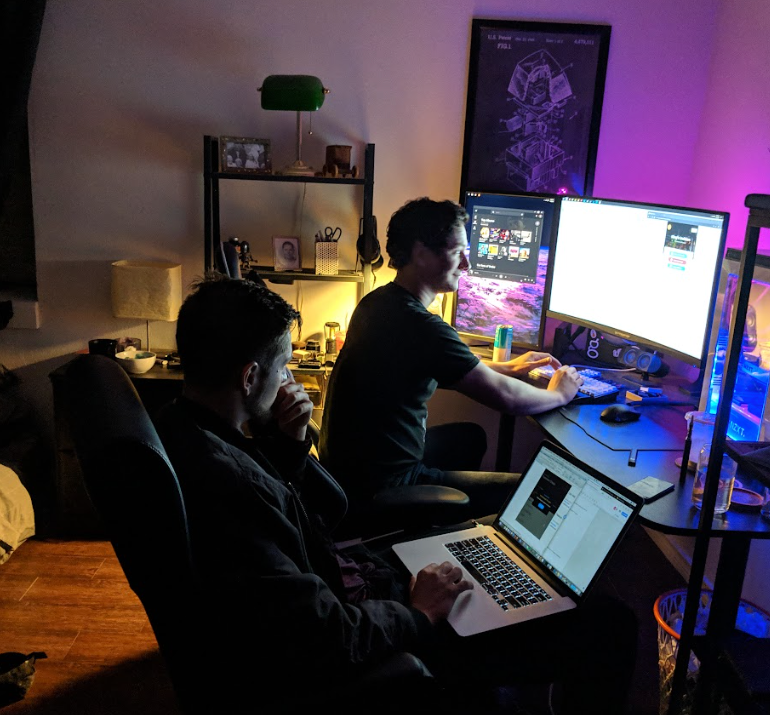
In 2018, Sitter was working in his restaurant during the day and on software at night with his childhood friend Adam Lamprecht-Morphew. Their software hours ran from nine in the evening until two in the morning. A photograph from that period shows computers, cables, a laptop balanced on a lap, and the decidedly unceremonious surroundings of work getting done.
That picture is a useful corrective to the polished founder portrait. A software business still has to begin somewhere, often in the hours another business has left over. For Sitter, the two jobs overlapped before there was a clean dividing line between them.
The restaurant rewards platform became VIPinsiders. By 2020, its proposition was straightforward: smaller restaurant groups could have a branded loyalty experience without financing the construction of a major chain’s technology. Sitter’s team helped build the rewards journey and the supporting promotional material. The operator already had a restaurant to run; another homework assignment would have been a curious selling point.
The product could help a restaurant recognize visits, offer rewards, and communicate directly with customers who had opted in. Those are ordinary hospitality instincts translated into a system. A familiar face at the door becomes a customer record. A remembered preference becomes a relevant offer. The welcome can survive a change of shift.
“Most importantly, it reminds me to come back when I haven’t visited in a while.”
Phil Sitter, discussing VIPinsiders in 2020
There is a revealing modesty to that ambition. A great deal of marketing seeks attention from strangers. Sitter was also interested in the customer who already knew the way to the restaurant and had simply stopped coming. Sometimes the missing ingredient in a relationship is a reminder.
A new room for an old idea
In 2020, restaurant shutdowns put the young software business under pressure. Sitter and his colleagues started looking for another setting where their rewards system might work. Chris Chomenko had sold the software to a friend with a newly opened aesthetics business. Its results gave the team something concrete to investigate.
That customer connection helped set the direction for RepeatMD. RepeatMD took shape in a rented house in The Woodlands in February 2021. By May, its first four employees were working from the founder’s attic. The route from a spare room to an attic is not much of a property upgrade, but it does suggest a team finding somewhere to keep going.
The move carried an idea from one kind of small business to another. Owners needed ways to sell, maintain relationships, and encourage people to return. A membership or reward could be useful beyond a restaurant, provided the product made sense in its new surroundings. Sitter had to learn a new market while holding on to the customer habits he understood.
By March 2022, RepeatMD was working with just under a thousand practices nationwide, with around a hundred joining each month. Those figures capture a business already well beyond a one-customer experiment. The founder’s task was changing again: finding a promising use for software was becoming the work of building a company around it.
The money arrived with more work
RepeatMD announced a $50 million financing package in November 2023. Centana Growth Partners and Full In Partners co-led the round, with PROOF and Mercury Fund participating. The announced total included a $10 million debt facility from Silicon Valley Bank. The distinction is useful: a financing headline can contain more than one kind of money.
At that point the company served more than 2,500 practices across all 50 states, with nearly 700,000 registered users. Sitter’s responsibilities now reached well beyond the first club membership and the first customer demonstration. Partnerships, product development, and the demands of a growing organization all competed for attention.
Capital can pay for people and development. It cannot, by itself, make departments agree on how to work. That more prosaic problem has become a substantial part of Sitter’s account of leadership. The interesting turn in his story is how much attention he now gives the machinery inside the business.
Hiring experience, inheriting habits
In his public conversations about managing RepeatMD, Sitter describes the need for a shared operating system. Experienced recruits arrive with methods that worked somewhere else. Without a common approach, a company can accumulate departments that each know what they are doing while disagreeing about what everybody else should be doing.
Looking back at those hiring decisions, he is candid about the lesson. He wishes he had examined the company’s internal foundations more carefully before accelerating after fundraising. Hiring, meeting rhythms, values, and reliable data all require deliberate attention. Growth eventually finds the places where the arrangements were temporary.
It is a familiar predicament in an unfamiliar costume. The restaurateur who outgrew a spreadsheet became the software chief executive who needed stronger organizational systems. At both stages, something that had worked with a smaller group began to demand a more explicit design.
On John Wheeler’s Great Friends podcast, Sitter explored accountability, hiring assessments, and principles that help teams make consistent decisions. These subjects have none of a product launch’s theatrical advantages. They are closer to the daily discipline of service: people knowing their responsibilities, keeping agreements, and noticing what needs attention before a customer has to ask.
The parallel has limits, of course. A software company has its own technical and commercial demands. But hospitality offers a useful education in how quickly good intentions become irrelevant when execution slips. Customers experience the result of the organization, including the parts they never see.
What the regular knows
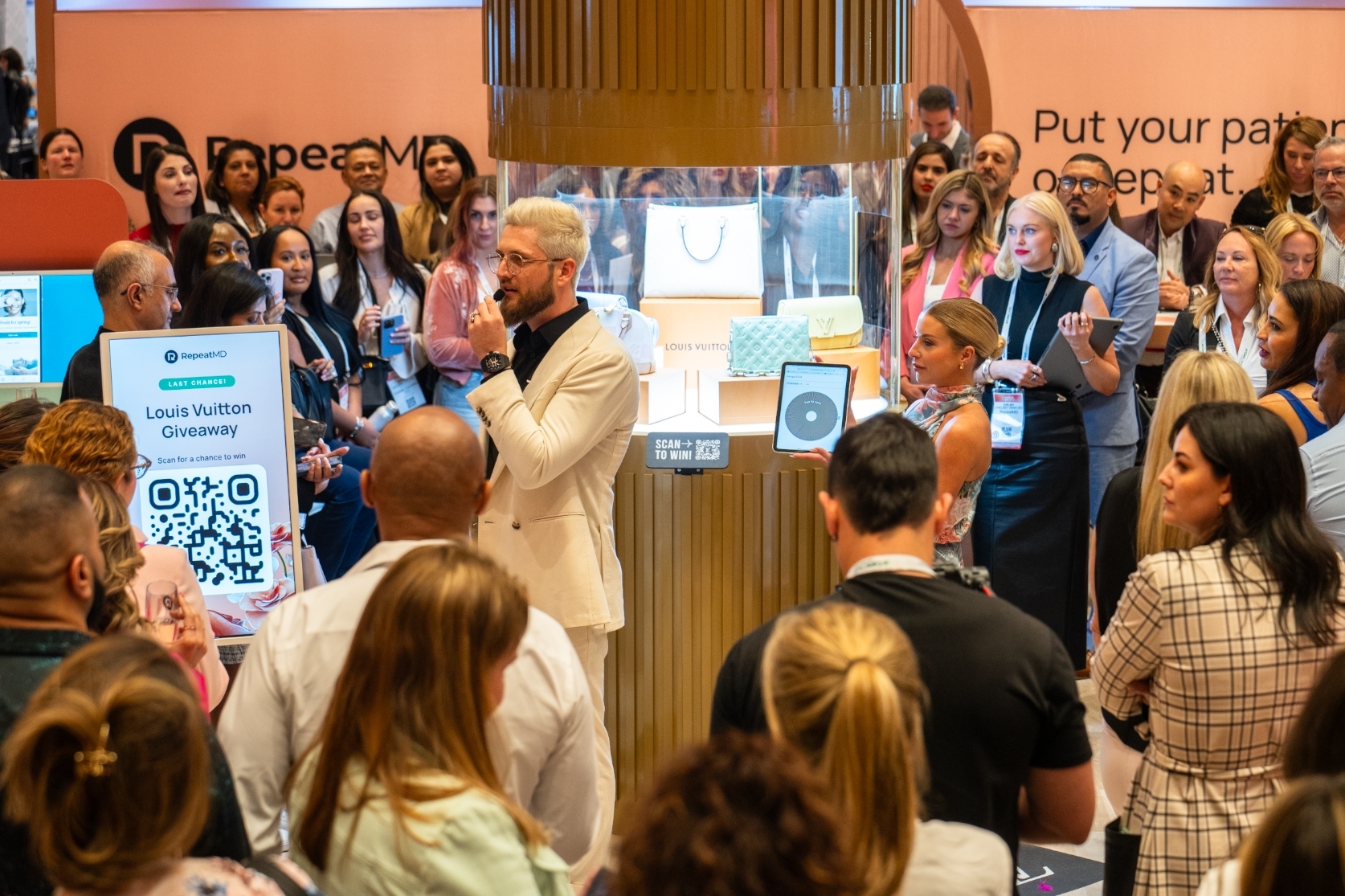
Sitter describes himself publicly as a husband, father, and entrepreneur. His company recollections include early colleagues, his childhood friend, and his young daughter alongside the business milestones. The photographs preserve the scale of those beginnings: people at desks, a first exhibition, a small team finding its footing.
They also make the later numbers easier to understand without letting the numbers take over the biography. A national customer base is assembled through particular relationships. The friend who helps build at night, the colleague who knows a potential customer, the operator willing to try unfamiliar software: each has a place in this story.
By 2025, RepeatMD had expanded into Canada. Sitter’s work had traveled far from Pearland, yet his recurring interest remained recognizable. He wanted small businesses to have better ways to maintain the relationships on which their livelihoods depended.
A restaurant regular understands something that can disappear inside a growth presentation. Returning is a decision. A membership can encourage it, a reminder can prompt it, and a pleasant experience can make it easy. The business still has to earn the next visit.
Sitter began with a club that had become too large for its spreadsheet. Years later, the business is larger and the systems are more elaborate. Somewhere underneath the software, the restaurant question is still waiting: will they come back?