There are two clocks in the CoinFLEX.US story. One ticks every eight hours, delivering interest to the owner of a digital dollar. The other measures how long it takes to turn that dollar back into spendable cash. In the spring of 2022, the company invited Americans to watch the first clock. By summer, the second had become the one that mattered.
- CoinFLEX.US brought flexUSD and zero-fee crypto trading to American customers in April 2022.
- The token’s yield came from lending activity on the international CoinFLEX exchange.
- A July update put U.S. flexUSD balances under a 90% lock.
The proposition had an appealing rhythm: buy a token, hold it, receive interest. A product associated with constant screens and frantic trading could become something you left alone. For a business holding spare cash, or an individual tired of idle balances, that was the attraction. CoinFLEX.US packaged participation in a lending market as a quieter experience.
A very American entrance
CoinFLEX.US launched on April 28, 2022, as the American subsidiary of CoinFLEX. Its home was Miami. The announcement described service for retail and institutional customers in 49 states, excluding New York. More than 30 cryptocurrencies would trade against flexUSD, with no spot trading fees. The yield token sat at the center of the shop.
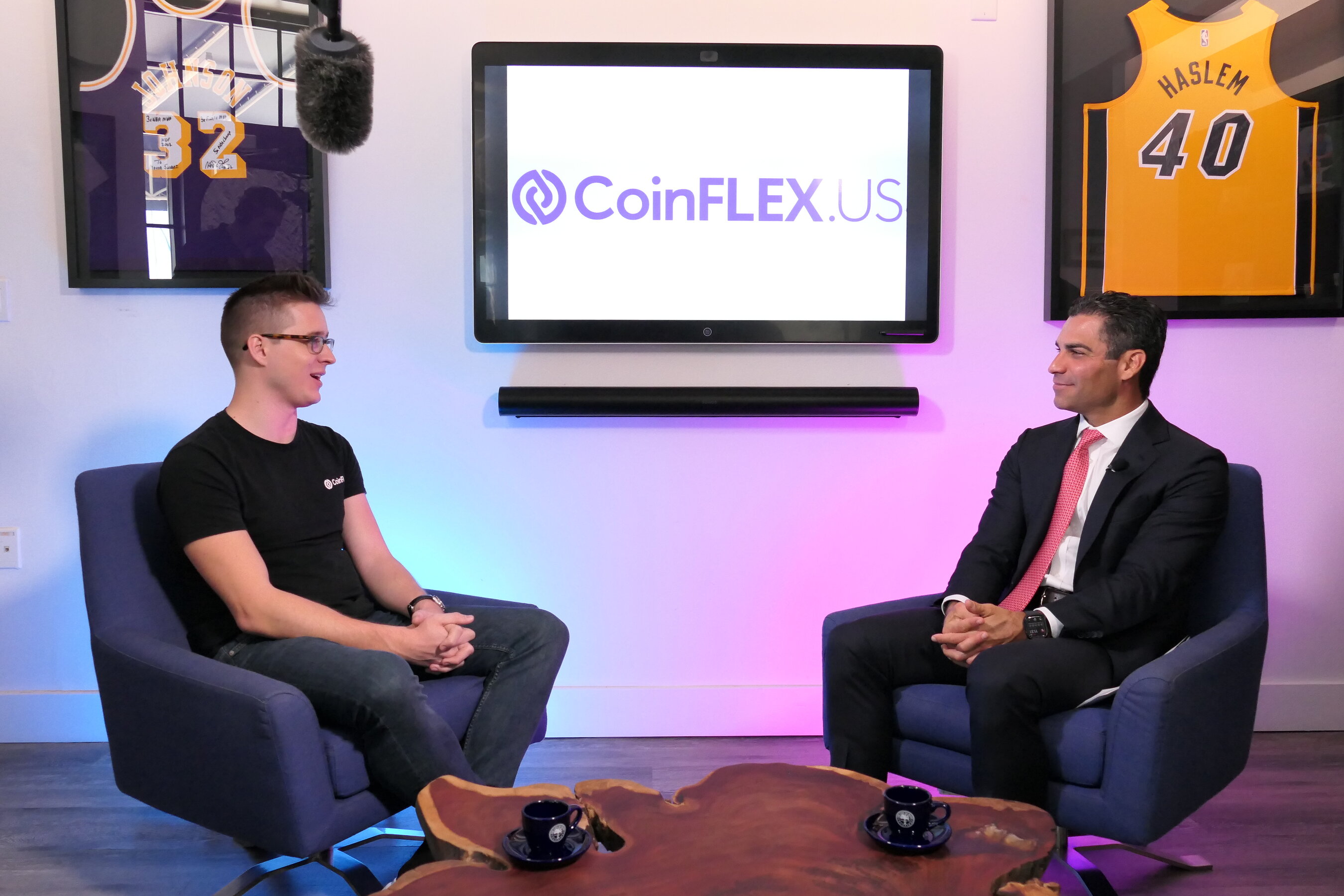
The parent’s founders, Mark Lamb and Sudhu Arumugam, supplied the exchange background. Leslie Lamb led the marketing campaign. Their distribution plan included poker player Doug Polk and Litquidity’s Big Swinging Decks podcast. A complicated financial product was finding its way into places where people already talked about money, ambition and calculated bets.
The onboarding was more formal than the advertising. CoinFLEX.US required identity checks before customers could deposit or trade. Its corporate checklist asked for formation documents, beneficial ownership and source-of-funds information. This was an attempt to give a crypto product a familiar American front door, with paperwork for both people and businesses.
Follow the dollar past the wallet
The useful question was what happened after someone entered. CoinFLEX.US’s documentation described USDC going into a peer-to-peer borrowing and lending market on CoinFLEX.com. Professional traders borrowed to finance positions. Their borrowing generated the income available to token holders. Americans could access the resulting yield even though the international exchange itself was unavailable to U.S. residents.
That structure put CoinFLEX.US between several markets. It competed with exchanges for trading activity and with yield products for customers seeking income. Its distinctive feature was attaching earnings to the token itself. Holders could receive payments in compatible private wallets, including cold storage, without repeatedly moving coins into a separate earning account.
But a private wallet changes who controls the token. It does not make the borrower repay. That distinction is easy to lose when the screen shows a dollar denomination and interest arriving on schedule. The interface compresses several relationships into one balance. The financial relationships remain.
“retain full control over their funds”Mark Lamb’s launch statement, April 2022
The price behind zero
The published economics were more specific than the zero-fee headline. Holders received 90% of profits from the lending market on deposited funds, leaving the remainder with CoinFLEX before other costs. Minting required at least $10. Scheduled redemptions were free; instant redemption carried a charge equal to the previous two interest-payment windows. Convenience had a timetable and a price.
These details matter because “free trading” describes one transaction. It does not describe the whole business. CoinFLEX’s expertise lay in connecting traders who wanted financing with holders who wanted income. The model needed willing borrowers, collectible obligations and enough liquidity to return funds when holders asked. A regular payout could show that income was being distributed without proving those conditions would hold tomorrow.
Fifty-six days later
On June 23, 2022, international CoinFLEX suspended withdrawals. Fifty-six days had passed since the U.S. launch. The company cited market conditions and uncertainty involving a counterparty. The point of failure was now visible in access to funds, the very feature an interest rate cannot describe.
Locked under the announced restriction.
The subsequent rescue discussion concerned the international exchange. CoinFLEX alleged a substantial debt owed by Roger Ver; Ver denied owing it. In July, the exchange said it was pursuing $84 million through arbitration. That was a disputed recovery claim, not a verified bill for the American subsidiary’s losses.
The July 14 update brought the dependency home to U.S. customers: their flexUSD balances would face a 90% lock. The distinction between a locally presented service and the market funding its yield had become concrete. A holder could understand the payout schedule perfectly and still be exposed to decisions elsewhere in the chain.
From earning interest to claiming equity
The international business moved toward restructuring. In March 2023, CoinFLEX announced Seychelles court approval. The restructuring allocated 65% ownership to creditors, with a later creditor portal explaining how eligible claimants could seek beneficial equity ownership through a trust. The relationship had changed from a product promising accessible income to a process for recovering value.
There was another dependency, too. Prime Trust, the U.S. launch partner, filed for Chapter 11 in August 2023. Its liquidation process was separate from CoinFLEX’s international restructuring. The two events should not be folded into one explanation, but together they show why naming a custodian never finishes the examination of a financial product.
The part builders can copy is the clarity of the original interaction: make the benefit understandable and remove unnecessary steps. The part customers can copy is a different habit. Draw the path from deposit to borrower to repayment. Ask who can interrupt each connection. When borrowing demand fades, collateral cannot be sold, or redemption stops, an eight-hour clock offers little help. The clock to watch is the one that gets you back to cash.
Explore the archive
Historical product and company links
Original website ↗LinkedIn ↗Twitter / X ↗Instagram ↗flexUSD product guide ↗CoinFLEX’s 2020 product conversation ↗Independent 2021 wallet demo ↗