The most revealing sentence on Gemini’s website has four words: “Trust is our product.” Imagine selling that. A trading app can advertise a faster button. A custodian must persuade you that, after the button is pressed and the market closes, your money will still be there. Gemini built a company around that reassurance. Its history shows how much work four words can conceal.
- The job: buy, sell, and safeguard crypto, with tools for individuals and institutions.
- The complication: Earn lent customer assets to Genesis. Withdrawals stopped in 2022; recovery followed in 2024.
- The next bet: cards, stocks, and event contracts give customers reasons to return beyond bitcoin.
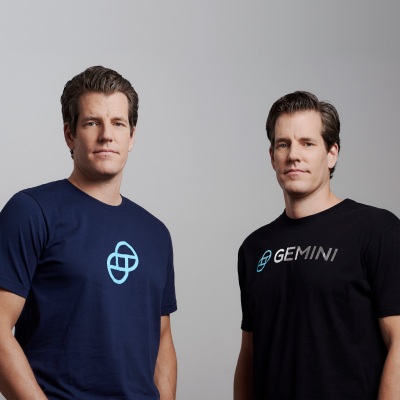
Cameron and Tyler Winklevoss founded Gemini in 2014. Trading opened in October 2015, after New York authorized its trust company. The sequence mattered. In an industry accustomed to launching first and sorting out permission later, Gemini made permission part of the product. Its intended audience included the person buying a first bitcoin and the institution that needed someone accountable for holding it.
A vault with a trading window
Start with what customers actually do. A retail user funds an account and buys supported cryptocurrencies. An active trader wants order books, charts, and control over execution. Gemini’s ActiveTrader supplies those tools; developers can connect through REST, WebSocket, and FIX interfaces. The sandbox lets a programmer try an integration with test funds before introducing real money to the experiment.
An institutional customer has a different headache: governing access. Who can approve a withdrawal? Who can inspect the records? Gemini Custody offers segregated blockchain addresses, auditor access, and configurable approvals. In October 2026, Gemini said new custody accounts would use multi-party computation. Signing uses distributed key shares without assembling the complete private key. Existing customers face a coordinated migration.
This is Gemini’s place in the market: an exchange and custodian connecting ordinary financial processes to crypto. Coinbase and Kraken offer trading alternatives; specialized custodians compete for institutions. Gemini’s security assessments and trust charter give buyers concrete things to examine. Neither makes every product bearing the name economically equivalent.
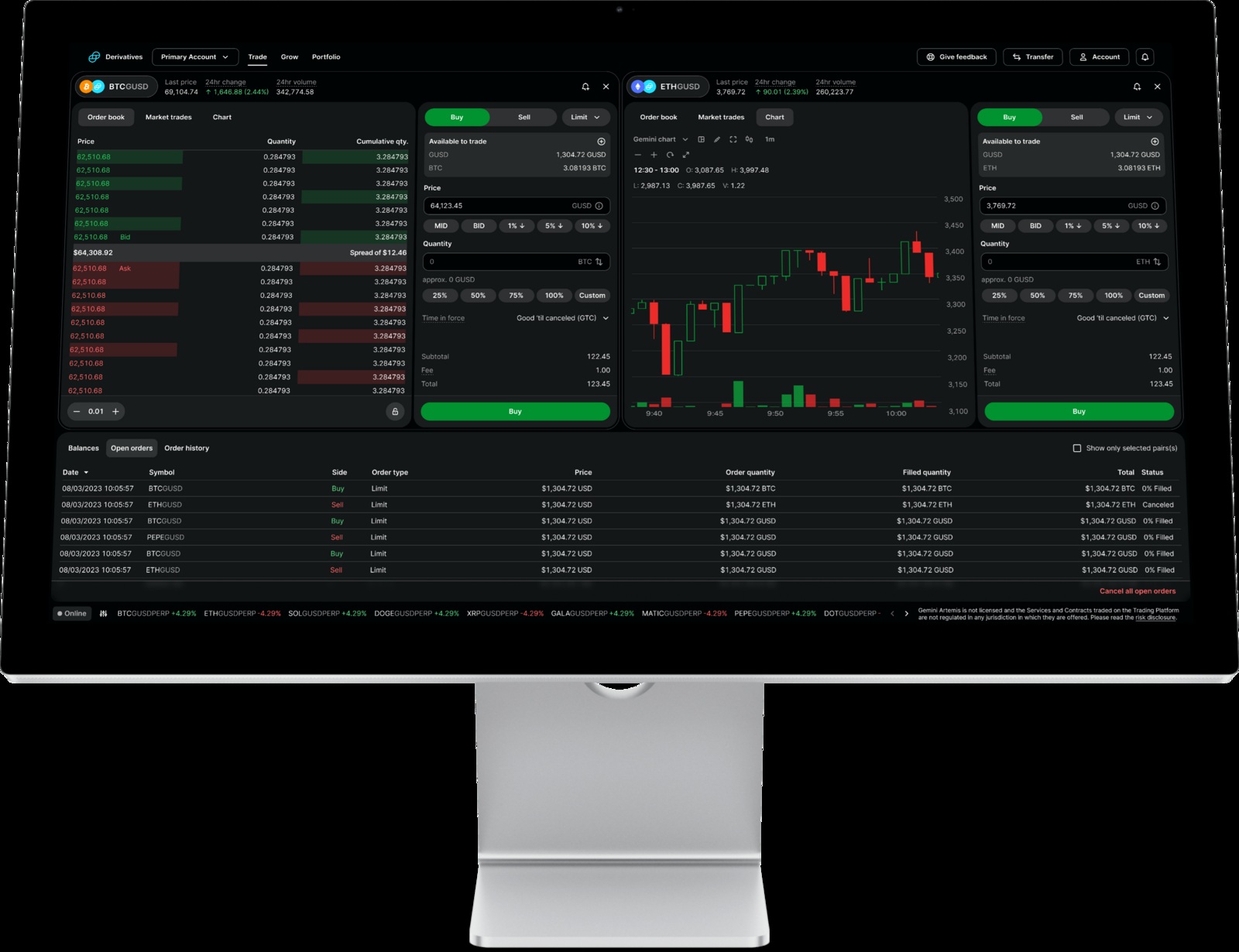
The bill depends on the door you enter. The September 2026 ActiveTrader spot schedule lists base fees of 0.6% for makers and 1.2% for takers. On a $1,000 order, that is $6 or $12 before other applicable costs. Qualifying volume or balances can lower those rates. A familiar logo is no substitute for reading the fee schedule of the interface you use.
The borrower behind the button
Earn introduced another job: lending crypto for a return. Here the important machinery sat outside the wallet. Genesis Global Capital was the program’s sole lending partner. Customers depended on a borrower’s capacity to repay. When Genesis suspended withdrawals in November 2022, Earn users lost access to their assets.
The failure was not a customer forgetting a password. New York’s financial regulator found Gemini had failed to conduct adequate due diligence and monitoring of Genesis. Among the missing information were audited financial statements and sufficient details about its loan portfolio. The February 2024 settlement imposed a $37 million penalty and required a $40 million contribution toward recovery.
By June 20, 2024, the regulator reported that customers had received all virtual currency owed, coin for coin, a recovery worth more than $2 billion. That distinction matters: returning a bitcoin preserves exposure to its changing price. So does the wait. An eventual recovery does not erase the months when an owner could not use the asset.
A secure wallet cannot make a borrower creditworthy.
The distinction at the center of Earn
The supermarket receipt enters the story
Now consider a less theatrical way to acquire crypto: buying groceries. Gemini’s credit card, issued by WebBank on Mastercard’s network, pays rewards in crypto. The current offer includes 3% on dining and 2% on groceries, with no annual fee. The advertised 4% category has a monthly spending cap. Ordinary credit-card economics still apply, including interest if you carry a balance.
The appeal is behavioral. Customers accumulate small amounts through purchases they already make. Gemini gets another relationship with the customer, one that does not require a deliberate decision to trade each morning. Its other bridge, Gemini Dollar, puts a dollar-backed token on Ethereum for people who want to transact inside crypto without choosing bitcoin’s price exposure.
Selected business lines, not total revenue. Card revenue exceeded exchange revenue.
This diversification is visible in the accounts. In the second quarter of 2026, card revenue exceeded exchange revenue. Total revenue was $45.5 million, yet the net loss was $107.7 million. More ways to earn money had not produced profitability. The company also disclosed card credit-loss provisions affected by identity fraud, a reminder that a new revenue stream brings its own underwriting problems.
A smaller map. A wider menu.
Gemini had raised $400 million in outside financing in 2021 at a $7.1 billion valuation. Its September 2025 IPO priced shares at $28. Those are snapshots of financing, not proof that the operating model works. In May 2026, Winklevoss Capital supplied another $100 million, paying in bitcoin.
The founders’ February reset supplied an unusually plain explanation for retreating from the UK, EU, and Australia: insufficient demand relative to operating complexity. Gemini announced a roughly 25% workforce reduction and emphasized AI-assisted work. Singapore remained important; a Major Payment Institution license followed in September. Growth now meant choosing the map more carefully.
The menu kept expanding. Gemini added U.S. stock trading in eligible states in July. Its prediction markets sell contracts on outcomes. An August letter of intent with Apex proposed distributing crypto event contracts through other brokerages. The opportunity is to reuse execution, clearing, and compliance infrastructure across more customer activities. Distribution still has to arrive; proposed partnerships are not customers.
Read the promise one product at a time
For a customer, the useful habit is to name the transaction before trusting the brand. Storing, trading, staking, borrowing, and predicting create different obligations. For a builder, Gemini offers a second lesson: make permissions, approval controls, and test environments usable. Copy that attention to the plumbing. Be more skeptical of expansion that adds operating costs before demand appears.
The model depends on people wanting several financial activities in one place, at prices that support the company. It becomes harder when trading slows, local demand stays thin, or lending and card losses consume the returns. Gemini’s original proposition remains recognizable. The next test is whether the institution selling reassurance can make the economics equally convincing.