On January 28, 2021, Robinhood’s promise encountered something its customers could not see. They could see a stock price. They could see a buy button. What they could not see was the collateral a clearinghouse required before their broker could support the extraordinary trading around GameStop and other volatile shares. Robinhood restricted purchases in certain securities. The app that had made entering the market feel easy suddenly had to explain why the entrance was partly closed.
- Zero commissions brought investors through the door.
- Outages and collateral demands exposed the machinery behind it.
- Subscriptions and more products give customers reasons to stay.
This is a useful place to begin, because Robinhood is often understood through its interface. Its more revealing story concerns everything behind that interface: capital, order routing, subscriptions, and the effort to remain useful after someone buys their first share.
The fee was the invitation
Vlad Tenev and Baiju Bhatt had been Stanford roommates and classmates. In New York, they built trading software for hedge funds. According to Robinhood’s account of its origins, they noticed a peculiar arrangement: large financial firms paid very little to trade, while ordinary investors paid commissions. Back in California, they set about changing the customer’s side of that equation.
Founded in 2013, Robinhood made commission-free stock trading the centerpiece of a mobile product. The attraction was concrete. Someone investing a small amount would no longer have a commission consume a conspicuous portion of it. Fractional shares and recurring investments would further reduce the practical difficulty of starting.
But a price is easy to copy. By autumn 2019, major American brokers were announcing zero commissions. Robinhood’s original invitation was becoming an industry expectation. Schwab, Fidelity, E*TRADE and Interactive Brokers could compete for the same investor. A pleasant phone screen now had to support a longer relationship.
The machinery sends a bill
Before the GameStop restrictions, reliability had already become a problem. FINRA’s 2021 findings described technology-supervision failures and outages, including the March 2020 disruption. They also covered misleading customer information and inappropriate options approvals. Robinhood settled without admitting or denying the findings, agreeing to a $57 million fine and approximately $12.6 million in restitution, plus interest.
June 2021
February 2021
The financing was capital raised, not a fine or operating loss.
The January 2021 trading surge presented a separate constraint: clearing collateral. Robinhood announced $3.4 billion in financing on February 1, including money announced days earlier. By the end of that year, it said its securities subsidiary had $2.8 billion in net capital. A company selling accessibility had received an expensive education in availability.
There is evidence of operational change, rather than a need to invent a private conversion. In 2022, Robinhood’s engineers described a formal incident-response process, automated workflows, and reviews intended to learn from failures. Their account included a blameless approach to incidents. The useful lesson for another builder is specific: make it easy to report trouble, and give responders a process before the next rush arrives.
A membership for the next account
Robinhood’s response to a maturing customer has also been visible in its product choices. Retirement accounts added a reason to think beyond the next trade. Gold, advertised at $5 a month, bundles benefits including eligible cash interest and a larger IRA contribution match. The match comes with conditions: keeping the full Gold match requires a year of membership and retaining the assets in the IRA for five years.
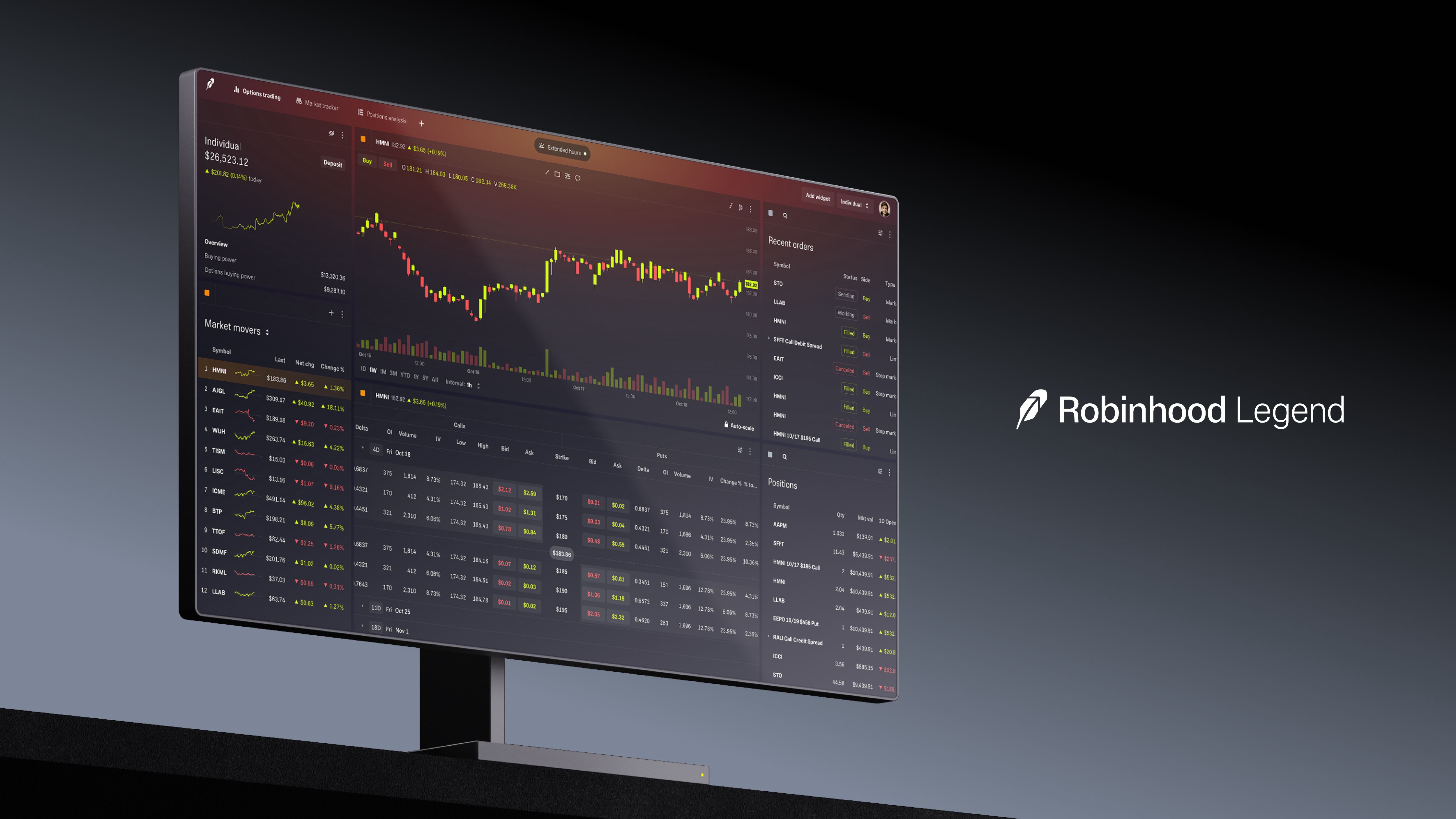
Then came Legend, introduced in October 2024. A browser-based desktop platform, it offered customizable layouts and up to eight charts in one window at launch. It carries no additional platform charge. Robinhood said conversations with active traders had exposed frustration with moving between applications. Here was a product decision grounded in an identifiable annoyance.
These products serve different jobs. A new investor can start small. A retirement saver can organize contributions. An experienced trader can analyze positions on a larger screen. Their shared commercial purpose is straightforward: fewer reasons to move the next account elsewhere.
Who pays for a free trade?
Robinhood earns transaction revenue, net interest revenue, and other revenue, including subscriptions. Market makers pay rebates for routed stock and options orders. Its own relationship disclosures acknowledge the resulting incentive for customers to trade more. Meanwhile, interest-bearing assets and lending make money from balances, and Gold supplies a recurring membership fee.
Q2 2026 revenue mix
59%Transactions
$776m
30%Net interest
$389m
11%Other
$143m
This matters when comparing brokers. Commission-free stock trading does not make every service free. Margin borrowing carries interest; some contracts and transfers carry charges. A subscription has value only when its benefits justify the cost for that customer. A low price on one action is an invitation to inspect the whole relationship.
“Our vision hasn’t changed: we are building the Financial SuperApp.”Vlad Tenev · February 2026
The next buy button might be a sentence
Expansion also means purchasing machinery. Robinhood completed its Bitstamp acquisition in June 2025 for approximately $200 million before closing adjustments. Along with an exchange came international licenses and institutional relationships. The business was stretching beyond the individual American with a phone.
In September 2026, Robinhood announced embedded AI agents for research and trading, described as coming soon for eligible US customers. The proposed experience uses a dedicated account and adjustable trade approvals. It also announced weekend equity trading plans, subject to regulatory review. Announcements should be read as announcements; availability is part of the product.
The approach depends on customers trusting the company with more money and more decisions. Quiet markets can weaken transaction income; lower interest rates can pressure interest revenue. Complex products require understanding that an elegant interface cannot supply by itself. Robinhood’s copyable idea is to remove a precise obstacle. Its history supplies the accompanying obligation: fund, supervise, and maintain everything the customer cannot see.