The route from a motorbike courier to a commodity contract is shorter than it looks. Both begin with somebody trying to move something through a system that feels larger, stranger and less forgiving than it should. A parcel needs a driver, a route and a promise. An investment needs a price, an interface and trust. Phuoc Tran has spent much of his career working in that awkward middle space, where a complicated network must become simple enough for a person to use.
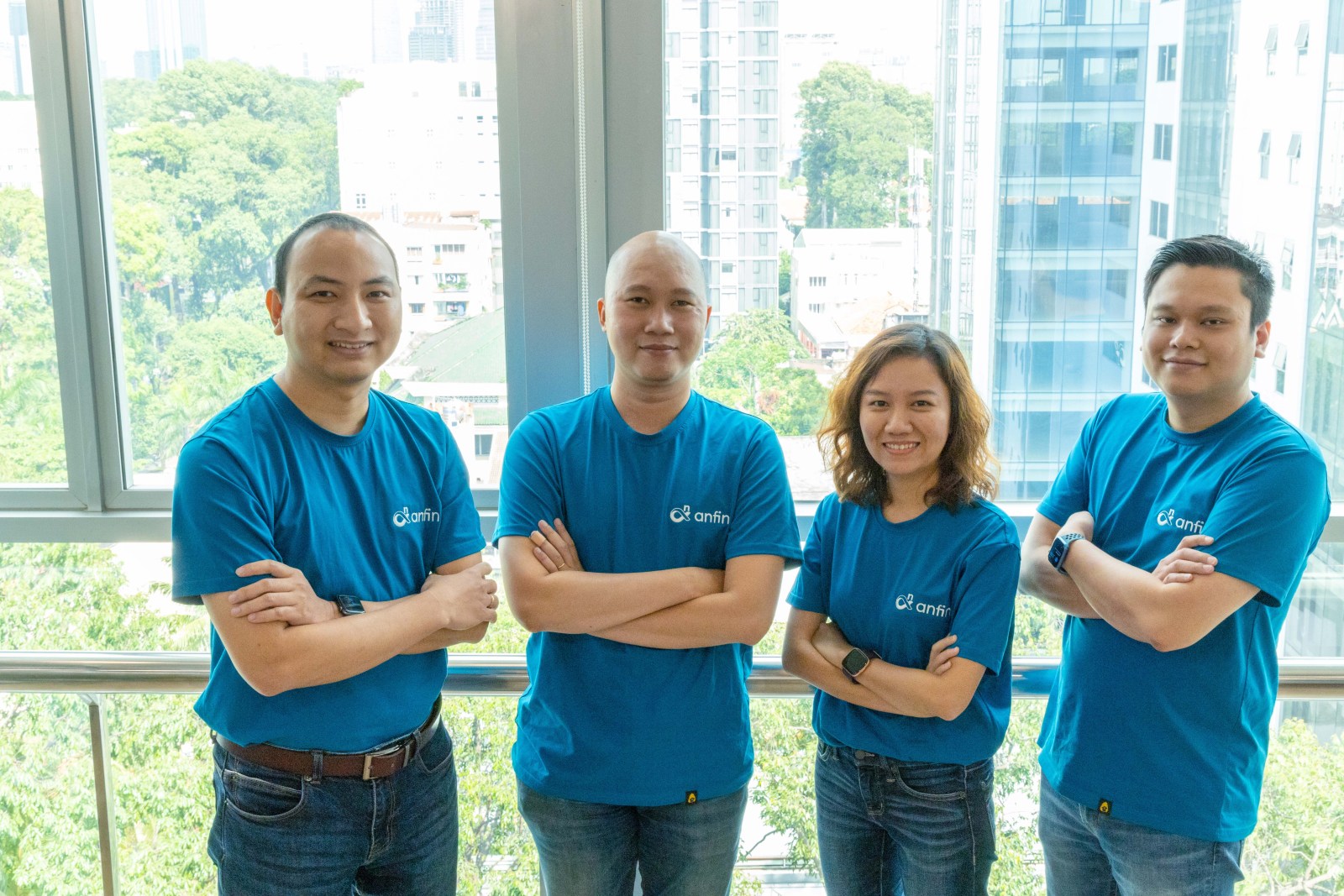
Today he is the co-founder and CEO of Anfin, a Ho Chi Minh City company building trading products for Vietnamese retail investors. The app began by lowering the entry point to stocks and exchange-traded funds. It added information and community features. Then the company moved into commodity derivatives, where the vocabulary grows sharper and the consequences of confusion grow with it.
The progression can look like a fintech company adding products. Read through Tran's earlier companies, though, and a more interesting continuity appears. He keeps returning to distribution: who can enter a network, what prevents them from entering, and which bits of machinery must disappear behind a useful screen.
An operator before an app
Tran studied international studies and international business at American University from 2007 to 2009. His early work moved through contracts, logistics and research in the United States before he returned to Vietnam. In 2014, he worked in operations at Easy Taxi, part of the first wave of app-based transport services to test Southeast Asian streets.
That year also brought the beginnings of Giaohangnhanh.vn and Ahamove. The latter organized on-demand delivery across Vietnam's dense cities. During Tran's tenure, the platform was completing more than 20,000 deliveries a day. The number matters less as a trophy than as an education. Twenty thousand daily promises expose every weak handoff: recruitment, incentives, routing, service quality and the small acts of trust that keep a marketplace from dissolving into complaints.
The recurring operating problem: access at network scale
In 2017, Tran shifted from urban logistics to distributed commerce. VRED recruited sales agents in rural Vietnam to distribute e-commerce and financial products. Its network passed 500,000 agents and, according to the company profile published by Y Combinator, distributed $36 million in gross transaction value each month. If Ahamove taught the choreography of a city, VRED taught the physics of reach. A service can exist everywhere in theory and remain absent in practice until a trusted person, familiar channel or affordable threshold carries it the final mile.
The VND10,000 doorway
Anfin launched in 2021 into an unusual Vietnamese moment. Brokerage accounts were multiplying. Smartphones had made financial information portable. New investors were curious, vocal and often teaching one another in social groups. Traditional access still carried practical friction: large trading lots, unfamiliar interfaces and institutions designed around people who already knew the language.
Anfin made its opening argument with a small number: VND10,000. That was the amount a user could begin investing with by the time the company announced its 2022 funding round. The modest threshold was not a promise of easy returns. It was an invitation to enter, look around and learn without first assembling the price of a conventional lot.
A low minimum changes the shape of the first decision. Instead of asking a curious person to make a large commitment before gaining experience, it lets the first transaction behave more like a lesson. The person still faces market risk, but the cost of discovering how orders, prices and portfolios behave becomes more manageable. Anfin paired that doorway with profiles, risk assessment and educational material. The pieces reflect a practical view of financial literacy: explanation matters, yet understanding also grows through carefully bounded action. For an operator trained in marketplaces, this is familiar terrain. Participation improves when the initial step is visible, affordable and connected to feedback.
In early 2022, Anfin joined Y Combinator's Winter batch. That June, the company announced a $4.8 million pre-Series A led by angel investor Clement Benoit and Y Combinator, with a group of other funds participating. It reported more than 100,000 funded accounts, $5 million in deposits and $10 million in total transaction value.
Tran's description of his own job was notably unromantic. He said he built the team, recruited talented people, aligned them around the company's north-star metrics and worked closely on projects that drove growth. In other words, the chief executive was still doing logistics. The parcels had become decisions.
“It's better to find co-founders who can support you and share the burden.”Phuoc Tran on advice for new founders
His surprise came from the customers. Young people were not merely interested in investing; they supplied constructive feedback and formed groups to exchange ideas. Anfin responded by building community into the product. By late 2023, Tran said more than half of active users visited the community tab to read market insights, interact and share trades. Thousands of posts were appearing each month.
That feature also exposed a delicate truth. Social energy can teach, entertain and keep people engaged. It can also amplify noise. An investment platform therefore has to hold two thoughts at once: people learn socially, and markets punish borrowed conviction. The product designer's task is to welcome conversation while giving data, risk assessment and clear information equal weight.
From stocks to the market beneath the market
Anfin's next act moved beyond listed shares. After navigating licensing and operational requirements, the company introduced AnfinX, its dedicated commodity-derivatives product, with approval arriving in April 2024. The tool brought order types, price data, charts, macroeconomic news, analysis and risk controls into a single interface.
Commodity derivatives sound like a departure from a beginner-friendly stock app. For Tran, they connect neatly to Vietnam's physical economy. The country is a large producer and exporter of coffee, rice, cashews, pepper and rubber, yet key benchmark prices are set in London, New York and Chicago. Farmers and exporters absorb prices discovered somewhere else, on somebody else's clock.
A market getting harder to ignore
Average daily commodity-derivatives turnover cited by Tran, VND billion
In his recent writing, Tran resists the easy diagnosis that Vietnam's price-taking role is simply a lack of sophistication. He calls it a problem of sequence. A meaningful domestic benchmark requires a liquid venue, standardized contracts, warehousing and delivery that participants trust, plus enough buyers and sellers for a settlement price to carry authority. Each ingredient takes years. Almost none of them makes a lively launch video.
“I don't think that's right. It's a problem of sequencing.”Tran on how domestic price discovery gets built
The distinction shows how his interests have widened. The early Anfin question was personal: how can a new retail investor buy a small piece of a stock? The commodity question is institutional: how does a producing country develop the depth to manage risk and, eventually, discover its own prices?
He has pointed to a paradox in the present market. Commodity trading volume is rising quickly, yet participation remains overwhelmingly retail. That means the infrastructure built for hedging is, for now, used mainly for speculation. Tran does not dismiss that stage. Retail activity has helped young markets create liquidity before institutions arrived. Still, the imbalance names the unfinished work with unusual clarity.
History, psychology, and a chocolate cone
Asked what he could discuss for hours, Tran picked history and psychology. They are revealing hobbies for a fintech operator. History studies institutions after the slogans have faded. Psychology watches what people do after the tutorial ends. Markets are where both subjects become expensive in real time.
His other answers were lighter. His favorite film is Gattaca, the cool, anxious story of a person trying to outrun a system that has already classified him. His ice-cream order is chocolate. The combination is almost suspiciously tidy: ambition, systems and a flavor that refuses product-market experimentation.
More useful was his advice to founders: unlearn old knowledge when the market changes, remove beliefs that no longer fit, and build resilience for the obstacles that follow. His companies make that counsel concrete. The operating grammar carried over from logistics to finance, but the nouns kept changing. Drivers became agents; agents became investors; delivery routes became order books. Reusing the lesson required abandoning the old answer.
Anfin now describes itself as a multi-asset platform. That phrase can flatten a difficult set of responsibilities. Stocks and commodity contracts behave differently. Novices and experienced traders require different kinds of explanation. A friendly interface can reduce friction, but it cannot remove risk, nor should it pretend to.
Tran's enduring project is less cinematic than disruption and more demanding: build the route, lower the threshold, explain what moves through the system and keep earning permission to add the next thing. Vietnam's new investors are already arriving. The remaining question is whether the infrastructure can grow wise at the same speed.