Martin Port used to get up at midnight to sell bread. His Leeds business, Kroustie, supplied restaurants, hotels and delicatessens with speciality loaves, cakes and patisserie. It stayed in business. It also consumed a remarkable amount of its owner’s time without making the money he wanted. Rye and pumpernickel had their admirers; the economics were harder to charm.
That is a useful place to begin with the founder of BigChange. The later transactions run to tens and hundreds of millions of pounds. The bread business supplies something more revealing: a reason to change direction. Port knew what it felt like to work very hard inside a company that would not grow in the way he wanted.
The bread was good. The hours were terrible.
He had been selling things long before Kroustie. Born in Leeds in 1962, he took a Saturday job at the menswear shop Cecil Gee, earning £5 a day. At 15, he started a printing business with a friend. Business cards and flyers offered an early education in finding customers who had an actual use for what he was offering.
New York widened the territory. In his twenties, Port helped a friend build a speciality German bakery business, selling to customers that included the Waldorf Astoria, the Plaza Hotel and the United Nations Dining Room. He returned to Leeds and opened Kroustie. Selling it in 1998 ended a chapter of punishing hours and limited returns.
His own description of his temperament is unusually compact: “I’m a strange mixture of optimist and realist.” There is room for both in that bakery story. He could sell the product, recognise the limits of the business and eventually leave it. Knowing when to stop selling bread would become as consequential as knowing how to sell it.
“I’m a strange mixture of optimist and realist.”
Martin Port
A dot on the map was only the start
In 2002, Port founded Masternaut UK, bringing vehicle tracking technology from a French business to British customers. Here was another set of practical questions: where are the vehicles, what are they doing, and how can the company running them organise its day? He had moved a considerable distance from a bakery, while staying close to the unglamorous business of getting work done.
Masternaut developed through acquisitions as well as selling subscriptions. Port made a partial sale in 2009 and exited in 2011 as part of a £60m transaction. The experience gave him a working education in capital, acquisitions and building teams. It also left him with knowledge of customers whose problems extended well beyond finding a van.
A vehicle’s position is a useful fact. Around it sits a job: a customer to contact, an engineer to schedule, instructions to send and work to record. After completion comes the invoice. Joining those activities gave Port his next business proposition. BigChange began trading in January 2013, bringing tracking, scheduling, customer management and mobile working into a single system.
The distinction matters because it explains the founder’s continuity. Masternaut and BigChange were separate businesses, but the second started close to the first company’s customers. Port was extending his view of their working day. The map could show an arrival; the wider system could help the office understand what should happen before and afterwards.
The price of being useful
Experience did not spare BigChange an elementary mistake. Port later admitted: “We set our prices too low at the beginning.” The subscription rose from £40 to £60 a month and customers remained loyal. It is a pleasingly awkward detail in a software success story: making the service cheaper had not solved the problem of establishing its value.
By 2017, BigChange ranked 25th in Deloitte’s UK Technology Fast 50, with growth of 1,095%. There was a business taking shape around the proposition. Its appeal lay in the range of work it joined together, giving companies with mobile teams a way to coordinate the office, the vehicle and the customer without treating each as an isolated administrative island.
In 2020 came the Queen’s Award for Enterprise: Innovation. The following February, Great Hill Partners invested £75m in a transaction valuing BigChange at £100m. At that point the company served 1,500 organisations and employed 170 people. The customers crossed more than 20 industries, including plant hire, drainage, waste and food service. Ordinary jobs, in considerable variety, had become a substantial software market.
Company valuations. The 2021 investment was £75m. The 2024 figure is reported on Port’s website. These figures describe the business, rather than Port’s personal proceeds.
He was still CEO when the investment was announced and later moved into the chairmanship, with Richard Warley becoming CEO. A year after the deal, Port credited both Warley and Great Hill’s team with helping the business accelerate. For someone who valued making his own decisions, bringing in a partner also meant finding people whose judgement he could use.
Simpro Group acquired BigChange in October 2024. Great Hill’s sale announcement recorded revenue growth of 2.5 times during its investment and a customer base exceeding 2,200. Port’s website puts the acquisition valuation at £330m and describes him as a continuing minority shareholder in Simpro. He had left BigChange’s chairmanship. The software business continued with a different ownership structure, and its founder had another project underway.
Back to the people answering the phone
Build Concierge began in 2024 with a different model from the platform it became. Port has described its subsequent pivot in plain terms: the business changed course. By 2025, the focus was AI customer engagement for trade and service organisations. The familiar customer was still there, trying to respond to enquiries while keeping the actual work moving.
The current platform brings calls, chats, WhatsApp, SMS, email and bookings into its scope, connecting with systems that service businesses already use. It is easy to imagine the software demonstration. Port’s account of finding the problem is more interesting: go to the customer’s premises and watch how a job moves through the company.
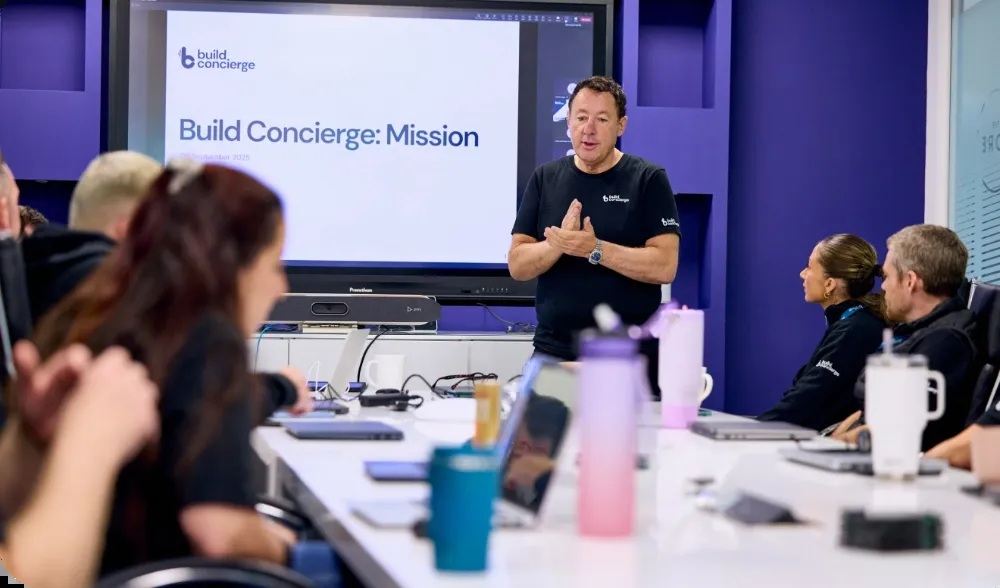
He describes talking to administrators, planners, supervisors and field engineers, following work from the first enquiry through delivery and invoicing. The official process and the process people actually follow can differ. Repeated data entry, disconnected messages and makeshift workarounds are easier to discover beside the person doing the task than in a discussion of how it ought to work.
This gives his latest venture a recognisable connection to the earlier ones. A tracking system supplies information. A job management platform joins activities. Automation has to contend with the spaces between them. Port’s examples begin with the daily frustrations of people who are busy enough already. There is commercial ambition here, certainly, but the starting point remains a close look at someone else’s work.
- 01 Enquiry
- 02 Schedule
- 03 Field work
- 04 Invoice
BigChange joined these activities. Build Concierge focuses on communications and automation around the handoffs.
The family resemblance
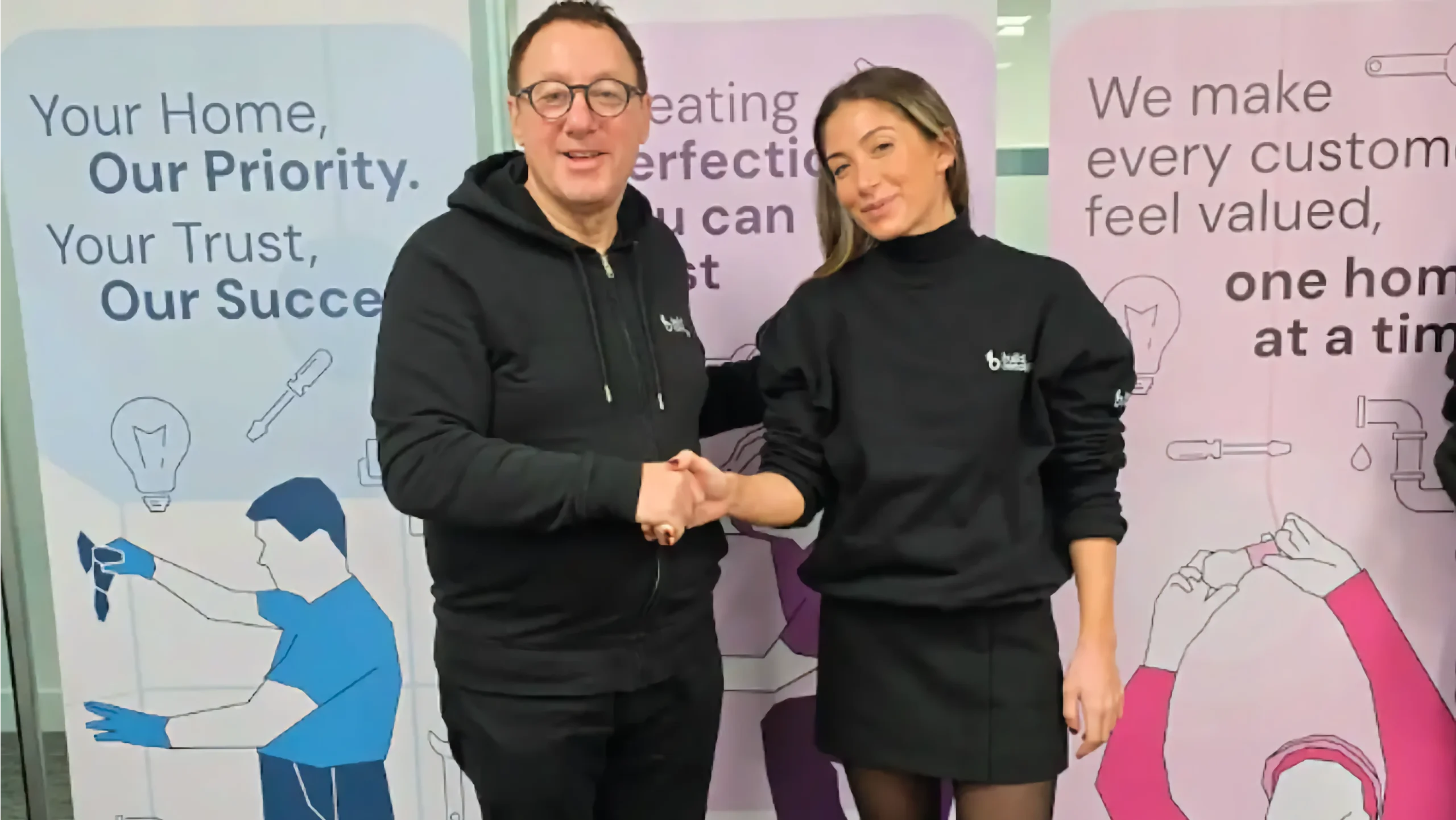
There are familiar surnames around the new venture, although their routes into it differ. Leah Port, Build Concierge’s chief marketing officer, had built her own career in marketing, including work at Lookfantastic. Her interests in fashion, customers and marketing technology eventually met her father’s interests in business software. Joining him offered a new company in which to apply experience she had acquired elsewhere.
His son Joshua founded Handshaik, a platform focused on business development and deal origination, with backing from Port Growth Partners. Martin appeared as the first guest on Joshua’s After the Handshake podcast in June 2026. Their discussion covered acquisitions, scaling and transactions. The father’s operating history had become material for the son’s questions.
Investment has also taken Port into Rated People, Panintelligence, Electron Green and StoriBoard. These relationships give him ways to participate without founding every business himself. Port Growth Partners combines money with strategic help, a role that suits someone with experience of selling products, hiring teams, buying companies and eventually negotiating a sale.
He also spends time asking other people how they did it. His Growth Stories series includes interviews with Buy It Direct’s Nick Glynne and Vehicle Weighing Solutions’ Julian Glasspole. In a separate nine-part series, Port spoke with former England footballer and manager Kevin Keegan about leadership. He has been willing to sit on either side of the interview: explaining his own decisions, then asking someone else about theirs.
With his wife Amanda, Port established a charitable foundation supporting more than 60 charities by 2025, including work in education and poverty relief. His account of success gives his family a central place. His current website describes him as based in Israel; the companies and relationships built in Yorkshire remain a substantial part of his working life.
Another quarter, another unfinished job
In an October 2026 update, Port reported that Build Concierge had finished the third quarter with more than £2.1m in annual recurring revenue and over £4.9m in signed contract value. Those are the company’s reported measures of its progress. They sit alongside another detail from his account: prospective customers can keep an automation roadmap even if they decide against buying.
It is a revealing piece of salesmanship. The company first tries to show that it understands the work. Port has said he wants Build Concierge to reach unicorn status, an ambition still ahead of the business. For now, there are customers to visit, processes to examine and another quarter to deliver. The bread ovens are a long way behind him. Someone still needs to answer the phone.