A warehouse has an unusually honest way of measuring ambition. Sooner or later, you run out of floor. When Mark Sell and Dave Kiebach started MD Logistics in 1996, they had 10,000 square feet and seven employees. Twenty years later, the business occupied a million square feet and employed more than 200 people. The initials above the door still belonged to the same two first names: Mark and Dave.
That expansion makes a tidy business story. Sell’s more interesting concern was what might get lost between the first building and the fourth. By 2016, he was talking about the difficulty of growing a company without giving away its character. Warehouses could change. The way people treated one another deserved rather more protection.
His career eventually included an international acquisition, industry recognition and a planned leadership handover. Yet the scale is only half the story. Look closely and the milestones contain smaller decisions: which requests to accept, which people to trust, where to put the next building, and what a buyer would have to respect.
Two initials, seven people
Sell’s public professional profile places him at Indiana University Bloomington from 1978 to 1982. The business he would later build was rooted in Plainfield, Indiana, near Indianapolis. By the time he and Kiebach launched it, they brought experience in freight forwarding and relationships with customers who needed products moved reliably.
MD Logistics began by arranging domestic and international shipments for central Indiana businesses. The move into warehousing followed the relationships. A customer who trusted the company with transportation could also ask it to handle storage or another part of distribution. Each request offered a practical test of whether the young firm could take responsibility for more.
There is something pleasingly unceremonious about that origin. The company name combined its founders’ initials; its services developed around work customers actually wanted done. A business can spend a fortune discovering its identity. Here, the lettering was settled with two first names, and the next assignment helped settle the rest.
In 2008, the company announced a $1 million investment in a 15,000-square-foot cold-storage facility in Plainfield, alongside plans for 75 jobs over four years. Sell pointed to the nearby international airport and four interstate highways when explaining the location. His Indiana business had a distribution argument behind its address.
The planned investment also shows the demands of his chosen trade. New work required equipment, space and trained people before it could become dependable service. A promise made in a meeting eventually had to survive a loading dock, a delivery schedule and a customer checking the result.
Permission to get on with it
Kiebach died in 2007. Sell continued the business. Looking back at that period, accounting manager Susan McIntosh credited his decision to keep building for the long term while protecting the company’s integrity. Her recollection gives the growth figures a human hinge: continuation was a choice someone had to make.
Other colleagues described an owner who gave leaders authority to act. Matt Collins, who worked in the freight-forwarding business, recalled that the owners set ambitious goals and allowed managers to carry them out. Employee number five, Mike Smith, pointed to Sell’s dedication to the workforce and customers.
That description resurfaced when Sell was named to the 2018 Supply & Demand Chain Executive Pros to Know list. Emilie Gerbers, then responsible for business development and marketing, connected his trust in managers to the company’s ability to respond quickly. Decisions could happen close to the customer’s problem.
It is a specific kind of leadership bargain. Managers receive discretion, and customers expect an answer. The founder must tolerate decisions that do not begin at his desk. In Sell’s case, the people describing that arrangement were the people expected to make it work, which gives their account some weight.
“In many ways we are a reflection of our customers’ needs.”
Mark Sell · 2016
The argument for Reno
In August 2011, MD Logistics announced a 55,000-square-foot distribution center in Reno, Nevada. For a company based in Indiana, the western United States presented an obvious distance problem. Putting inventory closer to customers offered a way to shorten journeys and widen the usefulness of the network.
The opening announcement emphasized transport connections, access to western markets and operating costs. MD Logistics relocated a group of managers to establish the operation. That detail matters: expansion involved carrying working knowledge across the country, alongside filling a building with inventory. Experience needed a forwarding address too.
By 2016, Sell could point to a facility whose previous use had suited the company’s requirements. There had also been spending on infrastructure, including roughly $500,000 for a sprinkler upgrade. Geography might win the first discussion, but a usable warehouse still had to pass the less glamorous tests.
His concern about preserving culture appeared in the same period. He accepted that the industry would keep changing while arguing that the atmosphere of the company could endure. That sounds straightforward until a business has multiple locations, different managers and customers who want different things on the same afternoon.
“But our culture doesn’t have to change.”
Mark Sell · on growth, 2016
Sell later wrote about the reasoning behind the Indiana-and-Nevada combination. His 2018 discussion focused on the relationship between location and delivery time. The expansion gave the firm a Midwest and western presence. He treated the map as part of the service itself, something customers experienced through arrival times.
Even the robots needed a reason
In his December 2019 letter, Sell described the pressure created by customers accustomed to constant availability and fast delivery. He also described a collaborative robot program introduced into the retail and consumer-goods operation. After implementation, the company reported improvements in productivity and picking accuracy.
His explanation kept returning to the people doing the work. Training remained a priority, and automation offered a way for existing teams to handle more demand. He was also considering predictive technology and customer input when assessing future locations. The machinery had to earn its place in an operating plan.
The broader company record adds a useful detail. In February 2020, its HR and learning leader reported that the intuitive design of collaborative robots had helped new associates learn more quickly. The same account described recruitment through job fairs and changes in hiring practices. Technology and staffing occupied the same conversation.
That combination fits the business Sell had built. A warehouse expansion creates capacity on paper; people and processes make the capacity usable. The less picturesque work of hiring and teaching sat beside the more photogenic arrival of equipment. Both had to function when orders arrived.
A buyer with something to preserve
The agreement to sell MD Logistics and MD Express to Nippon Express U.S.A. was announced in May 2020. After 24 years of private ownership, the companies were preparing to enter a much larger network. The stated ambition included further domestic and international growth while retaining the existing brands and organization.
The acquisition took effect on September 1, 2020. Sell remained president and CEO, and the executive and senior management teams stayed in place. At the time, the business had approximately 270 employees and reported about $51 million in 2019 revenue. Those are company figures, measuring an operation built over decades.
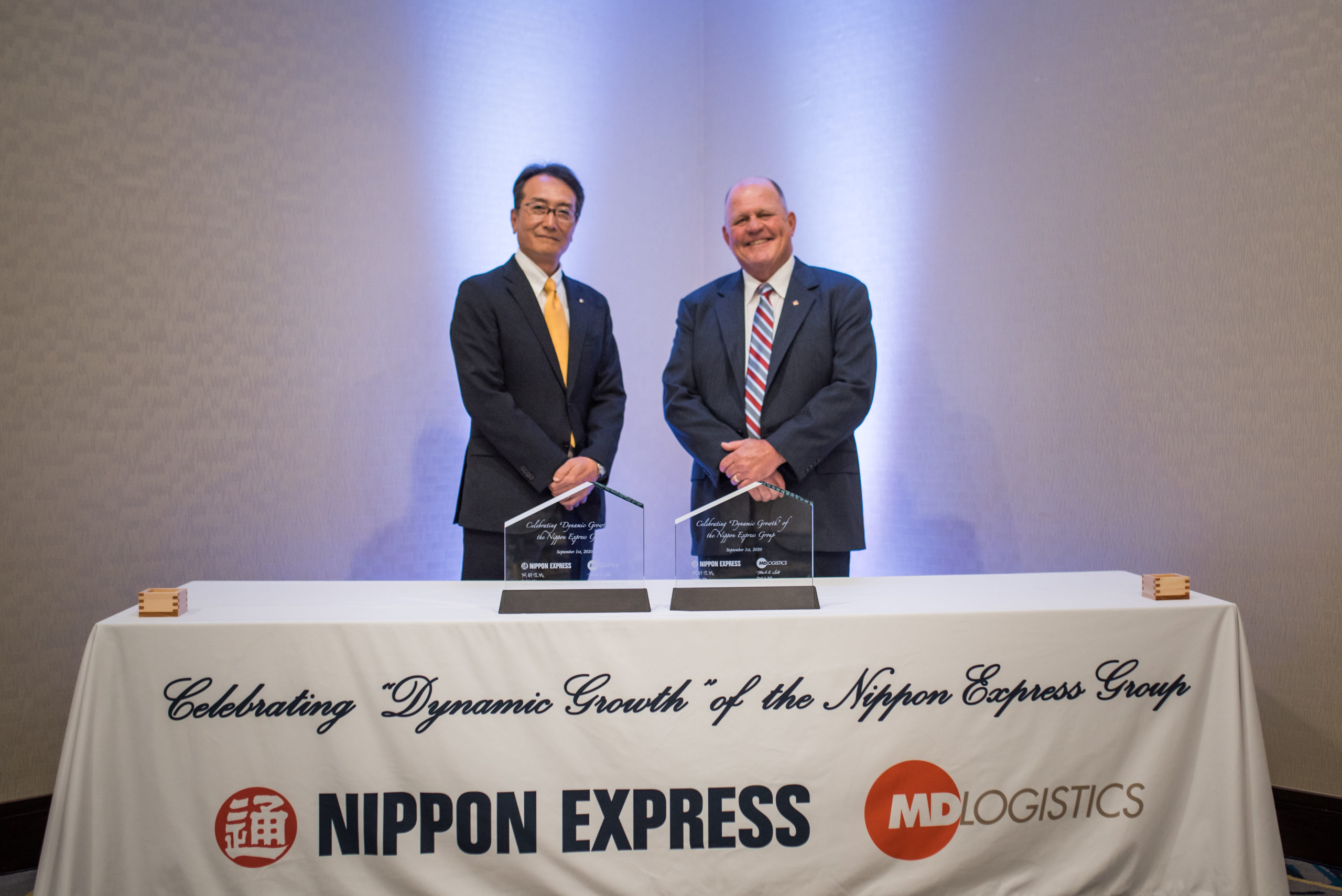
Sell’s explanation of the buyer selection was consistent with his earlier concerns. He wanted a partner with a plan for the sectors MD Logistics served and respect for its employees, culture and customers. Access to an international network mattered. So did the treatment of the organization already in place.
In his year-end 2020 letter, he returned to the possibilities of that network: a larger geographical footprint, additional services and connections to international warehousing and forwarding. The letter also thanked employees for keeping customer operations moving. Even in the account of a major transaction, he kept bringing the discussion back to the team.
The last delivery was a handover
On September 30, 2021, the board announced the next leadership arrangement. Effective October 1, John Sell would become president and CEO. Mark would become an executive advisor, helping with the transition, supporting growth plans and mentoring members of the executive team. The change gave his long practice of delegation a formal next step.
John, his brother, had joined the business in its founding year and worked across freight forwarding, IT and operations. Other leaders also moved into new responsibilities. The succession was built around people who knew the company from the inside, with Mark assigned a continuing role in helping them take over.
MD Logistics announced Mark Sell’s death on December 24, 2021. John remembered a brother, business partner and mentor with a “boisterous persona.” It is a welcome description in a story full of square footage and operating plans. There had been a particular person behind all those carefully organized movements.
When Sell reflected on his career in 2017, he spoke about watching employees marry, buy homes, become parents and advance within the business. “I am most proud of that,” he said. A million square feet explained how far MD Logistics had grown. The lives unfolding around him explained why the growth mattered to him.
Follow the longer route
Read Sell’s own words, revisit the milestones, or watch the company’s anniversary film.