In 2018, Mark Briggs had an acquisition to consider and a question that a spreadsheet could not answer for him. The proposed purchase made business sense, he later recalled. The trouble was how the company obtained its data: from people’s mailboxes, without their knowledge. Briggs imagined explaining that arrangement to his own customers. The explanation failed his test.
So he passed. For a founder building a company partly by buying other companies, declining an attractive purchase was a consequential way to begin. Revenue has the advantage of appearing in a financial model. A customer’s unease tends to arrive later, without an appointment.
Briggs told the story in 2026, looking back on Validity’s first year. The rejected business remained unnamed. What he chose to remember was the obligation he felt toward the people who would eventually have to trust the result.
“I couldn’t look customers in the eye and defend that.”
Mark Briggs, recalling the rejected acquisition
That refusal provides an unusually useful entrance to his career. Briggs is Validity’s founder, chairman and CEO, a Boston software executive whose work involves the unglamorous mechanics beneath customer communication. Records need cleaning. Addresses need checking. Messages need to arrive. A campaign can have an excellent subject line and still be defeated by its address book.
A physicist in the software business
Briggs studied physics at Dartmouth, completing his undergraduate degree in 1992 and his master’s in theoretical physics in 1993. His professional life then moved into software companies, where his responsibilities would include founding, operating and eventually assembling businesses.
He founded LinkSoft Technologies, served as its chairman and CEO, and sold the company. At QuadraMed, he was president of MPI Solutions. Executive positions at NaviNet and Carefx followed in the career preceding his leadership of ABILITY Network. The sequence gave him experience on several sides of company building: starting a business, leading a division and taking responsibility for an established operation.
From 2010 to 2015, he served as ABILITY’s CEO. By the time he began Validity, he had already spent years in executive roles. The new venture brought that operating history into a different set of customer problems, with a growth equity partner alongside him.
In 2018, Briggs founded Validity with Silversmith Capital Partners. He also became a senior advisor to the investment firm. The relationship put him in two connected positions: running a software company and advising investors whose business involves helping other companies grow.
Buying the missing pieces
Validity’s early proposition was straightforward enough to sound almost modest: executives should be able to trust their business data. The launch announcement paired Silversmith’s investment with the acquisition of CRMfusion, whose products served Salesforce customers. DemandTools, DupeBlocker and PeopleImport were already established tools when they entered the new company.
Briggs was buying working software, customer relationships and the people who understood those customers. CRMfusion addressed the contents of business databases, the accumulated information on which sales and marketing decisions depend. That placed Validity near the beginning of the communication process, before anyone composed an email.
BriteVerify joined in 2018, adding email address verification. It had been serving customers since 2009 and was described at the time as checking more than 500 million addresses each month. An email address is a small string of characters with an outsized capacity to waste everybody’s time. Verification made another part of the journey less uncertain.
- 2018CRMfusionImprove the customer record
- 2018BriteVerifyCheck the email address
- 2019Return PathWork on inbox delivery
- 2025LitmusTest and optimize the message
Different acquisitions, different points in a campaign’s journey. This is a capability map, not a measure of revenue.
The Return Path acquisition extended the business into email deliverability in 2019. Briggs’s explanation of the purchase emphasized the trust Return Path had developed with internet and email service providers, as well as its customers. He was interested in relationships inside the email system, alongside the tools marketers could buy.
At the announcement, Return Path’s platform covered 3.5 billion inboxes, according to the company’s figures for that period. Those numbers describe its reach then; the strategic attraction was access to a broader view of what happens after a sender presses the button. The acquisition closed on May 31, alongside an investment led by Providence Strategic Growth, with Silversmith also participating.
For Briggs, the purchases connected several distinct jobs. A clean database does not guarantee delivery. Delivery does not guarantee that a message looks right. Bringing those jobs into one business offered customers more of the journey under one roof, while giving the founder a larger integration task each time another team arrived.
The 2019 financing announcement gave the expansion a practical agenda. New capital would support product development, commercial expansion and further acquisitions. Briggs had partners willing to fund several kinds of growth at once. The job was to turn that backing into software customers could use, while continuing to bring existing products and teams into the operation.
That combination helps explain why his role carries both chairman and CEO in the title. The investment relationships and the operating business meet in the same office. A purchase has to make sense to the people supplying capital, then work for the employees and customers who live with its consequences. Validity’s history gives Briggs repeated occasions to manage that transition, from an agreement about a company to the everyday running of it.
Litmus added another piece on April 10, 2025. Its email testing and optimization software expanded Validity’s work around the message itself. Briggs described the ambition as a unified platform for creating, optimizing, delivering and monitoring campaigns. The acquisition joined the presentation of an email to the infrastructure already helping it reach a recipient.
A trophy, and a list of other people
Between Return Path and Litmus came a public marker of Briggs’s own progress. In June 2024, EY named him an Entrepreneur Of The Year New England award winner. The regional program’s judging considered growth, entrepreneurial spirit, purpose and long-term value. Briggs appeared among winners from businesses ranging from workwear to software and beverages.
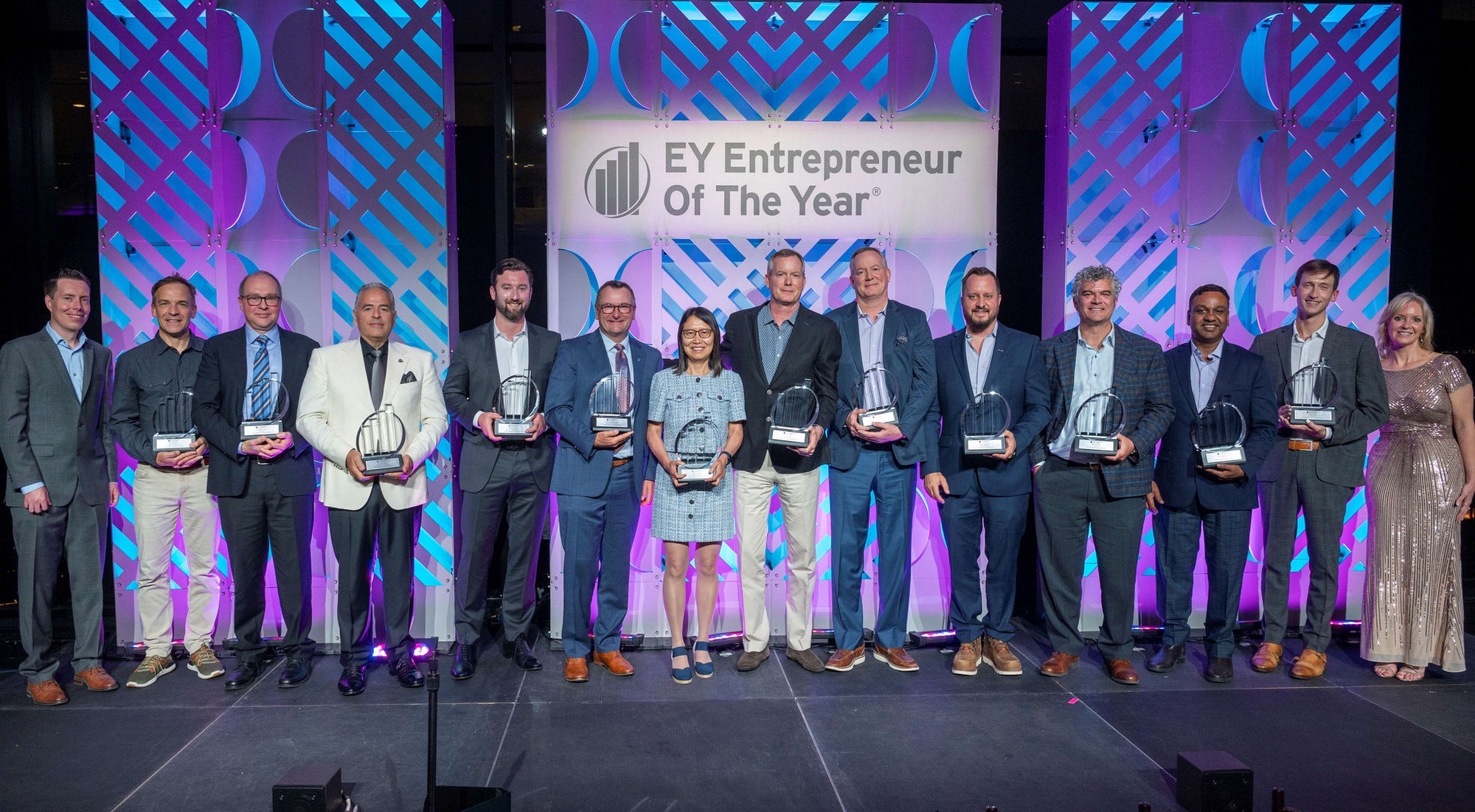
When he was named a finalist that spring, his public response directed attention toward his team. He thanked Validity employees, then named Silversmith’s Jim Quagliaroli and Sri Rao, PSG’s Tom Reardon and Mark Hastings, and board member Mike Volpe. It was an acknowledgment with names attached, giving the reader a more specific picture than the usual ceremonial thanks.
Those relationships are part of the business story. An acquisition announcement makes a clean dividing line on a timeline. Running the combined operation requires the people on either side of that line to keep making decisions together. Briggs’s acknowledgment put colleagues and investors into a career often compressed into one name and three executive titles.
The inbox acquires an AI department
In February 2026, Briggs and chief technology officer Matt Gore used Litmus Live to announce Validity Engage. The virtual conference drew attendees from 79 countries. For the founder, it was an opportunity to put a new product in front of the practitioners whose work his acquisitions had brought into the company’s orbit.
Engage’s launch introduced four agents. Ignite worked on email optimization. Guardian monitored issues affecting brand reputation, inbox performance and content. Expression assisted with creative work. Insight supplied market intelligence. The names suggested a small department, conveniently spared the difficulty of agreeing on a meeting time.
The announcement brought Briggs’s acquisition history into a new technological setting. Data quality, delivery information, creative work and analysis could now inform AI-assisted campaign decisions. The business question became how to make those capabilities useful together in the daily work of a marketing team.
Briggs also joined Gary Vaynerchuk for a Litmus Live conversation about marketing, AI and audience relationships. Later in the year, he appeared with Guy Hanson in an AI Executive Briefing about executive approval and implementation. His public advice on an AI proposal emphasized a credible plan, milestones, a date, an identifiable output and partners the team could explain.
“Your enemy is time, and then execution.”
Mark Briggs, on moving AI initiatives forward
That language shows the operating side of his role. Buying technology and announcing a platform are visible moments. Getting a project through a boardroom and into use requires another set of decisions. Hanson’s session addressed the risks leaders worry about and the work that follows their approval.
In August, Briggs sat down with Steve Wozniak for a conversation about innovation and the trust AI has to earn. The Apple co-founder’s long experience with technology cycles gave that discussion a different perspective from a product launch. Its announced themes included human intuition, skepticism and the distinction between a useful invention and the noise surrounding it.
A reputation has to come from somewhere
In September 2026, Validity launched Heatwave, an email blocklist intended to identify domains involved in artificial warming. Such services manufacture activity to establish a sending reputation. Heatwave looked for behavioral patterns associated with that activity; at launch, Validity said it had listed more than one million domains.
The development put a concrete product beside Briggs’s recurring argument about trust. Validity was helping marketers improve their own campaigns while also supplying information used to evaluate sending behavior. Both depend on understanding the activity behind a message, beyond the words visible to its recipient.
That brings the story back to the acquisition he refused. His business now asks customers to place confidence in software that can do more of the work surrounding an email. The original question has become more demanding as those capabilities have expanded: can the company explain the data and decisions underneath the result?
Briggs’s career offers a sequence of purchases, executive jobs, partnerships and product announcements. The small, stubborn detail is still the imagined conversation with a customer in 2018. He wanted an answer he could give while looking someone in the eye. Years later, with AI joining the conversation, that remains a useful test.
Follow the conversation
Explore Briggs’s work and appearances.
Validity leadership ↗Mark Briggs on LinkedIn ↗Silversmith biography ↗Briggs’s Return Path announcement ↗The conversation with Steve Wozniak ↗AI Executive Briefing with Guy Hanson ↗Litmus Live 2026 on YouTube ↗Validity’s blog ↗2024 New England award announcement ↗