A factory can possess a remarkable amount of information about a machine and still struggle to decide what to do when it stops. The manual is somewhere. The maintenance record is somewhere else. The person who remembers the last breakdown may be on another shift. Software has been invited to all these conversations; getting it to introduce the guests remains a job of its own.
Krish Ghosh has built a business around the systems involved in that everyday work. The founder and CEO of DreamzTech Solutions leads a company that develops custom software while maintaining a portfolio of products for equipment, field service, tracking and AI applications. His career connects the language of the boardroom with the less accommodating language of a machine awaiting attention.
The revealing part of his recent thinking is the attention he gives to restraint. In industrial AI, he argues, a useful recommendation needs reliable records, a defined job and somebody responsible for approval. An agent that can talk persuasively has acquired one skill. The workshop will have further questions.
A company with two starting points
DreamzTech dates its beginning to April 14, 2010, in Tempe, Arizona, and Kolkata, India. A company with two starting points has a practical subject to master early: how work travels between people. Requirements, decisions and revisions must survive the journey. The calendar may be shared; the working day is another matter.
Ghosh’s engineering background is in information technology. His responsibilities have ranged across the business and its technical direction: founder and CEO at DreamzTech Solutions, with CEO/CTO used for his role at DreamzTech US. Those titles place him on both sides of a familiar software negotiation, where an appealing commercial promise eventually has to become a system that somebody can operate.
There are other names in the undertaking. Kuntal Mazumder is the co-founder and COO. Greg Christofolo is the managing director for the United States. A business spread across locations needs people who can translate between a customer’s request, a development team’s choices and the obligations of delivery. The organization around Ghosh is part of his story.
The firm’s history dates a Las Vegas office to 2023 and Best Brain’s introduction to 2024. Together, those developments show expansion along two different lines: somewhere else to meet customers, and another product to offer them. Both require work beyond the founder’s own desk.
The number that came before the AI
In December 2017, DreamzTech announced that it had placed 34th in Deloitte’s Technology Fast 50 India. The stated revenue growth was 105 percent across the preceding three financial years. It is a useful historical marker: the business had a measurable growth story before its recent generation of AI products.
At the time, Ghosh spoke of the “passion and hard work of the entire DreamzTech community.” His stated ambition was to build a next-generation IT services and solutions business. The combination matters. Services meant responding to particular customers; solutions pointed toward something that could be carried from one engagement into another.
A growth award captures a period. The company then has to live through the next one. People still need to answer questions about a release, a change request or a piece of software written some time ago. A trophy has the enviable advantage of never needing a version update.
The customer who stays
Long relationships offer another way to understand Ghosh’s working life. Jeffrey Kiley, a customer who has recommended him, describes using DreamzTech across three online businesses over more than a decade. Those businesses included consumer e-commerce and a service working with libraries, universities and newspaper publishers. Different audiences, different requirements, the same technology partner.
Kiley’s account emphasizes assembling the right people and managing the complications that appear during projects. For a founder, that is a particular kind of compliment. It concerns the organization’s ability to respond, including when the request changes or the problem arrives inconveniently. The relationship depends on people doing their jobs repeatedly.
Another customer, Owners Path CEO Corey Pierce, described working with the same team lead and development team through a five-year engagement. That continuity has a practical value. A team familiar with the work need not rediscover every decision before making the next one. Institutional memory can be a very useful feature, even when it does not appear on the pricing page.
These are customers’ accounts of their own engagements. They give the business a human scale: the person who answers, the team that remembers, the question that receives a useful response. Ghosh’s executive role sits above those interactions, but his reputation also travels through them.
A product for the jobs that return
DreamzCMMS concerns asset and maintenance management. Its purpose places Ghosh close to businesses whose work is recurring and physical. Equipment has histories. Parts have locations. A repair has to be recorded so that the next person can understand what happened. The software is dealing with the continuity of a workplace.
The product’s stated mission centers on the real problems maintenance teams face. That is a demanding constituency. A technician has work to finish; a manager has equipment to keep available. An elegant screen must earn its place somewhere between those responsibilities. The appeal of maintenance software rests on whether information becomes easier to use during the working day.
BestBrain AI addresses another layer of business activity. The platform offers tools for building chat and voice agents, connecting business knowledge with visual workflows. It supports multiple models and channels, including WhatsApp. Its examples range from handling queries to routing incidents and processing documents.
Those are product capabilities and proposed applications, rather than proof that every customer has obtained the same result. Their connection to the rest of Ghosh’s business is nevertheless clear. A conversational interface has more to work with when it can reach the records and processes behind a question. The portfolio puts those different parts of enterprise work within the same company.
BestBrain’s current description names n8n and Activepieces as tools used to build connected workflows. That detail gives the product a more concrete shape: information from a conversation can feed a process involving customer records, scheduling or a team notification. The business has to configure the triggers and actions around its needs. An agent builder, in this setting, includes the work of deciding where a conversation should lead.
- 01 / MaintainDreamzCMMSAssets and maintenance
- 02 / CoordinateDreamzFSMField service work
- 03 / LocateRFIDTracksTracking physical assets
- 04 / ConnectBestBrain AIAgents and workflows
Who gets to say yes?
Ghosh’s September 2026 thinking on industrial agents starts with a bounded problem. He recommends defining the intended business result before selecting technology, understanding the current process and checking the quality of its data. Permissions, approval points and fallback procedures belong in the design. Workers who understand the equipment need a voice in it.
His phrase is that “context and integration matter more in physical operations.” The equipment’s actual history and the surrounding systems affect whether a recommendation deserves confidence. He also expects increased interest in local, on-premises models as companies consider running costs and the handling of operational data. That is a forecast, with the outcome still ahead.
“context and integration matter more in physical operations”
Krish Ghosh · on industrial AI
His writing on sales agents applies a similar discipline to a different workplace. It calls for limited permissions, a named owner, testing that covers failures and gradual release. Updating a customer record requires rules of its own. Automation can multiply activity; a business must still decide which activity deserves to be multiplied.
That argument gives Ghosh a recognizable position within the AI discussion. The founder of an AI product business is spending time on authority, records and responsibility. These concerns belong to the same working world as maintenance logs and returning customers. New software enters a business that already has obligations.
The view beyond the screen
Outside the executive titles, Ghosh describes himself as an amateur photographer. He also takes part in sports as a participant, team leader and instructor. The details give his biography some room to breathe. There is a person behind the product names, with interests that require other ways of paying attention.
He lists Bengali, Hindi and English among his languages. Alongside the geographic spread of the business, that is a small, specific detail about the person communicating across it. His colleagues and customers describe their own experiences of working with him; his profile adds the interests and capabilities he chooses to present himself. Together they offer several views of a founder whose day job involves coordinating other people’s expertise.
Photography asks someone to choose a frame. Team sport asks people to notice one another. These are useful comparisons for a reader thinking about his working life, without turning hobbies into explanations for every business decision. A camera may simply be something he enjoys. A founder is permitted an afternoon that does not become a management lesson.
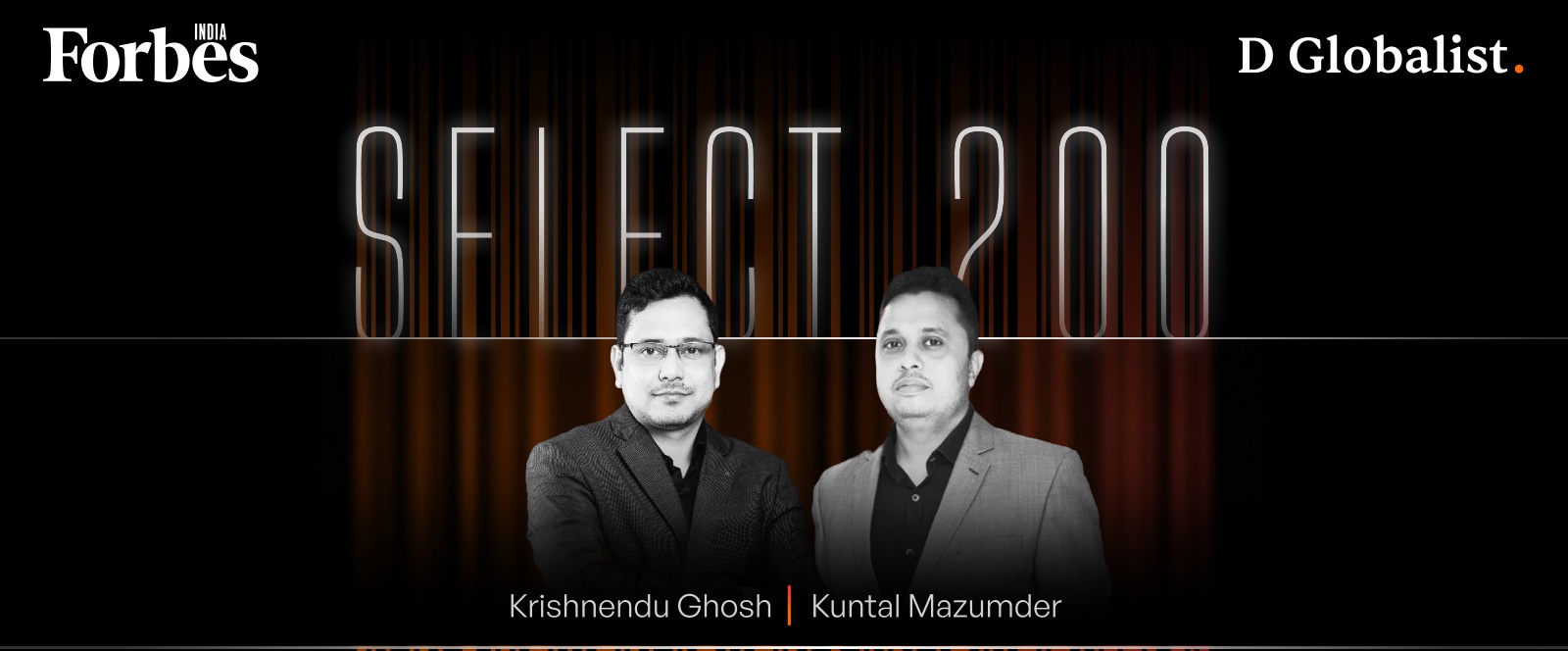
In February 2026, DreamzTech announced recognition in TIME and Statista’s India growth ranking and the Forbes India DGEMS Select 200. Ghosh described the aim as solutions that “deliver measurable outcomes for enterprises worldwide.” The ambition continues to reach across borders, while the promised result remains tied to somebody’s actual work.
That is where his story returns: a business with a task waiting to be done. A record needs finding. An asset needs attention. A colleague needs enough information to make a decision. Ghosh is building software for those moments, with the increasingly consequential question of when a machine should wait for a person to say yes.