Alan Trefler entered the 1975 World Open ranked 115th. He was 19, studying at Dartmouth, and sufficiently far down the list that a sensible spectator could have overlooked him. He finished tied for first with grandmaster Pal Benko. It is the sort of opening a business biography usually spends the rest of its pages trying to improve upon. Trefler went into software.
The temptation is to treat the chess result as a prediction: young strategist sees further than everybody else, builds company, collects vindication. But the more interesting part of his story is what happens after a position changes. A good opening does not excuse a bad next move. Neither does founding a company in 1983 grant permanent immunity from having to work out what customers need in 2026.
His career has become an unusually long experiment in that distinction. Pegasystems, usually called Pega, sells software for the decisions and processes inside large organizations. Trefler has spent decades trying to make those processes easier to revise. The same demand now lands on his own desk: keep the accumulated experience, while being willing to reconsider the machinery.
A repair shop before a software company
Before there was enterprise technology, there was the family restoration business. His father, Eric, a Holocaust survivor who came to America from Poland, repaired objects that customers had reason to care about. Alan worked in the business as a teenager. The family trade supplied an early encounter with commerce at a scale where the customer and the person doing the work could actually meet.
Restoration makes a useful companion to his later career, though the comparison is ours. A restorer inherits something: a structure, a history, someone else's decisions. Starting over is rarely the whole assignment. The work requires deciding what should survive and what must change. Anyone who has tried replacing a large company's old computer systems will recognize the awkwardness.
The restoration business continued as its own enterprise. By 2019, Alan and his wife Pam owned Trefler's; its work ranged across furniture and decorative arts. His brother Leon had helped develop its relationships with insurance companies. Software did not erase the family's older occupation. There remained a business in making an existing object useful again, with its identity intact.
The advantage of losing five games
Trefler's chess education had an unglamorous opening. Encouraged by teammates at Brookline High School, he entered a tournament at Boston's Boylston Chess Club and lost all five games. He began studying chess books. Later, when the school left him off a national tournament trip in favor of a senior, the exclusion became another reason to improve.
That sequence gives the World Open result some texture. The teenager who surprised the tournament had already encountered the difference between wanting to be good and doing the work. Five defeats are a fairly efficient way to remove ambiguity. A chessboard offers remarkably little room for explaining that the presentation went well.
At Dartmouth, chess met computing. He worked on systems that could play the game, an early engagement with artificial intelligence long before a conversational interface became its familiar public face. The exercise connected two interests: making a judgment and explaining enough of that judgment for a machine to act on it.
He graduated in 1977 after studying economics and computer science. The combination looks apt in retrospect: computers can execute instructions, while organizations have to decide which instructions are worth executing. His early professional work included Casher Associates and TMI Systems. At TMI, he managed an electronic funds transfer product, placing him close to the practical business of moving money through software.
Stanford could wait
At 27, Trefler passed up an opportunity to attend Stanford Business School and founded Pega. His frustration had come from observing the distance between what clients needed and what their systems could comfortably accommodate. The company was a way of working on that distance directly. An admission offer is a flattering possibility. A dissatisfied customer presents a rather more specific problem.
Pega's field is the consequential, frequently unphotogenic work of an enterprise: routing a request, managing a case, deciding the next action. The pitch depends on making such work adaptable. A business changes its policy or encounters a new requirement; the software should let it respond without treating every revision as a fresh expedition.
Trefler took the company public in 1996. That date matters less as a ceremonial milestone than as a change in the audience. A founder's argument now has to survive customers, employees and public investors. The product can promise adaptability; the organization making it must keep demonstrating some of its own.
There is a pleasing difficulty in selling change for several decades. Success creates installations, habits and expectations. Customers have reasons to value continuity. A founder who wants them to adopt something new is therefore arguing against some of the comfort his previous work helped create.
The customer gets a vote
His 2014 book, Build for Change, extended the argument beyond software architecture. Its subtitle promised a discussion of customer engagement through continuous digital innovation. The contents moved from changing customer expectations to data, judgment and execution. James Champy contributed the foreword. Trefler had given his longstanding business concern a form that could sit on a bookshelf.
The book's starting point was uncomfortable for established companies: customers were changing the terms of engagement. A single experience could travel publicly and alter a brand's reputation. Being familiar did not guarantee being wanted. For a founder with a growing installed base, it was an argument with an obvious application close to home.
The human details resist any picture of him as a remote calculator. At one customer conference, he hosted awards ceremonies across five formal dinners in a single evening. Colleagues described careful preparation. They also reported a taste for table tennis, with employees willing to challenge him and rarely winning. Apparently, leaving competitive chess did not eliminate the competitive part.
An AI enthusiast with objections
By 2024, Trefler was publicly arguing that the excitement around generative AI contained both useful technology and a great deal of inflated promise. His distinction was practical: different tasks require different kinds of intelligence. Statistical decisioning, help with everyday work, and designing a business process are separate assignments. Putting the same fashionable label on all three does not settle how to build them.
In a November 2025 podcast conversation, he returned to the gap between a persuasive demonstration and a dependable system. His concern was that teams could choose the wrong approach during design, then discover its limitations in operation. The argument is less theatrical than a prediction about machines taking over. It is also the sort of question a customer can bring to a purchasing meeting.
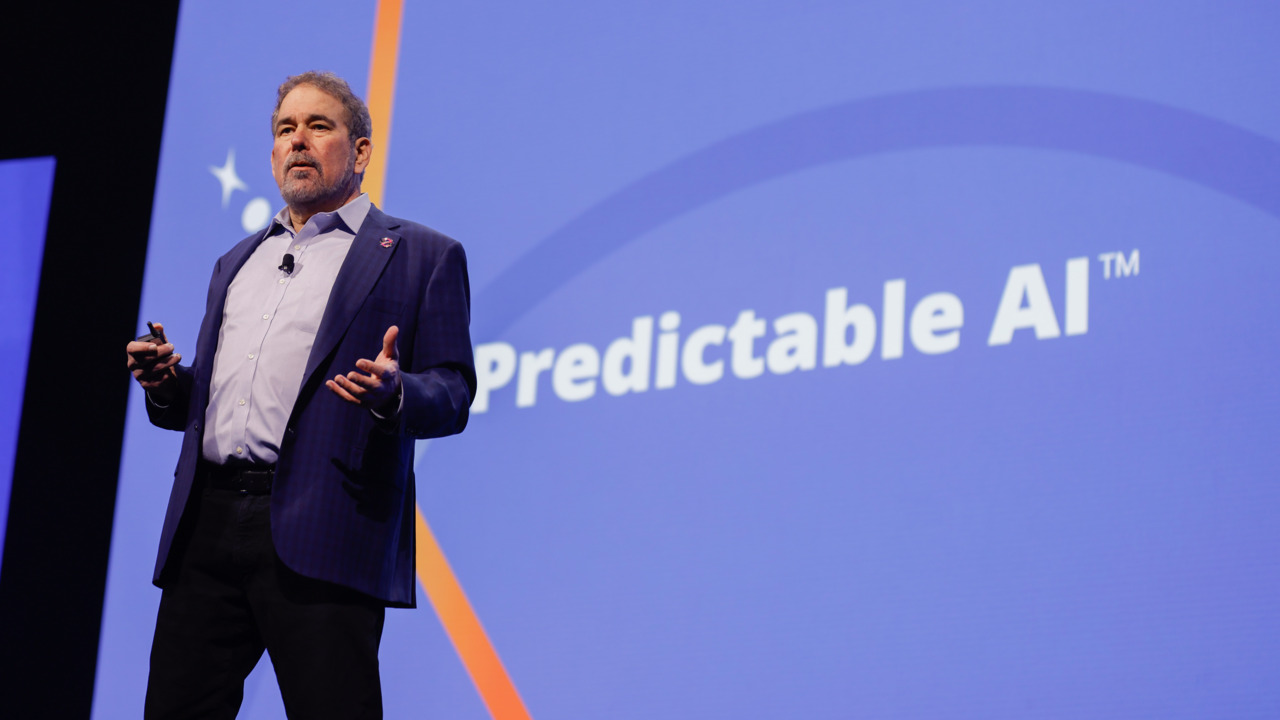
At PegaWorld 2026, his keynote addressed moving beyond rigid applications by connecting AI agents with workflows. That is his stated ambition, rather than a claim that every customer has already arrived there. The desired result is a business able to reorganize its work as conditions change. The old problem has acquired new tools, and a conference screen large enough to make the promise difficult to miss.
“you also need to think about the risk of not making a change.”
Alan Trefler, Business Checkmate, January 2025
Reassessing his own position
October 2026 supplied a less comfortable test. Pega reported 20 percent growth in its cloud annual contract value, while total annual contract value grew 6 percent as reported. Management acknowledged problems with execution and announced organizational changes. Cloud growth and wider commercial friction appeared in the same set of results; neither cancels the other.
On the October 21 earnings call, Trefler accepted that execution had lagged the opportunity he saw. For someone whose working vocabulary revolves around change, this is where the word becomes expensive. An attractive technical argument still has to become something a customer can adopt, an organization can deliver, and a sales team can explain.
His account of leadership leaves room for that discomfort. He calls himself “founder and still CEO.” In hiring, he asks candidates to teach him something. He describes a tendency to spot what needs improving before appreciating what already works. It is an exacting disposition, with a potential cost for anyone hoping a finished document will receive only applause.
“founder and still CEO”
Alan Trefler, in a September 2025 interview
Another kind of useful work
There is also an enterprise outside the software company. Alan and Pam formed the Trefler Foundation in 1997, initially focusing on Boston public education. Pam's experience teaching at Dorchester High School informed the work. Early support helped students encounter careers through internships, mentors and summer work. The foundation later backed Year Up, broadening the routes between education and employment.
That part of the story belongs to both of them, with Pam's classroom experience giving it a specific starting point. It also changes the scale of the questions. Software can address a process across an organization. A student needs an opportunity that actually reaches them. Each requires attention to the connections between a declared intention and the work that follows.
Fifty-one years after the World Open upset, Trefler's next position is still unsettled. AI presents possibilities; customers bring constraints; his company has revisions to make. The teenager's result makes a fine story. The continuing interest lies in watching a founder return to the board after success, inspect what is there now, and accept that the next move still needs thinking through.