At UL Technology Solutions in Kerala, the problem was refreshingly ordinary. Developers needed to learn an AI-powered analytics platform. Suitable courses were scarce; the available material was awkward. The IT services business had more than 450 employees, doing different jobs. Handing everyone the same pile of documentation would hardly solve it.
In June 2024, iLearningEngines announced that its Microverse tool had helped assemble targeted multimedia training for ULTS. An iLearningEngines sales executive, Ratish Nair, described a two-week rollout. That small, intelligible promise sits inside a much stranger corporate story: a business that reached Nasdaq, entered bankruptcy that same year, and left technology assets for another owner.
- The product: turn scattered company information into training and automated workflows.
- The rupture: the original company entered Chapter 7 liquidation in March 2025.
- The distinction: AAI Solutions bought core technology assets; former executives later faced criminal charges.
The two-week course
Microverse consumed existing material and repurposed it into courses with video, quizzes and assessments. The accompanying learning platform tracked progress and supported mobile access. The useful detail is the starting point: an actual training gap, for a particular workforce, on a particular subject.
“We were able to roll this out in just two weeks.”
Ratish Nair · iLearningEngines · June 2024
The ULTS announcement offers a reported deployment time, rather than an independently measured improvement in employee performance. That distinction matters. Producing a course quickly is one outcome. Showing that employees subsequently make fewer mistakes is another. Buyers should decide which result they need before admiring the stopwatch.
A library with a trigger
Founded in 2010 by Harish Chidambaran, iLearningEngines developed a platform that its prospectus dates to commercial deployment in 2018. Its ambition crossed three purchasing categories: corporate learning, enterprise information management and workflow automation. The connecting idea was to make institutional knowledge usable during work.
Its AI Knowledge Cloud and No-Code AI Canvas were the foundation. Documents, audio, video and other information fed a shared knowledge repository. Industry-specific models and a visual workflow designer were intended to turn that material into instructions or actions. A business event could trigger relevant learning, rather than leave someone hunting through a portal.
Company-described architecture, simplified.
That combination was its competitive proposition. A learning system typically organizes courses. A search tool retrieves information. An automation tool moves tasks along. iLearningEngines proposed linking those jobs. Integration, contextual delivery and industry expertise carried the pitch; the public material does not establish an independent performance advantage over competing platforms.
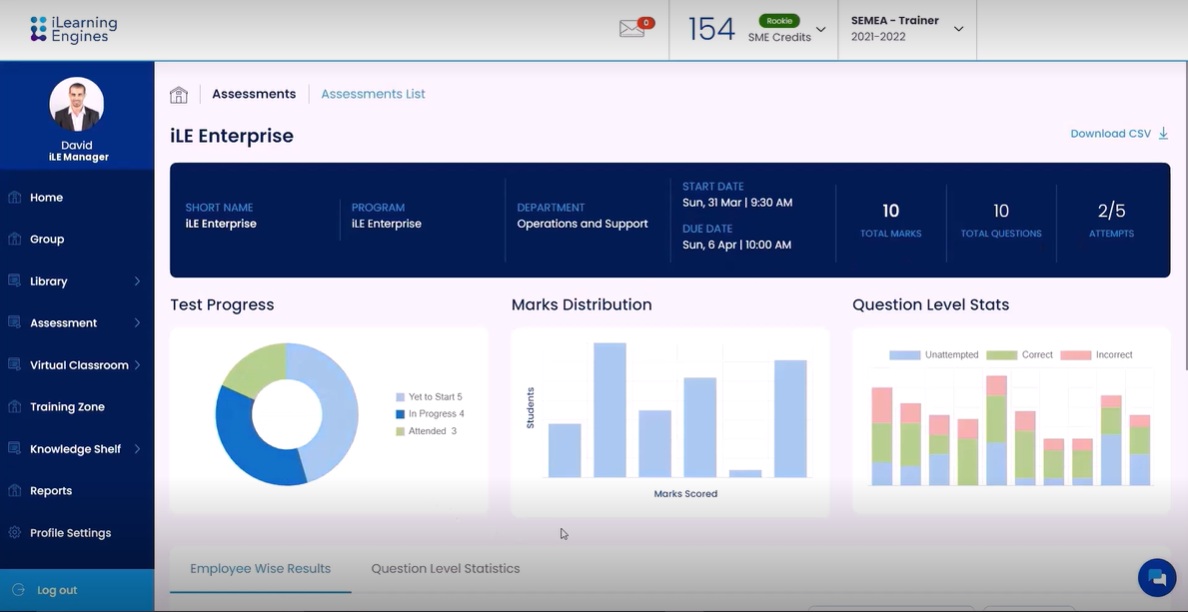
Its stated markets included healthcare, education, insurance and energy. The concrete jobs varied: patient education, staff training, risk prevention or process support. A 2024 Techvantage Systems alliance described applications in claims processing and training-material management. Those uses explain why the company sold through specialist partners as well as directly.
For an insurance carrier, the customer could also be a policyholder receiving risk-management help. A published Philadelphia Insurance Companies brochure listed online training alongside screening, consultation and employee reporting services. It is a reminder that the business included services around the software, with distribution shaped by the industry it served.
The bill behind the promise
The disclosed business model was enterprise licensing, with implementation, maintenance and support. Filings described agreements typically running one to three years, with annual renewal provisions. Pricing varied with scale, use case and support. Content-managing “Expert” licenses cost more than “Learner” licenses. This was a negotiated enterprise purchase.
The financing numbers answered a different question. In April 2024, the company announced approximately $92.8 million in gross proceeds connected with its go-public transaction. That package included a $40 million secured revolving loan, fully drawn at closing. It should not be read as a clean $92.8 million venture-equity round.
Included a $40m secured revolving facility.
The financing announcement separates the components.
For customers, the relevant cost also included connecting systems, preparing content and keeping material accurate. Those are practical requirements of the proposed architecture. A visual designer can simplify configuration; it cannot decide whether an obsolete safety instruction belongs in a training course.
When the numbers became the product
The Arrowroot merger closed on April 16, 2024; AILE trading became effective the following day. By August, the growth story faced a challenge. Hindenburg Research questioned revenue and related-party arrangements. iLearningEngines’ initial response attacked the short seller’s financial incentives. The disagreement put the business behind the presentation under scrutiny.
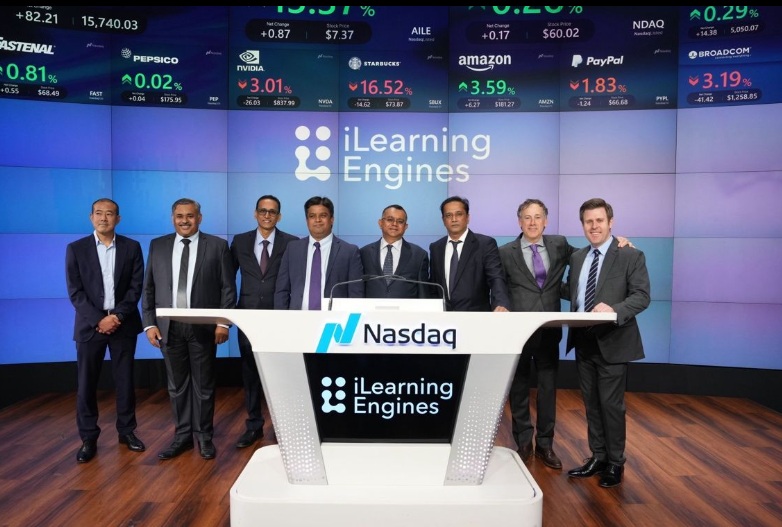
Chapter 11 followed in December 2024. On March 6, 2025, the court approved conversion to Chapter 7, and a trustee assumed control. The company’s liquidation disclosure warned shareholders that they could suffer significant or complete losses. The sequence suggests confidence in the financial story broke before any publicly documented failure of the course-creation tool.
- APR 2024Nasdaq trading begins
- DEC 2024Chapter 11 filing
- MAR 2025Chapter 7 conversion
- JUN 2025Asset purchase announced
In April 2026, federal prosecutors charged Chidambaran and former CFO Farhan Naqvi, alleging fabricated customer relationships and revenue, including money circulated through purported customers. The company had reported $421 million in 2023 revenue. That figure belongs to a disputed historical account. The charges are allegations; both defendants are presumed innocent unless proven guilty.
There is a second distinction in the legal record. In March 2026, a Maryland court dismissed the amended securities class-action complaint with prejudice. That civil decision and the later criminal indictment concern different proceedings. Reading them together requires attention to what each actually decided, rather than treating either as a verdict on every part of the company’s history.
The software gets another owner
A June 2025 announcement named AAI Solutions as buyer of the core technology assets through Chapter 7. President Thomas Olivier described supporting existing customers and pursuing education and insurance. The buyer’s stated direction shifted toward customer support and selected markets. An asset purchase does not restore the old issuer or validate its financial claims.
The useful thing to copy is the narrow ULTS starting point: choose one training problem, identify the material, then measure the result. For prospective buyers, add independent customer references, clear data-export terms and a continuity plan. When content is unreliable or vendor support is uncertain, that attractive chain from knowledge to action becomes much harder to trust.