no-code-ai
(36)
Lindy Wants the Busywork - Keep a Hand on the Wheel
Lindy has grown from a box of build-your-own agents into a shared AI teammate with a seat in Slack and a memory for office lore. For teams drowning in follow-ups, it can be useful - as long as somebody still checks the work.
Obviously AI Put a Data Scientist in a Button
For seven years, a San Francisco startup tried to turn spreadsheets into useful predictions without making business people learn Python. The idea worked, the market moved, and the ending says as much about AI software as the product did.
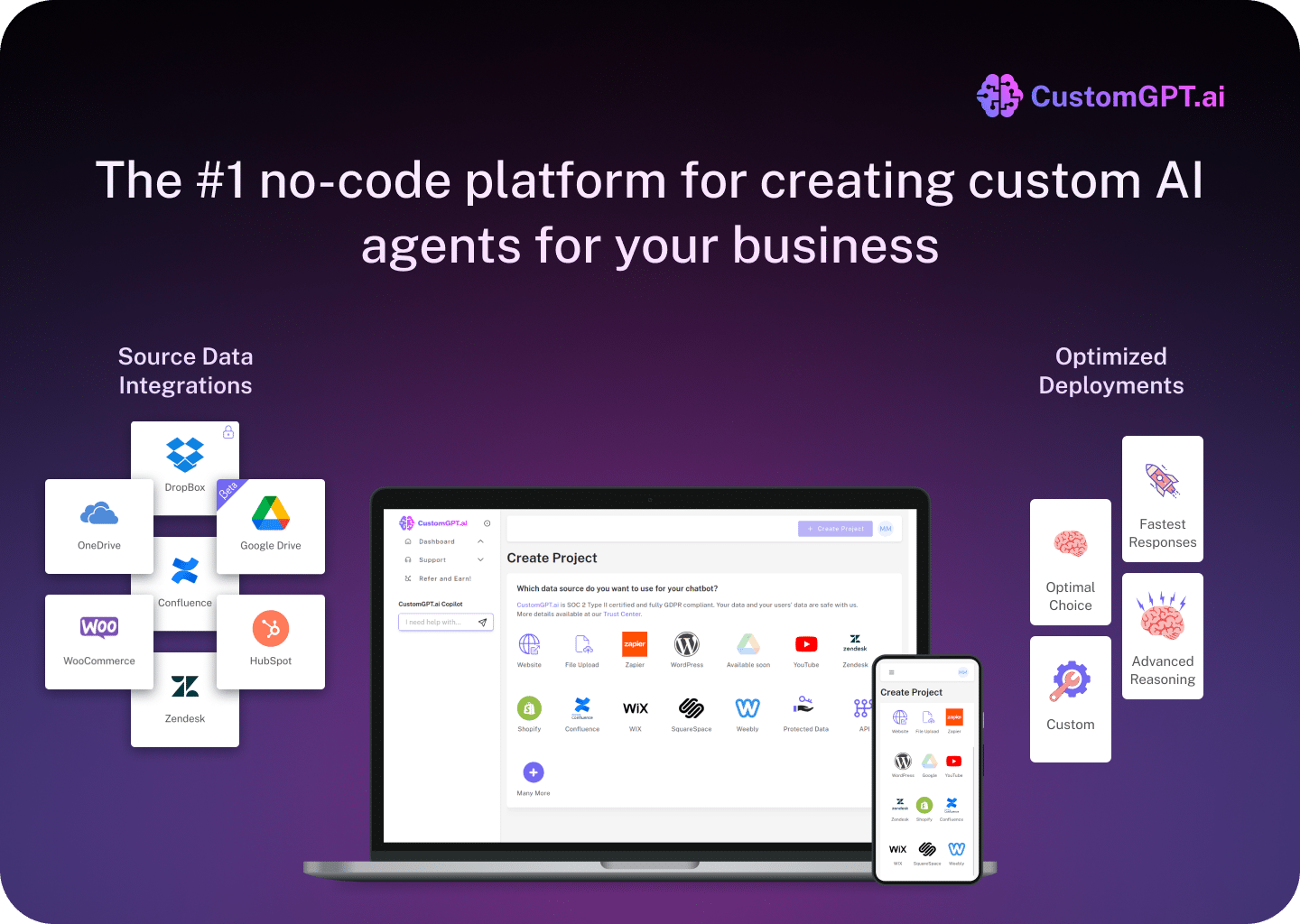
The AI That Finally Read the Manual
CustomGPT.ai turns the files your team already owns into a source-citing answer desk - and now, an agent that can finish the job. The catch is a price ladder built for businesses, not casual tinkerers.

Daniel Vassilev Is Building for the Moment Software Stops Waiting
The Relevance AI co-founder went from teenage apps with millions of users to a $24 million Series B. His enduring idea is simpler than the jargon: software should take a brief, do the work, and know when to bring a person back in.

Rohan Chopra
Rohan Chopra is the co-founder and CEO of Convey, a San Francisco enterprise AI company that lets non-technical operators build and manage autonomous 'digital teammates' to run repetitive business operations. An early DoorDash engineer who spent roughly eight years there building the logistics and dispatch systems behind its delivery network, Chopra started Convey in 2024 with childhood friends Diego Canales and Will Harvey. In June 2026 the company raised a $38 million Series A led by Andreessen Horowitz, with Khosla Ventures and Pear VC participating, after its platform logged more than one million hours of automated work for customers including NBCUniversal, Samsara, TelevisaUnivision, Unity, Faire and ChargePoint.
Ryohei Fujimaki
Ryohei Fujimaki is the founder and CEO of dotData, a Silicon Valley enterprise AI company that automates feature engineering and data science. A machine learning PhD from the University of Tokyo, he became the youngest research fellow in NEC's 119-year history at age 33 before spinning dotData out of NEC to commercialize automated feature discovery. He has raised roughly $75 million to make predictive analytics accessible to a broader range of business users.
Oxipital AI
Oxipital AI is a Bedford, Massachusetts company building AI-enabled machine vision systems for food processing, agriculture and consumer-goods manufacturing. Emerging in 2024 from the rebrand of Soft Robotics after that company sold its gripper hardware line to Schmalz, Oxipital AI now centers on its V-CORTX vision platform and VX2 hardware, which use synthetic data and computer vision to handle quality inspection, foreign-object detection, yield optimization and vision-guided robotic picking in high-variability production lines.
Pecan AI
Pecan AI is an Israeli-American software company that builds a predictive analytics platform aimed at business teams rather than data scientists. Founded in 2018 by computational-neuroscience PhDs Zohar Bronfman and Noam Brezis, Pecan combines automated machine learning with large language models - a category it calls Predictive GenAI - so analysts can describe a business problem in plain language and get production-ready predictive models for churn, customer lifetime value, demand forecasting, lead scoring and campaign ROI. The company has raised roughly $127M, including a $66M Series C in 2022 led by Insight Partners with GV and GGV Capital, and in 2025 launched DemandForecast.ai for supply-chain forecasting.

RapidCanvas
RapidCanvas is an Austin-based enterprise AI company that helps businesses move from concept to production-ready AI solutions in weeks rather than months. Founded in 2021 by veterans of Simility (acquired by PayPal), it pairs a proprietary agentic AI platform with human experts through what it calls the Hybrid Approach - AI agents automate data preparation, modeling and workflow execution while human specialists handle strategy and governance. The company targets non-technical business users across manufacturing, financial services, retail, energy and logistics, and has raised over $23.5M including a $16M Series A led by Peak XV Partners.

Uptiq
Uptiq is an enterprise AI company purpose-built for regulated financial services. Its platform, Qore, lets banks, credit unions, wealth firms, non-bank lenders and fintechs build and deploy AI agents that automate operational work across lending, wealth, compliance and back-office functions - with document intelligence, a library of financial skills, multi-agent orchestration and secure integrations into existing core systems. Founded in 2022 and led by CEO Snehal Fulzele, Uptiq says more than 140 financial institutions run on its platform, reporting faster underwriting, lower operating costs and higher loan volume without adding headcount.

Justin Fineberg
Justin Fineberg is the co-founder and CEO of Cassidy, a New York-based platform that lets non-technical teams build AI agents and automations powered by their own company data. He got early beta access to OpenAI's GPT-3 in 2020, left a product role at Blade in 2022, and teamed up with engineer Ian Woodfill to launch Cassidy. Alongside building the company, he grew an audience of more than 400,000 followers across TikTok, Instagram, X and YouTube by explaining how AI reshapes business. Cassidy raised a $10M Series A led by HOF Capital in 2025, bringing total funding to roughly $13.7M.

Jeen.ai
Jeen.ai is an Israeli enterprise AI company that builds an 'operating layer' for organizations to adopt generative AI securely, govern it responsibly, and scale it across business units. Spun off from ONE Technologies in July 2024 and led by founder-CEO Oded Tahori, the platform bundles chat, autonomous agents, workflow automation, governance and cost controls (FinOps), and data integrations - deployable in the cloud, on-premise, or fully air-gapped. It serves dozens of large enterprises and public bodies in finance, telecom, defense, healthcare and higher education, and is now expanding across the US, UK, Singapore and Latin America.

AI Squared
AI Squared is an enterprise AI integration company that helps organizations move machine learning and generative AI out of pilots and into the tools employees already use - CRMs, ERPs, spreadsheets, and custom apps. Its platform connects governed data sources like Databricks and Snowflake to business applications, addressing the 'last mile' problem that keeps most AI projects from reaching production. The company serves financial institutions, supply chain firms, and U.S. government agencies, and stewards the open-source reverse ETL project Multiwoven.

Cogniac Corporation
Cogniac Corporation is a Silicon Valley company building an enterprise-grade, no-code computer vision platform that lets non-experts train and deploy AI models on visual data. Founded in 2015 by Ruckus Wireless veteran Bill Kish and Amy Wang, Cogniac turns cameras and images into operational insight - inspecting products, detecting defects, monitoring safety, and automating document handling across manufacturing, transportation, automotive, government, and logistics. Backed by roughly $46M from investors including National Grid Partners, Cisco Investments, and Autotech Ventures, it counts BNSF Railway, Ford, Georgia-Pacific, Doosan Bobcat, and Trimac among its customers.

dotData
dotData is a Silicon Valley enterprise AI company that automates the most time-consuming part of data science: feature engineering. Spun out of NEC Corporation in 2018 and led by founder Ryohei Fujimaki, dotData builds software that automatically discovers signals hidden across multiple data tables and turns them into predictive features and business hypotheses. Its products - dotData Enterprise, Feature Factory, and the generative-AI-powered dotData Insight - let analysts and data scientists build models and surface KPI drivers in a fraction of the usual time, and are used heavily in financial services, insurance, manufacturing, retail, and telecom.

Pixis
Pixis is a codeless AI infrastructure company for marketing, giving advertising teams a suite of plug-and-play AI models that plan, target, optimize, and create ad campaigns without writing code. Founded in 2018 by three BITS Pilani classmates and headquartered in Burlingame, California, the company has built 200+ proprietary AI models and serves more than 1,000 customers, including 18 Fortune 2000 brands. It raised $209M across Series A through C1, backed by SoftBank Vision Fund 2, General Atlantic, Touring Capital, and others.

SixSense
SixSense is a Singapore-based deep tech company building an AI platform that helps semiconductor manufacturers spot, classify and predict chip defects in real time. Founded in 2018 by Akanksha Jagwani and Avni Agarwal, its no-code software lets process engineers train and deploy computer-vision models on their own fab data in under two days - automating visual inspection, lot disposition and root-cause analysis. Used by chipmakers including GlobalFoundries and JCET, the platform has analyzed more than 100 million chips and raised roughly $12M to date, including an $8.5M Series A in 2025.
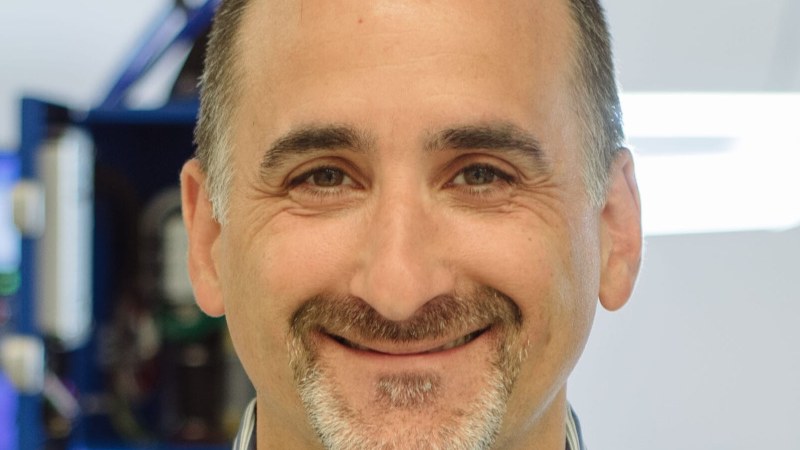
Mark Chiappetta
Mark Chiappetta is the president and CEO of Oxipital AI, a Bedford, Massachusetts company that builds AI-driven machine vision for factory lines that pick, count, and inspect food. He is an electrical engineer who spent 30-plus years in robotics, including a run as a corporate VP at iRobot and eight years growing Soft Robotics from an early gripper startup. In 2024 he took the top job at Soft Robotics, then engineered the pivot that spun the company's 3D vision and AI software into Oxipital AI while the gripper hardware business was sold off. His pitch is that food processors will not rip out human lines for robots overnight, so Oxipital sells the eyes and brains first and the hands later.

Rahul Pangam
Rahul Pangam is the co-founder and CEO of RapidCanvas, an Austin-based enterprise AI platform that pairs autonomous AI agents with human data scientists to help non-technical business teams build and deploy models. A serial founder, he previously co-founded Simility, a fraud detection platform PayPal acquired for roughly $120M in 2018, and spent years running Trust and Safety operations at Google.

Snehal Fulzele
Snehal Fulzele is the founder and CEO of UPTIQ, a McKinney, Texas company building an AI agent platform for banks, credit unions, wealth managers and non-bank lenders. A Carnegie Mellon-trained engineer who spent time at Adobe and Oracle before co-founding Cloud Lending Solutions (sold to Q2 Holdings in 2018 for about $105M), he is now on his second fintech infrastructure company, having raised roughly $69M in total including a $25M Series B in February 2026 led by Curql.

Zohar Bronfman
Zohar Bronfman is the co-founder and CEO of Pecan AI, a predictive analytics company he launched two months after finishing not one but two PhDs at Tel Aviv University - one in computational cognitive neuroscience, another in the history and philosophy of science. He and his co-founder built Pecan's first prototype for a data-science competition they missed the deadline for, then turned it into a low-code platform that lets business teams build predictive models without hiring data scientists. Pecan has raised roughly $127 million from Insight Partners, GV, and Dell, and its work now touches revenue at Fortune 500 companies. Bronfman is a vocal skeptic of AI hype, arguing that predictive AI and generative AI are more useful married than either is alone.
Averroes.ai
Averroes.ai is a San Mateo-based startup building a no-code AI visual inspection platform that helps manufacturers automatically detect, classify, segment and monitor defects on their production lines. Founded in 2021 by Tareq Aljaber and Omar Altamimi, the company targets semiconductor, electronics, pharmaceutical, food and beverage, and oil and gas producers, promising 99%+ inspection accuracy, deployment in under five days, and models trained on as few as 20-40 images per defect class without writing code or buying new hardware.

dMetrics
dMetrics is an AI company that builds Minsky, a natural-language-processing platform letting non-technical subject-matter experts create their own AI models to read, track, and analyze huge volumes of messy text - without writing code. Founded by two MIT machine-learning PhDs, the company started by decoding healthcare conversations across social media and now serves financial, pharmaceutical, and public-sector customers, including a five-year, $99.5M U.S. Department of Defense production contract for open-source threat analysis.

Neuralzome Cybernetics
Neuralzome Cybernetics is a Bengaluru-based deeptech startup building teachable, no-code AI agents that let ordinary off-road vehicles drive themselves through messy, GPS-denied places like orchards, farms and job sites. Its flagship autonomy stack, NeuralPilot, fuses vision, SLAM and GPS with a layered safety system and learns from human demonstration, while its RedPill simulator trains robots on photorealistic digital twins before they ever touch dirt. Founded in 2023 by Mohan Sivam and Aditya Shriwastava, the company sells autonomy as a service to labor-intensive industries and raised $2.4M in pre-seed funding in August 2025 to expand into North America and Europe.

VectorShift
VectorShift is an AI platform that started as a no-code builder for generative AI workflows and has sharpened into an 'AI operating system for private market investors.' Founded in 2023 by Harvard classmates Alexander Leonardi and Albert Mao and backed by Y Combinator, it lets firms turn scattered deal documents, diligence notes, and institutional memory into working AI - data-room analysis, IC memos, portfolio monitoring, and LP reporting - through a drag-and-drop interface or a Python SDK, without hiring a machine-learning team.

Birago Jones
Birago Jones is the co-founder and CEO of Pienso, a no-code AI platform that lets subject-matter experts train, fine-tune and deploy their own machine learning models without writing code. Born out of research he and Karthik Dinakar did at the MIT Media Lab on cyberbullying detection, Pienso is built on a simple conviction: the people who understand the data best, not just the engineers, should build the models. His customers now include the US government and Sky, the UK's largest broadcaster, which used Pienso to process half a million customer calls a day.

Yobi
Yobi is an AI workforce platform that lets businesses deploy task-specific 'AI employees' - synthetic agents that answer calls, reply across text and social channels, book appointments and sync data 24/7. Founded by Ahmed Reza and built around named agents like Kate (reception), Marie (support) and Carlos (operations), Yobi unifies calls, messaging, CRM and team collaboration so small and mid-sized teams stop switching tools and start automating the busywork.
Alex Leonardi
Alex Leonardi is the co-founder and CEO of VectorShift, a New York no-code AI automation platform that lets teams build enterprise-grade LLM applications, search engines, chatbots and workflows by dragging and dropping instead of coding. A Harvard statistics-and-computer-science graduate who built generative AI capabilities at Blackstone, he launched VectorShift in 2023 through Y Combinator's Summer 2023 batch and raised a $3M seed in February 2024. The company has since sharpened its focus into an AI operating system for private market investors.
Mohan Sivam
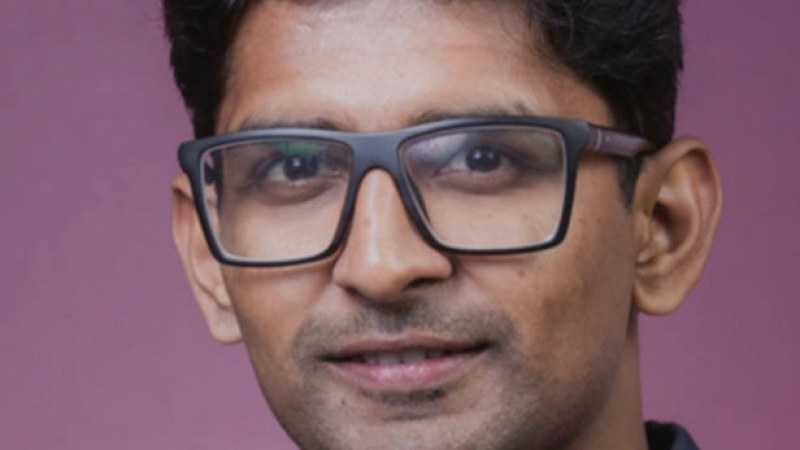
Mohan Sivam is the founder and CEO of Neuralzome Cybernetics, a Bengaluru deeptech startup teaching robots to drive themselves across orchards, farms and job sites no GPS map can describe. His pitch is deceptively plain: robots should learn by watching a human do the job once, not by waiting on a team of PhDs to code every turn. Neuralzome's NeuralPilot autonomy stack, RedPill simulation engine and rugged Jeeno platform aim to put off-road robots to work where labor is scarce and the terrain is unforgiving. In August 2025 the company raised $2.4M in pre-seed funding led by 8X Ventures. A serial builder who previously co-founded Flo Mobility and ran GAMASOME, Sivam describes his mission with a phrase that sticks: making robots sentient.
Tareq Aljaber
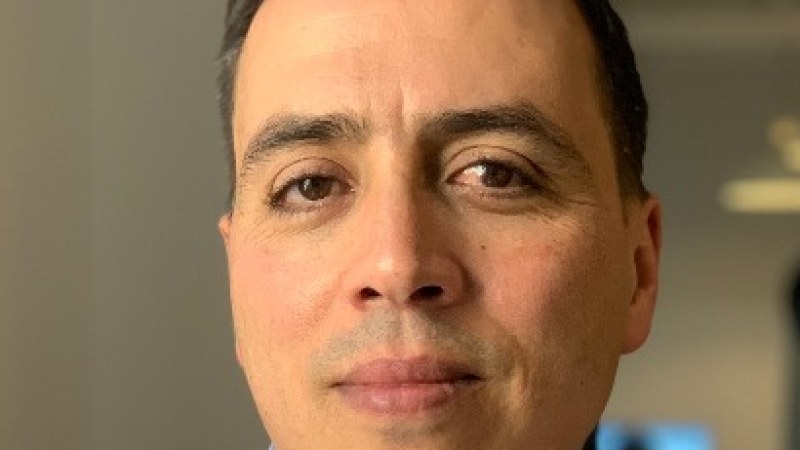
Tareq Aljaber is the founder and CEO of Averroes.ai, a San Mateo company building no-code AI visual inspection and virtual metrology software for semiconductor and industrial manufacturing. Before founding Averroes in 2021, he spent more than two decades shipping products used by millions at Adobe, Microsoft, Atlassian, and Samsung NEXT, including work that helped scale Adobe Flash and the launch of Microsoft's Visual Studio App Center. He now focuses on making AI-powered defect detection accessible to quality and reliability engineers who have no data science background.