Obviously AI was for the person staring at a spreadsheet with a valuable question and no appetite for becoming a machine-learning engineer. Which customers might leave? Which leads will convert? What will next month's sales look like? The product's promise was unusually concrete: bring structured historical data, choose the outcome, click, and receive a working predictive model. It was less interested in science-fiction banter than in finding the costly row in a CSV.
That proposition still matters, even though the product no longer does. Obviously AI evolved into Zams, an agent platform aimed largely at sales and revenue operations, in 2025. In August 2026, co-founder Nirman Dave announced that Zams would wind down. The old Obviously AI site remains a useful record, but its sign-up buttons and pricing table belong to history. Anyone shopping today should read this as a map of a category, not a checkout recommendation.
Who it was for, and why it clicked
The sweet spot was a small business team with decent historical data, a repeatable decision, and no resident data scientist. A sales analyst could score leads. An operations manager could forecast demand. A lender could explore repayment risk. A subscription business could rank accounts by churn probability. These are supervised-learning problems with a known outcome column, not open-ended requests to “find insights.” Obviously AI narrowed the job until a non-specialist could understand the door they were walking through.
The restraint was part of the charm. Dave explained in a Featureform interview that the platform focused on supervised learning and tabular data rather than audio, vision, or every fashionable branch of AI. Users could connect spreadsheets or databases such as Snowflake and MySQL, merge data sources, select a target, and let the system handle much of the model search. More experienced operators could adjust imputation, sampling, and tuning choices. Beginners could keep their hands off the machinery.
What happened behind the button
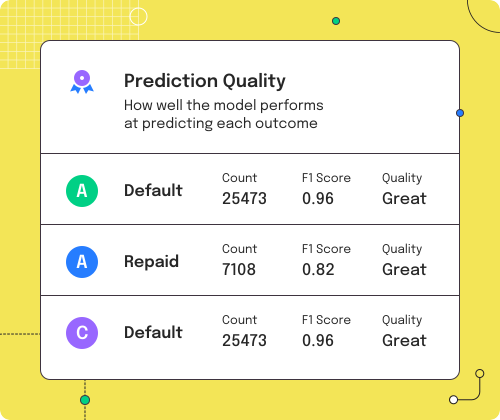
Obviously AI called its approach Edge Sharp AutoML. The system examined the shape of a dataset, including row and column counts, feature types, sparsity, variance, and more than 35 other properties. It then shortlisted five candidate algorithms, ran thousands of hyperparameter combinations, tested accuracy, and presented the winner. The company said that search could cover more than 10,000 configurations in under a minute.
The underlying ingredients were recognizable rather than mystical. Dave described Spark, TensorFlow, and Jupyter notebooks in the company's stack. Google Cloud hosted data; the security page listed TLS in transit, AES-256 at rest, and Cloudflare for geographic load balancing. The engineering value sat in selecting and tuning the right templates quickly, then wrapping the result in an interface a business analyst might willingly use.
Classification
Predict a label or probability: churn, conversion, repayment, fraud, and similar yes-or-no outcomes.
Regression
Predict a number such as price, yield, cost, sales, or deal size from historical patterns.
Time series
Forecast a value against a date, including demand, revenue, or another measured quantity over time.
Deployment
Publish a shareable web app, send live predictions through a REST API, or move results into existing tools.
“The hard part was never clicking Build. It was knowing whether the spreadsheet deserved to become a model.”YesPress assessment
The useful bit after the model
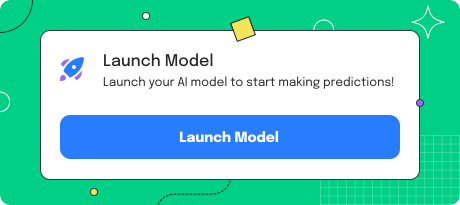
AutoML demos often stop at an accuracy score. Obviously AI kept going. A model could become an instant web app with a shareable link, feed live predictions into another product through REST, or send results to business-intelligence tools such as Power BI and Looker. Zapier supported if-this-then-that actions. Connected sources could refresh data, retrain models, and show version or accuracy changes over time. That last mile made the product more than a classroom exercise.
The service layer was another shrewd admission. Software-plus-data-scientist plans paired customers with a specialist for cleaning, merging, enrichment, statistical work, and advice. One G2 reviewer in financial services praised the assigned data scientist and described building a repayment model after merging data from an Oracle database. The same reviewer noted the counterweight: it took several conversations for the team to understand the dataset, and the customer sometimes had to investigate what its own columns meant.
There is the category in miniature. No-code can remove syntax, environment setup, and deployment chores. It cannot invent a coherent data-generating process, explain an unlabeled column, or decide whether last year's behavior is a fair guide to next year. A clean interface shortens the path to a model. Judgment still owns the destination.
The data has to earn its prediction
Obviously AI's own guidance asked for structured data with a clear identifier and a historical outcome to predict. It recommended at least 1,000 rows and five columns, few missing values, and no need for personally identifying fields. That sounds modest, but the more important question is whether the rows represent the decision honestly. A churn model trained on a temporary pricing shock may become a beautifully packaged mistake.
| Buyer question | Good sign | Warning sign |
|---|---|---|
| Is the outcome clear? | A labeled target such as churned or repaid | “Tell us anything interesting” |
| Is history relevant? | Stable process with recent examples | A policy or market changed last week |
| Can someone act? | A score routes a lead or flags a case | The result lives in a forgotten dashboard |
| Can it be checked? | Holdout data, monitoring, named owner | Accuracy accepted as a magic number |
What customers appeared to like
Public testimonials repeatedly returned to speed and accessibility. Learning Leaders said model-building fell from two weeks to five minutes and claimed annual savings above $70,000. Sound Agriculture said yield prediction changed its data-driven sales process. Dai Nippon Printing described analysts getting started within hours. On G2, the product held a 4.0 score from only four reviews, far too small a sample for sweeping conclusions, but the detailed comments support the broader pitch: customers valued the combination of software and human help.
One founder interview supplied the most vivid use case. A cookie business used the platform to predict waste by flavor, day, and store. Dave said wasted items fell from roughly 36 to 10. Forget robot poets. Sometimes the killer application is knowing how many snickerdoodles not to bake.
Pricing, now with a large historical asterisk
The archived pricing page lists a free tier for individuals, hobbyists, and nonprofits: 1,200 predictions, one seat, unlimited models, CSV input, up to one million training rows, 10 MB files, REST access, and email support. Startup, SMB, and Enterprise tiers added larger files and datasets, more use cases, monitoring, dedicated specialists, governance, SSO, audit trails, data residency, custom sources, and private-cloud options. Dollar prices were not published on the final page.
None of those plans should be treated as buyable. The practical purchasing question is what replaces them. Akkio and Pecan AI live closest to the approachable business-user end. DataRobot, H2O.ai, and Dataiku offer wider enterprise tooling and more knobs. Google Vertex AI and Azure Automated ML fit organizations already committed to those clouds. The better choice depends less on who advertises the shortest demo and more on data connectors, deployment path, auditability, monitoring, support, and the operator who will answer when a prediction causes trouble.
The verdict
Obviously AI understood a durable truth: most business users do not want a model. They want a defensible answer inserted into the place where work happens. Its focused approach to tabular prediction, approachable deployment, and human support made sense. Its weakness was shared by the category: an effortless interface can make a fragile dataset feel more authoritative than it is.
As a current purchase, the answer is simple because the company is winding down: do not start a new deployment. As a product lesson, keep it close. Demand a tight use case, honest validation, a route into production, and a human owner. The button can be easy. The decision should remain serious.
A startup story with three acts
Dave and Tapojit Debnath began in the basement of a San Francisco Airbnb after persuading their landlord to let them stay and help with chores. They went door to door for feedback. The public AutoML launch arrived on Product Hunt in February 2020 and ranked fourth for the day. A 2021 interview reported more than 3,000 users and 82,000 models trained. Funding profiles put its 2021 seed capital at $4.7 million, and O'Shaughnessy Ventures announced a further investment in December 2023.
Obviously AI launches AutoML for business users and lands at number four on Product Hunt.
Time Series adds date-specific forecasting to classification and regression.
The company becomes Zams and shifts from predicting work to having agents perform it.
Dave announces the wind-down after a seven-year journey.
The pivot was logical. Generative AI changed what buyers expected from “no-code AI.” A probability score began to look modest beside an agent promising to update the CRM, prepare a meeting, and send the follow-up. Zams moved from predictions for many departments toward autonomous workflows, especially for go-to-market teams. Then the founders called time.
There is no neat moral that turns a shutdown into a victory lap. There is, however, something worth sending to the colleague who keeps asking whether AI software is a feature, a company, or a temporary window. Obviously AI was useful because it chose a real job and made it simpler. Its market still shifted faster than that job could protect the business. Products live inside technical eras, and technical eras have poor manners about waiting.
Keep digging