Maria Alegre arrived in Silicon Valley in 2008 without a job. The position she eventually talked her way into had a title that deserves a place on more business cards: “Apprentice Entrepreneur.” At Tapulous, the studio behind Tap Tap Revenge, she could learn how a company worked while it was still being invented. There were ten people when she joined. A small staff offers a useful education: there are fewer places for the work to hide.
She had reconnected with Andrew Lacy, whom she knew from working at McKinsey, and persuaded him to take her on. Lacy and fellow Tapulous founder Bart Decrem became mentors. Her first business was, in effect, learning someone else’s business. Within three years, she and Tapulous engineer Sean Fannan would start Chartboost, a company built around an unglamorous question with considerable consequences: how does somebody who makes a good game make a living?
Her recollection of an early success is particularly revealing. She remembered cutting Chartboost’s first checks to Fluik Games and Kiloo Games. A payment to a developer made the proposition real. There was a business here, and its customers could earn money from it.
The American companies she hadn’t come to study
Alegre came from Barcelona and studied at Esade. An exchange at the University of Michigan brought her to America with an interest in its established businesses. Coca-Cola and McDonald’s were among the names on her mind. Then she enrolled in an entrepreneurship class. The subject changed the itinerary.
There is something pleasing about going abroad to understand an institution and coming home interested in starting one. A large corporation gives a student plenty to examine: established customers, a recognizable product, procedures that have survived their authors. An early company asks its employees to work before most of that exists. Alegre found herself drawn toward that uncertainty.
She later described her exchange as an opening into a culture that valued entrepreneurial attitude and determination. Experience mattered, but a beginner could get a hearing. The move to California followed. Tapulous provided the apprenticeship; its acquisition by Disney in 2010 supplied a close view of what could happen when a young mobile business found an audience.
A Friday night nobody needed to repeat
At Tapulous, Alegre was the first business hire, working on advertising deals, virtual goods and ways to earn revenue. Fannan came from engineering. Between them, they had seen both the commercial promise of mobile games and the plumbing required to keep that promise.
One memory explains Chartboost better than a catalogue of its features. Launching a game at midnight on a Friday could require an engineer to stay awake, coordinate with another colleague and involve a designer so that the promotional campaign went live too. The game was ready; the machinery for finding its players still needed a small committee and an inconvenient hour.
Chartboost, founded in 2011, turned that recurring inconvenience into a product. Developers could promote their own games, arrange direct advertising deals with other studios and manage campaigns through a dashboard. A studio with an audience could help introduce its next title. A studio looking for players could reach people already interested in games. The early direct-deal arrangement let partners set their terms without Chartboost taking a share of those deals.
An illustration of the early model, rather than a description of today’s product.
Nineteen million dollars, and more people to hire
In January 2013, Chartboost announced a $19 million Series B led by Sequoia Capital, with existing investors TransLink Capital and SK Telecom Ventures participating. Total funding reached $21 million. Its technology was then in more than 12,000 games, reaching more than 300 million monthly active devices. Those were company figures from that moment, when a mobile phone was rapidly becoming a place to play.
Sequoia’s Jim Goetz pointed to the founders’ familiarity with the problem. They had worked inside a game developer and built something they had needed themselves. That gave the pitch a concrete starting point. The inconvenience had already introduced itself.
Alegre’s immediate plans for the money were practical. Chartboost had 36 people and an office with room for 100. She expected hiring to concentrate on engineering, with new products and international offices ahead. A funding announcement makes for a tidy milestone. Filling the desks, deciding who should lead and giving those people something coherent to build occupy rather more of the calendar.
Her stated ambition was to build an enduring company. The relationships with developers were supposed to survive the growth. In a business associated with advertising, she kept returning to the people making the games.
The company grows out of its first habits
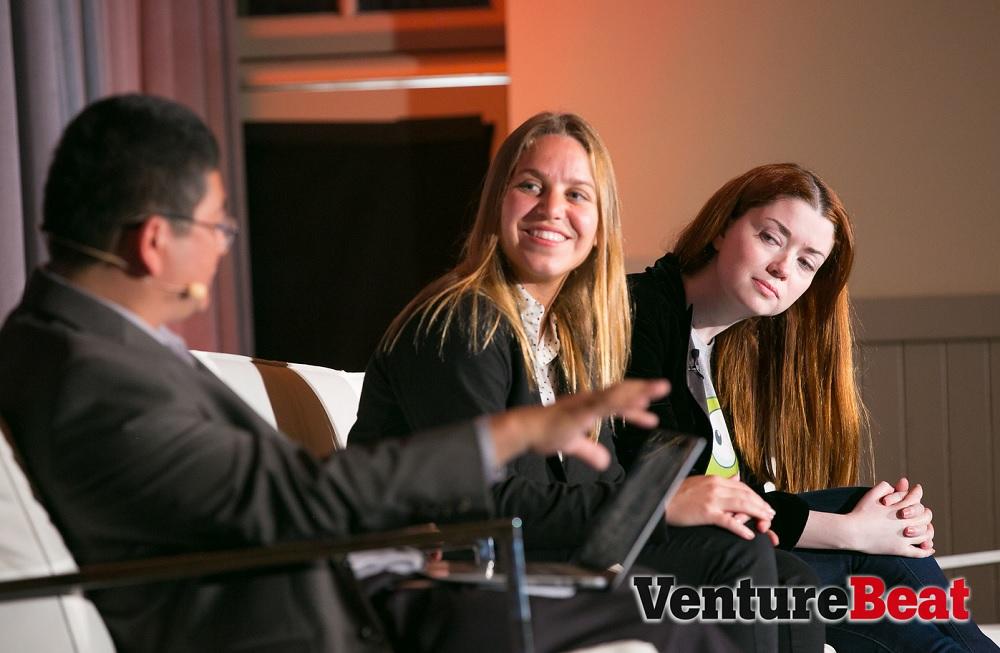
By early 2014, Alegre described a team of more than 100 and work with games including Clash of Clans, Candy Crush and Cut the Rope. Her account of management was less interested in systems than in hiring. Early employees needed to handle several kinds of work. Later, the company needed experienced leaders who could build teams of their own.
That is an awkward graduation for a founder: the organization grows partly by asking its creator to stop doing everything. Alegre emphasized trust, communication across functions and deciding priorities. The apprentice’s broad education had been useful; the growing company required other people’s expertise as well.
She also described the reward in unusually specific terms. A developer might tell her that Chartboost’s income had allowed them to leave a full-time job and make games. An employee might tell her and Fannan that the work offered the team and challenges they wanted. These were the encounters she said renewed her energy. Her advice about retaining a sense of oneself was concise.
“Always be true to yourself.”
Maria Alegre, 2014
One minute is an entire design problem
At the Mobile Summit in 2014, Alegre explained what other industries could learn from games. A console player might settle in for an hour. A mobile player might offer a minute. Designing for the second situation required changing the formula, delivering something satisfying quickly and giving the player a reason to return.
It was a useful example of how she thought about the business around a product. The screen was small, the session brief and the opportunity easy to lose. A company needed to understand what people actually did with its work. A beautiful creation still had to fit into somebody’s day.
Her own childhood gaming preference was less concerned with the convenience of smartphones. She played Streets of Rage on the Mega Drive with her brother and remembered the elevator level as a favorite. The future advertising executive had first encountered games as a player. In 2014, her answer about the industry’s future was “The only constant is change.” A sensible forecast, with the added advantage of remaining difficult to embarrass.
A sale, followed by a different kind of beginning
Zynga completed its acquisition of Chartboost on August 4, 2021. Its announcement described a purchase price of approximately $250 million in cash. A decade after the founding, the company’s advertising and monetization platform had become part of a game publisher’s broader business.
Moves to Silicon Valley and joins Tapulous.
Co-founds Chartboost with Sean Fannan.
Chartboost joins Zynga; Alegre introduces Flori Ventures.
That September, Alegre publicly introduced Flori Ventures. She described three years of exploration, research, travel and prototyping that had brought her back to an earlier interest: financial inclusion. Her ambition was to widen access to financial tools regardless of the country or circumstances into which someone was born.
Flori joined the Celo ecosystem, connecting her work with founders including Rene Reinsberg, Marek Olszewski and Sep Kamvar. The change of subject was substantial: from earning money inside games to the systems through which money moves. The recurring concern was access to the tools required to participate.
Her explanation of the new role was plain. Investing was a means of advancing that work. Having built a technology company, she could help other founders build theirs, raise money and work through the demands of growth. The former apprentice now had experience to lend.
The work beyond the game
Flori’s current team page lists Alegre as managing partner. The fund describes its remit as the future financial system and solutions to the climate crisis, investing from pre-seed to pre-Series A. Its website reports more than $30 million backing more than 80 startups. Portfolio examples include Ponto in digital-asset financial infrastructure, Releaf in African supply chains and MOSS in carbon markets.
In August 2024, Climate Collective announced Alegre as its chairperson, succeeding Ed Walters. The organization brought together entrepreneurs, investors, nonprofits and scientists working with technology for climate and nature. Its incubation work covered carbon markets, biodiversity and nature, and green accountability.
The appointment put her operating experience to work with another community of founders. She spoke about innovation needing an ecosystem of support. Climate Collective’s announcement also identified her as an Esade board member, another connection back to the school from which her American exchange had begun.
The person who arrived in California looking for an education has spent much of her career making it easier for others to get started. First came the game developers waiting for an audience and a payment. Later came founders working on financial access and climate. Across those chapters, her attention keeps returning to the practical conditions that let somebody else build a business. The first checks were a good clue.
Conversations & further reading
- Flori Ventures
- Twitter / X
- Maria’s writing
- The Tapulous years: 2014 conversation
- The early Chartboost model: 2012 interview
- Esade: building the team
- A conversation about Flori
- Climate Collective appointment
- Chartboost acquisition announcement
- Watch: Alegre’s GDC 2015 session
- YouTube: Pepe Agell on starting Chartboost