Creel Price was waiting in a marble lobby dressed as a seven-foot mouse. Upstairs, his business partner Trevor Folsom was negotiating the sale of their company. Downstairs, building security was developing understandable reservations about the wildlife.
The costume belonged to Blueprint Management Group. Its mascot, Motivational Mouse, helped put the company’s “Fun and Focus” value into practice. Price would wear it around the office; whoever was inside had to remain silent. During the sale negotiations, the partners decided the buyer ought to see something of the culture it was acquiring.
So Price waited for Folsom’s call. He recalled the episode years later, including his unsuccessful efforts to explain himself through mime. The deal eventually went through for $109 million. The mouse had made its point, although probably rather more clearly to security than to the lawyers.
It is a useful place to meet Price. The money is there, certainly. So are the teaching instinct, the willingness to look ridiculous and the conviction that a business consists of people behaving in particular ways. Much of his subsequent career has involved finding ways to help those people get started.
The strawberry apprenticeship
Price began selling strawberries at 11, on his family farm. More ventures followed before he completed school, then more during university. He graduated from the Australian National University with a commerce degree in 1992. Enterprise was already something he had practised, with the modest but demanding machinery of a product and a customer.
The childhood business gives his later interest in entrepreneur education a particular flavour. He had experienced commerce before studying it. A young seller has to discover whether somebody will actually buy, a question that remains inconveniently relevant after the presentation slides have become more expensive.
Blueprint brought a different order of responsibility. Price and Folsom built the company to more than 1,000 staff before the 2008 sale. Their starting contributions were $5,000 each. Over roughly a decade, they moved from creating their own opportunity to running an organisation in which a great many other people had a stake.
A company that can survive its founder
One of Price’s business lessons concerns the founder’s eventual departure. He has described three stages: income, profit and value. The first means earning enough to pay the bills and, eventually, the owner a market salary. The second means developing a model that can scale and produce profit. The third means preparing an organisation with value beyond its founder.
That final stage requires succession, systems and a management team. The person who once needed to do everything has to make it possible for other people to do the work. It is an awkward promotion: success can require becoming less indispensable.
Price has linked this to climbing Kilimanjaro. Reaching the summit is only part of the undertaking; the descent belongs in the plan. The business equivalent is thinking about how an enterprise continues, changes hands or survives the person who started it.
Pay yourself.
that can scale.
to stand beyond you.
A sequence of changing responsibilities, rather than a promise of automatic progress.
His 2012 book, The One Thing to Win at the Game of Business, puts decision-making at the centre of that work. He calls his approach Decisionship. The subject is recognisable to anyone who has run a small company: choosing what matters, deciding what to do and getting on with it while the information remains imperfect.
It also gives his teaching a narrower target than the broad instruction to be entrepreneurial. Better, faster decisions are something a founder can work on during an ordinary week. The business may have an expansive ambition. Tuesday still requires a choice.
Teaching the next person to begin
After Blueprint, Price devoted substantial time to entrepreneurship education. His work included developing curriculum for the Branson Centre of Entrepreneurship in South Africa. Club Kidpreneur took the idea to schoolchildren, using small enterprises to let them experience business themselves and raise money for charitable causes.
That combination matters to his account of enterprise. Making a profit and doing something useful for others belong in the same conversation. A child selling a product to support a cause gets a practical introduction to both, without needing a seminar on the relationship between them.
Price also experimented with how adult founders learn together. In 2015, he described an Investible program that began with people, assembled complementary teams and tested business ideas against customer and investor feedback. The program changed the teams as ideas were eliminated. Participants had to respond to evidence as well as defend their own enthusiasm.
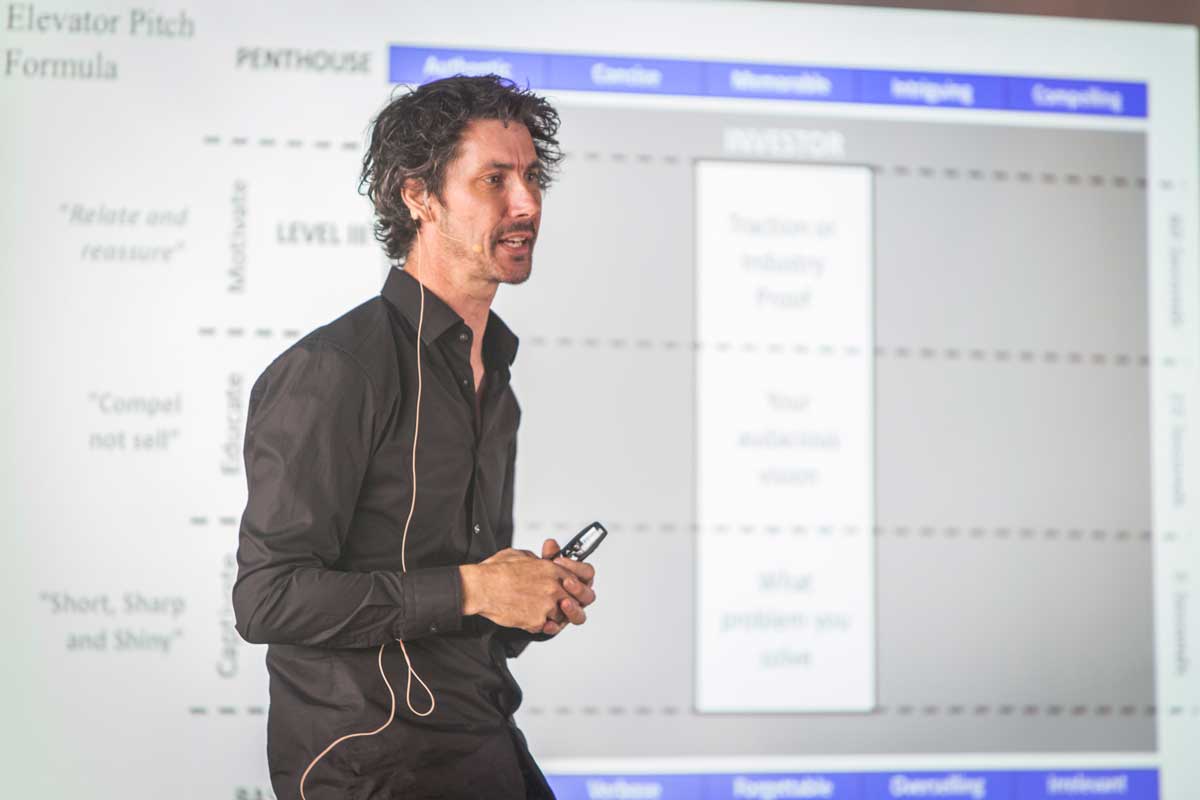
He brought the same interest in who gets a chance to television. In 2018, he hosted the SBS series The Employables, which gave people facing barriers to employment an opportunity to develop businesses. The boot camp included actual camping. Price appears comfortable taking business education beyond the conference room, where the stationery is usually better behaved.
The cheque comes with company
Folsom and Price remained connected after Blueprint, although their work initially diverged. Folsom concentrated on investing and advising businesses. Price concentrated on developing entrepreneurs. An investor community began to take shape in 2010; Investible incorporated in 2014, and its first fund followed in 2018.
The sequence helps explain the firm. The community preceded the pooled fund. Investor relationships, founder education and the experience of building a company were already part of the arrangement when the fund structure arrived.
Price’s advice to founders in a 2018 interview was direct:
“Pitch often but look for investors who add value to your business more than purely financial.”
Creel Price · 2018
He had little patience for the suggestion that a fashionable idea would make entrepreneurship easy. In 2016, he warned about founders entering unfamiliar industries with untested models and inadequate sales or technical experience. He argued for an apprenticeship: learn, seek mentors, work in a smaller business, acquire the skills the proposed venture will demand.
The caution fits his enthusiasm for teaching. He wants more people to attempt business with some preparation for its difficulties. A funding announcement can hide years of work with customers. A product that looks simple to use may have been difficult to build. Neither problem disappears because the founder has found an attractive font for the pitch.
Putting climate ambition in a room
Greenhouse gives Price’s interest in connection a physical address in central Sydney. Announced in 2021, the climate innovation hub brings together workspace, events and programs linking startups with industry and government. Price is its Executive Chairman and Co-Founder.
The space extends across three levels at 180 George Street. Its designers placed a central staircase between work areas, offices, shared facilities and event space. Architecture cannot make a collaboration happen, but it can give people more opportunities to encounter one another during the working day.
For a founder, those encounters can mean access to someone who understands procurement, investment or a particular industry. Greenhouse’s programs organise that access more deliberately, gathering cohorts around sectors, stages or specific problems. The aim is to bring the relevant people close enough for a useful conversation.
founders
Workspace + events + programs
Climate Camp takes the work outdoors again. The 2.5-day program combines business-model development with other climate founders and access to investors and advisers. Its methodology was developed by Price. Follow-on peer sessions give founders a place to bring leadership challenges and decisions after the camp.
There is a consistent interest here in the conditions surrounding an entrepreneur. A curriculum, an investor group, a shared staircase and a conversation around a fire each organise the people around the work differently. Price has spent much of his post-Blueprint career trying those arrangements.
In a 2024 conversation with Barbara Albert, Price discussed the relationship between entrepreneurial decisions and climate action, alongside the origins of Greenhouse and his work in regenerative agriculture. The subjects sit comfortably together in his career. He has moved between teaching the mechanics of building a business and choosing the problems on which that effort might be spent.
The ambition also gives the practical programs a purpose beyond helping somebody improve a pitch. Greenhouse links its founder work to research, procurement and collaboration with established organisations. A new company needs a route into the world outside the startup room. Finding a potential customer or an industry partner can become part of the same work as finding an investor.
Back to the strawberries
In 2021, Creel and Tania Price founded Zestiny Farm on the NSW Central Coast. Its 50 acres include a lemon orchard and vegetables, with a direct-to-customer produce business. The farm describes its approach as regenerative and certified organic.
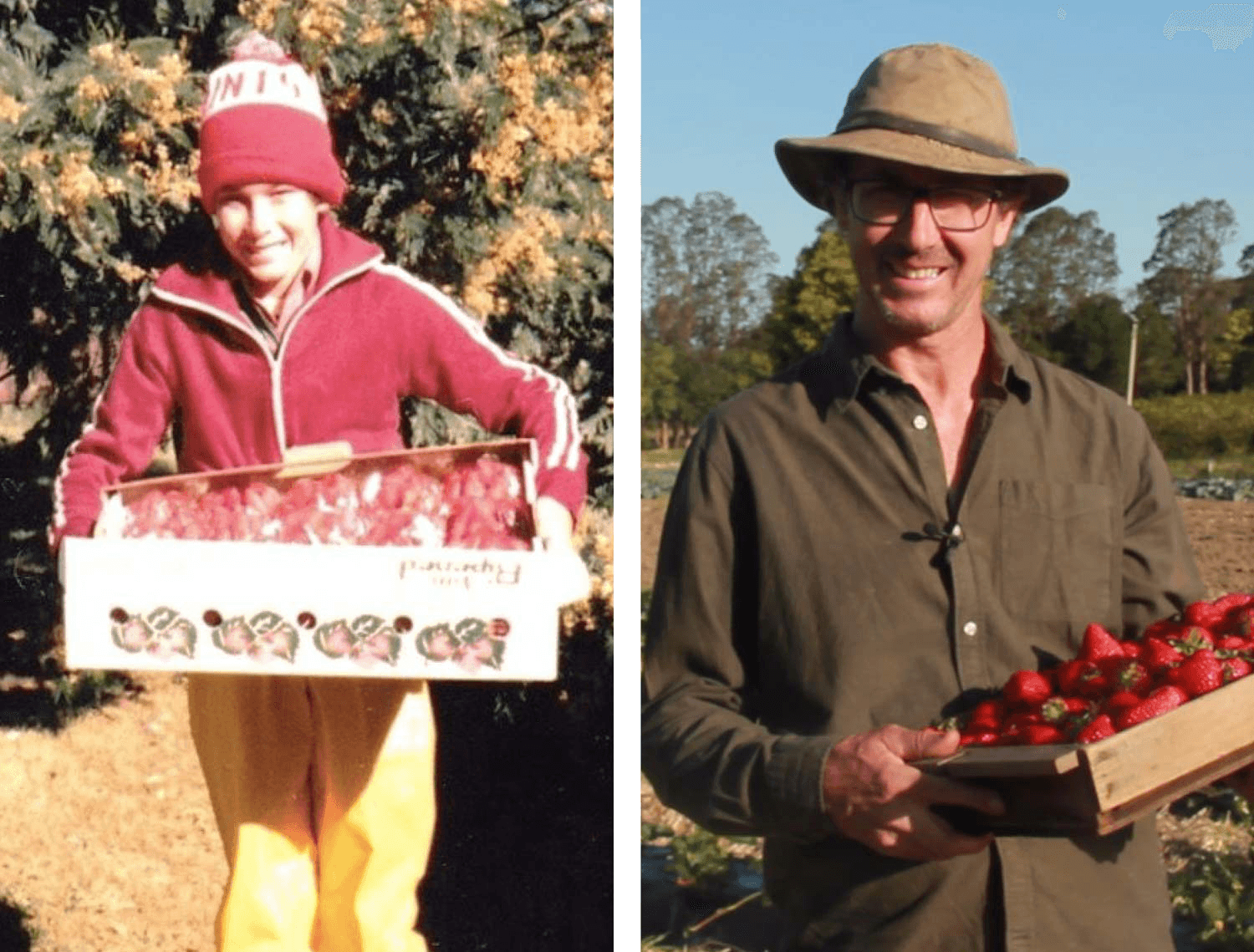
It makes for an unusually literal return to the beginning. Zestiny’s own photographs put the young strawberry seller beside the adult farmer. Between those two baskets sit Blueprint, a book, classrooms, investment funds and a Sydney climate hub. Produce has reappeared with rather more company around it.
The farm’s stated ambition includes developing a more sustainable model that other farmers could replicate. As with his teaching and investing, the project contains an interest in what another person might be able to do with the experience.
Investible was still making the case for that wider support network in September 2026, describing a model that combines capital with experience, customers, talent and advice. Price’s settings have changed since the marble lobby. The question of what people need around them to build a business has stayed remarkably consistent.
The mouse costume belongs to an earlier company. The strawberries, apparently, have another season in them.