Carl Prins had a name for the trap he had built himself. Handled, his energy startup, was supposed to be an entrance into the future of electricity: solar, storage, households participating in the grid. Price comparison would get people through the door. Three years later, the business was still comparing prices. The entrance had become the room.
In November 2019, he put the lessons in writing. Handled was no longer viable in its existing form. His account covered shifting regulation and the demands of large partners, but its opening advice was more personal: begin with the work you actually want to do. A sensible first step can consume every resource you hoped to spend on the second.
Prins went back to building. In 2020, he co-founded Pathzero with Charbel Ayoub in Sydney. Their subject was carbon accounting. Over time, their attention settled on the emissions information passing between companies, fund managers and investors. Here was a problem with plenty of arithmetic, and an awkward question underneath: when you say you have measured something, what have you included?
A promising detour
Handled’s predicament is easy to recognise even outside the energy business. A small company wins access to a large organisation’s customers. The opportunity looks irresistible. Delivering it requires extra work, which delays improvements to the product. The distribution deal begins choosing the development schedule.
Prins described precisely that experience. A banking pilot required a web version alongside the existing mobile apps. Development effort went into the new channel while product experiments waited. For a young business still learning what customers needed, the delay was expensive. A large partner could provide reach while reducing the room to manoeuvre.
“Start with what you actually want to do, not a stepping stone to that”
Carl Prins · November 2019
The advice sounds obvious when someone else has already paid for it. Prins’s decision to publish the account gives it more weight. He was describing choices that had seemed reasonable when he made them. That is the useful discomfort in the story: the wrong direction can arrive wearing an excellent business case.
An accountant with an energy habit
His interest in energy had a domestic beginning. Growing up in South Africa, Prins lived in an experimental passive house built by his Dutch engineer grandfather. Much later, his own household would have solar panels, a battery and an electric vehicle. One exception survived: a British racing green Mini Cooper. His daughter objected to its combustion engine. Sentiment was having a difficult time at the family emissions committee.
Professionally, he trained as a chartered accountant, worked in Pretoria and moved into London finance. At Arrowgrass Capital, he became CFO before turning 30. Building the infrastructure behind a growing hedge fund meant working with developers on systems that needed to stand up to financial scrutiny.
Australia followed in 2012. His career included Macquarie, Reinventure and Nearmap; the mix brought financial markets, venture capital and technology into his working life. Handled added direct exposure to a changing electricity market. By the time he began Pathzero, the connection between finance and energy was already part of his experience.
He had also tried to influence the rules. In November 2018, Handled submitted its position on the proposed Default Market Offer to the Australian Energy Regulator. Prins argued for protecting disengaged electricity customers while preserving competition. His proposed approach linked a retailer’s standing offer to its best market offer, rather than relying only on an annual bill amount.
It was an argument about incentives: how to improve an outcome without undermining the mechanisms that might keep improving it. Read beside his later climate work, the submission shows a continuing interest in how markets behave when their rules change. He was already thinking beyond the interface of an app.
Choosing someone to disagree with
Before Pathzero, Prins wrote another revealing piece. In November 2019, he considered how to choose a co-founder and drew a Venn diagram. There were three ingredients: shared values, an idea worth pursuing and complementary skills. Romance, apparently, could wait until after the diagram.
His framework was practical about what each combination might lack. People could get along and still be unable to build the product. They could build competently and choose the wrong problem. They could have the idea and the skills, then discover they could not bear one another. A partnership needed to survive the ordinary business of working together.
The emphasis on skills was particularly pointed. Founders were the initial workforce. An executive accustomed to managing people would have to become someone who could make things. Hiring every missing capability could exhaust a small budget before the business had found its customers.
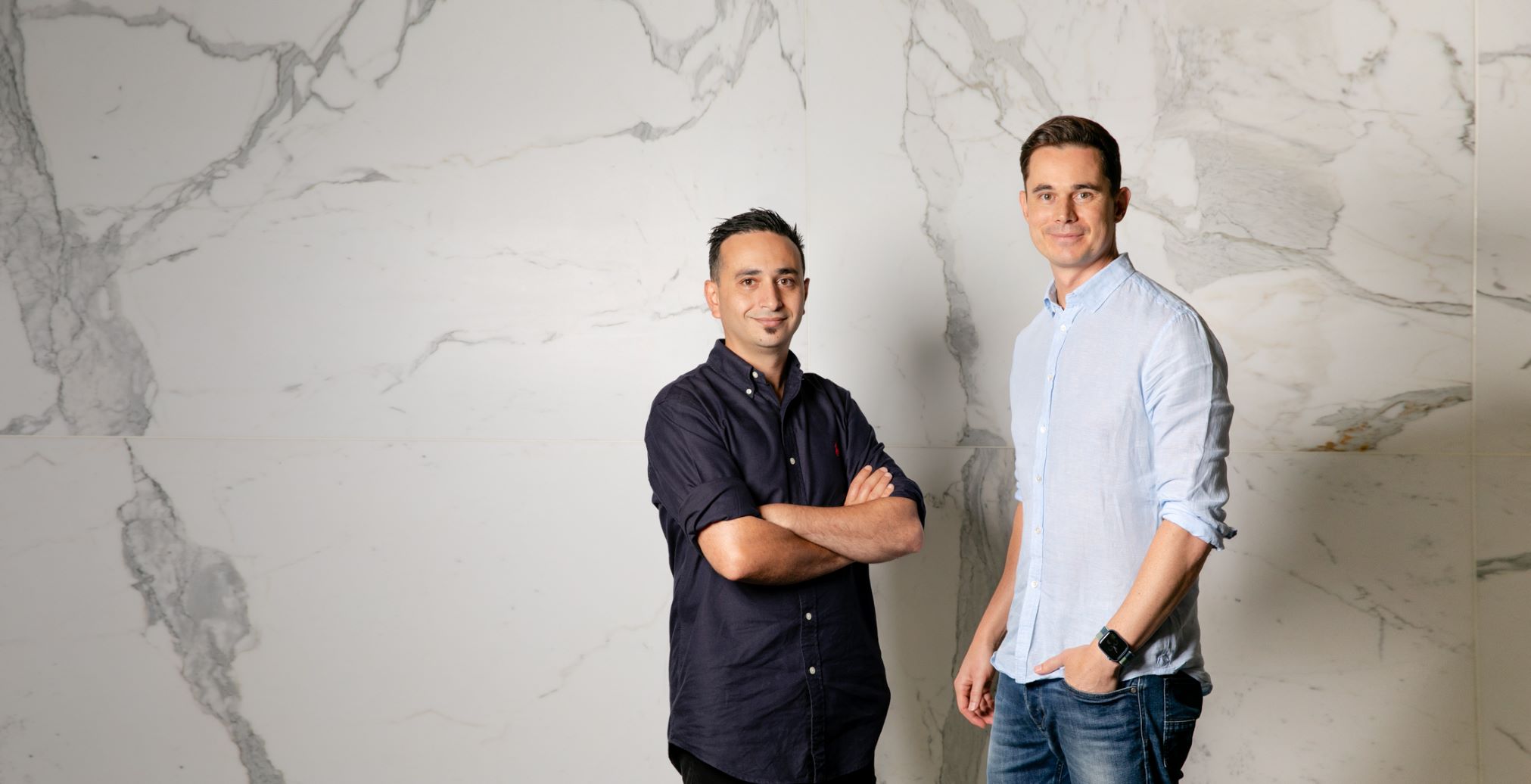
Ayoub brought software engineering to their eventual partnership. Prins brought finance and energy experience. Pathzero began within Antler’s Sydney programme in January 2020, initially helping businesses quantify their emissions. Its founding combination put the accounting problem and the means of building software around the same table.
Prins’s own explanation for starting the company was impatient with delay. In April 2020, he argued that many technologies needed to reduce emissions already existed, but were being deployed too slowly. Businesses, responding to customers, staff and investors, could act. They would need tools to understand and manage their footprints.
The argument gave his next venture a direct relationship to its intended work. Measuring emissions was already part of the climate problem he wanted to address. There was less distance between the first product and the reason for starting.
The boundary is part of the answer
Listen to Prins explain carbon accounting and the accountant comes through. In a 2021 conversation with Suzanne Tavill on StepStone’s RPM podcast, he began with the boundary of the organisation being measured. Which legal entities belong inside it? Which activities count? The calculation follows those decisions.
A company’s fuel use, purchased electricity and wider commercial relationships create different kinds of emissions. Prins explained how these fit into the familiar three scopes. The categories help establish where a business can act directly and where it has to involve other people.
Fuel burned by the business.
Electricity and other acquired energy.
Emissions across the value chain, including investments.
He also made verification concrete: trace an electricity entry back to the underlying receipt, check the boundaries and examine the models. A number is more useful when someone can explain how it arrived. For an investor receiving information from several businesses, that explanation becomes part of the product.
There is something fitting about a former CFO pursuing this work. Carbon accounting asks organisations to become precise about activities that financial accounts describe in another language. The same purchase can have a monetary cost and an emissions consequence. Understanding one does not automatically establish the other.
The money behind the number
Pathzero’s focus moved towards financial markets, beginning with private investments. An asset owner may invest through a fund manager, who in turn holds a portfolio of companies. Climate information has to move through those relationships. Each organisation needs something from the others before it can describe its own position.
That makes financed emissions a coordination problem as well as a measurement problem. Pathzero Navigator was developed to help financial institutions measure, manage and disclose investment-related emissions. The network around the calculation mattered: companies and investors needed a way to exchange information securely.
In December 2022, Pathzero announced an A$8.6 million Series A+ round. Carthona Capital led it, with participation from Clyde Bank Holdings, Antler and individual backers. Carthona also used the product. Other named users included StepStone and HESTA. Prins was now selling into a financial world he knew from the inside.
The company’s current account of its network describes more than 550 fund managers representing US$4.5 trillion in assets under management. Those assets belong to the represented investment businesses. The figure describes the reach of the network; it cannot tell us how much emissions have fallen. The distinction matters for a company built around careful accounting.
fund managers connected with asset owners
Pathzero’s company description, checked October 2026.A number with its workings attached
By August 2025, Prins was discussing the challenge with Eliza Bavin on The Greener Way. Their subject was emissions transparency in private markets: precise data, collaboration and disclosures that institutions could substantiate. The conversation placed Pathzero’s work squarely in the daily responsibilities of investors.
His more recent public comments have stressed uncertainty. A climate figure needs context about the quality of the information behind it. In discussing the Partnership for Carbon Accounting Financials, he pointed to data-quality scoring as a way for investors to judge how much confidence a number deserves.
That concern follows naturally from his earlier explanations of boundaries and receipts. An estimate can be useful while remaining an estimate. A reporting system should help people understand the difference between a broad assessment and detailed evidence, especially when money will move on the strength of the result.
In January 2026, Pathzero described integration work involving S&P Global Energy, MSCI and Morningstar Sustainalytics. The aim was to bring public and private markets climate information together around actual portfolio structures. For Prins, the next problem was how to organise these different datasets into something institutions could use across their holdings.
There is a line running through the career: understand the system, decide what belongs inside the calculation, and make the information useful to someone making a decision. Handled exposed how easily a business could spend its effort at a distance from its purpose. At Pathzero, that question remains close to the work. Every reported number needs a boundary. Every working day does too.