An athletic shoe company needs a shoe. This was the inconvenient detail confronting Marcus Wilson and Michael Schaeffer when a box of prototypes arrived at a hotel in Manhattan Beach. They had an idea, an identity and their own money committed to the venture. What they had in the box fell short.
Schaeffer’s description was “absolutely horrific.” The pair could proceed with the product they had, or postpone their debut for another year. They waited. For founders financing a business themselves, a year is a substantial purchase. It buys no guarantee that the next box will be better. It does, however, keep the first customer from becoming the first person you disappoint.
Wilson’s career can look deceptively tidy from a distance: former Reebok executive, co-founder of NOBULL, a brand that traveled from CrossFit gyms to the NFL Scouting Combine. Put those accomplishments on a conference badge and the waiting disappears. Yet waiting was one of the first consequential decisions he and Schaeffer made together.
Wilson had worked as Reebok’s head of brand strategy. Schaeffer had been its global creative director. They brought experience in how a sports brand looks, speaks and reaches people. Starting over required them to learn how much of that experience had depended on an organization already being there.
RejectedLaunch
+1 year
A delay before a debut. The founders chose a product they could stand behind.
Breakfast before the business
Wilson earned his MBA at MIT Sloan in 2004. His career included marketing and brand work at Bose and Reebok, followed by work in the startup world. He and Schaeffer stayed in touch after working together at Reebok. Over breakfasts, they kept discussing what they might build themselves. The conversations became a habit before they became a company.
In 2012, they established the marketing and design agency Bold & Co. It gave their partnership a working life outside a large employer. Eventually, the business they were developing for themselves would displace the work they were doing for clients. But the agency came first, a less cinematic and rather more practical bridge between having an idea over breakfast and having a product to sell.
The division of responsibilities was clear. Schaeffer handled the product and visual identity; Wilson concentrated on business, marketing and finance. Their arrangement left room for disagreement without requiring both people to own every decision. Wilson put the foundation of it plainly: “Most importantly we trust each other completely.”
Their shared interest in CrossFit supplied a place to begin. They knew the training and the people who showed up for it. This gave them something more useful than a hypothetical customer: a community they already belonged to. It also gave them regular opportunities to see what people wore, what they needed and what they were prepared to believe.
A name with very little room to hide
NOBULL’s argument was that buying equipment did not absolve anyone of doing the work. The founders wanted useful training gear without the suggestion that a purchase could confer athletic ability. The name made that view unusually easy to remember. It also placed a fairly strict obligation on the people printing it on a shoe.
For Wilson, this was familiar territory approached from a different direction. Brand strategy often concerns how much meaning a product can carry. Here the founders were limiting the claims they wanted their product to make. A shoe could do its job while the person wearing it retained responsibility for the result. That was a position customers could recognize without reading a manifesto.
The early business demanded attention to things less photogenic than a brand name. Materials had to be sourced. Manufacturing decisions affected costs. Orders needed to reach people. Wilson later recalled: “We took for granted the resources at our disposal, when it comes to materials sourcing to logistics to supply chain.”
Visits to manufacturers in China helped the founders understand the connection between a design choice and its consequences further down the chain. Their earlier careers had taught them about footwear at scale. Their small company made the missing departments conspicuous. A good idea still needed a factory, a schedule and someone prepared to ask an awkward question.
“Most importantly we trust each other completely.”Marcus Wilson · on working with Michael Schaeffer
The customer at the other end
One early midnight product release came with a particularly awkward answer. Thirty minutes before the launch, the factory called. Shoes expected to ship in two or three weeks would take four or five months. The company did not yet have an office; the founders were working from home. Customers were already waiting online.
Todd Meleney updated the website with the delay. The first purchase came a minute after midnight, and others followed. “People were still buying despite the delivery delay,” Wilson recalled. That response was evidence of trust, although trust did not make the shoes arrive any sooner. The business still owed its customers a product.
Another early sellout helped persuade the founders to commit fully to NOBULL. They closed Bold & Co., telling their remaining clients they were leaving the agency business. The transition included personal financial exposure: Wilson and his wife, Anisha, and Schaeffer and his wife, Amy, helped bootstrap the venture. Money moved from the families’ investment accounts to factories.
The founders also answered customers themselves. Questions about fit, shipping or an order could reach them through social media. The audience could speak back, and the people who had devised the brand had to answer. Every delayed parcel made the company’s tone a practical matter.
Wilson paid attention to where those conversations and purchases happened. In the company’s early mobile commerce work, roughly 80 percent of traffic came from mobile devices. People engaged with content on their phones, then sometimes completed purchases on desktop. NOBULL responded by creating photo and video material for mobile and social viewing.
The lesson was specific: an attractive campaign still had to work on the screen a customer was holding. Wilson’s interest in storytelling sat alongside a willingness to inspect how a visit became an order. The business required both the sentence that caught someone’s attention and the less glamorous work of making the next step easy.
When the gym got bigger
By 2019, Wilson and Schaeffer had received an EY Entrepreneur Of The Year New England award. For a company launched in 2015, it was a conspicuous acknowledgment. Its next stages brought a different kind of visibility, with NOBULL moving into places where many spectators would encounter the name for the first time.
In 2021, NOBULL succeeded Reebok as title sponsor of the CrossFit Games. In 2022 came the PGA Tour training apparel and footwear relationship and the NFL Scouting Combine agreement. The NFL also invested through its 32 Equity fund that December. The founders’ old employer had become part of the company’s history in a second, rather public way.
Wilson described an audience broader than professional competitors: parents, firefighters, police officers and other everyday athletes. That made training a connecting idea across sports with very different uniforms and calendars. The same brand could appear around a golfer and a football prospect because both spent much of their working lives preparing.
Growth also changed the job inside the company. In a 2022 leadership conversation, Wilson described a team that had expanded from fewer than 50 people before the pandemic to more than 200. Preserving the working culture across that increase had become a recurring discussion between the founders.
The company’s code included “don’t be an ass” and “think like MacGyver and move like a ninja.” Human resources literature rarely dresses quite so casually. Behind the jokes sat expectations about treating colleagues well and finding ways to get things done. Wilson also described a willingness to let people make mistakes, learn and continue.
For a founder who once fielded shipping questions himself, growth meant trusting other people with decisions. The partnership had already required clear responsibilities between two people. A larger team made the same question harder: how much direction helps someone do good work, and how much gets in the way?
- 2015NOBULL launches
- 2019EY New England award
- 2021CrossFit Games title sponsorship
- 2022PGA Tour and NFL Combine agreements
- 2023Repole acquires a majority stake
The brand changes hands; the questions change too
In July 2023, Mike Repole acquired a majority stake in NOBULL through Impact Capital. The transaction’s terms were not disclosed. At the time, Wilson welcomed the operational experience Repole and his team could bring to a larger business. The company had moved well beyond the scale of its first home-based product releases.
The handover belonged to a difficult year as well as an expansive one. NOBULL had implemented layoffs, and early executive Todd Meleney had departed. A history of the brand that keeps only the sponsorship announcements would miss the unevenness of running it. Wilson’s story includes building something that eventually needed different ownership and a different operating structure.
In January 2026, NOBULL raised $50 million at a reported $1 billion valuation under its later ownership. That is a company financing milestone. It is also a marker of how far the name had traveled since two former colleagues began discussing their own business. Wilson remains identified publicly as a co-founder, with his earlier CEO chapter behind him.
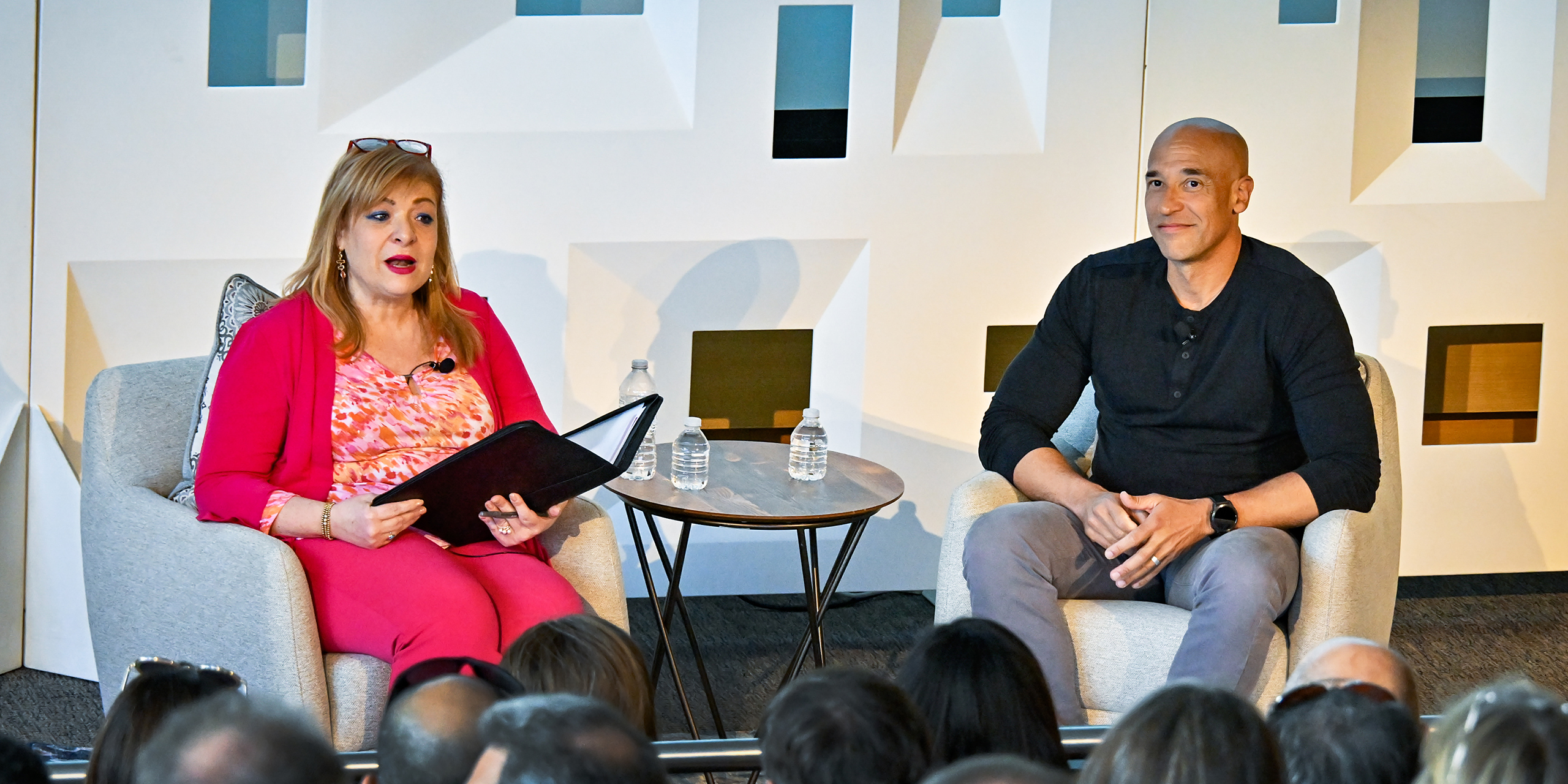
A roomful of people who knew him before
At MIT Sloan’s 2024 reunion, Wilson returned to speak with Interim Dean Georgia Perakis. His MBA Class of 2004 classmates occupied the front rows. When she remarked on his fan club, he predicted they would be “the most raucous.” It was a welcome change of setting for someone accustomed to explaining a brand to people meeting it for the first time.
Asked what had stayed with him from Sloan, he pointed toward the people. Friends and classmates could understand experiences that a career summary compresses into a line. The school also lists him within its entrepreneurship mentoring community, a place where the practical knowledge acquired after graduation can become useful to someone still preparing to begin.
By March 2026, a public conversation with Chasing Excellence was considering ambition from another angle. Wilson discussed how reaching business milestones had failed to produce the satisfaction he expected. His attention had shifted toward the person he wanted to become and the future self he hoped would feel proud of his choices.
Wilson had spent years telling customers that effort mattered. Effort can build a business; it cannot promise how an achievement will feel once it arrives. Wilson’s later reflections give the early story a different ending. The founders once chose to wait for a shoe they could stand behind. Years later, he was asking what sort of life he could stand behind, too.