The bank wanted a hundred dollars. Liza Cirlot had seventy-eight. In the usual arithmetic of starting a business, this was a modest shortfall. In the arithmetic of an empty pocket, twenty-two dollars can be quite a distance. She had a state income-tax refund, an advertising education and an explanation of what she intended to do with both.
The woman opening the account kept filling out the paperwork while Liza talked. Then she handed it over with a small instruction: “Go get ’em, Tiger!” The account opened. The phrase stayed. In 1984, The Cirlot Agency began with a deposit that had failed to meet the bank’s stated minimum.
It is a durable founding anecdote, partly because the bank officer gets a speaking part. But the check can monopolize the story. Liza Cirlot Looser’s subsequent career raises a more interesting question than how little money someone can start with: how does a person keep earning the right to be taken seriously?
Her recollection of the bank’s minimum. A starting balance, not a valuation.
The education before the opening balance
Looser grew up in Moss Point, on Mississippi’s Gulf Coast. She paid her own college and living expenses, an experience she later connected with learning self-reliance. The less picturesque preparation happened at work. At The Clarion-Ledger, her first job after college, she received a map with a sales territory marked out and instructions to find business.
That assignment made introductions part of the job. She learned to approach unfamiliar people and ask for their accounts. Before founding her firm, she also worked at Maris, West & Baker and served as communications director for the Mississippi Republican Party. Selling, agency work and politics supplied different lessons in getting an audience’s attention.
She saw an opening as advertising moved toward smaller creative shops. She prepared a plan and prayed about the decision. Looking back, she also wished she had found a mentor who could offer independent advice. Even the originator of a tidy success story could see where the beginning might have benefited from another person.
“Basically, my passion outweighed any fear of failure,” she said. Her education continued after the company opened: Mississippi University for Women was followed by Harvard Business School’s Owner/President Management executive education program. Study remained part of the work of owning a firm.
A photograph with a future attached
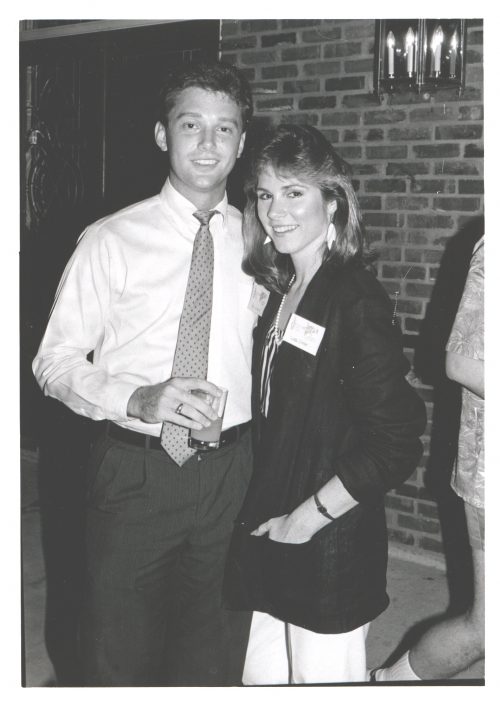
The agency’s history includes a photograph that deserves its place outside the filing cabinet. At an American Advertising Federation conference, Rick Looser saw Liza and asked a photographer to capture the night they met. His explanation was that he wanted to show the picture to their children.
As opening lines go, it placed considerable responsibility on the photographer. Rick and Liza married in 1988, four years after she started the agency. He joined the business, bringing his own communications experience. The future he had announced to a person holding a camera acquired both a family and a payroll.
The partnership also makes it especially important to keep the founding straight. Liza established the firm. Rick arrived later. Their shared story grew around a company that already carried her name. Today she remains chief executive, and he serves as chief operating officer.
A Mississippi address, an international brief
Over time, the assignments reached far beyond Mississippi. Looser’s work took in clients in Europe, South America and the Middle East. In 1998, NATO invited her to help develop communications surrounding the Bosnian land mine crisis. The brief concerned how citizens could have a stronger voice in rebuilding their government.
Aerospace and defense became a sustained part of the agency’s business. Its experience includes Northrop Grumman, Bell, Textron, Raytheon and Boeing. Explaining those organizations involves more than making a product sound attractive. Their audiences include executives, government customers and people asked to understand complex technology and consequential purchasing decisions.
Looser’s current advisory work connects market intelligence, competitive positioning and corporate reputation. MBDi, a business development consultancy, also lists her as a managing partner. The vocabulary has grown since that first newspaper sales map, but the audience still has to understand why a particular organization deserves its business.
Her institutional roles followed that widening practice. In 1997, she became the first woman to chair the MetroJackson Chamber of Commerce in its 116-year history. She later became the first woman to chair the Mississippi World Trade Center. In January 2025, she was appointed to the National Defense Industrial Association’s Washington, D.C. chapter board.
Her speaking profile puts the creation of value at the center of corporate purpose. It is a plain enough test to apply to a complicated career: what becomes possible for the people on the other side of the assignment?
“Creating value should be the central focus of every corporation.”
Liza Cirlot Looser
When home became the assignment
Sometimes the client was, in effect, the place that had helped make the company possible. Liza and Rick’s Mississippi, Believe It! campaign began in 2005. It answered caricatures of the state with examples of its achievements, using the agency’s professional tools on behalf of a shared address.
The campaign gave teachers posters and classroom materials. Its subjects included Mississippi writers, athletes and musicians. The humor carried a point: a dismissive assumption becomes harder to sustain when someone puts actual names and accomplishments in front of it. Schoolchildren were an audience worth addressing directly.
The connection also reaches back to her hometown. The Moss Point Sports Hall of Fame identifies Looser, a Moss Point graduate, and her agency as partners in developing its website. The organization records and preserves local sporting histories. It is a smaller audience than a multinational client offers, but a specific one: people whose achievements might otherwise survive mainly in the recollections of neighbors. Giving those stories a place to live is a recognizable extension of the campaign’s interest in making Mississippi’s accomplishments visible.
In 2007, the Mississippi Legislature commended the Loosers for the campaign. The resolution described a project intended to restore pride among residents as well as change outsiders’ perceptions. Reputation work began at home, with the people most likely to hear the old jokes and eventually repeat or challenge them.
Another assignment brought a very different audience to the state. For the first presidential debate of 2008, at the University of Mississippi, Looser served as chief communications strategist. The agency supported more than 3,000 national and international journalists in Oxford. The debate put the campus before an audience that extended well beyond its usual constituency.
- 1984A bank counter
Opening an agency account - 2008A presidential debate
Communications strategy in Oxford - 2025A family-business symposium
Helping review the lessons
The family business, with a chandelier
The debate assignment also helped draw the Loosers into Ole Miss life. Their children, Regan and Tripp, attended the university. In 2009, the family began tailgating with friends. A professional connection acquired a recurring weekend appointment and, inevitably, a menu.
By 2016, Liza described a group of nine couples who shared hosting duties. They prepared enough food for about fifty people. Tent decorations included flowers, candles and an occasional chandelier. Apparently, even temporary accommodation on a football weekend could use a little overhead ambition.
There was a small complication in the family’s sporting loyalties: Rick was an Alabama graduate. Liza enjoyed recounting his adjustment to Ole Miss football, particularly when the Rebels beat Alabama. She described the pleasure of those weekends in terms of laughter and catching up with friends and their children. For someone whose working life involves managing impressions, the appeal was pleasantly ordinary.
The scrutiny that comes with public work
Public assignments have also brought uncomfortable attention. In 2022, the agency’s branding and planning work appeared in scrutiny of Mississippi welfare spending. A state audit identified $1.7 million in improper payments by a nonprofit to Cirlot for services that included promotional work.
Looser said the firm had fulfilled its contracts and had not known the source of the money. At the time of that account, officials had neither accused Cirlot of wrongdoing nor instructed it to return the funds. Those distinctions belong alongside the payment figure. Work involving public institutions carries questions about accountability as well as questions about communication.
Who gets to build the next one?
Her involvement with Ole Miss eventually reached beyond both the debate and the Grove. At its Center for Innovation and Entrepreneurship, Looser chaired the advisory board from 2019 to 2022. She helped establish the REDe Entrepreneurship Summit, the Legacy Leadership program and the It’s All Relative Family Business Symposium.
These efforts address different stages of a company’s life. Students need access to people who have started businesses. Family enterprises need ways to make decisions about leadership and continuity. Looser has participated as a mentor, speaker and competition judge, putting an experienced founder within reach of people still working out their first moves.
The center named her its 2023 Farrington Distinguished Entrepreneur of the Year. Her contribution continued: the September 2025 symposium agenda paired her with Dr. Allyn Cascio to revisit the previous day’s learning. The program dealt with transitions, family-business research and practical ownership questions. Keeping a company going requires conversations that an opening-day celebration can safely postpone.
In January 2026, the question of continuity became visible inside her own firm. The agency named Sabrina Turner president, with responsibility across strategy and execution. Looser continued as CEO and Rick as COO. Liza explicitly connected the appointment with preparing the company for generational leadership.
That gives the bank story a useful second act. In 1984, someone listened while a prospective owner explained what she hoped to build. Decades later, Looser spends part of her time making room for other people’s plans. The original check bought a beginning. The work now includes helping a business have a future beyond its beginning.