A failed experiment has a short public life. The batch disappoints, the team changes something, and attention moves to the next attempt. Manmit Shrimali has spent years asking what happens to the information left behind. In consumer-product development, where ingredients must satisfy a remarkably opinionated collection of requirements, forgetting can mean paying for the same lesson twice.
Shrimali is the co-founder and CEO of Turing Labs. His subject is the work behind familiar things: sauces, drinks, detergents and other formulated products. His route there began in analytics consulting. Along the way, the question widened. Helping a company understand its data meant confronting the routines, incentives and habits that determine whether anyone uses the answer.
A consultant’s question, before the company
In April 2016, Shrimali was preparing to speak at San Francisco’s Big Data Innovation Summit. His announced topic concerned the distance between collecting information and making decisions. The distinction was already central to his work at Dextro Analytics, the consulting business he co-founded with Ajith Govind.
“There is no such thing as too much information,” he said at the time. His complaint concerned the difficulty of extracting something useful from it. Companies could accumulate records of customer behavior while continuing to struggle with what those records should change.
Dextro’s work combined analytics with an interest in the less orderly parts of human choice. Its founder biography described Shrimali’s experience in marketing analytics, customer decision science and loyalty. The sectors included consumer goods, retail, finance and telecommunications. He was working across different businesses, with a recurring concern about how people interpret evidence.
“Simplicity cannot be achieved without untangling complexity.”
Manmit Shrimali’s stated philosophy at Dextro Analytics
That sentence is a useful introduction to his later business. A sauce recipe looks simple on a label. Deciding what to change in it involves cost, texture, sourcing and the expectations of someone opening the jar. The apparent simplicity belongs to the finished object. The untangling happens elsewhere.
Burlington, a product called Delver, and a new start
There is a concrete Canadian chapter in the story. Early in 2019, Dextro moved into TechPlace in Burlington, Ontario, joining its LaunchPad program. The company had started in Toronto. It was preparing a software product called Delver to help consumer-goods businesses develop and improve products.
Shrimali spoke about access to resources and the advantage of being near Haltech, the regional startup organization. Mentorship was part of the attraction. This was a founder discussing practical help for an introductory product: proximity, advice and the infrastructure to get something into use.
The announcement placed Dextro within an existing consumer-goods network, identifying Unilever and Procter & Gamble among the companies it had worked with. Shrimali and Govind were approaching product software with experience of the organizations they hoped to serve. They had seen the work from inside consulting engagements.
In April 2019, they founded Turing Labs. Its platform launched at the end of that year. The chronology gives the business a longer runway than a founding date alone suggests. Before there was a Turing funding announcement, there were client problems, a consulting partnership and an earlier effort to turn knowledge into software.
The experiment that disappears
The missing experiment gives Shrimali’s argument its human stakes. In a 2022 conversation about food-product development, he described companies still capturing results with paper and pencil. Some retained the winning results while discarding information from formulas that performed badly.
That habit leaves a selective memory. The successful formula survives; the boundaries discovered on the way can vanish. A team facing a new requirement may need precisely that discarded knowledge. An unsuccessful result can explain where a promising direction stops working.
Shrimali’s proposed starting point was a particular decision. Choose a product or category that matters, establish what information the team already holds, and identify the gaps needed to move forward. His approach asked companies to work backward from their objective rather than begin with an indiscriminate collection of data.
The attraction is easy to understand. A product developer wants to know which experiment deserves the next slot at the bench. An archive that cannot help answer that question remains an archive. For Shrimali, the purpose of the software was to make the accumulated record useful at the moment of choice.
Learning to sell a different way of working
Turing joined Y Combinator’s Winter 2020 batch. That July, Moment Ventures announced it was leading the company’s seed financing, alongside participants including Y Combinator and Eric Ries. The investor described founders who had worked together for years and built their product around problems encountered through consulting.
It also described paying customers at an early stage. That matters to the shape of Shrimali’s career: the venture was developing in conversation with organizations already trying to use it. Selling and building were closely connected activities.
In January 2022, Turing announced a $16.5 million Series A led by Insight Partners. Moment Ventures, Y Combinator and Medallia co-founder Borge Hald participated. The stated uses were practical: research and development, more engineering capacity, wider operations and a commercial organization. Insight’s Josh Fredberg would join the board.
The financing announcement framed Turing’s approach through a familiar engineering idea: simulate a proposed product before making it. Applying that logic to consumer goods required accounting for the behavior of ingredients and the constraints around them. The physical product would still have the last word.
Led by Insight Partners, with Moment Ventures, Y Combinator and Borge Hald participating.
Shrimali’s founder biography also describes leading enterprise sales himself. It lists conflict resolution among the things he learned. That is an unusually revealing detail for a short professional introduction. A sale to a large company includes a negotiation over how people will work together after the contract is signed.
The algorithm has to survive the meeting
By October 2024, Shrimali was writing explicitly about the human difficulty of AI adoption. He described limited datasets, old technology systems and the work of helping people reconsider familiar methods. The platform had to coexist with infrastructure that customers already depended on.
In a November interview, he connected the founding idea to his Dextro experience and described an ambition to make the technology easier to use without requiring a team of data scientists. He also discussed expanding the platform’s capabilities beyond consumer packaged goods.
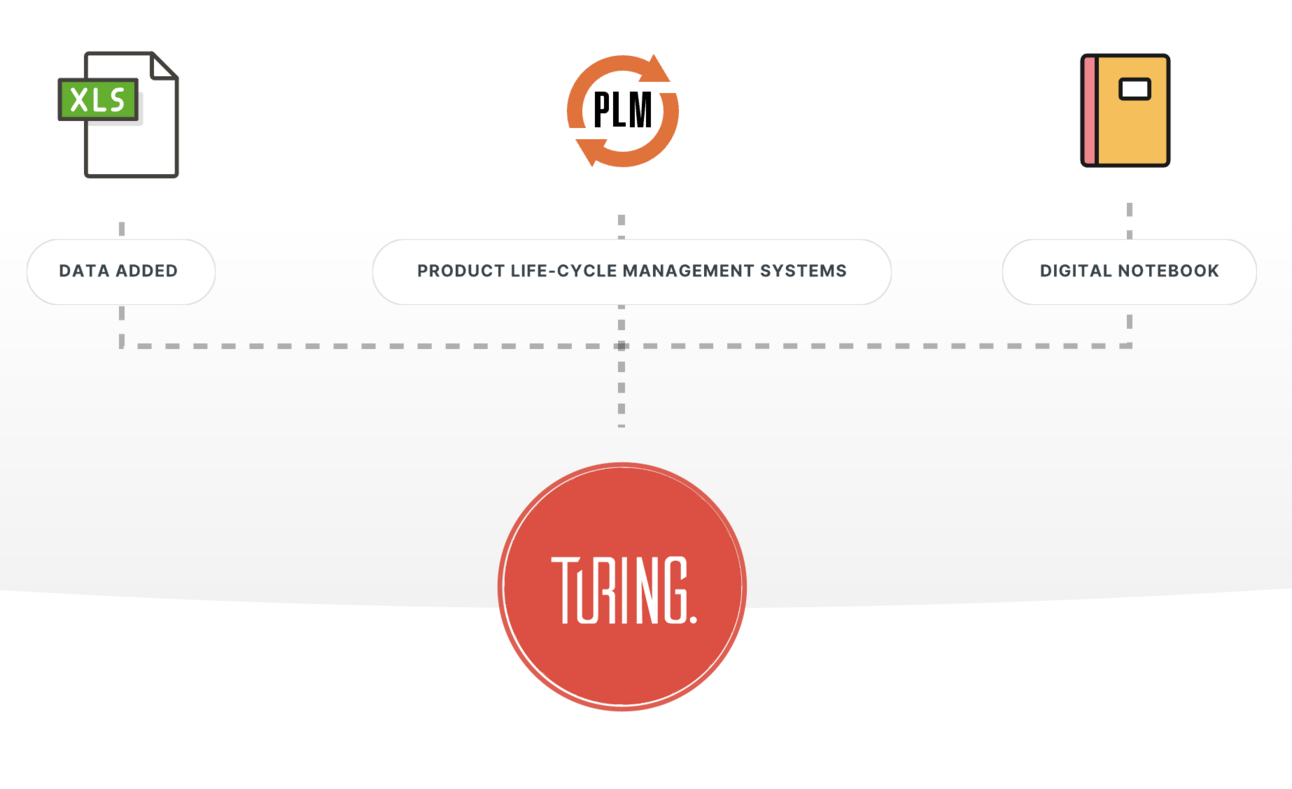
By January 2025, the company was discussing an AI assistant intended to suggest a developer’s next course of action. Shrimali’s accompanying concern remained organizational: useful knowledge could sit in spreadsheets, digital notebooks or people’s minds, while technology and business teams disagreed about the way forward.
A recommendation arrives in a workplace that already has its own hierarchy of confidence. A scientist may trust years of experience. An executive needs an economic reason to proceed. A technology team must consider the surrounding systems. Each position carries responsibilities that an attractive demonstration cannot settle.
In his April 2026 writing, Shrimali made those different incentives explicit. He argued that treating expertise as something to replace undermines trust, and that adoption depends on whose work a system strengthens. The practical measures he favored included cycle time and cost, tied to a specific problem and clear ownership.
“The enterprise does not adopt technology. People do.”
Manmit Shrimali, April 2026
A demonstration, then a harder question
Explaining the technology has become part of his public work. UC Davis listed him for a December 2025 seminar and technical demonstration on AI in food formulation. The event paired a general discussion with a closer look at the platform for people interested in product development.
The format suits the problem he describes. A broad account of AI can get a room interested; a working demonstration invites more particular questions. Where does the information come from? What can the developer inspect? How does the recommendation become a useful next step?
In June 2026, Turing released findings from a survey of 290 senior consumer-goods leaders in the United States and Europe. The company reported that only 19 percent had embedded AI in daily workflows. This was Turing’s commissioned survey, a commercial participant’s view of its market. It made the distance between trying a tool and routinely using it central to the discussion.
Later that month, Shrimali wrote about connecting scientific work with consumer needs. His argument expanded the field of responsibility around the laboratory to include marketing, finance and supply chain. Getting a product to the shelf required coordinated decisions across those functions. More ideas alone would leave the difficult work waiting.
What remains after the applause
In August 2026, Turing announced that it had received AgTech Breakthrough’s FoodTech AI Innovation Award. Shrimali used the occasion to emphasize how leaders approve tests, accept calculated risks and allow teams to learn. Even an announcement celebrating the technology returned to the conduct of the people using it.
His short personal description offers a few quieter details. He is a parent of two. He says he values honesty and originality. Those are modest statements beside the customary vocabulary of startup biographies, and they give a little scale to a career spent selling change to large organizations.
The thread from Dextro to Turing is a question about usefulness. What can a company do with what it already knows? Answering it takes software, but also a willingness to keep the awkward results and let them influence the next decision. Somewhere in a discarded experiment may be a perfectly serviceable reason to try something else.