When Manipal Dhariwal helped choose an early office in Mohali, one attraction was the internet service provider next door. For a software business, this was a persuasive neighbour. Before the campuses, the startup networks and the speeches about regional opportunity, there was the elementary matter of getting connected.
It is a useful place to begin with Dhariwal, co-founder and CEO of CareSmartz360. His career contains enough companies and affiliations to overwhelm a business card. But the more revealing story concerns where he chose to work, whom he hoped to recruit, and an early lesson about the difference between making a product and having a business.
He has built across borders while repeatedly returning to Punjab. That combination gives the career its shape: international customers on one side, a continuing interest in local opportunity on the other. The distance between them has supplied much of the work.
A return with practical consequences
Dhariwal grew up in East Africa and studied computer engineering at Rochester Institute of Technology. Netsmartz began in 1999. Around 2001, as the company expanded, the founders opened an Indian office in the Chandigarh region. In a later interview, he explained the choice through his affection for Punjab and the visits he had made there while living overseas.
“I prefer to be in a home state,” he said. The sentiment had a recruiting consequence. Engineers from other regions might prefer their own home states, too. His answer was to seek people who had left the region for work elsewhere, while developing the skills of younger people who could become future employees.
There is a pleasing lack of mystery in that explanation. The founder’s attachment to home and the employee’s attachment to home belong in the same calculation. A regional office needs people with reasons to remain there. Training then becomes part of the business plan, alongside the hunt for experienced recruits.
“I prefer to be in a home state.”
Manipal Dhariwal, 2018
The invoice before the customer
In the same 2018 conversation, Dhariwal was asked what he would do differently. He recalled a separate product company started during the early years, when business was going well. It absorbed time, effort and substantial money before it had a customer. “It was an expensive mistake for me,” he said.
That admission belongs near the centre of the portrait. The capacity to build software can encourage a seductive assumption: surely the commercial part will follow. An engineering team can make progress every day while leaving the question of demand unanswered. A product has features. A business also needs a buyer.
For a founder involved in several ventures, the recollection supplies a useful counterweight to the titles. It also makes the mentoring work more interesting. Someone who has paid for an avoidable mistake has a particular kind of experience to offer. The invoice lends weight to the advice.
There is no need to improve the anecdote with a dramatic rescue or a triumphant ending. Its value lies in his willingness to retain it in the account. The early years produced companies; they also produced a lesson he was still prepared to discuss much later.
Making room for the next founder
By 2016, Dhariwal was involved in the Chandigarh Angel Network and running Startup in a Box, a workspace in Mohali for early-stage businesses. His public ambition for the region was conspicuous: “Soon billion-dollar companies would be a reality from Punjab,” he said. It was a statement of expectation, with the outcome still ahead.
The workspace addressed a smaller, immediate problem. New businesses need somewhere to operate. Netsmartz describes Startup in a Box as a ready-to-use space, alongside its support for startup activities. Grand ambitions still need desks, internet access and somewhere to hold a conversation without borrowing a meeting room indefinitely.
Through the Startup Accelerator Chamber of Commerce, or SACC, Dhariwal’s work extended into mentoring. The organisation, established in 2014, connects entrepreneurship with training and support. Netsmartz also describes 54-hour Startup Weekend programmes, a format that puts participants under a short deadline to work on a business.
The range matters because a first-time founder can encounter several different shortages at once. A room solves one. Advice solves another. A useful introduction may solve a third. Dhariwal’s activities across workspace, investment networks and mentoring bring those needs into the same career.
A workspace, an experienced ear, a useful introduction. Different needs require different kinds of help.
Teaching the region to hire itself
At a youth forum in Mohali in 2015, he argued that fresh graduates needed professional knowledge. Addressing younger Punjabis, he told them: “The world is looking at you. So, follow your dreams.” In the setting of a student event, the encouragement had a practical companion: preparation for work.
Four years later, his published argument about the Tricity startup economy put education and industry closer together. He called for stronger educational infrastructure, research and development, and contact between researchers and working professionals. His concern included capital at different stages of a company’s development, rather than a single cheque at the beginning.
These are unglamorous subjects for someone routinely introduced as an entrepreneur. They are also consequential ones. A company can advertise a vacancy quickly. Developing the skills needed to fill it takes longer. A founder can ask for investment today; becoming ready for that investment may require months of work.
In 2021, discussing incubators linked to higher education in Haryana, Dhariwal described helping founders with market access, business models and routes towards venture capital. His emphasis was on opening channels through the Netsmartz group’s network. For a young business, reaching a possible customer can be as useful as another round of encouragement.
His institutional connections now include Plaksha University, which lists him among its founders, as well as the Mohali IT City association. Together, the roles connect company building with education and the business community around it. They show how far his work has spread beyond the original software office.
One career, several kinds of software
CareSmartz360 sits within that wider entrepreneurial history. The company names Dhariwal as co-founder and CEO, alongside co-founder Manjeet Dhariwal. Its published timeline dates its founding to 2016 and records a $5 million research and development investment in 2017. Those are company milestones, rather than personal financial figures.
Later entries describe an open API in 2022, custom forms and reports, an administrator mobile app, and security and disaster-recovery improvements in 2024. Viewed together, these developments show attention to the everyday demands of running software: connecting systems, tailoring information and keeping operations dependable.
Another part of his work concerns construction software. His author profile at MSDynamicsWorld connects him with ProjectPro, built around Microsoft Dynamics 365 Business Central. Accounting, project management and business systems feature in that work. The subject changes, but the interest in software used to run an organisation remains visible.
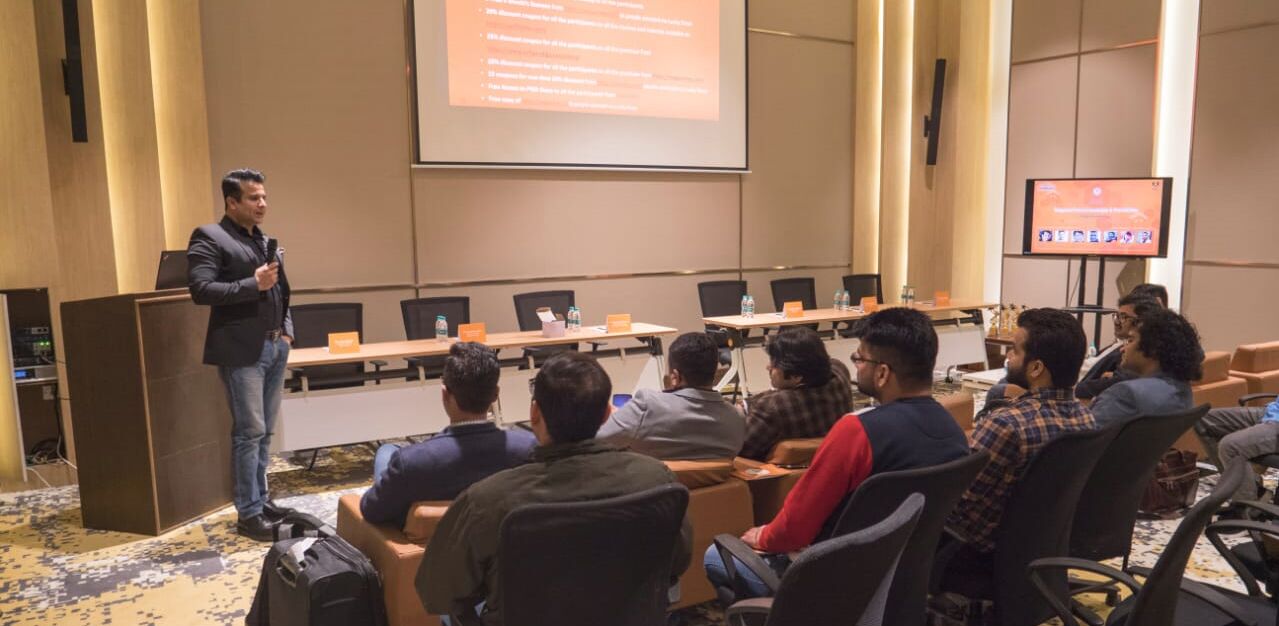
At the 2019 Magento meetup in Chandigarh, he spoke about e-commerce technology. It was another setting in which software businesses, developers and commercial questions met in the same room. Across these appearances, the career looks less like a single product narrative than a continuing involvement in the practical uses of software.
The dog had an excellent brand name
A 2016 glimpse of his home life provides a welcome change of scale. Dhariwal and his wife, Amrita, were described as frequent travellers, collecting objects during visits to countries including Italy, Spain, Denmark and Sweden. Their taste combined paintings, American furniture and an affection for an older house.
The household included their daughter, Annika, and a Saint Bernard named Louis Vuitton. Some families bring back souvenirs. This one also had a dog whose name could have appeared on the luggage. The detail is small, domestic and rather more memorable than another list of business affiliations.
Plaksha’s biography also identifies him as an avid golfer. Between travel, family and golf, the public portrait acquires some space around the executive roles. The interest in place extends into life outside the office, where objects gathered elsewhere can coexist with a home in Chandigarh.
Back to the connection
Dhariwal’s recent writing follows enterprise AI into questions of infrastructure. A June 2026 article examines energy, computing power and carbon as business constraints. His later article list includes AI as enterprise infrastructure and the relationship between AI growth and sustainability. These are his current areas of attention, rather than promises of a settled future.
There is a connection to the earlier office beside the internet provider. Technology depends on arrangements beyond the screen. Someone must supply connectivity, computing capacity and power. People must know how to use the tools. Businesses must find enough value in the result to keep paying for it.
For Dhariwal, the work has repeatedly involved those surrounding conditions: recruits, skills, workspace, introductions and institutions. The costly product venture belongs in that picture, too. It supplied an early reminder that technical progress and commercial progress can move at different speeds.
His career has carried him across continents. Its recurring commitment has been to make more work possible in a region he cares about. Return to that first office and the choice becomes refreshingly concrete. There was a place he wanted to build. There was a connection he needed. He found a neighbour who could help.