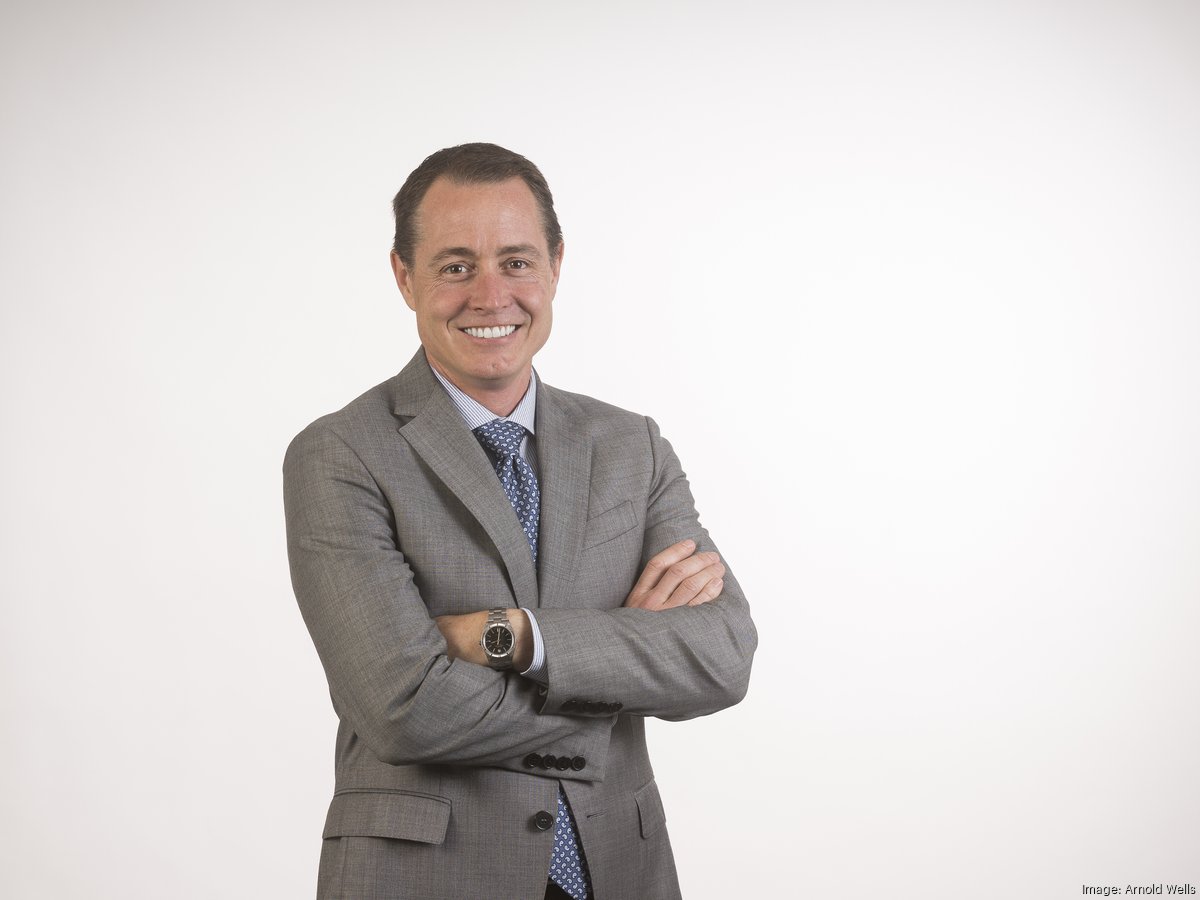
Mark Friedman helped prepare a sales presentation for a company that did not yet exist. The name was familiar: Accruent, the software business he had founded in 1995. The unfamiliar part was its future. In 2013, after a new investment, Friedman and his investors set out to describe what a buyer should eventually see. Then they had to build it.
There is something pleasingly audacious about putting tomorrow’s business in a binder. Most office documents have enough trouble describing what happened last Thursday. Friedman’s exercise required a picture of leadership, products, customers and markets several years ahead. It offers an unusually useful entrance into his career: a founder interested in the distance between a promising idea and an organization capable of delivering it.
That distance runs through Accruent’s expansion, the executives he developed, and the software companies he later helped oversee. It also leads to an unexpected setting for a technology story. Start with a building. Consider the paperwork.
A very expensive spreadsheet
A lease has dates, obligations and payments. A property has equipment, repairs and projects. Multiply those details across a corporate portfolio and the paperwork acquires a financial life of its own. Friedman founded Accruent around the work of managing real estate and facilities, an area where large, expensive assets could coexist with surprisingly modest information systems.
By 2007, he was making a pointed observation about the mismatch. Companies were, in his phrase, “using Excel to manage billions.” Real estate represented a substantial business expense, yet it had received less technological attention than other parts of the enterprise. He argued that better systems could reduce the money lost through duplicated effort, overspending and opaque charges. The appeal was practical: help customers see where their money went.
Accruent’s customer roster at the time included Boeing and Morgan Stanley. These were organizations with plenty of reasons to care about the small administrative details surrounding property. A spreadsheet can hold a date perfectly well. Persuading an entire organization to act on the right date is a larger assignment.
Friedman brought a technical education to that assignment. He earned a bachelor’s degree in computer science at Tulane University’s School of Engineering. His company’s early biography placed him in charge of its vision, strategy and operations. The combination is revealing: understanding software was one part of the job; turning it into something customers could use consistently was another.
“using Excel to manage billions”
Mark Friedman, on corporate real estate management, 2007
The business grew around a category whose vocabulary could empty a dinner party: lease administration, facilities management, capital planning. But each term describes somebody’s working day. A renewal must be handled. A repair must be scheduled. A property decision needs a reliable record. Friedman’s opportunity lay in making those ordinary tasks easier to manage across organizations large enough to lose track of them.
The company gets more rooms
Accruent expanded through acquisitions as well as product development. The purchases make more sense when read as additions to a customer’s working world. In 2008, it acquired FAMIS Software, combining facilities expertise with its real estate capabilities. Friedman described customers who wanted a more complete solution and less fragmentation between their systems and processes.
The attraction was the relationship between the tasks. Choosing and leasing a location creates one set of records; operating the place creates another. Bringing those activities closer together offered a reason for the combined business to exist beyond the arithmetic of an acquisition. A company could ask more of its software partner because that partner understood more of the job.
In March 2011 came Siterra, whose software was used across more than 500,000 locations. Its markets included wireless communications, renewable energy, retail and corporate property. At the time of the announcement, Siterra’s systems managed approximately 60 percent of cell towers in the United States. Friedman’s real estate software business now reached into the infrastructure behind a phone call.
That December, Accruent bought 360Facility. The acquired company served 418 customers in 56 countries, managing 64,000 properties. Its products covered maintenance, property and asset management, emergency preparedness and incident management. Those figures describe a substantial collection of everyday responsibilities, each carrying its own users, expectations and habits.
For a founder, this kind of expansion changes the nature of leadership. The original product is no longer the entire conversation. Different teams arrive with different expertise. Customers may know an acquired brand better than the parent company. The operating challenge becomes keeping those relationships useful while giving the larger organization a coherent direction.
By the end of 2014, Accruent reported more than 4,000 customer organizations. It had delivered 27 product releases that year and completed customer launches in markets including Germany, South Africa, Cambodia and Japan. Friedman received an EY Entrepreneur of the Year award in Central Texas. The company’s geography had become as varied as its product vocabulary.
A future you could put in a binder
The 2013 mock sale presentation turned an eventual exit into a practical planning exercise. With Vista Equity Partners and TA Associates invested in Accruent, Friedman and his backers described the business they wanted a future buyer to encounter. That picture informed the operating plan leading toward the 2016 sale to Genstar.
He also accepted a demanding education from Vista. Its involvement reached into sales timing and compensation. Friedman said the close attention improved his work as CEO. The willingness to learn sits comfortably beside the ambition to plan: even a founder with years in charge can have something useful to borrow.
Genstar’s acquisition was announced in May 2016. Friedman spoke about software already working inside thousands of organizations. John Borgerding, then Accruent’s president, emphasized both customer value and opportunities for employees. The transaction marked another ownership chapter for a business that had spent more than twenty years accumulating products, customers and experience.
The announced cash price for Genstar’s sale of Accruent to Fortive.
Two years later, Genstar announced an agreement to sell Accruent to Fortive for $2 billion in cash. Friedman was identified as founder and chairman; Borgerding was CEO. Under Genstar’s ownership, the company had doubled revenue and acquired nine businesses. The scale of the transaction supplied a memorable number, but it represented an organization built across several leadership and ownership periods.
For Friedman, the achievement also carried the long view of a founder. A business started in 1995 had become something a major industrial technology company wanted to own. Twenty-three years is enough time for an original insight to acquire layers of people and process. The acquisition price compressed that history into a headline. His career continued beyond it.
The career inside the company
Jason Beem provides another way to measure those years. Friedman hired him in 2007 and mentored him for eleven years. Beem expected his professional life to remain in services. Friedman kept placing him in other roles, including sales, expanding the range of work he thought he could do.
Asked who had given him a consequential chance, Beem named Friedman. “He changed the whole trajectory of my career,” he said. The account offers a personal counterweight to the transaction history: alongside the expanding business was an executive discovering that his first specialty did not have to define his future.
“He changed the whole trajectory of my career.”
Jason Beem, reflecting on Friedman’s mentorship
Other colleagues describe similar qualities. In a public recommendation, Phil Burroughs emphasizes Friedman’s ability to notice business patterns, connect operational detail to the larger picture and teach others. Benoit de la Tour describes the discipline of working with Friedman and ST6 while building Advantive. Their accounts place the emphasis on the working relationship: paying attention, explaining decisions and following through.
They also suggest why operating work can outlast a particular title. A founder leaves more than a product portfolio. People carry methods into their next jobs: how to ask a question, how to prepare a plan, when to trust someone with unfamiliar responsibility. Beem’s recollection is a reminder that a company’s succession of roles can become someone else’s education.
Taking the question to other businesses
Through ST6, Friedman took on roles across enterprise software. At insightsoftware, formed by TA and ST6 in 2018, he served as executive chairman. By 2021, the financial reporting and enterprise performance management business served more than 28,000 customers. In discussing a roughly $1 billion investment from Hg, Friedman described revenue approaching ten times the company’s starting level of $35 million.
Revalize brought another setting in 2021. Friedman joined as chairman of a business assembling software for manufacturers’ revenue operations, from design and simulation to product selection and quoting. The products differed from facilities management. The underlying commercial interest was recognizable: specialized work, complicated information and customers who wanted less friction in getting something done.
In 2022, he became executive chairman of Advantive, serving specialty manufacturing and distribution. Its software supported activities including production, supply chains, quality and commerce. Friedman’s public comments focused on combining the constituent companies’ strengths and helping customers adapt. The founder’s work had become a series of engagements with businesses whose usefulness depended on understanding an industry’s details.
- 1995Founds Accruent
- 2016Genstar acquisition
- 2018Accruent sale agreement; insightsoftware chapter
- 2025Incoming executive chairman, Solovis
- 2026Solovis board chairman as a new CEO arrives
Solovis is the latest chapter. In October 2025, the portfolio management and analytics company announced the close of its sale to Insight Partners, with ST6 joining as an operating partner. Friedman was named incoming executive chairman. The business gives institutional investors visibility across public and private markets, helping them manage portfolios whose complexity resists a tidy summary.
On October 15, 2026, Solovis announced Leo Rozkin as CEO, succeeding interim chief Laurens Albada. Friedman, identified as chairman of the board, described work to rebuild both the platform and company with AI at the center. “The foundation is built,” he said. New developments were still ahead.
There is a familiar tension in that statement: something substantial has been done, and the next version still has to arrive. Friedman’s career has repeatedly occupied that interval. A property portfolio, a software company, an employee’s next role: each begins with what is already there and asks what might become possible with more clarity. The binder is the easy part. The interesting work begins when somebody opens it.
Keep reading & watching
- Mark Friedman on LinkedIn
- ST6
- Accruent
- Solovis
- Planning and investor partnership: the interview study
- Accruent’s 2018 sale agreement
- FAMIS joins Accruent
- The Siterra acquisition
- The 360Facility acquisition
- Accruent’s 2014 year in review
- Revalize’s formation
- The Advantive chapter
- The insightsoftware investment announcement
- Solovis’s October 2026 leadership announcement
- Watch Jason Beem discuss his career and mentorship