With 1:03 left, Corbin Tognoni intercepted a pass and ran it back 53 yards. Claremont-Mudd-Scripps finished with a 28-9 win over Pacific. It was 2011, and the future software executive was a college defensive back, wearing number 11. For once in a profile about enterprise software, the score is an actual score.
The episode belongs to an earlier life, before acquisition committees and international subsidiaries. It also supplies a useful introduction to someone whose working biography can otherwise disappear into the vocabulary of finance. Tognoni has been a student of political ideas, a college athlete, an investor and a chief financial officer. Today, based in Austin, he runs Mirador Software Group.
The company he founded in 2023 buys specialized enterprise resource planning businesses. ERP is the software through which companies organize production, inventory, finance and other daily work. Mirador’s stated intention is to own its businesses indefinitely. For an executive trained in software buyouts, that makes for an interesting second act. He knows the acquisition business from the inside. Now he is arguing that the ownership clock deserves changing.
Before the balance sheet, a question about institutions
Tognoni attended Phillips Academy before Claremont McKenna College. At Andover, his name appeared on The Phillipian’s circulation staff. Newspaper distribution is a modest entry on a future executive’s résumé, but an agreeable one: somebody has to make sure the thing actually reaches its readers.
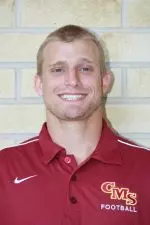
At college he played defensive back through his senior season. His 2011 conference statistics record two interceptions, 96 return yards and a touchdown. These are details with the virtue of being wonderfully literal. There is no need to turn a football field into a business-school parable; he had a position, played it and left a record.
His academic work offers a different glimpse. In spring 2012, he completed a senior thesis titled Two and a Half Lawyers: Coolidge, Wilson, and the Legacy of Lincoln. Charles R. Kesler was its reader. The abstract examines competing views of America’s founding principles, political change and self-government. Mirador identifies his degree as a BA in economics; the thesis sits in the college’s Government department.
Years later, his business writing would return to questions about institutions and incentives. The subjects had changed from presidents to corporate owners. The recurring interest is visible in the work itself: how arrangements of authority affect what people do. Reading the thesis beside the essays is an invitation to notice that thread, without pretending a college paper was secretly a plan for an ERP group.
Learning the acquisition trade
Tognoni’s early career took him into enterprise software transactions at Battery Ventures and Forterro. At Expandable, where he later served as CEO, his remit included strategy, customer success, operations and financial performance. The progression brought together buying businesses and carrying responsibility for how they ran afterward.
Forterro supplied the larger apprenticeship. During his decade there, the group expanded from a Swedish ERP business with fewer than 80 employees into an international organization with roughly 1,300. Its portfolio reached 12 ERP products and more than 11,000 customers across 17 countries. Tognoni became CFO and held chairmanships or presidencies across multiple business entities.
The attraction of that experience is easy to understand. A specialized software company can hold knowledge that is difficult to reproduce: a particular manufacturing process, a local market, years of customer requirements. Buying several such companies brings together expertise that would take a long time to assemble from scratch. Keeping that expertise useful is the operating problem that follows the transaction.
Tognoni’s other relationships extend beyond the industrial software group. His advisory work has included Sweden’s Gung, which provides B2B commerce software, and Ingressive Capital, which invests in African technology businesses. He has also been involved with BookReport, serving American schools. The connecting subject is the business around the software, including the customers and organizations that depend on it.
A buyer with a longer calendar
Mirador was founded in May 2023. Its family and employee ownership is central to the proposition Tognoni offers sellers: an ongoing home for a business whose founder may be ready to hand over responsibility. The acquired product is supposed to retain a purpose, a market and people who understand both.
That offer becomes more concrete in the case of MIE Solutions. Founder Dave Ferguson began writing software in fourth grade, in 1981, to help automate his father’s shop floor. Decades later, he wanted a successor that would preserve the company’s products and give its employees room to continue. Mirador’s account of the relationship emphasizes the appeal of a father-and-son owner with knowledge of ERP.
There is a human complication inside every acquisition announcement. A sale can be the seller’s long-awaited release from responsibility while arriving as unwelcome uncertainty for everyone else. Mirador’s pitch tries to address both sides. The founder can step back; the software company can carry on. Whether that promise remains convincing depends on decisions made after the congratulations have finished.
Expandable describes its place in the group in similarly practical terms: access to capital, expertise and shared resources, backed by an owner taking an indefinite view. Those benefits still require execution. A long calendar creates room for investment; managers must decide what deserves the money and attention.
The customer who knows where it hurts
Tognoni’s January 2024 essay on customer intimacy explains the operating side of his argument. He describes ERP as the system of record and warns against software that pushes distinctive businesses toward generic processes. A polished demonstration, in this view, says little about whether the product fits the work.
His examples are prosaic and consequential: materials wasted, inventory mishandled, jobs costed poorly, decisions made without timely information. This is where his approach acquires substance. He wants providers to spend time understanding customers’ operations, involve them in product decisions and maintain the relationship after implementation. He also acknowledges that such attention takes patience and sustained investment.
The ambition asks something demanding of an acquirer. If customer knowledge stays near the product, the parent company must improve the business without smothering its judgment. Mirador’s declared approach combines decentralized management with shared services. There is a balancing act here: which decisions benefit from the group, and which belong with the people answering the customer’s call?
Permanence still needs a bank
In September 2024, Mirador announced growth debt capital from Wells Fargo after a series of acquisitions in the United States and Europe. The announcement gave Tognoni a chance to describe the structure behind his promise. He expected the bank relationship to support expansion over decades.
Borrowing introduces its own obligations. There are repayments to make and an operating business to sustain. An indefinite holding period does not abolish financial discipline. It changes the proposed destination of the company being financed: Mirador was describing growth without a scheduled sale as the intended payoff.
Tognoni put the distinction plainly in that announcement. The phrase is short enough to survive the journey from an investment thesis to a customer conversation. It is also a commitment that takes much longer to demonstrate than to pronounce.
“our strategy does not include plans for an exit.”
Corbin Tognoni · September 2024
The argument gets sharper
By October 2025, Tognoni was making his criticism of ownership incentives more explicitly. In an essay about capital structure, he used consolidation in the fire-truck industry to discuss the consequences he associated with short investment horizons. He drew a comparison with ERP and brought Adam Smith into the discussion. This is a CFO willing to make a historical argument in public.
The criticism is his stated position, and a pointed one. His proposed alternative places responsibility on Mirador too: if ownership shapes behavior, then its own structure must show up in investment, service and product decisions. The test will be the experience of customers and employees over time.
One of the favorite quotations he selects for his company biography is attributed to Epictetus: “You cannot learn what you think you already know.” It is a useful sentence for someone buying businesses full of specialist knowledge. Arriving with capital gives a new owner authority. Listening determines how intelligently that authority gets used.
Two ends of the textile business
In January 2026, Intex Consulting joined Mirador. The textile software company brought more than three decades of work with manufacturers and a reported user base exceeding 30,000. Its customers span activities including spinning, weaving, knitting, dyeing and finishing. Here was another business whose value depended on knowing a particular industry in detail.
Mirador already owned Reflex Data Systems, which serves textile wholesalers and related markets. Tognoni described the opportunity as a connection between manufacturing and distribution, while saying the product lines would continue to develop independently. The distinction matters: common ownership can create possibilities for coordination without requiring every customer to move into the same application.
Intex founder Bastian Schneider would continue in an advisory capacity. Writing about him on LinkedIn, Tognoni praised his product discipline and customer commitment, and expressed gratitude for being trusted with the company’s future. The language was personal because the transaction involved a person’s accumulated work.
That is where Tognoni’s current story lands. He has moved from a college playing field and a thesis about political institutions to the daily obligations of owning software businesses. Mirador offers founders a way to leave while giving their companies a way to continue. For its CEO, the interesting part of the bargain is everything that follows the purchase. Staying, after all, is a verb.
Follow the thread
More from Tognoni’s working life, writing and earlier chapters.