At thirteen, Seth Ravin had a word processor to sell and an established competitor to annoy. His company, Real Computing, offered software for the Tandy TRS-80 at $50 against an alternative he remembered costing about $200. He took the contest to computer conventions. “I went head to head with Radio Shack at several conventions,” he recalled. Before that came Bubble Yum, sold at school in third grade. The merchandise changed. An interest in what people would pay for an alternative survived.
Decades later, the sums have more zeroes and the customers have procurement departments. Ravin is the founder, chief executive, president and chairman of Rimini Street, which maintains and supports enterprise software. His proposition asks buyers to reconsider an apparently settled arrangement: whether the company that sold the software should also control the terms of keeping it useful.
There is an appealingly awkward quality to that question. The technology industry likes a launch. Ravin has built a career around what happens afterward, when the launch is forgotten, the software has become part of daily work and another invoice arrives. A system that continues doing its job can be a difficult thing to celebrate. It can also be a valuable thing to own.
Learning where the friction lives
Ravin’s preparation included a business administration degree from the University of Southern California and work well outside a conventional software sales route. He worked on defense conversion programs in Russia and assisted the Clinton administration’s effort to secure congressional passage of the GATT trade agreement in 1994. Those are unusual entries in the biography of somebody whose eventual business would concern maintenance renewals.
PeopleSoft supplied the more direct education. From 1996 to 2000, he held management positions there, eventually becoming vice president of its customer sales division. His responsibilities included upgrades, installations, release support policies and preparations for the year 2000. He was working near the point where a vendor’s product calendar met a customer’s operating calendar. The two calendars did not necessarily agree.
He later recalled a revealing experience around Y2K: customers were willing to pay more for special support that let them avoid replacing their software. The lesson was unusually concrete. Continuing to use an existing system had a value of its own. A company could want help with the application it already depended on, even when a newer version was available.
That experience helps explain why service occupies so much of his account of his career. In discussing PeopleSoft, Ravin has emphasized the relationships created by looking after customers. Software buyers must trust somebody with the unglamorous, recurring work. Knowing how to keep a system running can become as commercially important as persuading someone to buy it.
A living room, then a ticker symbol
After PeopleSoft came a vice presidency at Saba Software, followed by TomorrowNow, where Ravin held executive roles from 2002 to 2005. He became its president and a board director. SAP acquired TomorrowNow in January 2005; Ravin left that April. By September, he had launched Rimini Street. The new company began in his Las Vegas living room.
Its initial offer was easy to understand: independent enterprise software support at roughly half the vendor’s annual support fee. The operational undertaking behind that price was less simple. Customers needed people who could understand complicated business applications and take responsibility when something went wrong. A discount could begin the conversation. Reliable service had to carry it.
A sketch of the business idea, not a guarantee of any customer’s savings.
Rimini Street reached the public markets in 2017 through a merger with GP Investments Acquisition Corp. Trading under RMNI began on October 11. A business that had started at home now had public shareholders watching its results. That change added another audience to Ravin’s argument. Customers wanted useful service and lower costs; investors wanted a company capable of turning those promises into a durable business.
The company’s reach also changed the scale of the work. By 2024, Ravin was describing clients operating across 150 countries and company operations in 22. The living-room origin makes a good anecdote, but the geographical spread is the more demanding achievement. A service company must repeatedly deliver what its founder first sold. Distance gives it plenty of opportunities to disappoint.
The bill for challenging the bill
Ravin’s career also contains an extended warning about the difficulty of this market. Oracle sued Rimini Street and Ravin in January 2010. The first case produced monetary relief for Oracle and a permanent injunction restricting certain support practices. A second proceeding, begun by Rimini Street in 2014, led to further claims, rulings and appeals. These were disputes with concrete consequences for how support could be delivered.
The distinction matters. A customer’s interest in an alternative does not settle the intellectual property questions involved in supplying it. A service company can have a commercial opportunity and still face restrictions on the methods it uses. Any account of Ravin as a challenger has to make room for that less flattering, more consequential part of the story.
On July 7, 2025, Ravin and Rimini Street entered a settlement agreement with Oracle. Among its terms was a requirement to wind down support and services for Oracle PeopleSoft products by July 31, 2028. Existing injunctions remained in effect, and the agreement included no admission of liability. Rimini Street subsequently reported receiving approximately $37.9 million back from previously paid attorneys’ fees and costs.
“I was a young man when that battle started. I had hair.”
Seth Ravin, 2025
The joke gives the dispute a human timescale. A founder can spend years talking about the future while lawyers continue sorting through the past. Yet Ravin also expressed respect for what Oracle’s leadership had built. His stated position was that customers should have room to choose among different approaches. Respect and competition could occupy the same interview, even after all those court dates.
An old opponent across the table
One of the more interesting relationships in Ravin’s later career involves Bill McDermott. As SAP’s chief executive, McDermott had competed against Rimini Street’s alternative support offering. As ServiceNow’s chief executive, he became a partner. The companies announced their collaboration in October 2024, combining Rimini Street’s knowledge of existing enterprise systems with ServiceNow’s platform.
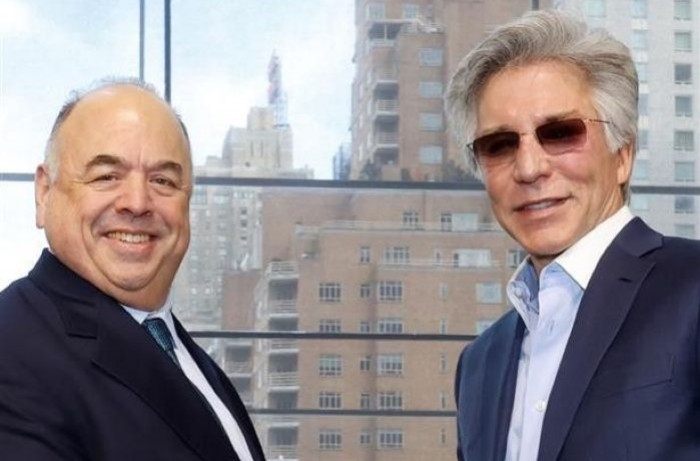
The idea makes Ravin’s argument more expansive. Keep the underlying enterprise system doing useful work, then introduce new workflows, automation and interfaces around it. In that arrangement, maintaining older software and introducing newer capabilities become connected activities. The installed application becomes a foundation that can support changes above it.
It is also an ambition that needs to be judged through actual implementation. A partnership announcement cannot establish how well every customer’s systems will fit together. For Ravin, though, it offers a way to move the conversation beyond the support renewal. The company that argues against an unnecessary replacement can also propose what the customer might improve instead.
The cost adviser checks his own cupboards
Ravin supplied a useful complication to his public message in May 2025. Discussing technology budgets alongside chief financial officer Michael Perica, he described an examination of spending inside Rimini Street itself. Looking across departments revealed technology spending about 30 percent above what the central IT budget showed. Purchases made outside the usual channels had accumulated.
It is a more revealing admission than another account of someone else’s waste. Even a company built around scrutinizing technology costs could have trouble seeing its own complete bill. A department buys something useful. Another department buys something similar. Both decisions can look reasonable until somebody counts them together. The spreadsheet acquires a personality of its own.
Ravin said the company intended to consolidate and streamline that spending. The episode brings his argument down from industry philosophy to ordinary management. Customer choice requires visibility as well as alternatives. It is hard to make deliberate decisions about software when nobody has a full view of what the organization is already purchasing.
AI can wait for a business reason
By August 2026, Ravin was applying familiar skepticism to a newer buying rush. He urged companies to examine their business processes before adopting AI. Remove unnecessary steps. Consider the tools already available. Then evaluate whether an AI investment would lower operating costs, improve profitability or strengthen competitive advantage. The sequence leaves the technology purchase waiting for an explanation.
That advice comes from an interested party. Rimini Street is itself developing and selling AI-related services. Its July 2026 announcement introduced Rimini Govern for AI, a governance and management service. Ravin is participating in the market he is asking customers to question. The useful tension is whether the discipline he recommends will apply as firmly to his own offerings.
Revenue rose 6.7% year over year. Company-reported figures; these describe the business, not Ravin’s personal wealth.
Those figures give his current position some scale. They also bring the story back to execution. A founder can make a persuasive case for customer freedom, but a public company must keep earning the right to serve those customers. Support quality, new services and financial performance all have to survive closer inspection than a conference-stage argument.
Ravin’s recurring question has traveled from an inexpensive word processor to systems that run large organizations. He has spent much of that journey challenging the assumption that the next purchase should follow the vendor’s calendar. Now the calendar has AI written all over it. His proposed pause is familiar: look at the work, look at the cost, and decide what improvement is worth buying. The convention tables are long gone. The buyer still has a bill to consider.