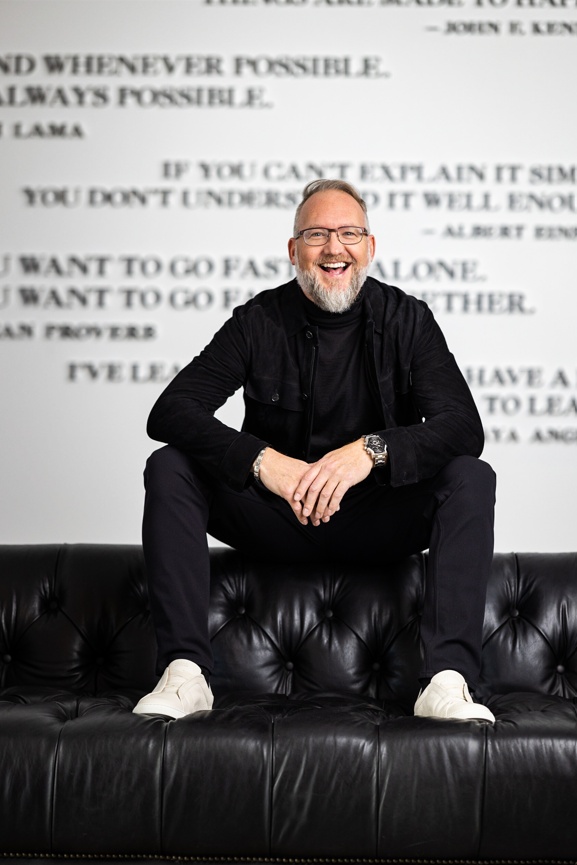
Randall Ward had a timetable for leaving the job he created. After 20 years as Appfire’s chief executive, he would choose a successor. In January 2025, with the company reporting more than $200 million in annual recurring revenue for 2024, he announced the handoff to Matt Dircks. The founder was making room while the business was still growing. In an industry fond of treating the corner office as a hereditary possession, this was an interesting piece of advance planning.
Ward stayed as Founder and CEO Emeritus, with work centered on culture, acquired-company founders, and executive relationships. These are unusually revealing duties. They put him near the people who carry a company’s habits from one chapter to another. A product can survive a change in its owner’s job title. Whether the people still recognize the place is a more demanding test.
Dircks was already familiar with the business. He had joined its board in 2021, and Ward described him as a mentor when explaining his decision. The succession therefore carried the same preference that appears elsewhere in Ward’s career: get to know the person before committing to the arrangement. The announcement gave a name and a date to something founders often leave suspended in the future.
A childhood within walking distance of computing
Ward grew up in Maynard, Massachusetts, near Digital Equipment Corporation’s headquarters. Through a family connection to Ken Olsen’s executive assistant, he spent time roaming DEC’s mill building as a child. Computing was something happening inside a real place, with engineers and rooms to wander through. The distance between a curious child and a technical workplace could be crossed on foot.
His later career began in telecommunications signaling engineering. He worked on software businesses including Boston Communications Group and Net.Genesis, and his professional history includes consulting or work for Oracle and Vodafone. He also helped architect MIT’s OpenCourseWare platform and worked as a visual learning researcher at Stanford. Those projects put him around both technical infrastructure and the ways people use it.
That combination helps explain the attraction of an extension: a small piece of software that makes a larger system more useful. At Vodafone, Ward recalled running Jira beneath his desk despite restrictions on choosing his own tools. Corporate software policy had met an engineer with a desktop computer. The desktop appears to have had the more persuasive argument.
Small software, a long commitment
In 2005, Ward and Mat Gauvin founded Appfire around the idea that software was becoming smaller and more pluggable. Browser plug-ins and open-source modules offered clues. A company would supply a platform; other developers would supply the things that made it fit a particular team. Appfire could build a business in those spaces.
The early business mixed professional services with software. The Atlassian ecosystem gave Ward and Gauvin a place to work close to customers using Jira and Confluence. Their opportunity was practical: help people get more from tools they already had. Few office workers wake up hoping to replace every system in their employer’s technology stack. They might, however, appreciate a report that finally answers the question.
Appfire acquired the Bob Swift brand of Atlassian apps in 2014 and Wittified in 2015. Those purchases began turning individual useful tools into a portfolio. In 2017, the company concentrated on the marketplace model, winding down side projects. That decision narrowed the work while opening a larger business opportunity. Repetition could now become an advantage: find a customer problem, offer an extension, support it, and do the work again.
The distribution mattered as much as the code. A marketplace brings a developer close to someone already searching for a fix. Appfire could grow alongside a platform rather than asking customers to abandon it. Ward’s bet depended on a particular kind of restraint: accept the platform’s place in the customer’s life, then make that relationship more useful.
The founder who brought his own terms
When Appfire sought outside investors, Ward wanted the relationship to preserve the company he had been building. He used a reverse term sheet: a written account of conditions a prospective investor would have to accept. It gave the founder a way to make his priorities concrete before the conversation disappeared into valuation.
His stated concerns included equity allocation and how investment money would be divided between capital for the business and payments to existing holders. He also wanted investors whose experience and networks would help build a durable company. The method makes for a less glamorous fundraising story than a bidding war. It also produces a document people can consult after the celebratory dinner.
Silversmith Capital Partners became Appfire’s first institutional investor in 2020; TA Associates subsequently invested as well. Ward has described taking two years to find the right first partner. In a 2024 joint podcast interview with Silversmith’s Sri Rao, the partnership itself became part of the story. Growth capital was arriving inside an existing relationship, with time already spent understanding the business.
There is a useful clue here to Ward’s temperament. He was willing to entertain a larger ambition without treating speed as the only evidence of seriousness. A founder who wants a company to last for decades has reason to ask awkward questions before signing. The awkward questions are considerably cheaper then.
“Appfire has been my life’s work and a source of immense pride.”Randall Ward, on the 2025 succession
An acquisition comes with people attached
Appfire’s purchases brought in more than product names. In 2021, Bolo Software founder Jason Boileau joined as a Chief Product Architect when his Confluence publishing apps became part of the company. The products included LaTeX Math, Numbered Captions, and Easy Numbered Headings. These are specific, unflashy needs, familiar to anyone who has watched a document become less intelligible as more people edit it.
Another 2021 deal brought developer Vitalii Zurian and 13 Lizard Brain products into Appfire. Zurian joined as an active advisor. His explanation was straightforward: marketplace success eventually requires more investment on the business side. Appfire supplied resources and operational support around developers who had already found customers. The appeal was a division of labor that let product builders keep building.
The RoninPixels acquisition that September brought all three co-founders and their team, together with Dashboard Hub apps for Jira and Confluence. Ward’s explanation focused on helping teams understand data before acting on it. Across these deals, the recurring subject was the working team: who would join, what they knew, and how their tools could develop inside a larger business.
Long relationships also traveled across platform boundaries. When Appfire acquired a suite of ServiceRocket applications connecting Salesforce and Atlassian products, Ward recalled meeting ServiceRocket founder Rob Castaneda more than 15 years earlier. A transaction might have an announcement day. The acquaintance behind it could be old enough to have its own filing cabinet.
Giving belongs in the operating plan
Ward’s interest in company culture extends beyond how colleagues treat one another on a call. He has written about growing up with a single mother who had to make difficult choices over household essentials. His account of charitable giving starts with remembering what it was like to receive help. That history gives his public advocacy a personal point of departure.
Appfire participates in Pledge 1%, committing across product, profit, equity, and employee time. Ward also serves on the movement’s Global Visionary Council. The arrangement gives giving a place inside the company’s structure rather than leaving it dependent on an executive’s spare attention. A percentage is a small number with a useful administrative quality: someone can keep track of it.
Appfire Town, launched in 2022, made that activity more visible. For 2023, the company reported more than 4,000 volunteer hours, over half a million dollars in donations, and work reaching 942 organizations. These are company-reported figures, but their specificity matters. They turn the broad wish to contribute into hours, dollars, and organizations that can be counted.
Ward’s public language returns to the value “Be human.” The relevant test for that phrase is what a company makes room for: time to volunteer, support for partners, and continuity for the people joining through acquisitions. Pleasant wording costs little. Allocating a company’s resources is where the preference begins to become visible.
A business that keeps going
By the January 2025 succession announcement, Appfire reported nearly 850 employees across 27 countries and 76 consecutive profitable quarters. Those figures describe the scale of Ward’s responsibility at the handoff. They also complicate the familiar founder story in which growth must excuse everything else. Profitability had been part of the company’s record throughout the long build.
The partner network was another part of that infrastructure. By 2024, Appfire described supporting more than 700 partners worldwide with training, sales materials, and other resources. Ward’s work had expanded from understanding individual tools to sustaining the relationships through which those tools reached customers. A larger catalog requires a larger capacity to explain, sell, and support it.
His own interests have continued to move with technology. In August 2026, Ward published essays on prediction markets, how to measure an internet that generates things on demand, and the communities surrounding data centers. The titles suggest an engineer still looking beyond the interface to the systems underneath it. The questions have widened from what an application can do to what its surrounding infrastructure changes.
The chair, meanwhile, belongs to someone else. Ward has kept a role in the company while letting another executive run it, giving his long-standing ambition a practical form. Appfire’s next chapter will be written through decisions he does not make himself. For a founder who built a business around making other people’s software more capable, helping a successor do the job is a fitting piece of work.
Keep the conversation going
Writing, conversations, and the company behind the story.