Hollywood had a storage problem. The films were going digital. The information about who could sell them, where, and on what terms was still in filing cabinets. Russell Reeder remembers hearing Bob Daly describe the difficulty in a 1998 meeting at Oracle with Larry Ellison and Terry Semel. An industry capable of sending pictures around the world could still struggle to locate the permission slip.
Reeder left to build a business around that gap. Rightsline would organize intellectual property rights so that people could work out what was available and transact on it. In his recollection of the beginning, he put up the first money himself, persuaded ICM chairman and CEO Jeff Berg to become the second investor over lunch, and won backing from Ron Conway.
It is a satisfying founder story: an awkward problem, an attentive listener, a lunch that becomes consequential. The more interesting part is what happened to Reeder’s thinking afterward. Having founded a company, he spent years considering how companies could depend less on any particular person.
The rights were in the filing cabinet
The appeal of Rightsline becomes clearer when you shrink the unit of entertainment. A viewer sees a television series. A licensing business may need to distinguish the series, an episode and a single scene. Each level can carry information relevant to a sale. A title in a catalogue is the beginning of the question.
By January 2003, Rightsline’s product had a rights repository and three modules: one for managing rights information, another for analyzing availability, revenue and sales, and a third for automating online licensing requests. Reeder was its president and CEO. There was a useful division of labor here. The database remembered; people could get on with the transaction.
A contemporary biography described his ambition as bringing Silicon Valley technology together with Hollywood content. It also recorded the less cinematic preparation: financial and manufacturing applications, enterprise software sales, and business-to-business web strategies. The person attempting to untangle the paperwork had spent time learning how large organizations stored and used information.
Rightsline continued long after his founding chapter. In May 2026 it announced a $500 million strategic growth investment from Hg, with existing investors and management participating. Patrick Arkeveld was CEO. Reeder’s response credited the original team, early customer Jeremy Laws and the people who had built the company over subsequent decades. A founder can begin a story without being its permanent main character.
Rightsline’s announced strategic growth investment from Hg, May 2026.
The family business was leadership
Reeder had encountered the responsibilities of leading people well before he had a software company to run. He identifies himself as the fourth Russell Reeder in his family. His grandfather, Colonel Russell P. “Red” Reeder, commanded the 12th Infantry Regiment at Utah Beach on D-Day.
In his account of childhood weekends at West Point, family dinners came with stories about decisions, duty and what to do when plans stopped matching circumstances. The younger Reeder initially treated this as ordinary family conversation. After college, he continued visiting his grandparents for weekly lunches at Fort Belvoir.
He briefly followed the expected route, attending West Point Prep for a year. Then he chose business and technology. The departure mattered to him because the school represented so much of his grandfather’s life. Choosing another profession did not dispose of the lessons he had heard at the table.
That family background helps explain the particular weight he puts on responsibility. His career would involve sales targets, customers and acquisitions. He describes the inherited obligation in terms of character and making the team successful. The setting changed considerably. The expectation that a leader owed something to other people traveled well.
First, learn to listen
Reeder graduated from James Madison University in 1994 and spoke at commencement. His field was computer information systems. His early work included developing financial systems for banks; his public biography also identifies a programming job at Mobil Oil. These were practical introductions to software with consequences beyond the demonstration screen.
The journey into sales began with a wish for less travel. Tired of being stationed at client sites for each project, he moved into technical support for field engineers. Sales engineering followed, then sales and sales management at Oracle. The sequence gave him several views of the same transaction: building the system, helping it work, explaining it and asking someone to buy it.
In 1997, he says, a promotion took him to Redwood City to help run enterprise application sales. He later joined RightWorks, a business-to-business startup, before founding Rightsline. His progression put customer conversations close to the center of his working life.
He returned to that subject in a January 2026 essay about sales. Preparation, he argued, can become a polished way of avoiding discovery. Presenters rehearse their material while leaving the other party’s needs insufficiently explored. The lesson extends easily to the boardroom: a good presentation does not guarantee that the people listening have had their actual question answered.
“The culture is about the employees.”
Russ Reeder, in conversation with Cloudflare, 2012
When the deal closes, who can say yes?
After Rightsline, Reeder’s work took him through businesses including NxTV and LibreDigital. The latter, which he led as president and CEO, was sold to RR Donnelley in 2011. Digital distribution kept changing its form: hotel entertainment, books, websites, cloud infrastructure. He kept encountering the organizations required to make it work.
At Media Temple, where he was president and COO, the customer base included designers and developers. In a 2012 conversation with Cloudflare co-founder Michelle Zatlyn, he discussed acquiring website builder Virb and making it easier for people to put a site online. He also put the emphasis on employees’ understanding of customer service. The technical offering and the people delivering it belonged in the same conversation.
GoDaddy acquired Media Temple in 2013. Reeder joined its executive leadership team. In a later account of the integration, he described employees having difficulty identifying who possessed the authority to help them. A task that once had a local route to resolution could become stranded inside a larger organization.
His reflection on the acquisition is unusually useful because it gets past the cheerful accessories of workplace culture. Team activities could survive the transaction while people’s ability to complete their jobs weakened. His account places the obligation on management to align priorities, clarify authority and make assistance accessible. Buying a company also buys a responsibility to answer the people inside it.
Three cultures, two data centers
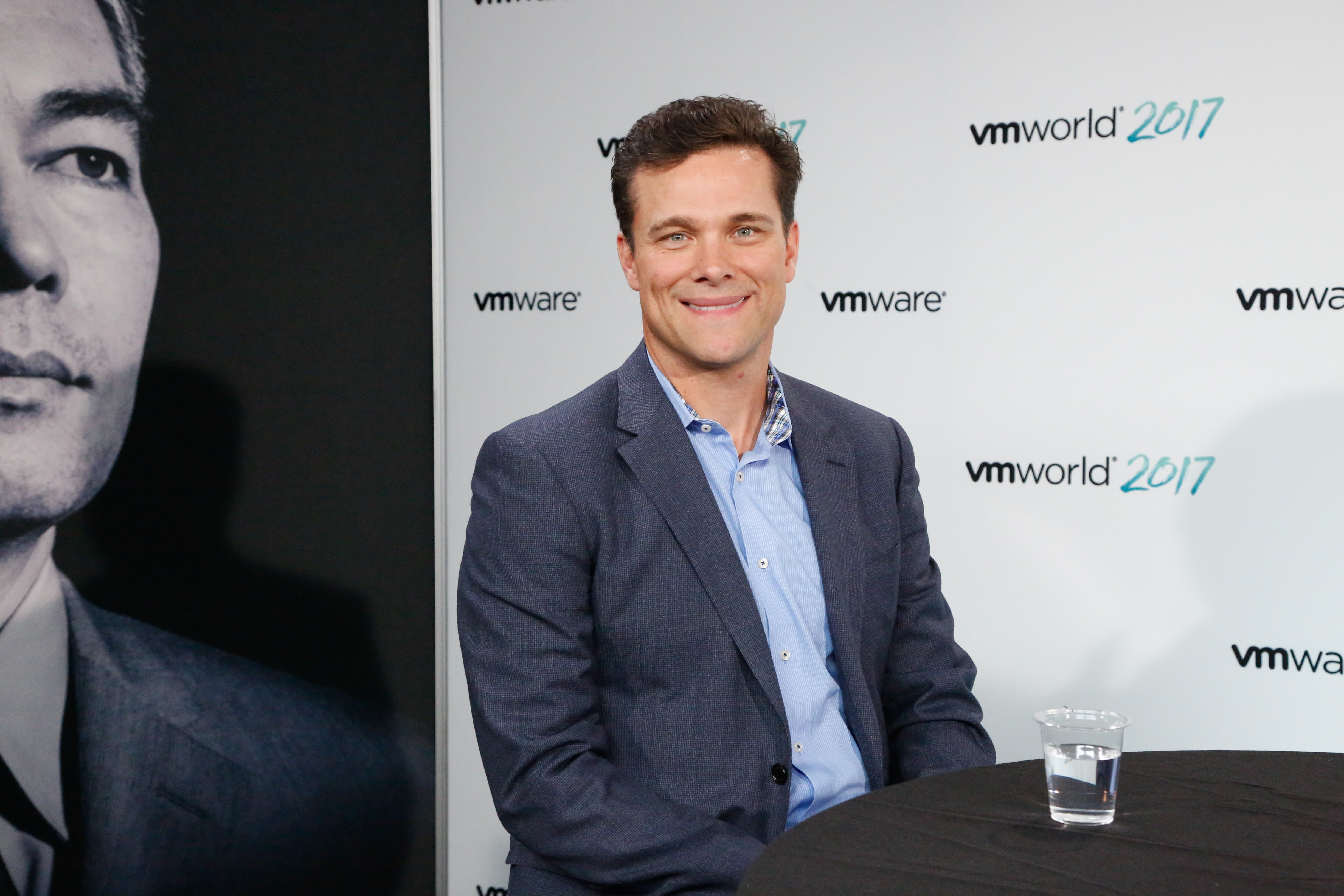
OVHcloud brought another version of the integration problem. As president and CEO of its US business, Reeder helped bring a French cloud provider into the American market. In 2017, that work included acquiring VMware’s vCloud Air business and bringing its employees into the operation.
The resulting organization had three cultural starting points: the French parent, the new American team and the people arriving through the acquisition. Reeder and his colleagues called the exercise the “Triple Lindy.” The nickname suggests an acrobatic maneuver; the underlying challenge included finance systems, HR systems and data centers still being built.
In November 2017, Reeder was discussing new private cloud offerings following the integration. Customers needed to operate across their own data centers and external infrastructure. His work therefore involved coordinating the organization behind a service whose purpose was itself coordination. Cloud computing has a way of making a very physical collection of buildings, equipment and people sound pleasantly weightless.
Later came leadership roles at Infrascale, Netrix Global and XTIUM. Netrix appointed him CEO in 2022 after he had served on its board. The repeated assignment was to help technology businesses work through change while continuing to serve customers.
A company with fewer rescue missions
Reeder now identifies his job as founder and CEO of KeyDelta. Its senior operators work alongside CEOs and leadership teams on execution and AI implementation. His current position on AI starts with the operating model: establish how work gets decided and delivered before trying to accelerate it.
He calls his execution framework VOOCS. Its five elements turn broad ambition into questions about priorities, measurable results, decision authority, working rhythm and continuity. The acronym is less interesting than its insistence on specificity. A goal needs a way to tell whether it has happened. A decision needs somebody who can make it.
- VVisionChoose the priorities.
- OOutcomesDefine the result.
- OOwnershipAssign responsibility.
- CCadenceReview commitments.
- SSystemsMake the work repeatable.
VOOCS is Reeder’s framework, rather than a measured performance comparison.
Alongside it sits HEAR: honesty, empathy, accountability and respect. Those values fit his continuing interest in the people doing the work. His activities outside company leadership include chairing the advisory council for JMU’s Madison Center for Civic Engagement. The university remains part of his working life more than three decades after graduation.
His next project is Heroes Don’t Scale: Build a Business That Grows Without You, which he says will be published in early 2027. The title makes an awkward proposition for anyone accustomed to being the person called in to save the day. The business should become capable of managing the next day without the same intervention.
Rightsline began with valuable information trapped in filing cabinets. Reeder’s current concern is valuable judgment trapped in particular people. Both create a queue. Both leave colleagues waiting for an answer they need to do their jobs. Across the distance between a Hollywood rights database and an operating advisor’s notebook, he is still interested in getting that answer out where people can use it.