An engineer opens an old codebase. The functions have names. The documentation has headings. Yet one question keeps returning: why was it built this way? This is a familiar software predicament, and a useful way into Maitri Services. The company sells development across the United States and Nepal. Its more interesting proposition concerns the person who can answer that question without arranging another handover.
- US leadership and Nepal delivery teams build and operate business software.
- Clients can choose dedicated teams, engineer-led AI agents, or a blend.
- The recurring promise: keep the knowledge, the engineer, and the code.
Maitri launched in 2023 with Jeff Rick, Julie Ditta, and Robert Woollam. Rick’s announcement described the other founders as two of his best friends. “Maitri as a word means friendship,” he wrote. Friendship is an unusually personal starting point for an outsourcing business. It also supplies a practical question: can a commercial relationship last long enough for familiarity to become useful?
“Maitri as a word means friendship.”
Jeff Rick / Co-founder, launch announcement
The expensive part is remembering
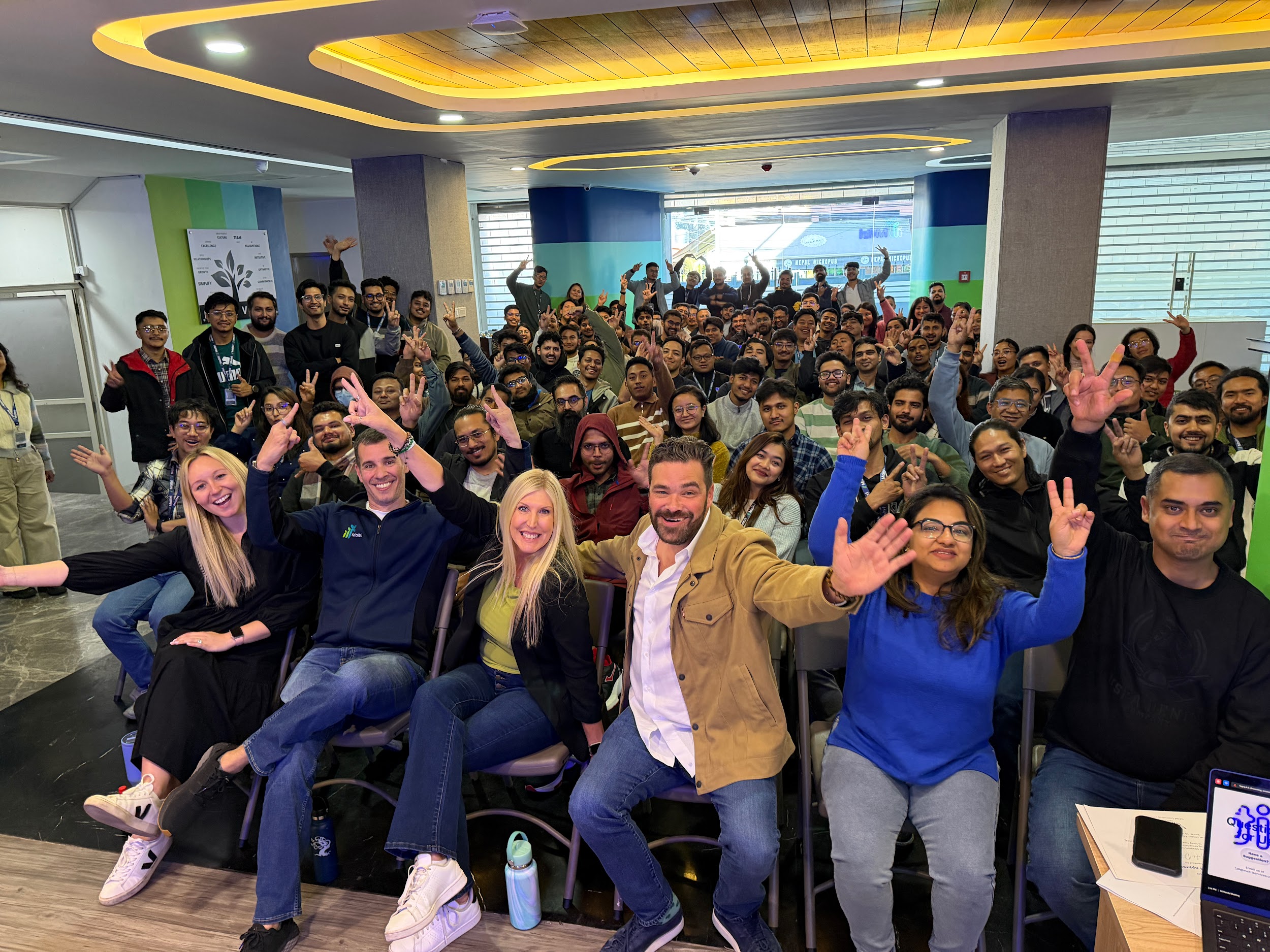
The company’s answer starts with employment. Maitri says its engineers are employees rather than contractors, and emphasizes keeping them on engagements. Senior US leadership works with managers and engineers in Nepal. Rick is CEO, Ditta COO, and Woollam CTO; Abhinayak Swar leads operations as vice president. The arrangement puts executive oversight and offshore implementation inside the same relationship.
For a startup or a small software business, the attraction is straightforward. A prototype needs architecture, tests, deployment, and eventually someone to fix it. Maitri offers those disciplines together. Product workshops refine the roadmap; engineers build interfaces and integrations; operations staff manage cloud costs, configuration, and business processes. The customer can enter at different points rather than purchasing an entire company’s worth of specialists at once.
Consider the arithmetic of a handover. A new developer must learn what the application does, which compromises were deliberate, and which integrations are fragile. The invoice captures hours; it may obscure how many were spent rediscovering decisions. Maitri’s continuity argument asks buyers to pay attention to that second number. It is a sensible lens for evaluating any engineering supplier.
Now give that engineer some agents
Maitri’s current front door is Agentic Development. A senior full-stack engineer coordinates specialized AI agents across implementation and delivery, while an engagement manager handles communication and coordination. The client sets priorities directly. Maitri says generated code passes security scanning, regression tests, and human architectural review. The proposition combines faster production with a named person responsible for the result.
Compared with a comparably priced traditional offshore team, according to its May 2026 sales sheet. A company claim, not a measured result from this profile.
That comparison deserves careful reading. Throughput measures work moving through a system; it does not automatically establish business value. A buyer could test the claim with an agreed backlog, acceptance criteria, deployment frequency, and defects discovered after release. Faster implementation becomes commercially interesting when the delivered changes survive contact with users.
The model also changes what the customer must supply. Maitri explicitly targets decisive leaders with clear requirements. An engineer can accelerate a feature once someone chooses it. Competing priorities still need a decision. When scope, scale, or governance calls for a dedicated team, Maitri offers traditional delivery too, and allows the two approaches to be blended.
The spreadsheet has a supporting role
The customer names displayed on Maitri’s website include Tuva Health, Premikati, ShipMint, Relevize, and Eclat. They place the business in the working world of healthcare, procurement, shipping, and commercial software. This is a services company helping other businesses run and build products, with expertise extending into the awkward plumbing beneath the interface.
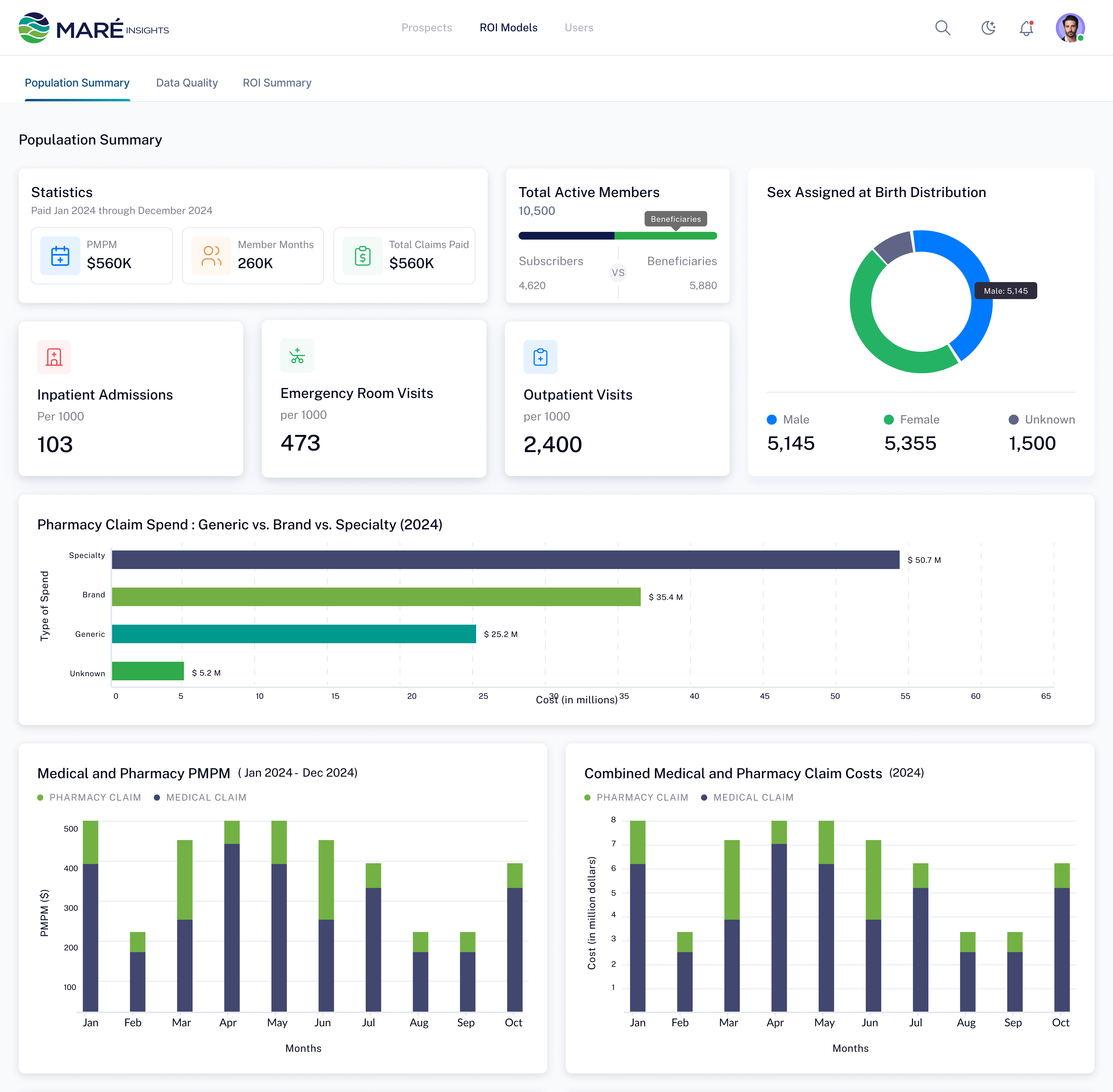
One example is MARÉ Insights. In September 2025, Maitri announced the new product and company as a way for healthcare vendors to turn complicated data into sales arguments about return on investment. The current offering concentrates on receiving, mapping, checking, enriching, and delivering healthcare feeds. Maitri identifies MARÉ as its data partner and coordinates the work under one engagement contract.
A renamed file or rearranged column is a small nuisance with a long shadow. MARÉ says its system recognizes feeds, adapts mappings, grades quality, and reconciles totals before delivering usable tables. It runs inside the customer’s cloud environment. The product pitch has moved closer to the recurring operational problem: getting reliable data ready before anyone can make a useful decision with it.
What a buyer can borrow
The commercial model is a professional services engagement. Clients retain their code, documentation, and infrastructure. Clutch lists a $1,000 minimum project and $25–$49 hourly rates, although its much smaller staff listing makes those figures a historical reference rather than a current quote. For agentic work, the useful comparison is accepted output at a comparable engagement cost.
There is another unusual incentive: Maitri says up to 10% of fees are tied to agreed performance metrics and directed to vetted philanthropic causes when targets are met. Meanwhile, its workplace materials describe mentoring, internal promotion, learning budgets, and employee clubs. These commitments fit its central argument that durable relationships deserve deliberate investment.
That approach has a boundary. A customer still needs someone available to clarify requirements and accept completed work. Where approval chains are slow or the product direction keeps changing, faster code generation can leave decisions waiting in a longer queue. Maitri’s continued sale of conventional teams acknowledges that delivery structure matters as much as the tooling.
A reader can borrow the purchasing discipline without borrowing the supplier. Define successful delivery before hiring. Ask who reviews changes, who owns the repository, and who stays when the build becomes maintenance. Choose the delivery model around the decisions your organization can actually make. Maitri’s most useful proposition sits there: continuity belongs in the specification, alongside the features.