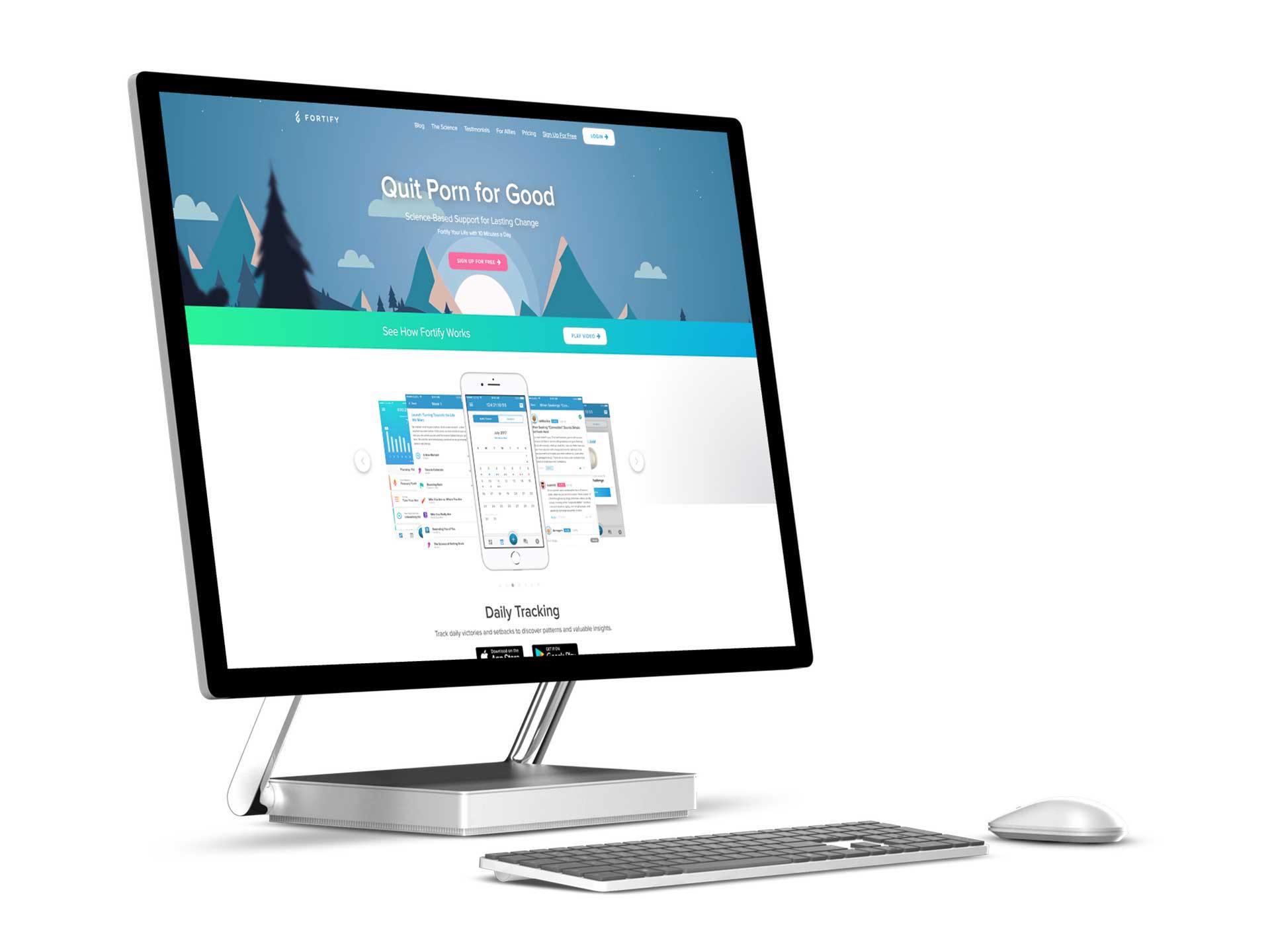
Forty seconds is an awkward length of time. Too short to leave your desk. Long enough to wonder whether a website has stopped working. For Fortify, a recovery software platform, that was the average page load described in Zibtek’s case study. The trouble began underneath the interface: conflicting legacy code, overloaded servers, freezing databases. Zibtek audited the application alongside its existing developers and repaired the Ruby on Rails and SQL environment. The reported average fell to three seconds. Thirty-seven seconds disappeared from the wait.
- Zibtek builds software and supplies engineers to existing teams.
- Its interesting work includes repairing products that already have customers.
- Buyers should test the difficult assumption before buying the whole build.
That is a useful introduction to this Utah software consultancy. The glamorous version of technology is invention: an idea, a launch, a ringing bell. The less photogenic version involves making something that people already depend on behave properly. Much of Zibtek’s published work lives in that second world. The business problem arrives wearing a technical disguise.
First, find the jam
Cache Merrill founded Zibtek in 2009. Today, the company pairs U.S. management with engineering capacity in India, selling custom development and staff augmentation. A client can commission an application or add people to an existing team. Design, testing, deployment and maintenance sit alongside the coding. The arrangement addresses a familiar predicament: a business needs more engineering than it can immediately hire.
Consider Statix, a healthcare research application. According to Zibtek’s account, its first version ran on WordPress, while coordinators manually recorded contact attempts and scheduled surveys. Growth made those chores and the underlying architecture harder to tolerate. Zibtek rebuilt the application using a JavaScript stack, automated workflows and added two-factor authentication through Twilio. Its reported result was a 90 percent reduction in data retrieval and loading times. A tool that had helped prove the idea had become an obstacle to running it.
The best choice can be the ordinary one
A custom software company has an obvious incentive to recommend custom software. That makes The Giving Keys project worth examining. The jewelry business needed a storefront its own staff could maintain. Zibtek describes evaluating BigCommerce, Magento, WordPress and Shopify. Magento’s maintenance burden counted against it. Shopify won, and Zibtek built a custom theme. The company’s contribution was partly knowing how much software the customer should have to own.
Testing Mom presented a different trade-off. Its educational games needed to move from the web onto phones. A hybrid application was initially contemplated, but small proofs of concept tested the experience. Zibtek says performance and fluid transitions pushed the decision toward native applications: Swift for iOS and Java for Android. The revealing detail is the sequence. Test something small, discover the constraint, then change the plan while changing it is still manageable.
For a buyer, that sequence is copyable. Ask which uncertain assumption could invalidate the proposal. Have the team demonstrate that assumption with working software. A technology recommendation becomes more useful when you can see what evidence would cause the developers to abandon it.
You are buying a working relationship
Zibtek’s breadth can matter when a product crosses technical boundaries. In its Volley Metrics project, camera software, cloud processing, web interfaces and mobile applications had to cooperate. Zibtek says Java was chosen for the camera application with future hardware replacement in mind. One supplier handled connected parts of the system. For the customer, the appeal is fewer organizational seams at which a problem can be passed elsewhere.
The economic model is service work: clients pay for engineering capacity and delivery rather than a universal subscription product. Zibtek’s Clutch listing advertises projects starting at $25,000 and hourly rates of $50 to $99. Those are directory figures, not a quotation. Historical customer interviews describe very different engagements: one roughly $40,000 app project and another charging $4,500 per developer per month. Scope, duration and responsibility change the bill.
“Don’t separate them from your team.”
A customer’s advice in a historical Clutch review
That customer described keeping a Skype channel open and using Jira, with daily interaction and weekly calls. Offshore communication could still be difficult. The advice points to a condition buyers sometimes overlook: somebody inside the client’s business must remain available to make decisions. Extra developers cannot settle a disagreement about what the product is supposed to do.
The meeting is part of the machinery
Zibtek’s published process specifies a senior technical lead and project manager for each engineering team, daily written updates, prototypes and client-visible development environments. These are ordinary practices. Their value comes from making mistakes visible while they remain small. A demo reveals more than a reassuring percentage-complete report.
The company’s own homepage includes a useful qualification. A customer identified there as Dave Shrein describes an unsatisfactory stretch, discussions with the project manager and changes that improved the outcome. Team assignment mattered. For a prospective buyer, the practical question is who will actually do the work, how their output will be reviewed and how a struggling assignment gets corrected.
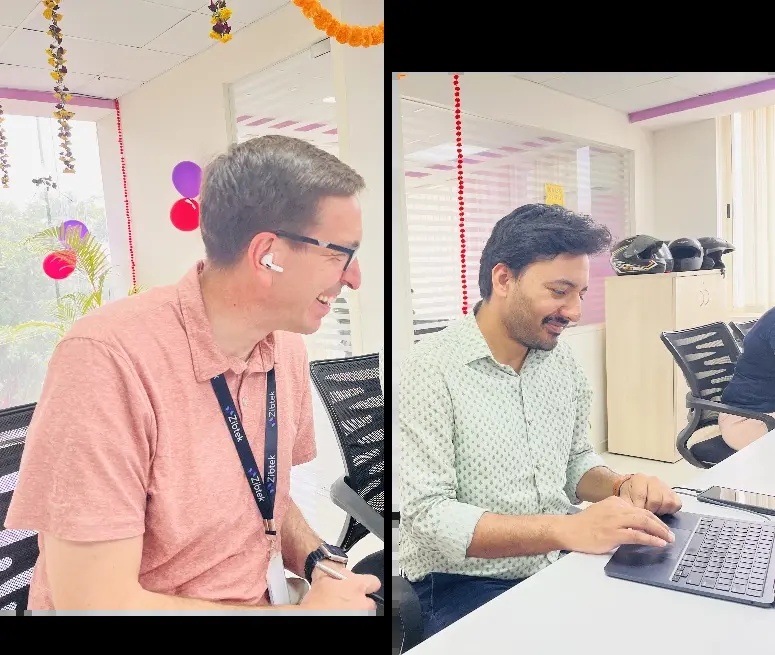
There is a human version of that operating system, too. In a 2018 company account, the U.S. team described visiting colleagues in Pune at least twice annually. The trips included project discussions, whiteboarding and cricket. The details are cheerfully unglamorous. Distributed engineering still benefits from people acquiring some shared context.
AI still needs somebody to ask why
Zibtek now markets AI consulting, chatbots, custom models and integration into existing products. In an October 2026 interview, Merrill described using AI for research and repetitive tasks while reviewing its output. He reserved understanding a client’s needs for human conversations. He also reported prospects arriving through AI discovery tools, changing the questions they brought to an initial call.
That leaves Zibtek in a crowded market of development agencies, offshore teams and internal hiring. Its proposition makes sense when a business has a specific engineering constraint and people ready to collaborate on it. A small job already handled by an existing tool is a weaker fit. So is an engagement where nobody can review a build or approve a change. In those circumstances, outsourcing adds a handoff while leaving the decision bottleneck in place. Buyers can borrow the discipline immediately: identify the jam, test the risky assumption, inspect working increments. Sometimes progress looks like a new product. Sometimes it looks like thirty-seven seconds you no longer have to spend waiting.