Mahyar Raissi needed a name for a GitHub repository. He called across the room: “OpenPhone.” Daryna Kulya thought it sounded acceptable. “It’s just a placeholder,” he said. Seven years is a respectable working life for a placeholder. By September 2025, when the company became Quo, that improvised name had carried a business serving roughly 90,000 companies.
There is something pleasing about a communications company beginning with someone shouting across a room. The technology would become more elaborate. The underlying transaction stayed familiar: one person wants another person to hear them, understand the request, and do something useful. Raissi has spent much of his working life trying to make that transaction less troublesome for small businesses.
His route runs through his father’s website, software for contractors, a move from Canada to California, and a partnership with Kulya that became both a company and a marriage. It is a story about paying attention to work that rarely gets a glamorous job title: answering, remembering, following up.
A website was only the beginning
At 16, Raissi was building websites for small businesses. One belonged to his father. Watching his dad build a business from scratch had already given him a close view of how many responsibilities land on one owner’s desk. Putting that business online added another set: handling enquiries and turning interest into actual bookings.
In Raissi’s telling, the recurring problem was the gap between attracting a customer and being ready to respond. A website could invite people in. Someone still had to answer them. His later career would keep returning to that interval, where a promising enquiry can quietly become a competitor’s customer.
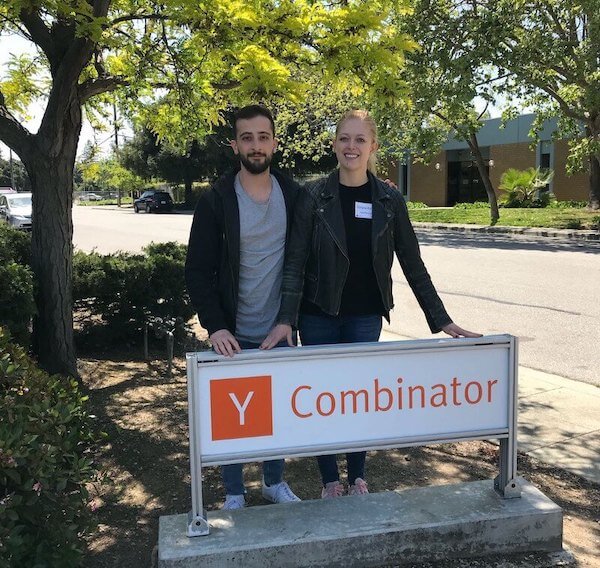
He had moved from Iran to Canada in Grade 10, then studied software engineering at the University of Waterloo, graduating in 2014. Waterloo supplied both technical training and proximity to people building companies. He and Kulya eventually developed their own venture at the university’s Velocity Garage in Kitchener, before leaving for Y Combinator.
The geographical path matters because the company emerged from two startup communities. Waterloo helped them get going; the Bay Area offered investors, introductions, and a larger network. Explaining the decision to stay in California, Raissi said the people around them encouraged them “to dream bigger.” The move expanded his circle without changing the kind of business owner he wanted to serve.
The contractor had already supplied the brief
After university, Raissi joined Joist, which made invoicing and estimating software for contractors. Working on those products put him close to a particular business reality: being good at the trade and being good at keeping up with customers are separate jobs. The owner often has to perform both.
He noticed that contractors who presented themselves professionally, stayed organized, and followed up with customers earned more. Many were using personal phone numbers for work. That arrangement put business calls, private conversations, and after-hours interruptions into the same pocket. Sharing responsibility for the phone became awkward. Finding the right conversation became another chore.
A friend’s suggestion supplied a practical experiment. Raissi moved his own number to a virtual phone service to save money. He liked the call quality, the control, and the price. He disliked the app. Looking for alternatives brought him back to software that seemed poorly suited to the people expected to use it.
He and Kulya began working on their own version during evenings and weekends while keeping their jobs. He built the early product; she started putting it in front of potential users. The first division of labour was unusually clear: make something people could use, then find out whether they would.
A phone app learns to share
The early OpenPhone was built around an individual. It gave a solo entrepreneur or freelancer a work number on an existing device. For a two-person founding team, that was a manageable starting point. Kulya handled customer conversations, marketing, sales, and support while Raissi wrote code.
Customers soon complicated the brief in a useful way. Some spent much of their day at a laptop and wanted to use the service there. A mobile app suited someone travelling between jobs; it was less convenient for someone working at a desk. Some users even tried to construct desktop workarounds themselves. That is feedback with unusually persuasive punctuation.
The shift to OpenPhone 2.0, launched in April 2020, widened the focus to teams. A number could become a shared responsibility. Colleagues could work around the same customer conversations instead of treating each handset as its own little island. Raissi’s product was moving closer to the way a business actually remembers things: imperfectly, across several people.
That development also clarified the partnership. Kulya’s account of the company’s early years keeps the customer close to the engineering decision. Someone asks for something, struggles with something, or invents a workaround. The product team has to decide what that behaviour means. A feature request can contain a much larger clue about who the customer is.
Three stages of a product built around the same customer conversation.
The application with $320 in revenue
Raissi later published the application that got the company into Y Combinator’s summer 2018 batch. Its figures preserve a useful sense of scale: 1,500 users, 32 people already paying after billing had recently launched, and $320 in revenue for the last full calendar month. The founders were still working out how to turn interest into a business.
The application also records an earlier project called Milkshake. Users could describe what they were doing with three emojis, a location, and an optional image. Posting became easier; the resulting feed did not prove interesting enough. It is a compact lesson in the distance between removing friction and creating something worth returning to.
Even then, the phone was an entry point to a wider ambition. The founders wanted to connect communication with customer relationships, reducing the work of keeping records and following through. Their proposed customer-relationship software would depart from the familiar enterprise model. That direction was already present years before the Quo name arrived.
“The best CRM for small businesses will look nothing like Salesforce.”
Mahyar Raissi, in the company’s 2018 Y Combinator application
Acquiring customers required its own education. Kulya posted in 62 Facebook groups, experimented on Reddit, and learned to begin conversations rather than deliver a sales pitch. About 60 beta users initially became paying customers. By the end of July 2018, the company had reached 1,000 customers. Those figures describe different moments, a distinction that tends to disappear once a startup story gets polished.
The recruitment pitch without the rocket ship
There is a revealing account of Raissi from Cai Cardenas, who joined as the company’s first designer in 2020. After speaking with more than 50 companies during a nine-month job search, Cardenas found the founder’s approach refreshingly straightforward. Raissi explained the opportunity without pretending the company had already solved every difficulty.
Cardenas described an interview process that stayed candid about the growth stage, the challenges, and the work ahead. He knew what he was joining. Raissi’s own design experience had helped the small team manage before making that hire; eventually, the company needed someone to own the discipline and build a team around it.
This is a more useful glimpse of personality than an adjective attached to a headshot. A prospective colleague remembers how the conversation felt and what information was offered. For a founder selling communication software, being clear with a recruit is a modest but relevant demonstration of the product’s larger argument: people make better decisions when the conversation contains what they need.
More money, more people on the line
In January 2020, Raissi announced a $2 million seed round led by Slow Ventures. Alongside the financing came practical product changes, including Slack and email integrations and improvements to the web app. The ambition was visible in small conveniences: notify the right colleague, find the conversation, keep business contacts together.
That November, a $14 million Series A led by Craft Ventures brought David Sacks onto the board. Raissi pointed to Sacks’s experience with Yammer and its product-led growth. The announcement emphasized integrations, hiring, and regular improvements. The circle around the founders was widening, bringing people who had already faced some of the organizational questions ahead.
By April 2022, the company reported more than 20,000 customers and announced a $40 million Series B led by Tiger Global. Some customers became investors, including founders from Hotplate and AirGarage. There is a neat progression there: people who first encountered the business as a tool for their own work decided to back the people building it.
- 2020 · Seed
- $2M
- 2020 · Series A
- $14M
- 2022 · Series B
- $40M
- 2025 · Financing
- $105M
Individual announcements, not a valuation or a measure of Raissi’s personal wealth.
Seven years later, the placeholder goes
During a leadership gathering in Petaluma in October 2024, Raissi raised the question of whether OpenPhone still fitted the roadmap. Kulya was skeptical about changing a name that customers knew and that had become part of her own identity. A repository label had acquired something considerably harder to replace: recognition.
On September 23, 2025, they announced Quo, together with $105 million in financing and a broader role for Sona, the company’s AI agent. Raissi described Sona extending beyond missed calls into sales, support, and other customer conversations. The proposal was a front office able to help businesses handle more of what happens around a call.
The aspiration follows a recognizable line through his career. His father needed a way to get online and manage incoming interest. Contractors needed to keep business conversations organized. Teams needed to share them. The new product direction adds assistance with the work those conversations create. The methods have changed; the recurring question is how much an owner must carry alone.
Raissi’s story gives the ordinary business phone a surprisingly long plot. A teenager builds a website. An engineer watches contractors lose opportunities. Two founders put a second number into an app and keep listening as the request grows. Eventually, even the name needs more room. The placeholder lasted seven years. The problem has kept him occupied for considerably longer.