Two minutes is enough time to question a spreadsheet. In 2017, Jon Lerner and Chandan Lodha had packed theirs with so many formulas that opening it required a small act of patience. They were buying cryptocurrency across exchanges, using different wallets, importing prices and entering transactions. Their money was digital. Understanding it involved waiting for a grid of cells.
They had begun with a more ambitious financial idea. Now they were stuck on a basic question: how much had they put in? The exchanges did not give them the combined picture they wanted. Their improvised spreadsheet had become indispensable and increasingly cumbersome. In early September, Lerner began turning it into a web app. A week later, they had a working first version of CoinTracker.
The episode has the modest comedy of much useful software: two capable people, surrounded by sophisticated technology, defeated by their own accounts. It also captures something that keeps recurring in Lerner’s career. He works on the machinery between an ordinary person and a supposedly ordinary task. Send a text. Understand a portfolio. Make a financial decision without assembling the answer yourself.
Before the spreadsheet, a phone bill
Lerner was born in Russia and grew up in Israel and Canada. Ottawa was part of his Canadian upbringing; later came computer engineering at the University of Waterloo. His public account of those places is brief. The professional record becomes more detailed in the years when a student’s experiments began turning into products used beyond campus.
In 2009, he and classmate Derek Ting co-founded Enflick, the company behind TextNow. Both graduated in 2010. The timing matters: starting a company was already part of Lerner’s education before the degree was finished. TextNow addressed the expense of mobile communication, giving people an alternative to paying for every text. An irritating bill had become a product opportunity.
He served as co-founder and chief technology officer through 2014. On his founder profile, he recorded TextNow reaching more than 30 million installations, profitability and a team of more than 30. Those were achievements he chose to emphasize together: people using the product, a business that could support itself, and colleagues to build it.
There was also the apprenticeship inside larger companies. His engineering experience included Apple and Google; in 2008, as a Google intern, he helped build and launch the initial Android platform. From 2014 to 2017 he worked at Google again. By the time CoinTracker arrived, he had experience with both a student-founded business and software built inside a much larger organization.
The idea that had to wait
In 2014, Lerner pitched Y Combinator an idea called Nino. He wanted a personal assistant that could do things for its user. The partners passed. Years later, he recalled Justin Kan sending the rejection that evening and telling him the idea was early. Lerner’s retrospective verdict was unusually economical: the timing objection had been correct.
He had left TextNow to investigate what he could build in artificial intelligence. He compared notes with people working in the field, including Ilya Sutskever before OpenAI existed. Yet he did not find an application he felt ready to commit to. By 2017, working with Lodha, he had narrowed the assistant idea to money.
Moving that money presented another obstacle. The traditional transfers they encountered took days and carried fees. Cryptocurrency offered a different route, but using it created a fresh accounting problem. The assistant would have to wait while its prospective builders figured out their own holdings. Their detour had acquired a task with a much shorter deadline.
A week of code, an inbox of strangers
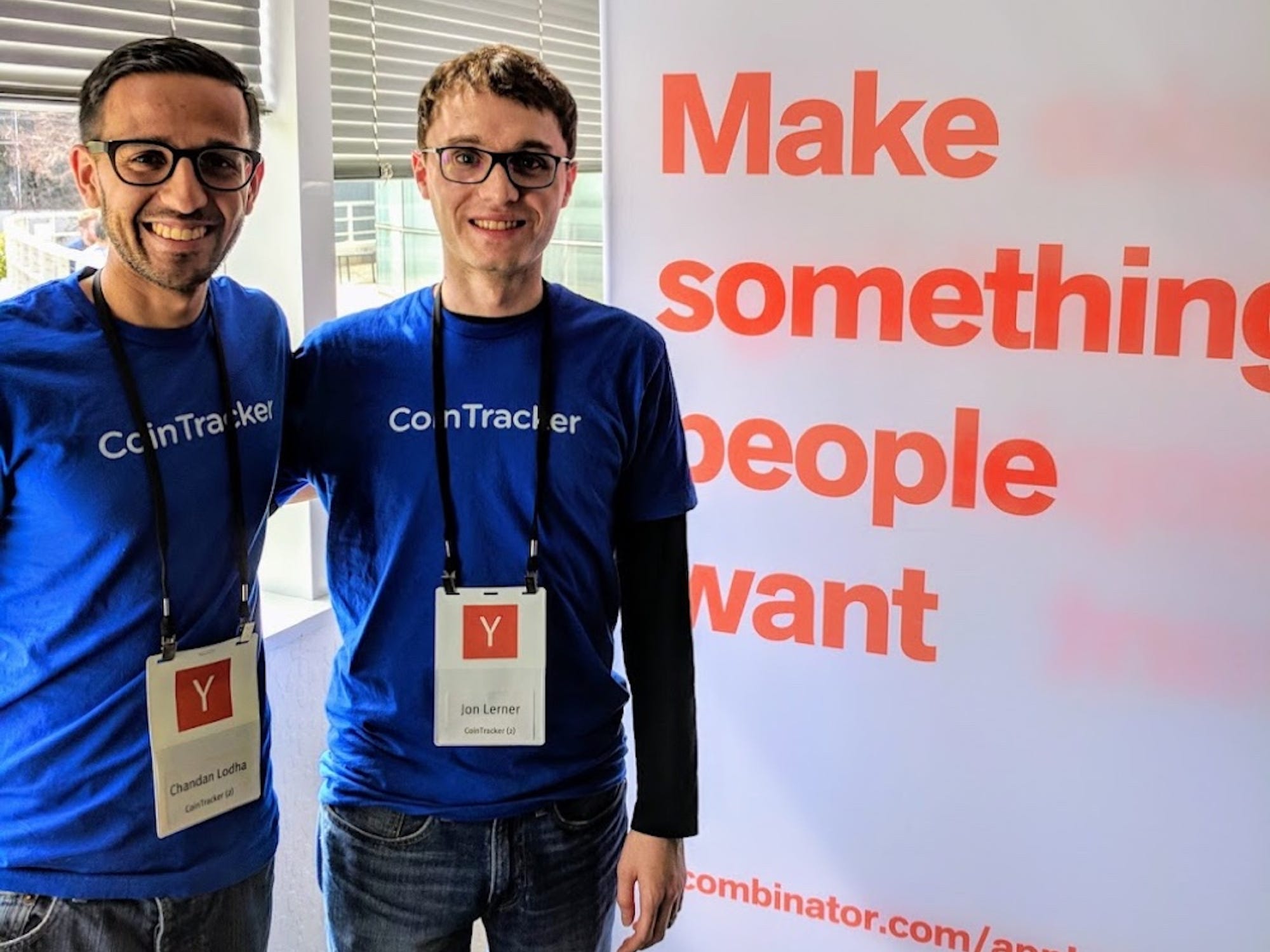
The first CoinTracker lived at cointracker.network. Lerner and Lodha posted a link in a few online groups to see whether anyone else found it useful. Replies began arriving: requests, bugs, thanks. Some users wrote pages of feedback. A spa owner in Thailand asked for features. The geographical reach of the problem was becoming visible in the inbox.
That particular customer is a useful corrective to the familiar image of crypto software being built exclusively for other crypto builders. Someone running a spa also wanted the numbers to add up. The early response gave the founders a reason to keep improving a tool they had originally made for themselves.
They added tax reporting, joined Y Combinator in January 2018 and raised a $1.5 million seed round led by Initialized Capital. Thousands of users used the tax product for their 2017 returns. In April 2020, CoinTracker announced it had passed 100,000 users. The spreadsheet replacement now had a constituency and an annual appointment with tax season.
“We wanted CoinTracker to just work. Magically.”
Jon Lerner, January 2022
Magic is an amusing ambition for accounting software, where the audience eventually wants to inspect the trick. For Lerner, the phrase described the experience he wanted users to have. Behind a simple view sat exchange connections, transaction classification and the work of preserving a coherent history as assets moved around.
The round, and the reckoning
In January 2022, CoinTracker announced a $100 million Series A led by Accel at a $1.3 billion valuation. Investors included Coinbase Ventures, Intuit Ventures, General Catalyst and Initialized Capital. The company said it was synchronizing more than $50 billion in crypto assets daily. A tool born from two personal portfolios was handling a substantial volume of other people’s records.
Recognition accompanied the financing. Lerner was named among The Financial Technology Report’s 25 cryptocurrency executives for 2022. A decade earlier, he had received Ernst & Young’s Young Entrepreneur recognition in Ontario. The awards bookend a change in subject matter, from phone service to digital assets, while his role expanded from technical co-founder to chief executive.
A year after the funding announcement, the tone changed. In January 2023, Lerner published a message explaining the departure of 19 employees. Fifteen worked in customer support; four held other non-technical roles. CoinTracker had entered 2022 with 34 people after revenue grew fourteenfold in 2021. The company had hired to meet demand, then faced a markedly different crypto market.
Lerner took responsibility and acknowledged that the business had hired too many people for its revised plans. He described a need to consider roles over a longer period and examine existing operations before adding staff. The statement is a necessary part of his record. Building a product that simplifies a customer’s life can still leave its builders facing complicated, consequential decisions.
Departing employees were offered twelve weeks of pay and could keep their company laptops. CoinTracker also waived the one-year equity vesting cliff, giving recent hires a vested stake based on their months of service. These were specific commitments in a letter otherwise concerned with forecasts, efficiency and the company’s future.
Another reduction followed in April 2026, this time affecting about a third of the team. Lerner said CoinTracker would concentrate on crypto tax compliance while pursuing AI products for a broader financial life. He subsequently shared a list of former colleagues seeking work. The new ambition came with an immediate cost to the people who had helped build the existing business.
Following the money between accounts
Meanwhile, CoinTracker’s original difficulty had become a problem for institutions too. In October 2025, Lerner introduced its enterprise broker tax-compliance suite. The package combined customer tax documentation, a cost-basis engine, a consumer tax center and reporting tools. The company was extending the accounting infrastructure behind its individual product to the platforms where people traded.
Cost basis is an uninviting phrase for an essential piece of history: what an asset originally cost. A balance tells you what is there. It cannot, by itself, explain every earlier purchase and transfer. When activity is scattered across accounts, a missing piece can distort the picture. CoinTracker’s business had grown around joining those pieces together.
Conceptual diagram of CoinTracker’s workflow.
In January 2026, Lerner announced a platform upgrade built around 1099-DA forms, including importing broker information, reconciling it against underlying activity and preparing reports. The work had a family resemblance to the original spreadsheet: gather information from different places, preserve its meaning, give the user something they can understand. The infrastructure had changed considerably. The basic demand remained recognizable.
Back to the assistant
On July 7, 2026, the team behind CoinTracker announced Nino in beta. The service paired connected financial software with a dedicated certified financial planner and certified public accountant. Investments, equity, cash, real estate and crypto could be considered within one plan. CoinTracker supplied the crypto connection; the intended view extended beyond it.
Nino addressed a familiar division of labor. An accountant may see a return. An adviser may see investments. An employee may hold stock options whose consequences reach across both. The service’s proposition was to let software and professionals work from a combined picture, with planning continuing through the year. Lerner’s assistant idea had returned with a specific job and human collaborators.
His personal website states a larger ambition: greater economic stability and prosperity through cryptocurrency. His working history is more concrete. Affordable communication. A portfolio that adds up. A financial plan whose pieces can be considered together. Each requires someone to do a great deal of connecting before the result looks simple.
The twelve-year interval gives the Nino launch its interest. During that time Lerner co-founded a tax company, raised money, expanded its reach and explained decisions that disappointed employees. The assistant he once pitched came back after years of work on the records it would need to understand. The spreadsheet that took two minutes to open had occupied rather more of his calendar than anyone could have expected.
Follow the thread
Jon’s writing, the companies and a conversation in his own voice.