The trouble with a business phone is that it rings while someone is doing the business. A contractor is on a ladder. An office manager is already helping another customer. At M&M Skylights, owner Scott Geddis told Quo that only 60% to 70% of calls were answered live, even during business hours. The problem was coverage. Two people in the front office had more to do than wait beside a ringing device.
- Quo puts business calls, texts, and contacts in a shared workspace.
- Sona, its AI agent, handles conversations when people cannot.
- The bet: a customer inquiry should arrive with context and a next step.
In a company-published account, a Sunday inquiry at M&M received an automated text follow-up, became a logged request, and eventually turned into an installed job. That modest sequence explains Quo’s ambition more clearly than a futuristic demo. A business can buy attention with advertising. It still needs someone, or something, to answer.
A number that belongs to the team
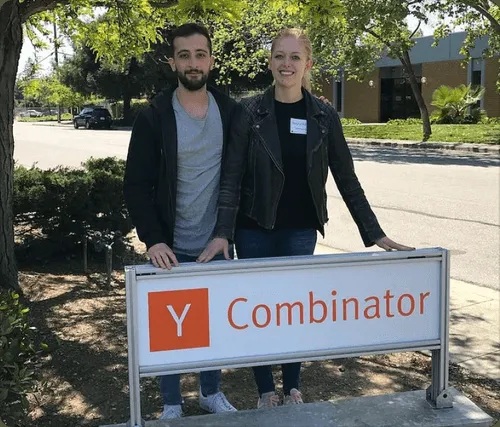
Mahyar Raissi and Daryna Kulya founded the company in 2018 as OpenPhone. Its starting problem was familiar to anyone who has handed a customer a personal number: the company’s relationships end up living on one person’s device. Raissi had seen the difficulty while building tools for trade contractors. Better communication helped businesses earn more, but their phone tools had not caught up.
OpenPhone gave those businesses a number on devices they already owned. The consequential choice was making that number shareable. Calls, texts, and customer information could become a team resource. If one colleague was unavailable, another could open the conversation instead of asking the customer to repeat the story. The product works across desktop, web, and mobile apps.
Quo sits among business-phone services such as Aircall, RingCentral, and Nextiva, with Google Voice another alternative for simpler needs. Its particular emphasis is the small team sharing customer conversations. The useful comparison is the daily routine: can the next colleague see what happened, take responsibility, and respond without assembling a history from several apps?
That design also changes the handoff between sales and service. A team can leave internal comments beside the customer’s messages, rather than create a separate explanation elsewhere. The phone becomes a place to collaborate. For an owner stepping away for an afternoon, that is a more useful promise than another device to carry.
The receptionist joins the thread
In April 2025, OpenPhone introduced Sona, an AI voice agent that could greet callers, answer questions, and capture messages. The business supplies the knowledge and decides where the agent enters its call flow. Call logs, recordings, and summaries stay inside the workspace. By September, the company was expanding Sona’s jobs and its ability to transfer callers to people.
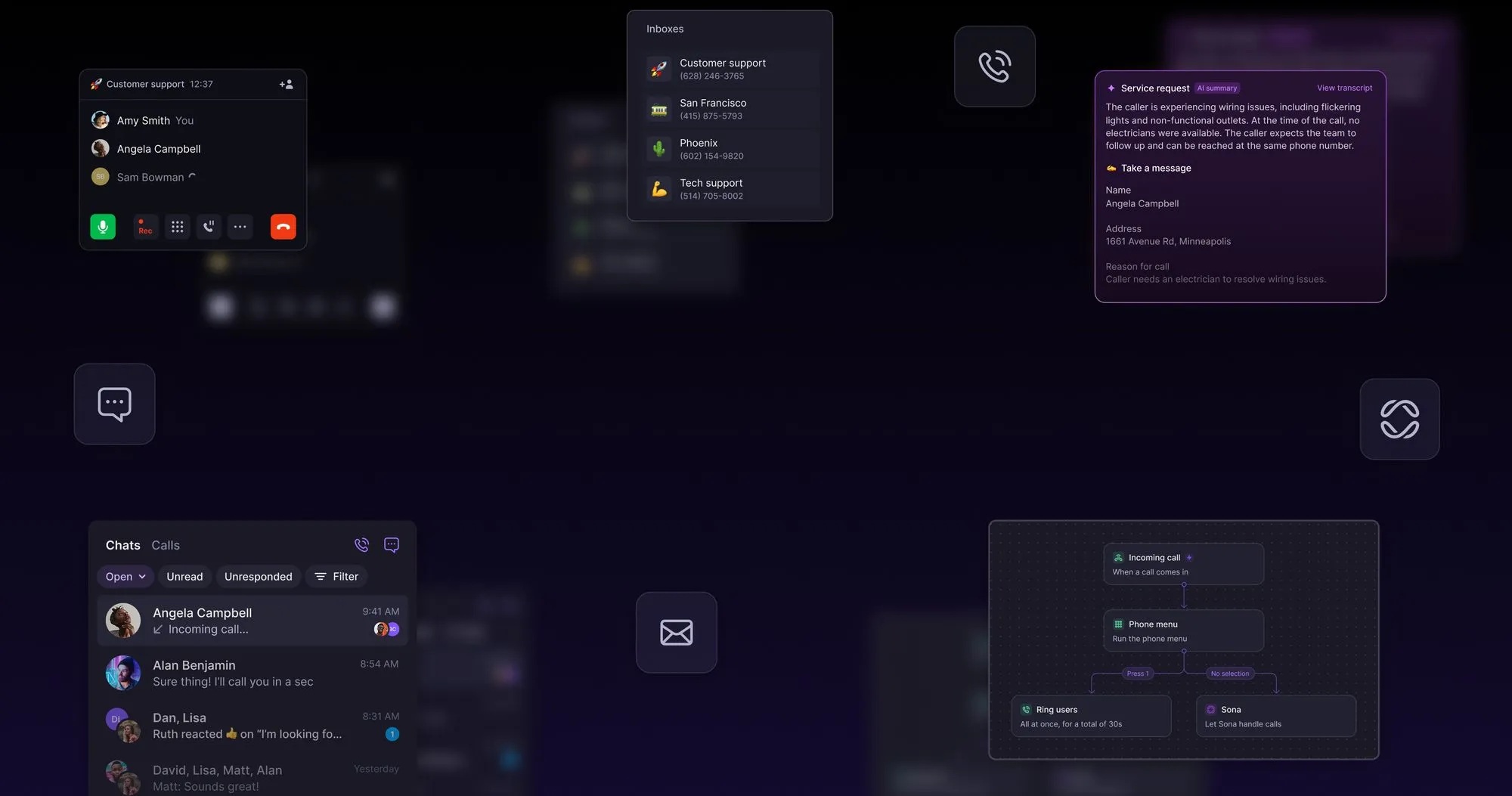
M&M’s example adds an instructive detail: urgency matters more than raw volume. A potential installation and a broken remote control deserve different responses. Sona’s messaging lead-capture beta helped gather information so the team could sort those requests. Geddis reported roughly 80 leads a month handled through it. Those are customer-reported results from Quo’s own case study, rather than an independent productivity experiment.
“It’s just a placeholder.”
Mahyar Raissi on the original OpenPhone name, as recalled by Daryna Kulya
The placeholder grew a ceiling
OpenPhone began as a GitHub repository name Raissi needed in a hurry. Years later, the name became a strategic question. At an October 2024 planning offsite, he asked whether it still fit the roadmap. Kulya was skeptical: the company had spent years building recognition, and a descriptive name made the product easy to understand.
Working with Lexicon Branding helped change her view. OpenPhone suggested VoIP, while the founders wanted room for a broader customer workflow. They reviewed 37 names. Quo came from a naming team that did not know what product it was naming. Customer interviews did not put it first. The founders chose it anyway, and announced the change on September 23, 2025.
The same announcement included $105 million in financing. The structure matters: $96 million came through General Catalyst’s Customer Value Fund for go-to-market growth, with another $9 million in equity from existing investors. Earlier rounds included a $14 million Series A in 2020 and a $40 million Series B in 2022. The headline number bundles two financing mechanisms.
The price of being available
Quo charges by user. In October 2026, Starter lists at $19 per month, or $15 per month with annual billing. Business and Scale cost more. Each plan includes 1,000 automation credits, equivalent to ten Sona voice calls. Usage beyond the included allowance changes the bill; so can additional numbers, international communication, taxes, and carrier registration.
Starter with annual billing: $180 per user per year, before applicable taxes and fees. Monthly billing: $19.
For a two-person Starter workspace, annual billing therefore means $360 a year before extras. That is a starting calculation, not a complete deployment budget. CRM integrations with HubSpot and Salesforce sit in higher plans. A buyer should price the workflow the team needs, including expected AI usage, rather than multiply the smallest number on the pricing page.
Answering is only half the job
The company’s stated values include ownership and constructive disagreement. Those are useful ambitions for a product whose success depends on colleagues seeing the same information and deciding who acts. Software can expose the handoff; the team still has to agree on it.
The newer releases make the direction visible. Tasks attaches an assignment and due date to a conversation. A Claude connector lets users work with communication history and contact records. October’s Housecall Pro integration imports customer details and logs matched communication to jobs. Each feature addresses a different place where useful information can disappear between a call and the work it creates.
The practice to copy is simple: decide what an inquiry must collect, name the person who owns the next step, and keep the conversation attached. Reliable internet and accurate business instructions remain prerequisites. A sensitive or unusual request still needs a human route. Giving everyone access will not resolve unclear responsibility. Quo’s opportunity is to make that responsibility easier to see, while the person on the ladder keeps working.