At Petaluma Dental Group, the software problem had become a counting problem. More than ten tools were helping to run the practice. Each had a job. Together, according to the practice’s Adit case study, they were consuming time, money, and staff energy. The office had acquired plenty of technology. It still needed people to connect the pieces.
- Adit brings calls, scheduling, forms, payments, and follow-up into one platform.
- It connects to existing practice management systems, including OpenDental and Dentrix.
- Its AI tools answer calls and turn conversations into tasks. Staff training still matters.
After consolidating with Adit, Petaluma reported saving more than $1,200 a month and six hours a week. Those are customer results published by the vendor, rather than a forecast for every buyer. But the situation is recognizable well beyond dentistry: a business buys tools to save time, then hires its employees to move information between them.
Ten tools, one bottleneck
Adit’s appeal begins with that awkward arithmetic. Dr. Yolanda Mangrum, Petaluma’s owner, calls it “a software Swiss Army knife.” The useful part of the comparison is the shared handle. A phone system, a payment service, and a reminder tool become more useful when the person operating them can see the same patient and the same next step.
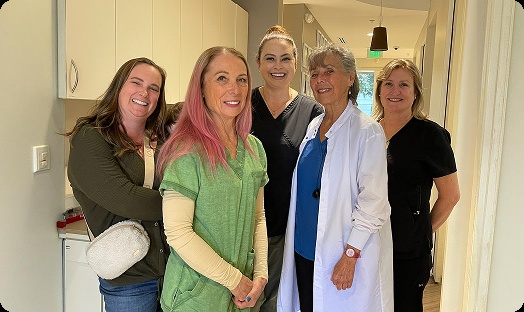
Houston-based Adit serves dental, optometry, chiropractic, and orthodontic practices, including groups with multiple locations. The company reports more than 5,000 practices and 30,000 active users. Founder and CEO Ali Jhaver’s background includes helping healthcare practices grow; his company now addresses the administrative machinery that growth puts under strain.
There is a revealing detail in its name. In a Dentistry Uncensored interview, Jhaver explained the combination: advertising and information technology. That pairing helps explain a platform that reaches from finding patients to getting them booked, treated, and billed. Generating an inquiry is only the beginning of the work.
Follow the patient, not the app
Consider the journey Adit is designed to support. A patient calls. The team communicates through Adit Voice and texting. An appointment is booked online or by staff. Digital forms gather information before arrival. Reminders help keep the appointment visible. After the visit, a payment link and a review request can continue the conversation.
- 01Call
- 02Book
- 03Prepare
- 04Visit
- 05Pay
- 06Return
Behind that sequence sit practice analytics, recall tools for overdue patients, digital treatment plans, and insurance verification. Adit also offers revenue cycle services covering claims, payment posting, denials, and receivables. Website design, search optimization, and advertising extend the platform into patient acquisition. Its expertise spans the business around the appointment.
The distinction that matters is where Adit fits. Its integrations include Dentrix, Eaglesoft, and OpenDental. Practices can retain their core management system while connecting communications and other workflows around it. Weave, Dental Intelligence, RevenueWell, and Lighthouse 360 occupy overlapping territory. Adit’s argument centers on breadth and consolidation; the buying decision depends on which jobs a particular office needs connected.
In March 2026, Adit announced an official OpenDental partnership. Existing users were told they needed no additional setup. Better synchronization and smarter automation were described as coming enhancements. For an office already running both products, the immediate promise was reassuringly modest: keep working.
The phone call becomes a work queue
Adit’s recent AI releases follow the same trail. Its expanded Call Intelligence suite, announced in November 2025, transcribes and summarizes calls, classifies booking outcomes, identifies potential follow-ups, and scores staff interactions. A manager can inspect conversations that did not produce bookings and assign attention where it might help.
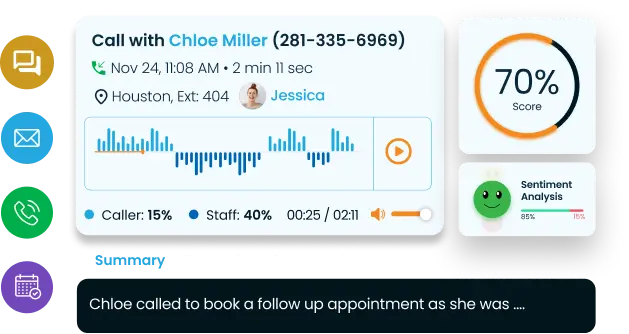
The AI Front Desk launch followed in February 2026. The agent handles inbound requests, books or changes appointments according to practice rules, and syncs call summaries to patient records. It can transfer callers to people. That last capability deserves attention: successful automation needs a route out of automation when the conversation demands one.
AVA Dental supplies another view of the problem. In Adit’s published account, unreliable tools and inadequate support prompted the practice to leave Weave. Over its first three months with Adit, AVA reported 25% new-patient growth, a 50% reduction in no-shows, and a $66,000 production increase. These figures describe one customer’s experience; they do not isolate software from every other influence.
One subscription still has a total cost
Adit sells subscriptions, with monthly or annual billing. Its support documentation separates recurring charges from overages and surcharges. Extra messages, phone numbers, and call-tracking usage can cost more. Carrier and regulatory fees also apply. Consolidating vendors can simplify purchasing, but the final invoice still reflects how an office uses the service.
Adit Pay’s published processing rates. The payment module is included; transactions carry fees.
Adit Pay, powered by Stripe, makes the distinction explicit: the module is included, while card transactions carry processing fees. CareCredit financing is integrated through a Synchrony partnership announced in April 2024. Buyers should price their actual transaction mix alongside subscription and communications usage, then check the terms of any separate marketing program.
Time belongs in that calculation too. Adit’s onboarding plan allocates one to two weeks to core setup, then four to six weeks to adoption. Staff learn modules and configure preferences. For a practice with an unsupported integration, little training capacity, or few overlapping tools to retire, the consolidation argument becomes less persuasive.
That suggests a sensible test for buyers: bring a real scheduling exception to the demonstration. Ask what happens when a family needs several appointments, an insurance rule changes the available slots, or a caller needs someone at the office. Then watch where the information lands. A fluent conversation is helpful; a correct calendar entry and a clear follow-up responsibility are what let the next person do the job.
“Adit is like a software Swiss Army knife.”Dr. Yolanda Mangrum / Petaluma Dental Group
Count the handoffs
The practical lesson is available before anyone books a demo. Follow one patient inquiry. Count every retyped detail, separate inbox, and promised callback. Decide who owns the unfinished work. Then ask a vendor to demonstrate that exact journey, including an exception and a human handoff. Adit’s proposition earns its keep when those connections make a busy office easier to run.