The demo went well. That was the trouble. Mahesh Baxi had shown his recruiting product, TalentOjo, to a prospective customer who liked it, discussed it, and agreed to a free pilot. Then came the silence. A friendly introduction had opened the door. Keeping the conversation alive would require a different skill entirely.
In a February 2015 account, Baxi described reaching the prospect through a friend in operations at a multinational company in Pune. The head of HR wanted time to consult colleagues in India and the United States. Baxi waited, called, sent messages, waited again. A week could pass without the promised reply. Enthusiasm, it turned out, did not come with a calendar invitation.
He drew a practical conclusion: follow-up deserved a place among the skills he looked for in business development hires. Remember the conversation. Track the next date. Keep the correspondence straight. These were small, unglamorous acts, yet a product could depend on them. His story began with a good reception and became a lesson in the considerable distance between interest and action.
A career on the customer's side of the table
Baxi had already spent years close to enterprise customers. His professional timeline starts in 1993 as a programmer and analyst at Indo German Tool Room in Ahmedabad. It continues through Challenger Systems in San Jose, professional services at Nextance, and a regional director role at Vendavo. The geography changed; responsibility for making software work for a customer kept recurring.
He studied computer engineering at Dharmsinh Desai Institute of Technology. His early American career included work on B2B and customer relationship management systems, with enterprise customers whose requirements rarely fit neatly into a software demonstration. A successful sale still left implementation, organizational habits, and the customer's own expectations to contend with. That stretch of his career put him near the consequences of a promise.
At Apttus, where he was an early employee, he held professional services and customer success leadership roles. He also became managing director at ThoughtWorks India, and in 2012 was appointed CEO of Compassites. By May 2019, he was joining My Ally as senior vice-president of customer success and machine learning operations. The remit combined the customer lifecycle with product innovation in AI and machine learning.
That pairing matters now. Baxi's interest in AI predates the recent rush to put an assistant into every application. At My Ally, he was dealing with the operational side of an AI-powered recruiting platform. Across these roles, technology and customer delivery were adjacent responsibilities, often sitting in the same job description. He had ample opportunity to see what happened between a product's capabilities and its everyday use.
The arithmetic before the handshake
Provus gave that experience a particular target: services quoting. Baxi co-founded the business with Stawan Kadepurkar and Ganesh Ramachandran. In July 2022, he was CEO when the company announced a $12 million Series A led by Norwest Venture Partners. Funding was intended to strengthen product and engineering and expand sales and marketing.
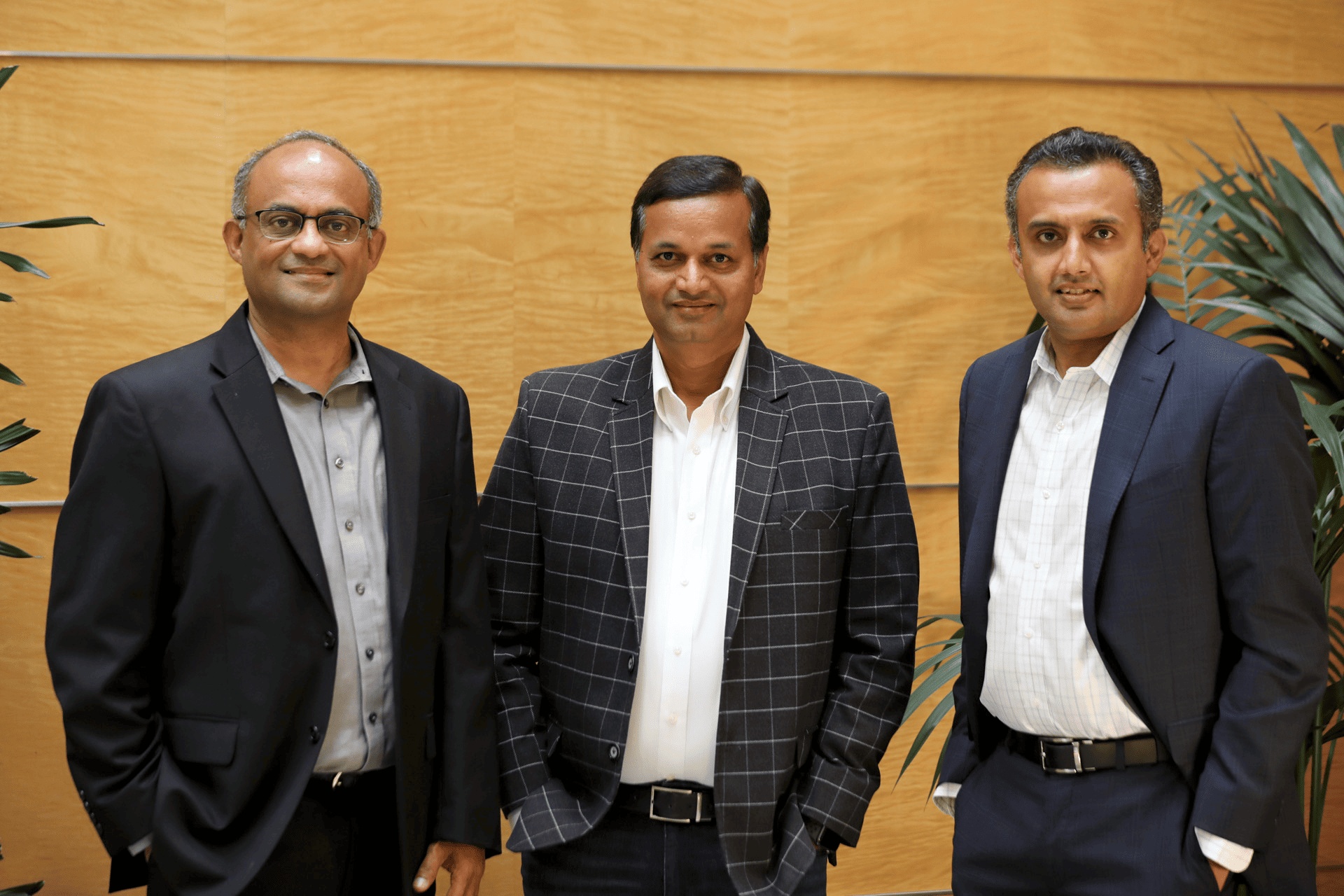
The problem was familiar to the people building it. A services estimate has to account for who will do the work, their rates, the time required, and the effect of changes on the project's economics. Sales, finance, and delivery all have a stake in the answer. Spreadsheets and email approvals can carry those decisions, but keeping everybody's assumptions aligned becomes difficult.
Provus built services-specific configure, price, quote software on Salesforce, with estimation, scenario modeling, collaboration, and approval workflows. Baxi's experience at Apttus helped explain the choice of problem. He had worked in the functions that would inherit the result of a quote. A price was connected to a staffing plan, and a staffing plan was connected to what someone could actually deliver.
Seen alongside the TalentOjo story, Provus addresses another gap between intention and execution. A prospective buyer can sound delighted while a deal stalls. A proposal can look attractive while its assumptions remain scattered among departments. Baxi had encountered both kinds of friction. His work at Provus brought attention to the part of selling where the numbers have to agree with the people.
A fireside chat with an awkward instruction
Early in 2023, Provus brought Gainsight CEO Nick Mehta to a company offsite for a fireside conversation. Baxi's account of the discussion emphasized attention to early customers, the value of a community, and a difficult restraint: resisting one-off development requests. A young company needs customers, which can make every request sound rather persuasive.
There is a real management problem inside that advice. Give every customer a separate variation and the company accumulates work that is difficult to repeat. Refuse too readily and it can miss what customers are trying to teach it. Baxi's takeaways kept both responsibilities in view: help early customers succeed while shaping a product that serves a broader market.
Mehta also appears among the endorsements on Baxi's website, recalling their work on customer success strategy, processes, and technology at Apttus. Their connection reaches beyond a guest appearance at an offsite. It belongs to a professional circle in which customer relationships are treated as operating work, with decisions about people, information, and product design attached.
Murphy gets a chapter
Baxi's Customers for Life framework makes room for the part that a tidy presentation can hurry past: things going wrong. Its stages move from establishing the relationship and nurturing it to handling trouble, then building the systems that keep the work going. Executive accountability and clear communication sit alongside automation and customer communities. The framework expects friction.
- 01Begin
Build confidence - 02Nurture
Make value visible - 03Weather trouble
Take ownership - 04Keep it going
Build repeatable systems
Murphy's Law is a revealing guest in a customer strategy. It gives failure a place in the operating model before anyone needs to explain it away. Baxi's argument is that the response to difficulty helps determine whether a relationship lasts. Long-term loyalty requires someone to take responsibility when an engagement becomes uncomfortable. A renewal date alone supplies very little guidance.
Writing has been part of his work for years. He contributed to Tips from the Trenches, a collection drawing on more than 100 professional services leaders, and wrote New Age Leadership. The latter uses particular situations, practical guidance, and questions for reflection. His website now also presents Customers for Life - The Art of Never Losing a Customer. The titles trace a sustained interest in what leaders actually do.
That interest can make his writing pointed. In a reflection on leaders who withhold information, he criticizes selective context, missing debriefs, and exclusion from customer meetings. Information becomes a management issue when the people answerable for the business cannot see what is happening. His complaint has a recognizable target: the colleague who treats the meeting notes like a private wine collection.
A new title, a familiar question
In 2025, Baxi announced that he was stepping away from Provus's day-to-day operations after more than four years co-founding and leading it. He thanked the team across the United States and India, customers, partners, and investors. His departure account gave considerable space to the people involved. The operational chapter was ending; the relationships were part of what he chose to carry forward.
By 2026, Rocketlane had announced him as Chief Success Officer. In May, he appeared on its Propel26 program for a session on CFO expectations of professional services in an AI-first world. September brought a webinar with Brian Hodges on moving toward outcome-based services. The subjects connect customer delivery to financial decisions: how work is scoped, sold, and valued when technology changes the effort required.
His own writing describes a broader mandate for customer leaders, involving revenue, product, data, and automation. He wants them to think about systems that can identify signals and act, rather than simply add more process as a business grows. He also argues that using AI solely to cut headcount misses an opportunity to redesign how customer outcomes are achieved.
“I work with founders and leadership teams who are navigating complexity - growth, scale, and enterprise readiness - and need clarity more than speed.”
Mahesh Baxi · On his advisory work
He has tested that interest away from executive presentations. At a PyxTech hackathon he coached, Baxi described predominantly nontechnical participants building, testing, deploying, and presenting working solutions within seven hours using agentic AI. He contrasted the experience with starting to code in the 1990s. The attraction was practical: people could try making something themselves and discover what the tools allowed.
The conversation continues, off-screen
There is another version of Baxi beside the product builder and executive. He describes himself as a cyclist, chef, amateur singer, and traveler. Rocketlane's welcome introduced those interests too. They give a little texture to a career otherwise crowded with enterprise acronyms. Even a person fluent in quote-to-cash is entitled to have something else cooking.
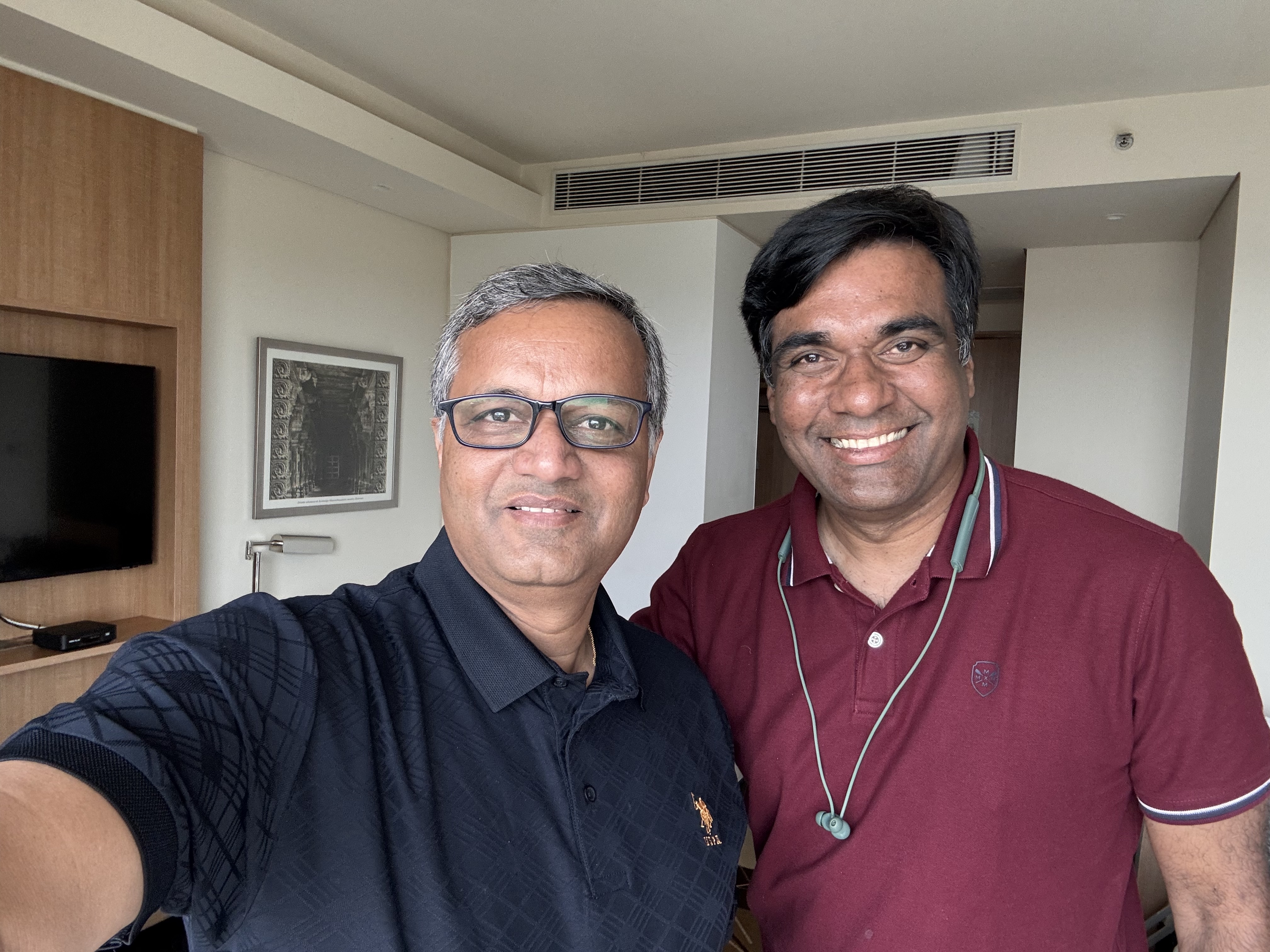
One personal reflection returns to Kiruba Shankar, who wrote the foreword to New Age Leadership. Baxi recalled meeting him at a Pune conference when their conversation revolved around blogs, Twitter, and online communities. On reconnecting in Chennai years later, he was struck by Shankar's work creating experiences around Vaksana Farms. Their discussion had moved from digital reach toward gathering people in person.
The connection reached another generation: Baxi wrote that his son attended one of Shankar's book retreats and subsequently published a book. It is a modest, specific detail in a career concerned with lasting relationships. Someone first met through the technology community became connected to a family milestone. No software workflow could have prescribed that particular outcome.
The unanswered TalentOjo conversation, the quoting company, the customer framework, and the reunion belong to different periods of his life. Together they reveal what repeatedly catches Baxi's attention: what people do after an introduction, a sale, or a promise. The important work keeps arriving after the apparent occasion is over. He has made a career of staying for it.
Keep the conversation going
- Mahesh Baxi’s website ↗Books, essays and advisory work
- LinkedIn ↗Professional profile and posts
- Twitter / X ↗Public handle named in his Compassites announcement
- Watch: Intro to Services Operations ↗With Chris Souza · May 2024
- Listen: The CPQ Podcast ↗A conversation about services quoting · January 2023
- Read: Provus’s Series A announcement ↗The company’s July 2022 funding milestone
- Explore: Outcome-based professional services ↗Rocketlane webinar with Brian Hodges · September 2026
- Read: From Hashtags to Harvests ↗Baxi’s reflection on reconnecting with Kiruba Shankar