Eugene Trautwein’s first real leadership job came with a basketball and a misunderstanding. Coaching at high school, he expected the work to consist of drills, tactics and getting ready for games. A couple of weeks later, he had revised that assessment. Some players struggled to meet his eye when he offered feedback. Knowing the game had not prepared him for every part of coaching the people playing it.
He recounts that beginning in his leadership newsletter, The Operator. It is an apt opening for a career spent close to the point where a plan encounters an actual person. A coach can explain a drill. A software company can ship a product. The interesting work begins when someone tries to use what has been given to them.
Today, Trautwein is the Sydney-based founder and CEO of Fortisphere, an AI transformation and operations advisory business. Before that came sixteen years at Commvault. His responsibilities covered professional services, enterprise success and customer support, eventually including worldwide support leadership. Across those settings, a persistent concern emerges: what happens to the person on the receiving end?
Fourteen seconds to a human
Customer support is an unusually practical education in the distance between intention and experience. A feature can make perfect sense inside a product meeting and become thoroughly mysterious at a customer’s desk. The support team gets the questions that survived the documentation.
In November 2015, Commvault reported a 98 percent customer-support satisfaction rating in its annual survey. Trautwein was its vice president of customer support. The announcement also reported an average of fourteen seconds for a customer-service call to be answered in person, and support in more than twenty-one languages.
The company linked its performance to experienced engineers and low staff turnover. The point was straightforward: knowing how to solve a technical problem and knowing how to help a customer were both part of the job. Those numbers described a team’s operating performance. Behind them sat people who had learned the product, retained that knowledge and remained available when someone else needed it.
Commvault annual Support and Services Survey, 2015. Team results during Trautwein’s tenure.
A ticket is only part of the problem
By 2018, Commvault was describing support in terms of a larger customer outcome. Its new framework connected individual incidents to the event around them: a disaster recovery, a major infrastructure project, a migration or a restoration of services. Trautwein, then worldwide vice president of customer support, spoke for the programme.
The distinction is easy to appreciate. A customer carrying out a migration may have several problems, each tidy enough to receive its own ticket number. Solving them separately does not automatically get the migration finished. The framework asked the support organisation to manage the incidents with the overall situation in view.
It was an operating idea with a human consequence. The customer had something to accomplish, and the support team needed to understand that larger task. An incident could be resolved correctly while the person behind it remained stuck. A dashboard full of green indicators would offer that person remarkably little consolation.
There was a concrete example in Commvault’s work with Brennan IT. In 2016, Brennan used the company’s Enterprise Support Program to help design and deploy a backup-as-a-service solution combining Commvault software and Huawei hardware. Brennan described support that extended from technical problems to its development roadmap, including the transfer of skills into its own team.
Trautwein’s contribution to that announcement focused on response times, escalation management and strategic partnership. Together, those concerns show the range of the role. A customer needs help now; its team also needs to be better equipped next time. Good support has to make room for both horizons.
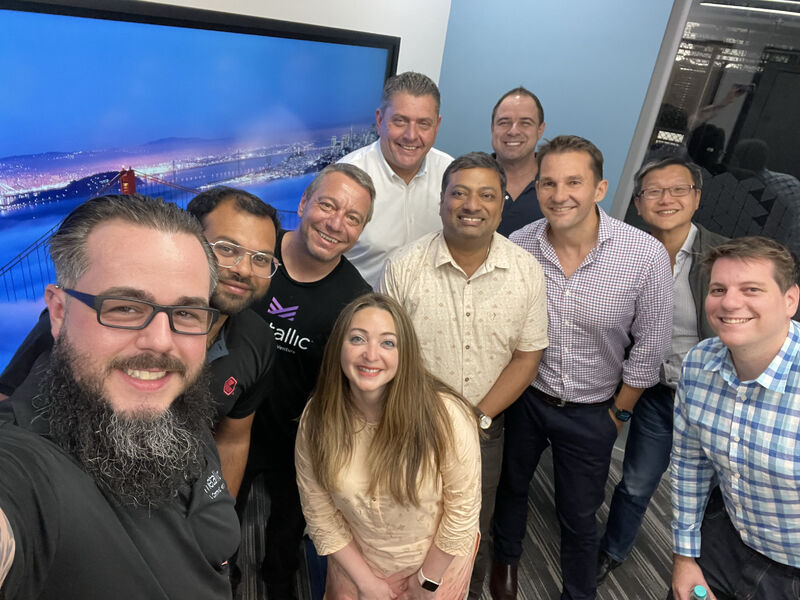
In March 2019, Totango named Trautwein to its inaugural Customer Advisory Board. The group brought together customer-success executives from businesses including SAP, Google and Zoom. Its purpose included feedback on products and services, peer learning and discussion of industry challenges. His support experience was being brought into a wider conversation about the customer relationship.
That relationship also runs through his August 2023 writing on SaaS. He describes support as a contributor to retention, expansion and adoption, with direct customer contact feeding useful information back into product development. A complaint can carry a design lesson. An onboarding difficulty can explain an eventual cancellation. Subscription revenue gives those conversations commercial weight, because the relationship continues after the initial sale.
Sixteen years, then a different scale
When Trautwein announced his Commvault departure in 2024, he described sixteen years that had begun through an acquisition. He looked back on the company’s transition toward subscriptions and recurring revenue, and on his part in building a SaaS product that reached $100 million in annual recurring revenue.
His farewell gave substantial space to other people. He thanked leaders who had backed him, named mentors and colleagues, and acknowledged the support organisation he had led. It was a departure message with a long cast list, fitting for work whose results depended on many hands.
Fortisphere’s biography credits him with leading global teams of more than 500 people and helping scale Commvault’s SaaS business from zero to $100 million ARR in under two years. The important verb is helping. These are collective achievements, and his own account of leaving makes that collective visible.
Fortisphere’s company profile lists its founding year as 2024. Its current work brings executive operating experience to practical AI adoption: understanding a business problem, choosing a useful starting point and working with the people involved. The size of the organisation changes. The obligation to make the change work remains.
The engineer stays in the picture
Trautwein’s July 2024 advice to technical support engineers is specific about where AI can help. Ticket logging, case routing and routine troubleshooting can consume attention that engineers could spend on difficult cases. His argument puts automation alongside deeper investigation, communication and stakeholder management.
Engineers also contribute to the machinery itself. Documenting problems and solutions supplies knowledge; feedback helps correct mistakes; experience reveals which repeated tasks are suitable for automation. The people who understand the awkward cases have something useful to teach a system trained to answer them.
His account of troubleshooting starts with listening to the customer and follows the problem through questions, analysis, testing and follow-up. That sequence makes the customer an active part of the investigation. The first description of a problem is a beginning, rather than a complete specification.
A companion article on redesigning support models addresses the economics. He proposes AI as a layer handling initial interactions and simpler problems, while staff develop the skills to manage more demanding work. Training and the retention of experienced people are part of that proposal. Changing the queue also changes the job.
The investigation, in sequence
- ListenUnderstand the symptoms.
- QuestionGather what is missing.
- TestWork toward the cause.
- Follow upCheck the result holds.
A condensed view of the troubleshooting process in Trautwein’s writing.
Start with the spreadsheet
In April 2025, Trautwein described a consulting engagement focused on AI, customer interactions and business-process redesign. The first task was a data blueprint: map integrations, identify inefficiencies and find where information could be shared more effectively. He also wanted to examine the manual handling of data outside formal systems.
It is a revealing choice of beginning. The glamorous part of an AI project is usually the demonstration. The less glamorous part is working out which information is available, where it lives and who has been moving it around by hand. A spreadsheet may be carrying responsibilities that nobody included in the systems diagram.
He asked how automation could increase what people were able to do. That question connects the new consultancy work with his earlier attention to support engineers. Time saved has a purpose when someone can use it for work that deserves their judgment.
“How can automation amplify human capability, not replace it?”Eugene Trautwein, April 2025
Fortisphere’s published EVT Marketing case gives that approach concrete measures. The firm reports an 80 percent reduction in the time needed to build custom travel itineraries and 50 percent faster resolution of customer queries. Those are Fortisphere’s reported results for this engagement. They describe identifiable tasks, giving the change a scale a working team can recognise.
The firm’s invitation to prospective clients follows the same logic: bring a slow, repetitive or frustrating piece of work and agree how to measure improvement. It is a modest unit of ambition. A business can inspect one workflow, see what changes and decide what deserves to happen next.
The economy of a black belt
Trautwein’s leadership writing offers another way to understand his preference for deliberate action. He describes the difference between a beginner in martial arts, spending energy on every movement, and an experienced black belt, moving with control. He connects that lesson to leadership: calm, clear intent and precision under pressure.
His writing on employee engagement adds a different concern. He says that, as he led larger teams, he developed leadership programmes from lessons learned through experience. The Gallup Q12 became a useful framework for understanding engagement and the extra effort people choose to contribute.
Read alongside the basketball beginning, these accounts reveal the questions he keeps returning to. How does someone receive feedback? What helps them contribute? Where should a leader direct attention? The vocabulary of the business may change from support to SaaS to AI, but people still have to understand the work and take responsibility for it.
Fortisphere gives Trautwein a new setting for those questions. A founder can propose an improvement; a team has to live with it. That is where his story returns to the court: the plan becomes useful when the people carrying it out can make it work.