Consider a billable hour. Someone sells it, someone schedules it, someone works it. Then someone else has to prove it happened. Between those moments, a services business can accumulate a remarkable amount of clerical work. The hour itself was useful. Its journey through the company is where things become expensive.
- KEBS joins sales, staffing, delivery and finance in a cloud PSA platform.
- Its parent, KaarTech, used it to run its own operations.
- KAÏS adds AI assistance to the records behind the work.
KEBS.AI is built around that journey. The initials stand for Kaar Enterprise Business Suite. Its category, Professional Services Automation, sounds like something procurement invented to discourage conversation. The underlying question is much livelier: can the people who sell the work, do the work and collect the money agree on what happened?
Built inside the business
The origin gives the question some weight. KaarTech, the enterprise technology services company behind KEBS, described it in its 2020-21 annual report as an internally built ERP. The report also outlined an ambition to bring the suite to smaller businesses through SaaS. Before the product had today’s AI vocabulary, it had an office to help run.
KEBS credits Maran, KaarTech’s founder and CEO, with the original vision. KaarTech’s reporting identifies Sukumaran E as the executive championing KEBS, drawing on SAP delivery and project management experience. That background helps explain the product’s preoccupation with the unglamorous details: costs, allocations, approvals and whether a completed milestone becomes a bill.
“We don’t Sell something we don’t Buy !”
KEBS, on its parent company’s internal use
On its “Why KEBS” page, the company reports that its parent cut tool costs by 40% and reduced working capital days from 200-plus to 20-plus. Those are vendor-reported results from its own organization. They make consolidation worth investigating; they are not a forecast for the next buyer.
A deal needs a memory
Start with the sale. KEBS’s deal management tools include customer records, pipeline reporting, costing sheets and proposal creation. Together, these preserve the assumptions behind an engagement. What was promised? What would it cost? Which work was included? A delivery team needs those answers long after the celebratory sales message disappears up the chat window.
The resource module brings employee information, recruitment, onboarding and allocation into the picture. Project management adds Gantt charts, recurring tasks, progress tracking and budget reporting. Finance covers receivables, cash flow, invoicing and revenue recognition. The point of putting these functions together is that an operational decision can carry its financial consequences along with it.
- 01PromiseQuote + scope
- 02AllocatePeople + time
- 03DeliverTasks + milestones
- 04CollectBilling + cash
A task board can tell you that something is finished. A services platform must also relate that finish to an agreement, a cost and a billing event. This is the market KEBS occupies: the intersection where project software meets the commercial machinery of a firm selling expertise.
AI with a filing cabinet
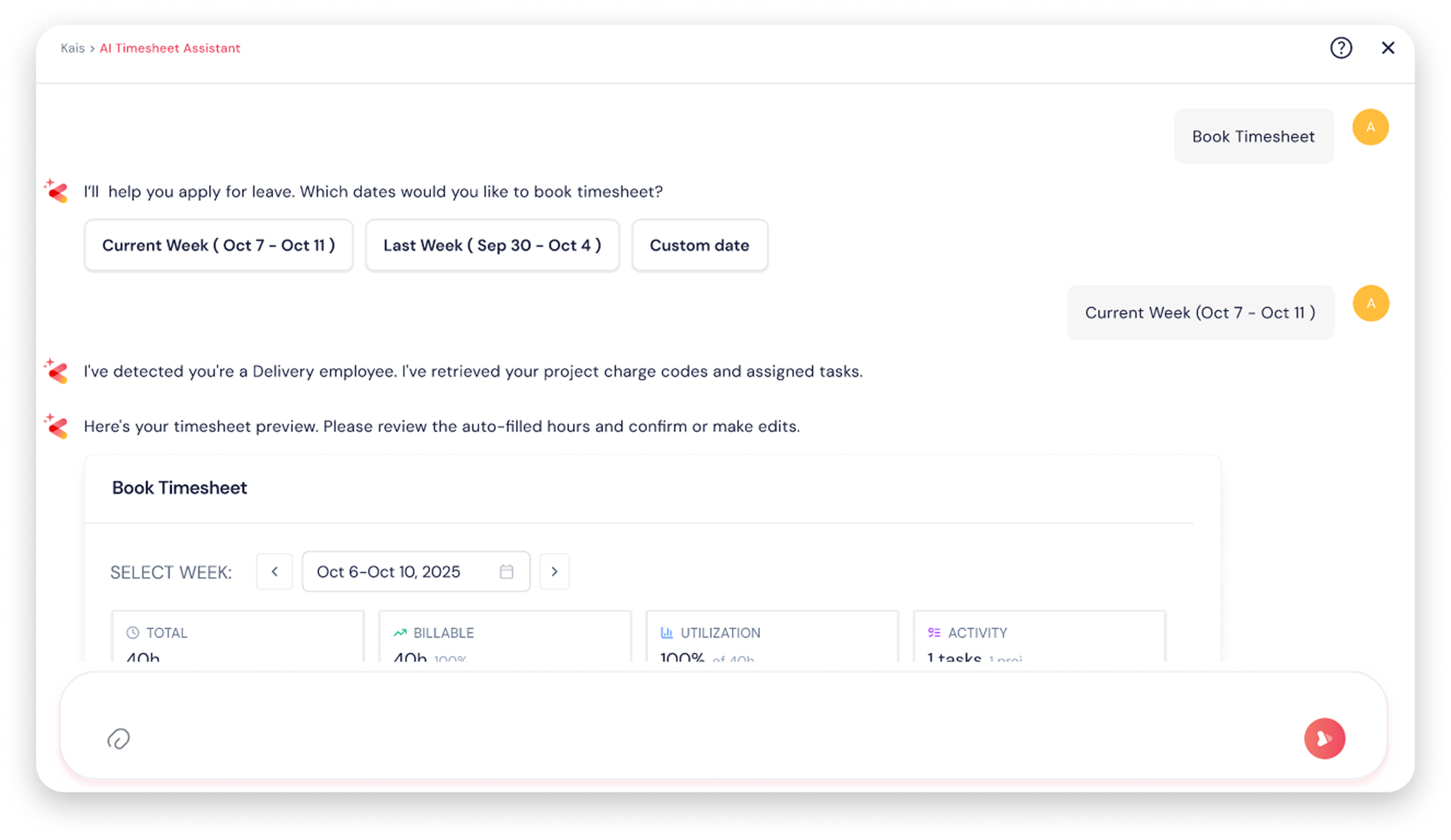
KAÏS, the AI assistant introduced publicly in 2025, sits on top of that operational record. Its introduction described searching modules, generating reports and booking timesheets through prompts. The current product presentation extends the idea into specialized agents for deals, staffing, tasks, time, billing and revenue.
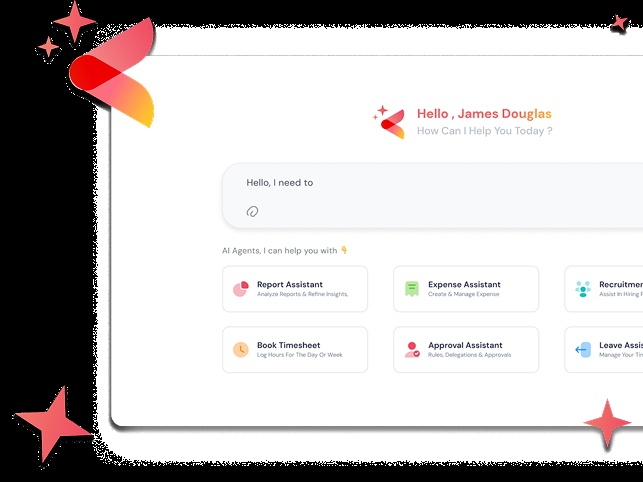
Two advertised functions explain the appeal. Staffing assistance considers skills and availability against upcoming demand. Timesheet assistance flags differences between allocated and logged effort. The useful connection is between a plan and what actually happened. A warning about a mismatch gives a manager something specific to investigate before the month closes.
That also gives buyers a practical way to judge the AI. Ask it to explain a discrepancy in a real engagement. Check the underlying records, the suggested action and who approves it. An answer becomes useful when the team can follow it back to the work. A polished sentence alone does little for a disputed invoice.
Who buys the whole chain?
KEBS names customers including Zifo, Maveric Systems, Stellium and Congruent. Its published customer stories focus on people management at Zifo and order-to-cash automation at Stellium. These are recognizable services problems, where employees move between engagements and the organization needs to keep delivery and financial records connected.
In a testimonial published by KEBS, Maveric CIO Sunil Peter says it has “quickly become an integral part of our operations.” The attraction is understandable for consulting, IT services, staffing and other project-based firms. Their inventory is largely people’s time, and a staffing decision can change the economics of several projects at once.
KEBS competes in a category populated by Certinia, Kantata, OpenAir, Accelo and others. Its ERP background and broad workflow coverage frame its positioning. SAP’s partner directory also identifies KEBS among KaarTech’s proprietary offerings. For buyers already carrying substantial enterprise systems, how the suite connects to those systems matters as much as what it replaces.
The price of joining the dots
The published US subscription has three tiers. Standard costs $19 per user per month, Essential $49 and Premium $69 on monthly billing. Annual commitments lower the monthly equivalents to $15, $39 and $55. The distinction follows responsibility: contributors track work, managers coordinate it, and finance leaders administer billing and revenue.
For illustration, ten Standard seats, two Essential seats and one Premium seat total $357 a month at those monthly rates. That arithmetic covers subscriptions. A buying decision should also account for migration, configuration, integrations and the staff time needed to agree on processes. Those practical costs determine whether consolidation pays.
Try it with one invoice
The lesson a reader can copy is small enough to try this week: follow one completed engagement from proposal to payment. Note every place a person retypes a number, checks another system or asks which version is correct. That exercise gives a software demonstration a concrete job.
The conditions matter. If teams do not maintain skills, time entries or contract terms, connected software inherits their omissions. If a small firm’s existing process already works, a broad suite may add more administration than it removes. KEBS makes its most interesting case where the handoffs themselves have become a recurring cost. Start there, with the hour that everyone worked and nobody wants to reconcile.