Mads Fosselius knows what it feels like to be the person between an impatient customer and several pieces of software that decline to speak to one another. Before the funding rounds, before the board meetings, he answered calls. A conversation arrived as a human problem. Dealing with it meant navigating a collection of systems.
That experience became the recurring subject of his working life. He moved through customer-service management, engineering and company leadership, returning to the gap between what a customer expected and what an agent could see. It is an unglamorous place to look for a business. It is also a place where the same irritation can turn up thousands of times a day.
In July 2026, Fosselius returned to the chairmanship of Dixa, the Copenhagen company he co-founded in 2015. Between those two dates he had served as CEO and chief innovation officer. His titles changed. The problem that drew him into the business remained recognisable: people want help, and the machinery for providing it too often gets in the way.
The education of an agent
His early introduction to business came through his father, who ran a computer and office-machine company in Hillerød. As a teenager, Fosselius visited after school. Later came commercial studies and a move to Copenhagen. The family connection supplied an example of entrepreneurship before he had a company of his own.
The call centre supplied something more specific. Fosselius has described starting as an agent, becoming a team leader and moving into IT to build software that filled gaps in the existing systems. He was learning the industry from several positions at once: the person answering the question, the person managing the work, and the person trying to make the technology behave.
At ProffComm, an outsourced customer-service operation, he encountered the ordinary disorder of switching between vendors, windows and communication channels. Each extra tool promised to handle a piece of the job. The employee inherited the task of connecting the pieces. A good memory was useful. So was an unreasonable tolerance for tabs.
He also studied at Copenhagen Business School, completing bachelor’s and master’s degrees while building his career. Working with demanding telecom customers gave him practice in defending decisions and hearing criticism. The education extended well beyond the classroom: a system had to work for people who were already busy using it.
A company between the systems
In 2004, Fosselius founded 3pas. Its work addressed the awkward joins between legacy customer-service systems, including technology from vendors such as Genesys and Avaya. The opportunity was practical. Companies had already bought substantial systems; getting those systems to cooperate created another business.
He recruited former colleagues into the venture. His account of the departure includes a displeased chairman who nevertheless respected the manoeuvre. The old employer became a customer. Entrepreneurship had arrived with an unusually direct sales lead, and an awkward conversation attached.
Cirque bought 3pas in 2009. Fosselius stayed in the business as an operator and shareholder, taking on responsibilities across product, engineering and customer success. He had wanted the opportunity to build in a larger setting. The sale gave him that opportunity, along with the peculiar experience of helping run something that no longer belonged to him in quite the same way.
TDC acquired Cirque in 2016. Fosselius went on to lead TDC Solution House, a digital cloud division that Dixa’s announcement of his arrival described as having around 400 employees. He had travelled a considerable distance from the support desk. Along the way he had accumulated experience of integrations, acquisitions and the organisational work that follows a deal.
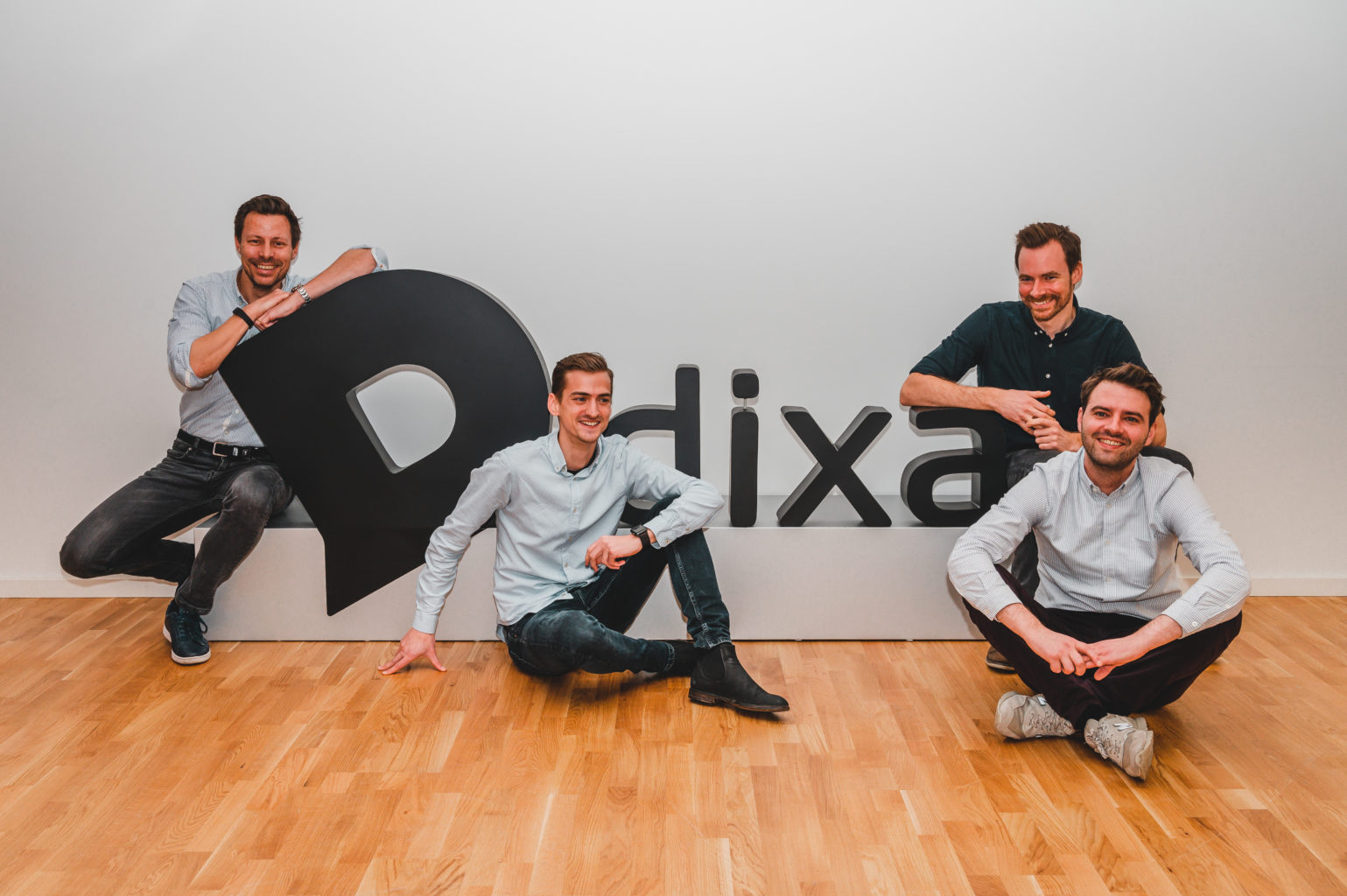
Four founders, one conversation
Dixa took shape through conversations with Jacob Vous Petersen, including walks in Copenhagen’s King’s Garden. Jakob Nederby Nielsen and Krisztian Tabori joined the founding group. The ambition was to build a platform capable of bringing together work that had been divided among call-centre software, ticketing systems and live chat.
That decision reflected the limits of their earlier work. They had experience making separate technologies fit together. For Dixa, they chose to build from scratch. It was a larger undertaking, and knowing the industry did not spare them the time required to produce something customers could use.
The founders worked closely with early Nordic customers, including Saxo.com and Interflora, to refine the product. These businesses contributed real situations, real conversations and real constraints. The resulting feedback mattered more than a tidy demonstration. An interface can look convincing until somebody has to use it for an entire shift.
“Sitting in a basement doesn’t give you any sense of the market.”
Mads Fosselius, 2020
The team also learned to attract attention. At an early TechCrunch Disrupt appearance in London, their Back to the Future-themed T-shirts and stickers helped draw visitors to the booth. A DeLorean was an entertaining companion for customer-service software. It gave passers-by a reason to begin a conversation, which was rather appropriate.
Fosselius became CEO in January 2018, as Dixa moved into its international launch. Jacob Vous Petersen shifted his attention to technology as CTO. The transition brought an existing relationship into a new arrangement: the investor and co-founder taking day-to-day leadership, the technologist concentrating on the product.
The price of remembering
The phrase Dixa used for its ambition was “customer friendship”. It carried a fairly demanding premise underneath its cheerful surface. A business should recognise a returning customer and preserve the context of the relationship. Changing from a call to an email should not require the customer to reconstruct everything that happened before.
Fosselius’s argument included the employee. If agents spend less time searching and repeating questions, they have more attention available for the actual problem. He treated the working experience of the support team as part of the customer experience. The connection was familiar to someone who had occupied both sides of that equation.
In his public discussion of the conversational approach in 2020, he made room for familiar technologies. A phone call could be part of a conversation just as much as a message. The point was continuity across the exchange. A new channel was useful only if the service organisation could make sense of what arrived through it.
The financial scale changed. In July 2021, Dixa announced a $105 million Series C led by General Atlantic. Funding was intended to support expansion, engineering and acquisitions. The announcement marked the distance travelled from the small founding group, while setting out a larger programme of work still to be done.
Acquisitions supplied additional parts of the product. Elevio brought knowledge-management capabilities; Solvemate brought automation; Miuros brought customer-service intelligence. Discussing the strategy in 2022, Fosselius described these capabilities around Dixa’s central experience platform. The founder who had started by joining systems was now considering which technology and talent the company should own.
The deals also put him on the other side of an experience he knew personally. Selling a company and bringing a company into a larger organisation involve different responsibilities. His own route through Cirque and TDC gave that work a history beyond the transaction announcement.
Learning to leave the room
A growing company changes the founder’s job. Fosselius has spoken about reassessing his role every six months, moving away from doing everything himself and allowing managers to take responsibility. Knowing a business intimately can make that handover difficult. It can also make it tempting to keep reaching back for the controls.
His stated response was to hire capable people and trust them. The logic resembles his product argument: people need enough context and autonomy to do useful work. Keeping every decision with the founder creates another queue.
He has identified resilience, humility and a strong vision as traits that helped him. Those are his own descriptions, and the combination contains a useful tension. A founder needs enough conviction to keep building and enough humility to let other people change how the work gets done.
Outside the business, Fosselius has repeatedly credited his wife, Heidi, for her support and spoken about their three sons. In a public reflection on his career, he linked the example he wanted to set for his children with dedication and effort. The company’s history is shared with people whose names never appear in the funding headline.
Back in the chair
Christian Lohmann took over Dixa’s CEO role; Fosselius focused on innovation before returning as chairman on July 1, 2026. The return brought him back to a position he had held at the beginning. It also placed him alongside a company whose technology and leadership had changed considerably since the four-founder office.
His recent language pairs human service with AI and describes customer experience in terms of the value it creates. Dixa now offers an AI agent, Mim, alongside its conversation-management tools. The old question remains a useful one for the new technology: does it help the person trying to get something resolved?
He has widened his work with other founders, too. Through the byFounders Collective and public conversations about the Dixa journey, Fosselius has made room for passing experience along. In a February 2024 podcast, he discussed finding a favourite competitor and building through networks. His preferred book was Play Bigger. The ambition has company.
The arc of his career returns to a modest observation from the phones: the person asking for help has a history, and the person answering needs to see it. Fosselius has spent years trying to make that ordinary courtesy easier to deliver. Now he gets to support the next version from the chairman’s seat.