The customer wanted to stop carrying paper. There was a sales team, a trade show and a newly useful object called the iPad. Could In The Pocket build an application that let people present their material at a booth and share it with prospective customers? Pieterjan Bouten and his colleagues had an app development business. This was precisely the sort of request they were supposed to accept, deliver and invoice.
Instead, they kept looking at the problem. Other companies must have salespeople searching for presentations. Other marketing departments must have perfectly good material that never reached the right hands. A commission for one client began to look like a product for many. There are more theatrical ways to begin a technology company. Finding a better home for a brochure has the advantage of being useful.
Showpad followed in 2011, founded by Bouten, Louis Jonckheere and Peter Minne. More than a decade later, Bouten had handed over the CEO role. By 2024, he was launching Entourage, combining a venture studio with an investment fund. His career had acquired an interesting loop: the founder who had found a software business inside a services business was helping other people find their own beginnings.
A customer request with a second life
Bouten's working life had already taken him through Accenture and Netlog before he co-founded In The Pocket in 2010. His education paired communication sciences at KU Leuven with international business at HUB-EHSAL. The combination would prove relevant to a company concerned with how businesses explain themselves and how those explanations travel across borders.
At In The Pocket, mobile devices were producing a stream of requests from companies wanting applications and content adapted for smaller screens. Showpad emerged from that work, then developed a broader purpose: helping marketing equip salespeople, helping sellers hold more relevant conversations, and making it possible to understand how content contributed to revenue. The presentation was the visible object. The relationship between two departments was the larger problem.
The early product let marketing teams create a branded mobile environment through a web interface. That mattered when developing and maintaining a company's own application was a more cumbersome undertaking. A sales team needed something dependable in front of a customer. An elegant demonstration that crashed at the booth would have made paper look rather sophisticated.
The growth was measurable. In February 2018, Bouten described a business that had reached $30 million in annual recurring revenue for 2017, with annual growth of roughly 70 to 75 percent. He also described its earlier restraint: Showpad had reached about $400,000 in recurring revenue before its first external funding round in 2013. The product had begun earning its keep before investors supplied the next gear.
Recurring revenue measures a subscription business's annualised run rate. These are historical figures, not current results.
The company changes. So must the founder.
The numbers describe expansion. Bouten's account of running the business describes repeated reconstruction. In 2019, he explained that Showpad became a different company each year. Processes for sales and marketing needed replacing as the business grew. Milestones were worth acknowledging, but the founders kept returning to the next problem. He could laugh about the organised chaos without pretending the organisation had finished its work.
He also resisted the assumption that a founder should have every answer. As teams grew and hierarchy appeared, he spoke about learning from employees as well as teaching them. Being the cleverest person in the company would itself be a problem. This is a useful admission from someone whose job title might otherwise encourage an expensive amount of certainty.
Hiring brought that belief down to earth. By 2018, Bouten could no longer personally interview everyone joining Showpad. He had done so until the previous year. The desired recruits had a memorable description: “authentic, good-natured asskickers”. The phrase made room for ambition and decency in the same person. It also set a harder test than technical competence alone.
He regarded finding the right people as harder than the technology challenge. The company could map out its product development; assembling the team to deliver it was less predictable. For a founder, that meant surrendering some personal oversight while remaining particular about who came through the door. A growing company needs more people making decisions. It also needs those decisions to bear some family resemblance.
“authentic, good-natured asskickers”
The hiring description Bouten discussed in 2018
Ghent, with an American timetable
Showpad's international ambitions arrived early. Jonckheere moved to San Francisco, while Bouten spent substantial time in the United States. Building on two continents meant working on culture and communication before a larger, more geographically comfortable company might have needed to. An office overseas added responsibilities as well as access to customers.
The United States was Showpad's first expansion market. Bouten later explained the attraction in practical terms: it was the largest market for the business and a source of people experienced in its industry and subscription model. By 2022, he said more than half of Showpad's revenue came from the US. The distance had become part of the company's everyday operating reality.
For all that travel, his story remains closely connected to Belgium. In The Pocket was one beginning, Showpad another. The people involved would reappear as colleagues, backers and fellow founders. A company can sell internationally while its next idea, next collaborator or next investment remains a short conversation away.
In The Pocket
Showpad
the CEO role
Entourage
A different sort of finish line
Outside work, Bouten has chosen some demanding ways to spend his free time. In 2019, he described finishing the Cape Epic mountain bike race in South Africa. He had also tried a half triathlon the previous year. Asked what he liked spending money on, he named sports equipment and travel, preferably experiences shared with family or friends.
He was candid about the cost of a new mountain bike, and equally clear that it brought him pleasure. He recommended Yuval Noah Harari's Sapiens. Asked which achievement made him proudest, he chose his family. Becoming a father, he said, had given him perspective and made him a better CEO. Those answers put some ordinary preferences around the otherwise abstract business of scale.
The CEO job itself ended in March 2022, when he became executive chairman. That was a change in responsibility after more than ten years leading Showpad. The company subsequently entered another chapter: Vector Capital completed its acquisition in October 2025 and combined Showpad with Bigtincan under the Showpad brand. Apratim Purakayastha became CEO and Jim Hopkins chairman of the combined business.
The chronology matters. Bouten's founder story belongs to Showpad's history; his present work reaches beyond it. A familiar company name can cling to a person long after their calendar has changed.
Experience gets a new address
Entourage made the next chapter explicit. At its 2024 launch, the operation announced $30 million raised and two complementary activities. Entourage Studio would build companies; Entourage Capital would invest in early-stage software founders. Maarten Mortier and Evert Beeckman joined Bouten in leading the operation. In The Pocket became the studio's long-term partner and principal backer.
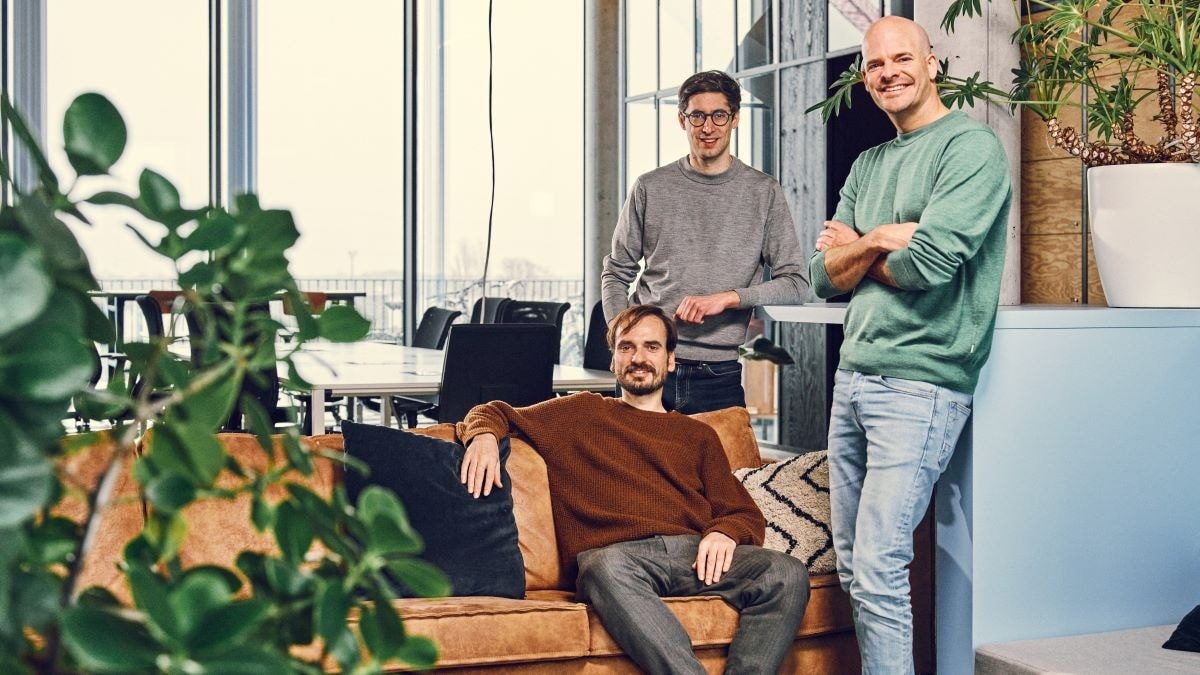
The backers included Showpad co-founders Jonckheere and Minne, SaaStr's Jason Lemkin and founders associated with Collibra, Deliverect, Silverfin and other software businesses. The initial investment portfolio included Aikido, Henchman and NineID. People who had built companies were supplying money for others to try. The proposed advantage was experience that could be called upon when a founder encountered a difficult decision.
“We aspire to be the builders and investors we dreamed of having by our side while building and scaling our companies,” Bouten said at the launch. The ambition carries a personal standard: remember what help would actually have been welcome when you were the person doing the building.
Tekst was the studio's first company, founded by Wouter Janssen and Tiebe Parmentier to apply AI to enterprise work. Bouten later recalled meeting them in Ghent at eight on a Sunday morning in June 2023, while he was still deciding whether to start Entourage. The encounter accelerated his plans. They went on to share desks for more than a year, working together on hiring, product and bringing the business to customers.
By May 2026, Tekst had announced a $13.5 million Series A led by Elephant, with Entourage investing again. The Sunday meeting had become a substantial working relationship. Its appeal as an anecdote lies in the proximity: a backer close enough to help hire, discuss a product and see the work being done.
Bouten also serves as an Entrepreneur in Residence at the Vlerick Entrepreneurship Academy. His 2026 conversations about company building include Wintercircus, Ghent's gathering place for entrepreneurs, researchers and digital creatives. The public company history and the local community now sit beside the fund and studio.
There is a consistent habit here: pay attention to the work in front of you and notice when it contains another possibility. A trade show application became Showpad. Years spent building businesses became material for helping new ones. Bouten has returned to the beginning with more people around him, and rather more experience of what happens after the first invoice.