Morten Ebbesen would like electricity to be boring. In a business full of competing offers, that is a rather pleasing ambition. The founder of Siteimprove has turned his attention to electricity retail, where he sees advance payments, obscure charges and bills that require more interpretation than a bill ought to require. He has spent a substantial part of his working life finding commercial promise in details other people would prefer somebody else to handle.
His objection, expressed in a public post about Ebbefos, is straightforward: something as ordinary as buying power has become unnecessarily complicated. Customers should understand what they pay for. People who use an electric car or a heat pump should be able to follow the arithmetic. He says he had not originally intended to start another electricity company. Looking at the existing market changed his mind.
There is an echo here of an earlier assignment. Before Siteimprove became an international software business, Ebbesen was confronted with the unglamorous work of keeping websites in order. Links broke. Content needed checking. Someone had to notice. A company could spend handsomely getting a website made and still leave its visitors wandering into the digital equivalent of a locked cupboard.
The price of noticing
Ebbesen founded Siteimprove in Denmark in 2003. Its beginnings were practical: automate work that otherwise had to be done by hand. The problem had the useful quality of recurring. A website changes, another page appears, another link stops working. Finishing yesterday's checks does remarkably little to prevent tomorrow's errors.
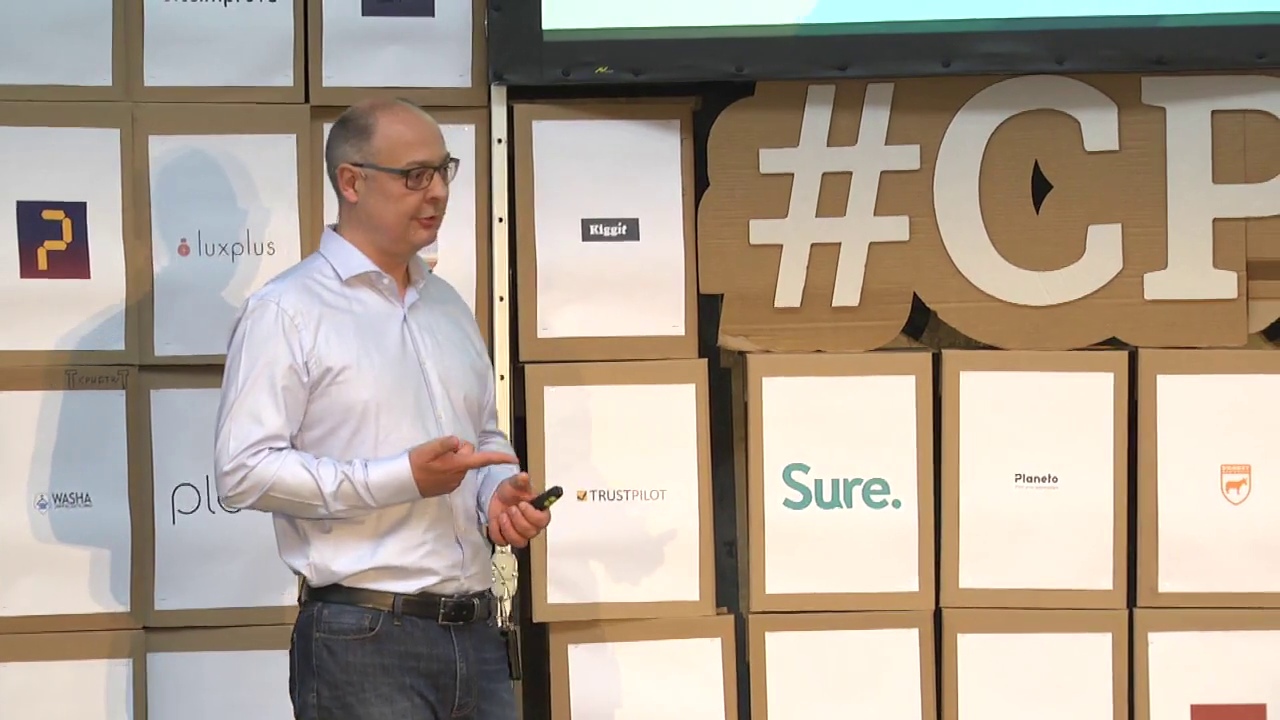
Looking back in a 2016 founder talk, he recalled an early price of 129 Danish kroner a month. Monthly invoicing made that modest sum even less attractive. Annual payment in advance helped finance the business through its customers. It is a wonderfully administrative beginning for an international software company: part product idea, part discovery that sending the invoice can cost too much of what is on it.
The distinction between building a website and maintaining one gave Siteimprove room to develop. Its tools grew to cover quality assurance, accessibility and analytics. For the people running large sites, these were connected responsibilities. A page has to be usable, accurate and worth visiting. Giving several teams a way to inspect it creates a reason to keep paying attention after launch day.
Twelve years before the cheque
In December 2015, Siteimprove announced a $55 million minority investment from Summit Partners. The sequence matters. The company had already spent twelve years growing organically and profitably. Outside capital entered a business that had customers, staff and an international operation. By the announcement, it served more than 3,500 customers and employed 260 people across eleven offices.
Six countries had been added to its operations during 2015 alone. That makes the investment easier to understand as a decision about capacity. Sales, marketing, product development and international expansion all needed support. A recurring customer problem had become an organizational problem: how to give a growing company enough room to keep delivering.
Ebbesen's statement about the deal stressed culture alongside the money. He wanted a partner with an international outlook who understood the company's values. Ownership percentages are easy to put in an announcement. Preserving the character of a workplace while adding offices is a less tidy assignment, particularly when the original business has already been running for more than a decade.
He could also be amusingly resistant to administrative overreaction. In his founder talk, he described alarm over a $700 restaurant wine bill. The bottle turned out to hold four litres, bought for a team celebration. His preferred response was a conversation rather than a new thicket of procedures. The detail gives his advice its flavour: first establish how much wine there was.
“Keep it simple and talk to people.”
Morten Ebbesen, founder talk, 2016
What the numbers made possible
By the time Nordic Capital announced its majority investment in September 2020, Siteimprove had 550 employees in fifteen countries and more than 7,200 customers. Its 2019 recurring revenues were $81.6 million. Approximately 60 percent came from customers in the United States. A company founded in Denmark had become deeply dependent on its ability to serve people elsewhere.
Those figures also explain why the story belongs to an operator as much as a founder. An international business needs a functioning organization behind the original idea. In his letter accompanying the 2019 annual report, Ebbesen described strengthening the executive team with marketing, product and technology leadership, as well as adding board experience. He was building the management around the software.
The same letter discussed work with partners on accessibility testing and contributions to standardized testing rules through W3C. These are the quieter achievements of a software business. A financing announcement arrives on a particular day. Shared testing rules require coordination, technical work and agreement about what a result should mean. Their usefulness depends on other people being able to rely on them.
Nordic Capital became the majority owner, Summit exited its holding, and Ebbesen remained a significant minority shareholder and CEO at the time of the transaction. The terms were undisclosed. For Ebbesen, it was another change in the structure supporting the company he had started seventeen years earlier.
Making a usable web a daily job
Siteimprove's work on accessibility put the practical consequences of website maintenance close to the centre of the business. Its 2020 sustainability report described an upgraded accessibility tool, free checking tools and participation in the WAI-Tools project. That collaboration produced more than seventy accessibility conformance testing rules.
There is something characteristic about making a business out of checks. They turn an attractive intention into a job someone can actually do. A team can inspect a page, identify a problem and return to it. Free tools, including a browser checker and a colour contrast checker, extended that habit beyond paying customers. The subject is technical; the everyday question is whether a person can use what has been published.
For Ebbesen, this work occupied eighteen years as chief executive. The duration is easy to skim past. It spans the initial product, years of organic growth, institutional investment and the construction of an international management team. He stayed through several different versions of the business.
Leaving the chief executive's chair
On July 7, 2021, Siteimprove announced Shane Paladin as its new CEO. Paladin came from SAP, where he had run a services division with 19,000 employees and $4 billion in revenue. The scale of that previous job gives some sense of the experience Siteimprove was bringing in for its next phase.
Ebbesen moved to the board. He said he looked forward to supporting the company in his new role, and linked the handover to Nordic Capital's involvement. A founder changing seats can be a substantial event without requiring a dramatic exit. In this case, he retained a formal place in the company's direction.
Today, Siteimprove continues to list him as a board member. His other executive work sits with the Ebbefos energy companies. The change of industry is substantial, although a reader following his complaints about confusing electricity bills may recognize the old interest in making an everyday system easier to use.
His wider board work keeps him connected to several kinds of business. Alongside Siteimprove, his board roles include recruitment software company Elvium, digital agency Kruso, search software company Cludo and cargo bike maker Black Iron Horse. The roles do not all involve selling the same product. They do involve the continuing work of company leadership: choosing direction, understanding finances and helping an organization make decisions. That gives his move into energy a useful context. The former CEO has remained involved in operating companies, with a collection of responsibilities extending well beyond the firm that first made his name familiar in software.
Another system that needs explaining
In January 2023, Ebbefos Holding acquired the Xolta battery business from Lithium Balance. Ebbesen became its chairman. The operation came with 25 employees and plans to move to Skovlunde. Its products stored electricity from solar installations, with applications in homes and larger buildings. This was a business involving equipment, space and manufacturing, alongside software.
He connected decentralized solar batteries to a practical question about the electricity grid: how to accommodate more electric vehicle charging without simply relying on extensive network expansion. The attraction was the ability to manage energy differently. Power could be stored and used at another time. Once again, the workings behind an ordinary service were where he saw room to act.
The family connection is explicit. Ebbesen, his wife Vibeke Nyfos and their daughters Lærke and Mathilde founded Ebbefos Fonden in 2021. The energy group's ownership places its commercial activity within that foundation. Ebbefos Energy describes a business supplying battery systems, software, training and support through installers and energy companies.
The electricity retailer brings that work to the household bill. Its website offers payment after consumption and sets out its subscription options. Ebbesen's stated aspiration for the venture is simplicity and honesty; in a later public update, he discussed a target of reaching break-even in 2027. That remains a target. There is still a business to build.
A broken link and an electricity bill are unlikely companions in a founder's biography. Both, however, can leave the customer doing work that the service ought to have made unnecessary. Ebbesen has found plenty to occupy him in that gap. Electricity becoming boring would be a satisfying result. It would leave people free to be interested in something else.