A finger dipped into a shrimp pond is an unusual instrument for an electrical engineer to encounter. Liris Maduningtyas had worked with data logging in the oil and gas business. Here were farmers assessing their water through touch and experience. The contrast caught her attention. She began asking how technology might help them make decisions about a crop that remained largely out of sight.
Her eventual answer became JALA, the Yogyakarta-based business she co-founded and now leads. Getting there involved more than building something that could take a reading. The early device ran into a rather persuasive objection: farmers did not want to buy it. Even a discount failed to settle the matter. A working sensor, it turned out, could still leave the important work undone.
That awkward discovery gives her career its shape. An engineer enters an unfamiliar industry with tools for gathering information. The people she hopes to serve teach her what information is worth. Over time, the job expands to include money, markets, and who gets a voice in the room. Shrimp have no interest in a founder’s résumé. Farmers have rather more immediate concerns, too.
A different kind of fieldwork
Maduningtyas graduated from Universitas Gadjah Mada in 2014 with a degree in electrical engineering and information technology. Her final project at Chevron concerned steam-generator optimization using a genetic algorithm. She then joined Schlumberger’s wireline services in Duri, Riau, working as a field engineer. Before she had a company to run, she had equipment, measurements and practical engineering work to understand.
In late 2015, she moved into marketing and finance at Atnic Ekotekno, a hardware startup. It was an early turn toward the business side of technology: research and prototyping came with the task of explaining the work and managing its finances. Her subsequent JALA co-founder role dates to January 2017; she became CEO in April 2018. The earlier pond-monitoring project had begun in 2015.
The combination of engineering and business matters here. A device has to function; an offer has to make sense to someone paying for it. Moving between those questions can be uncomfortable. A beautifully measured problem still needs a customer willing to act, and a company has to discover how to make that action possible.
Field engineer
Co-founder
CEO
The sensor nobody wanted
The monitoring project was initially called Blumbangreksa. It won awards and grants, and the team developed a sensor able to send water data to a smartphone app. Then came the sales problem. Market research helped reveal what farmers actually needed: an explanation of the readings and guidance about what to do next. The team changed its features and moved toward selling insights through subscriptions, with devices loaned to customers.
“What the data meant and what to do with it.”
Liris Maduningtyas, on what farmers wanted
There is a modest but consequential distinction between handing over a reading and helping someone interpret it. The first adds a number to a day already full of work. The second can give that number a purpose. For a farmer, the value rests in the next decision. An engineer’s satisfaction at getting a sensor to work does not automatically appear in a customer’s accounts.
JALA’s early development makes that lesson unusually tangible. Its raw material was water data, yet its business depended on understanding people. In the company’s account of its growth, listening changed both the product and the way customers could obtain it. The technology needed a business arrangement around it, much as a good instrument needs someone who knows what to listen for.
A joke in Bergen, a job in Yogyakarta
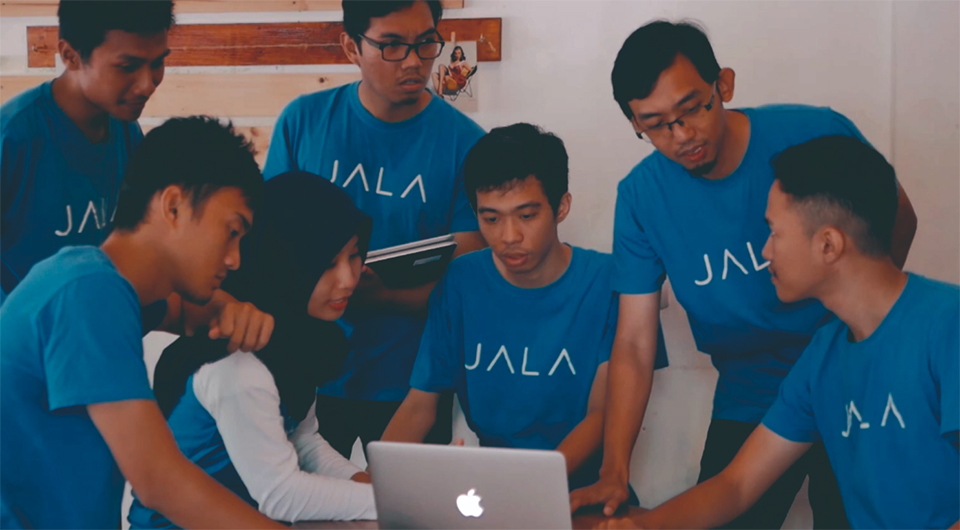
In 2018, JALA joined the first cohort of Hatch, an aquaculture accelerator in Bergen, Norway. The experience put Maduningtyas among people working on related problems and offered a different perspective on growing the business. It also brought outside scrutiny of the team. Following accelerator advice about matching people to responsibilities, she took the CEO role.
At a presentation in Bergen, she described the time she had spent with farmers: working, eating and drinking alongside them. Then came a pause before the punchline about sleeping on the farms. It was a small piece of comic timing in a talk about a serious business. The joke worked because the underlying point was clear. Understanding customers had required spending time where they worked.
Her engineering background gave her a way into the technical problem. Those visits gave her something different to bring to a room of potential supporters. A presentation can explain a device with a diagram. Explaining why anyone needs it becomes easier when the speaker has listened to the people expected to use it.
Learning to ask for a seat
The career move needed explaining closer to home as well. Maduningtyas recalled that her parents had encouraged her to become a lecturer. A pitching competition win and revenue from farmers helped persuade them that the business could work. Their support followed evidence. For someone building a company around data, there is a pleasing consistency in that family story.
She also spoke about proving herself to older, experienced farmers in an industry where she encountered few women in the field. It was a reminder that technical competence arrives inside a person, and people bring expectations to a meeting before anyone opens an app. Winning trust therefore had a human dimension alongside the engineering one.
Her later public comments on inclusion became quite specific. After visiting a farm in Purworejo, she described her pleasure at seeing women involved in shrimp farming. She pointed to JALA’s Tebar work with small farmers and its use of the Gender Action Learning System, a community-led empowerment method intended to support inclusivity. Her interest extended across preparation, farming, harvesting and the work that follows a harvest.
In a separate post about her team, she emphasized bringing different perspectives and skills together around a shared purpose. The practical question is how those differences get room to contribute. A workplace can count its people; collaboration asks what happens once they start working together. Her public discussion connects that question to the farm as well as the office.
A harvest needs somewhere to go
By 2023, JALA’s offering stretched beyond monitoring. Farm assistance, financing access, supplies and marketplace services sat alongside analysis from farm data and connected equipment. In November of that year, the company announced a $13.1 million Series A led by Intudo Ventures. Sinar Mas Digital Ventures and existing investors Mirova and Meloy Fund also participated.
That wider offer acknowledges how many things must go right around a production cycle. Information can help a farmer manage a pond, but producing shrimp also involves paying for inputs and finding a route to market. Each connection brings another relationship for the company to manage. The original sensor was a relatively tidy object. The business around a harvest has rather more moving parts.
JALA’s announced Series A round
Company capital raised, not personal wealth or company valuation.Recognition followed several routes. Forbes included Maduningtyas in its 2021 Asia 30 Under 30 list for Industry, Manufacturing & Energy. Tatler named her among its Gen.T Leaders of Tomorrow that year. She became an Unreasonable Fellow, and her participation later included the 2025 Impact World Forum. Each placed the shrimp-farming business in a different conversation about entrepreneurship.
In December 2023, she accepted JALA’s second-place award in Pahlawan Digital UMKM, a competition focused on digital businesses serving small and medium enterprises. The process included proposal review and regional pitching before the national award ceremony. That is a useful counterweight to the familiar funding headline: another way of examining the company was to ask what it did for smaller businesses.
Making the numbers speak
Maduningtyas has also taught the craft of explaining an idea. In a 2020 UGM entrepreneurship class, she discussed pitching as a recurring part of a founder’s work, useful in hiring, finding customers, raising money and building partnerships. She emphasized practice, clear communication and stories that prompt action. Protectiveness about an idea, in her account, should give way to confidence in execution.
In a 2021 session hosted by Indonesia’s State Secretariat, she returned to pitching as a way to communicate passion and invite people into a story. It is a revealing subject for an engineer to teach. The same person asking what a pond reading means must explain what a company means to somebody who has never stood beside that pond.
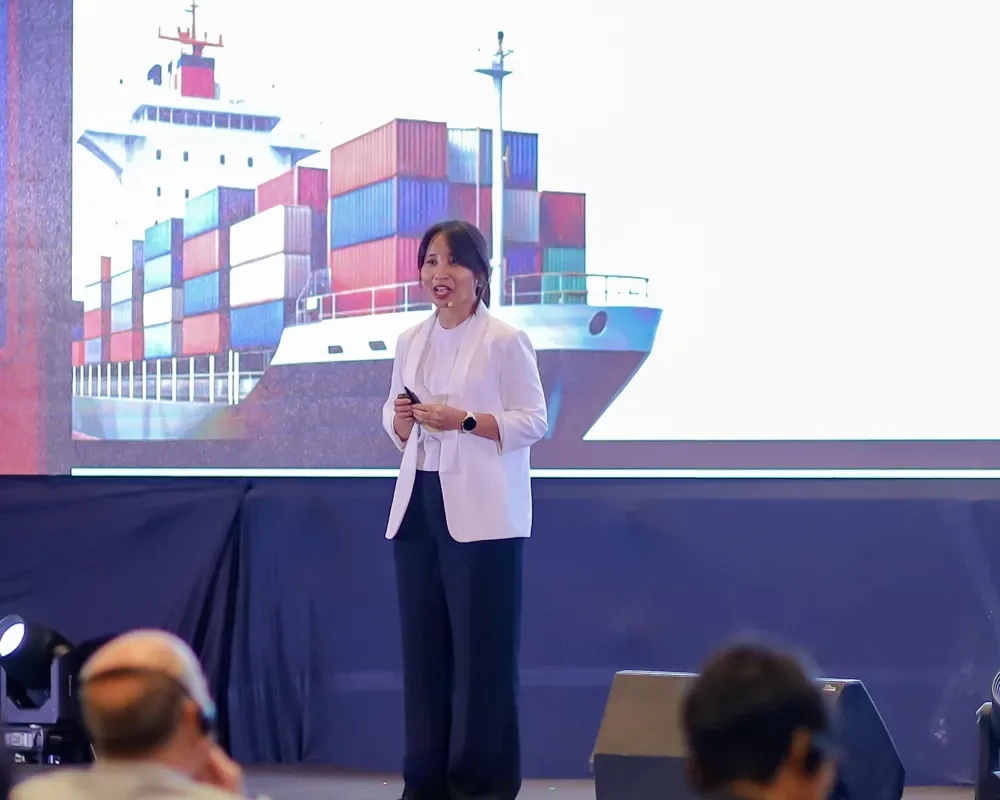
Her public work now takes those questions into industry gatherings. At Shrimp Outlook 2026, she discussed resilience, collaboration, cost efficiency and profitability. In September, JALA reported her participation in Global Shrimp Forum 2026 sessions about leadership, innovation and a more inclusive shrimp value chain. The conversation had widened from an individual farm’s records to the relationships around an industry.
Her LinkedIn description includes the cheerful phrase “Shrimp Enthusiast.” It leaves room for the less cheerful work of changing an offer, explaining a decision and making a business useful. The finger in the pond remains a good place to begin her story. It captures an engineer’s curiosity. Everything that followed asks how that curiosity can earn its keep.
Follow the conversation
- JALA website
- Liris on LinkedIn
- Liris on Instagram
- The early product interview
- Bergen and the early JALA team
- Career profile
- The 2018 interview
- Forbes profile
- Gen.T recognition
- Unreasonable profile
- JALA’s 2023 funding announcement
- Pahlawan Digital award
- Pitching class at UGM
- The State Secretariat session
- Women in farming
- Collaboration at JALA
- Shrimp Outlook 2026
- Global Shrimp Forum profile
- JALA’s recent updates
- Watch: Shrimp Outlook 2023