A bag of fertilizer has an inconvenient relationship with the internet. You can order it on a screen, compare its price on a screen, perhaps approve the purchase on a screen. Eventually, somebody has to move the bag. Samuel Tirtasaputra’s career has been spent close to that eventuality: the procurement decisions, distribution arrangements and information gaps that stand between needing something and having it.
He co-founded Gokomodo in 2019 with technology entrepreneur William Pramana. Their business addresses the agricultural supply chain in Indonesia, serving both companies and smallholder farmers. It brings together digital procurement and a physical presence. The combination is easy to describe. Making it useful across an archipelago is the work.
Samuel’s story begins before the startup, in the less photographed world of corporate purchasing. His route into agritech offers a view of entrepreneurship grounded in an existing occupation. The problem had already been turning up at work for years. He decided to organize a company around solving it.
Sixteen years on the purchasing side
Samuel studied at the National University of Singapore from 1999 to 2002, listing a bachelor’s degree in Finance and Financial Management Services. His professional profile places him at PT Sampoerna Agro Tbk from August 2005 to December 2021, as Head of Procurement, Project and Supply Chain. Those dates overlap with Gokomodo’s beginnings; his CEO role there is listed from January 2020.
Procurement rarely enjoys the glamour allotted to a product launch. Its achievements often look like an absence: no missing supplies, no unexplained price, no project held up waiting for a purchase. Yet the person managing it sees how many things must agree before work can proceed. Price, product quality, information and delivery all have their own opinions.
By Gokomodo’s third anniversary in 2022, Samuel’s founding motivation was described through approximately fifteen years of encounters with inefficient purchasing, competition over product prices and limited access to information in plantations and commodities. This gave him a particular starting point. He knew the difficulties from inside an established agricultural business.
With Pramana as co-founder and CTO, that experience met a technology background. The resulting company would need to understand both the purchasing process and the systems capable of improving it.
The farmer at the other end of the order
Gokomodo’s early focus included Indonesia’s oil-palm plantation industry. In an October 2022 television interview, Samuel discussed the gap between the productivity of smallholder farms and larger businesses. Limited access to complete, quality supplies and agricultural knowledge formed part of the explanation. A farm’s location could make both harder to obtain.
He described two principal customer groups: corporate businesses and smallholders, including farmers and smaller agricultural enterprises. The products reflected that distinction. E-procurement software helped companies digitize purchasing. Agricultural commerce handled demand for supplies from businesses and smaller buyers. The common concern was access, though the customers arrived with different resources.
There is a practical question beneath that arrangement. If a large agricultural company can purchase through a developed network, can some of the advantages reach a farmer who buys much less? Samuel’s ambition was to connect corporate buying power with the needs of smaller agricultural operators. The point was to improve the terms of an ordinary purchase.
For the reader, that makes Gokomodo easier to understand than the word “platform” alone. It is a business dealing with the conditions around buying: what is available, how it is selected and how it reaches the customer.
and commerce
and logistics
and local customers
Capital with a physical destination
On September 6, 2022, Gokomodo announced a US$26 million Series A led by East Ventures. The participating investors included SMDV, Eight Capital, K3 Ventures, Triputra, Waresix, Indogen Capital, Sahabat Group and Sampoerna Financial. At that point, the company reported more than 3,000 businesses in its ecosystem, including Sinar Mas, First Resources and Sampoerna Agro.
Samuel’s plans for the funding included a wider product selection, more customers, improvements to the digital platform and physical distribution points in remote areas. The expansion was intended to serve customers outside Java, where the announcement located much of the agricultural customer base. Software and premises appeared in the same plan.
“By having a closer presence with farmers, we hope to improve their welfare and help them to build more sustainable farming practices,” he said. Proximity was part of the proposition. A nearby place to obtain supplies could help the digital service reach customers in areas with less developed digital infrastructure.
The partnership with logistics company Waresix added another piece. In September 2022, their work together was described as securing domestic routes and containers and transporting more than 300,000 tonnes of fertilizer across Indonesia. Those movements put weight behind the otherwise rather airy language of digital transformation.
“By having a closer presence with farmers, we hope to improve their welfare and help them to build more sustainable farming practices.”Samuel Tirtasaputra · September 2022
A shop door joins the business plan
By March 2023, Gokomodo reported that it had distributed more than 250,000 tonnes of agricultural inputs during 2022. The figure refers to that year’s inputs; it has a different scope from the fertilizer volume described in the Waresix partnership. Samuel spoke of the company’s original purpose: giving farmers and agricultural businesses faster access, more choice and competitive prices.
Later in 2023, the company described a GokoHub agricultural retail concept in Bodok, West Kalimantan. Samuel’s explanation was straightforward: customers should be able to meet different needs in one place, with varied products and services under one roof. Convenience here had a building attached to it.
The store makes the company’s approach tangible. A customer can have a destination as well as a digital service. It also changes the texture of the founder’s story. The software company becomes involved in the familiar business of serving people who walk through a door.
Who explains the technology?
Samuel has also spoken about the people needed to make agricultural change happen. At the East Ventures Summit in 2022, he pointed to the attraction of big-city careers and more modern industries for young Indonesian talent. In his account, a shortage of professional expertise contributed to slow technology adoption in agriculture. Education and agricultural practices needed attention alongside purchasing.
His subsequent plans included making Gokomodo’s services more educational and interactive, with the hope of attracting young digital talent to the sector. That aspiration sits neatly beside his own career: someone bringing established professional knowledge into a startup wants others to see agriculture as a place to apply theirs.
By the 2024 Summit, he was discussing GokoMart’s physical retail infrastructure together with retail apps and digital agronomy services. Education included soil preservation and the benefits of no-burning policies. The company’s agents, often village leaders or experienced farmers, helped spread that knowledge.
Those local intermediaries give the model a human dimension. An app can present information; a person who understands the setting can help explain it. Samuel’s public agenda gives both a role in improving smallholder access and farming practice.
Cramped rooms, larger conversations
There is a modest early-company memory from communications adviser Harumi Supit. She recalled visiting Samuel and Pramana when Gokomodo occupied a couple of cramped rooms, to discuss messaging and positioning. Looking back around the company’s fifth anniversary, she praised the team’s disciplined focus and described founders who preferred time at work to the spotlight.
It is an observer’s impression, and a useful counterweight to the formal titles. A company trying to explain itself from cramped rooms is a more recognizable beginning than a funding announcement. The founders had a supply-chain idea; they also had the ordinary task of making its purpose legible.
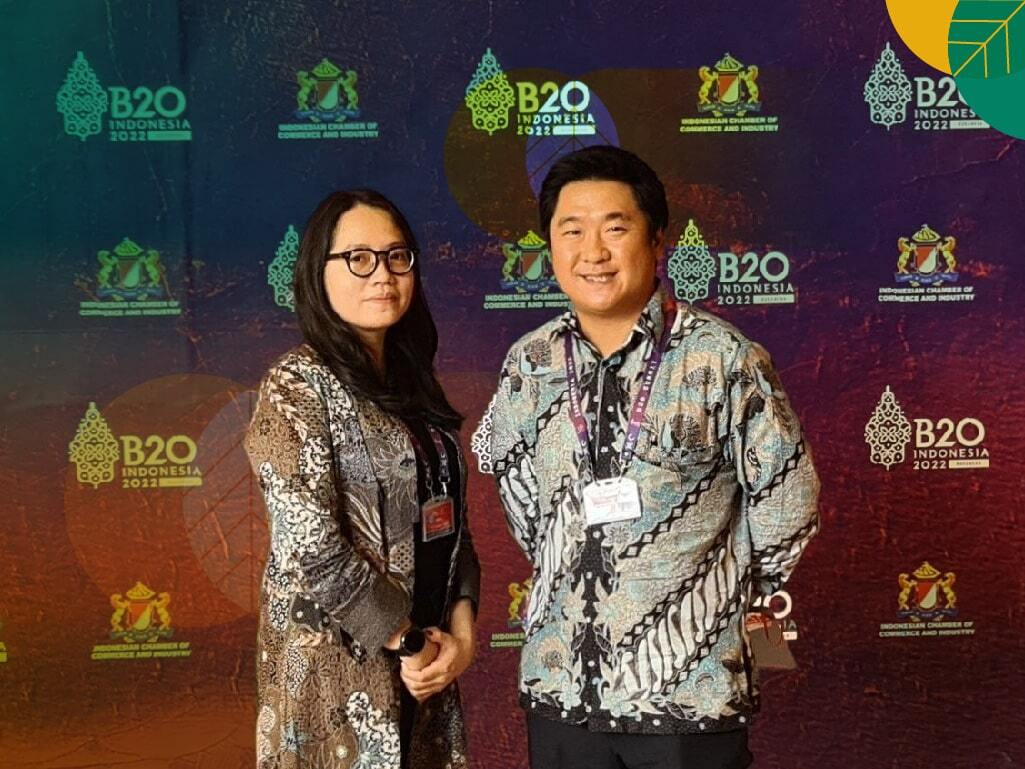
The public settings grew larger. In November 2022, Samuel and Witny Tanod represented Gokomodo at the B20 Summit in Bali. Samuel emphasized collaboration and the digital empowerment of smaller agricultural businesses. His language also drew on gotong royong, the Indonesian principle of mutual cooperation, as a foundation for building a sustainable business model.
The customer comes back into view
Growth brought some unromantic complications. A December 2024 case study described Gokomodo strengthening its intellectual-property management after discovering that somebody had already registered GokoHub’s name on social media. The company’s response included earlier checks and registrations before new launches. Even a business concerned with physical supplies had to look after its digital shop signs.
By February 20, 2025, Samuel was at GokoMart in Nanga Tayap, West Kalimantan, for a customer prize drawing. Witny Tanod and retail head Marchellina Sugiono attended too. The promotion had collected coupons from customers across eighteen branches in the province, with prizes including a motorcycle, gold and shopping vouchers. It was a retail occasion, complete with the familiar pleasures of a possible windfall.
The distance from corporate procurement to a local customer event is an illuminating one. Samuel’s business now involved the people on both sides of the purchasing system: the large organizations whose processes he knew, and farmers and smaller enterprises obtaining supplies through a growing network.
That is where his story retains its practical character. Better purchasing has to become a better experience somewhere beyond the spreadsheet. For Samuel Tirtasaputra, the interesting distance is the one between selecting a product and putting it within a farmer’s reach.