Lior Tamir remembers a grand piano decorated for Sour Patch Kids. During his years in advertising, he visited brand experiences in Beverly Hills and New York where houses had been dressed in the candy’s identity and emerging musicians were invited to stay and make content. The piano was one detail in a much larger exercise: giving people something they would want to spend time with.
The memory has a pleasing symmetry. Tamir’s early career included jazz. He later helped build a marketing software company concerned with budgets, audiences and measurable responses. Somewhere along that route, a musical instrument turned into an advertisement. Even the piano had acquired a marketing department.
What interested him about those experiences was the question they raised for his own businesses: how could he make something distinctive? In his telling, working with brands widened his understanding of what a customer encounters. A campaign could bring someone to the door. Everything after that would help decide whether the visit was worth repeating.
That connection between getting attention and deserving it runs through Tamir’s business career. It also makes his writing from the Accomplice years more revealing than a funding announcement alone. Here was a software founder selling efficiency, repeatedly returning to the uses people might make of it.
Four founders, one crowded working day
In 2013, Tamir co-founded Fractal Sciences with Brian Lewis, Idan Benaim and Shaun Porcar. The San Francisco company became Accomplice. Tamir served as CEO; Lewis was president and chief data scientist. Their chosen problem was familiar to anyone trying to make several advertising channels behave like one campaign.
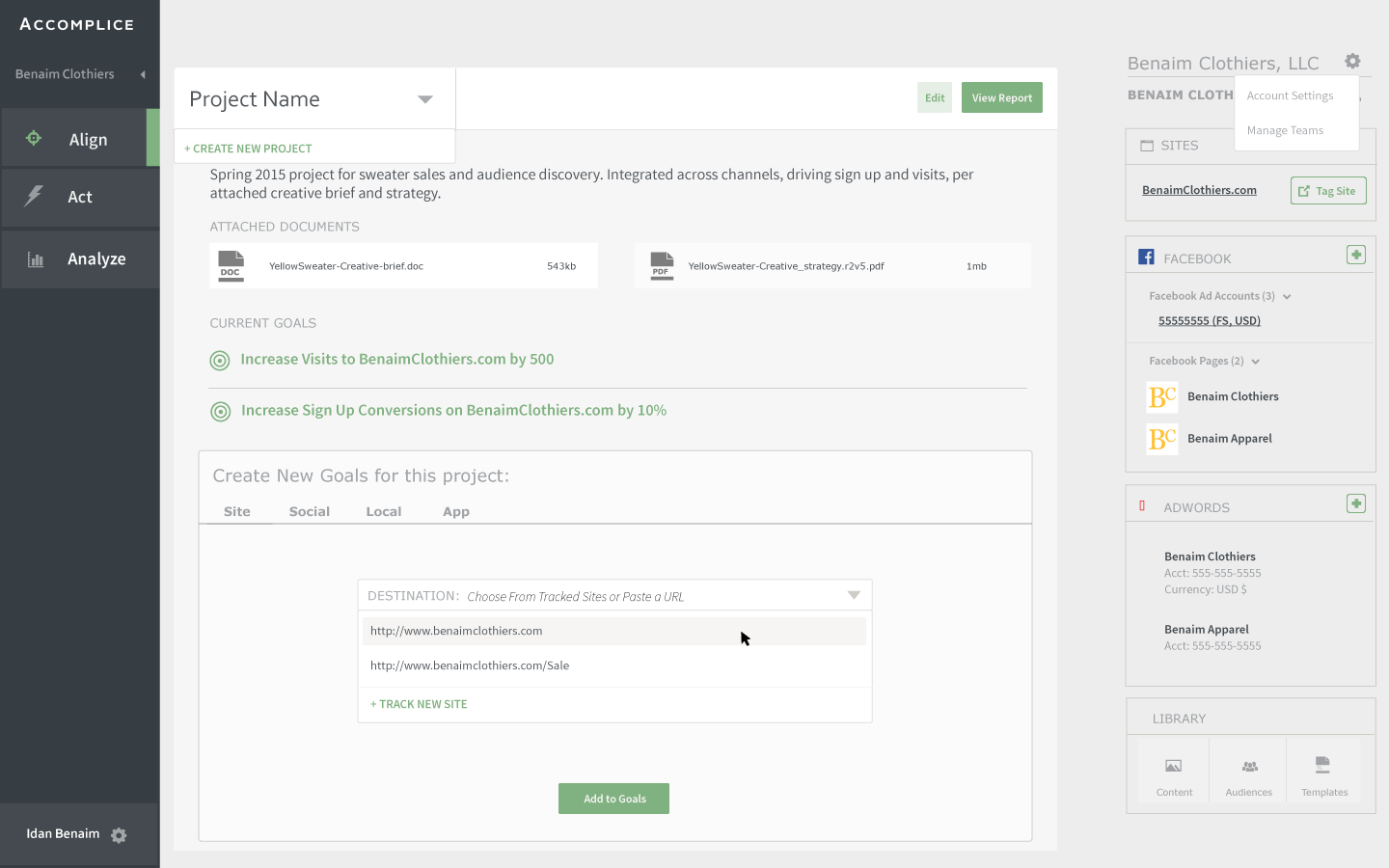
The team worked with brands and agencies to test its assumptions. Accomplice sought to connect campaign creation, measurement and changes to advertising spend. Its ambition put several jobs inside the same product: the advertiser managing a budget, the social manager organizing posts and the analyst trying to understand what all that activity produced.
The name carried a little mischief. Lewis explained it as a nod to partnership and accomplishment: software that would help a marketer decide what needed attention. The proposed accomplice would make recommendations as well as carry out tasks. An ordinary working day supplied the plot; the product was meant to help untangle it.
Accomplice’s announced Series A. WME | IMG participated after using the platform.
In March 2015, Accomplice announced a $5 million Series A with WME | IMG among its backers. The relationship had begun with the agency as a customer. The financing would support more work in engineering, data science, design and marketing. For Tamir, the company now had capital behind its effort to connect advertising decisions with business results.
A thousand ads, and a person with better things to do
Tamir’s case for automation came with arithmetic. In November 2015, he described a hypothetical campaign with 50 audience segments and 20 creative variations. Testing every combination would mean creating 1,000 ads. At one minute apiece, manual assembly would consume nearly 17 hours.
He suggested that an optimization tool such as Accomplice could compress that work to about half an hour. It was an illustrative product claim, rather than a measured result from a named customer. The revealing part came afterward: his list of things an employee could do with the recovered time.
Research a strategy. Develop copy or visuals. Pursue a partnership or a client. He treated the repetitive part of advertising as work that could crowd out the reasons an agency had been hired. His argument offered a particular bargain: give software the assembly job and let the people spend more time thinking.
For an executive selling automation, this was also an answer to an anxious audience. Agencies had reasons to wonder what programmatic buying meant for their role. Tamir put creativity and strategy at the center of his defense of their future. Read his argument for agencies ↗
The audience could answer back
Tamir also wanted advertisers to treat a campaign as an opportunity to learn. In an October 2015 essay, he asked whether their media spending was telling them anything about their customers. A broad demographic label gave a team little to act on. More specific groups could reveal differences that would change the next message or budget decision.
His questions were practical: which attributes should a marketer test, what should the campaign teach, and how would the findings affect the next creative choice? Segmentation mattered because the response could guide an action. The exercise required someone to decide what was worth learning before the software started sorting.
In a separate essay on cross-channel strategy, he proposed beginning again with a blank slate. Existing systems and familiar media mixes could become habits. He urged teams to research where their audiences spent time and how they used each outlet, then make the channel plan follow that understanding.
His examples allowed for awkwardly specific answers. An audience might use LinkedIn frequently but only on mobile. Another might have no interest in Snapchat. Those details mattered more than being present everywhere. For Tamir, a channel earned its place through the people using it. On learning from audiences ↗ On choosing channels ↗
A click still had to lead somewhere
By October 2015, Tamir was asking online retailers to consider the value of transactions alongside their number. His subject was return on advertising spend: advertising-attributed revenue divided by advertising cost. A campaign could generate activity without producing the commercial outcome its owner wanted.
He described the underlying work in unglamorous terms: organize product information, put tracking in place, test audience groups and creative choices. A tidy ratio depended on that preparation. The useful question was how the information would change the next decision.
Advertising-attributed revenue
Advertising spend
This emphasis makes a useful companion to his interest in memorable experiences. The candy-themed houses showed how a brand could make an impression. Measurement asked what followed. Tamir’s business writing kept both concerns in view: give someone a reason to care, then examine the response carefully enough to learn from it. His essay on advertising returns ↗
The useful thing you say after hello
In late October 2015, Tamir attended PTTOW! Sessions in New York. He came away writing about how brands could make content worth people’s attention. He favored education, practical help and stories grounded in something that had actually happened.
His examples included companies sharing expertise and using their resources to solve problems. The common requirement was usefulness. A brand had to offer more than a reason to admire the brand. Tamir urged businesses to let employees and contacts explain subjects they knew well.
“And remember that your story must be real to be believed.”
Lior Tamir, November 2015
That sentence is a reasonable test for his own profile, too. The jazz background, the four co-founders and the decorated piano are concrete details. They do more work than a string of executive adjectives. His essay on authentic content ↗
By December, his attention had turned explicitly to relationships after the first sale. He described social advertising as a way to keep communicating with existing customers. An advertiser could thank an event attendee, share relevant material or introduce a feature. These were uses of paid media that depended on remembering a person’s previous interaction with the business.
It was a broader assignment for advertising than continually finding strangers. Tamir argued for familiarity built through successive relevant encounters. The same customer could have different reasons to listen at different times; a useful message would acknowledge where the relationship had reached. On advertising after the first purchase ↗
The software salesman’s caution
Tamir could also be dryly realistic about buying technology. His December 2015 guide to choosing marketing tools opened with the attractive possibility of higher output and Fridays off. He quickly qualified the prospect. A complicated purchase could add work and expense of its own.
He urged buyers to begin with recurring problems, repetitive tasks and the team’s capacity. They should examine contracts, implementation time and whether a new tool would work with existing systems. A subscription price could look reasonable while the calendar quietly presented another bill.
He also observed that scaling a tool down could be harder than scaling it up once a team had customized its processes around it. This was advice from someone hoping to sell software, which gave the warning a useful edge. The product still had to justify the trouble of adopting it. His checklist for software buyers ↗
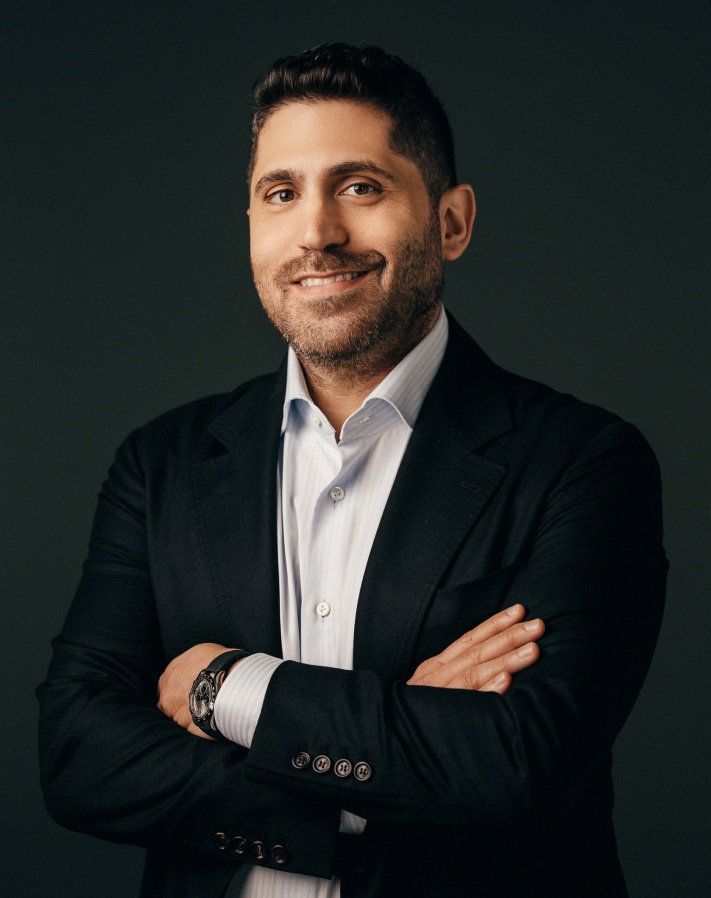
Today, Tamir is the founder and CEO of The Dental App, another software business bringing management workflows and analytics together. The continuity is in his interest in how businesses work: what people have to assemble by hand, what their information tells them and how a customer experiences the result.
His career has moved through music, advertising and software. The piano remains a fitting detail to carry away. Tamir noticed the instrument inside the campaign, and remembered the experience long afterward. A budget had bought attention. Someone’s thoughtful, slightly improbable idea had given that attention somewhere to go.