Leif Welch kept the name of a business that failed. The first JamLoop helped musicians find new and used equipment and connect with other local players. It lasted about a year. Years later, the name belongs to a streaming television advertising company. Somewhere between the two, Welch spent evenings and weekends driving Uber. A corporate naming consultant might have proposed a fresh start. Welch apparently had other uses for the money.
The continuity makes more sense when he explains what he wanted the original business to do: bring buyers and sellers together, with more visibility into the exchange. Musical equipment was one application. Advertising became another. The customers changed, the machinery changed, and the company acquired a quite different reason to exist. The old name still described the sort of exchange he wanted to arrange.
At eTail Boston in August 2026, Welch revisited that first attempt while discussing the company he now leads. He described a platform that lets brands and agencies buy advertising on streaming television, with measurement extending to website activity, purchases and store visits. It is a long way from helping somebody find a secondhand amplifier. Yet the question underneath remains recognizable: how do you help the right people find one another, and see what happened afterward?
A guitar, then an engineering degree
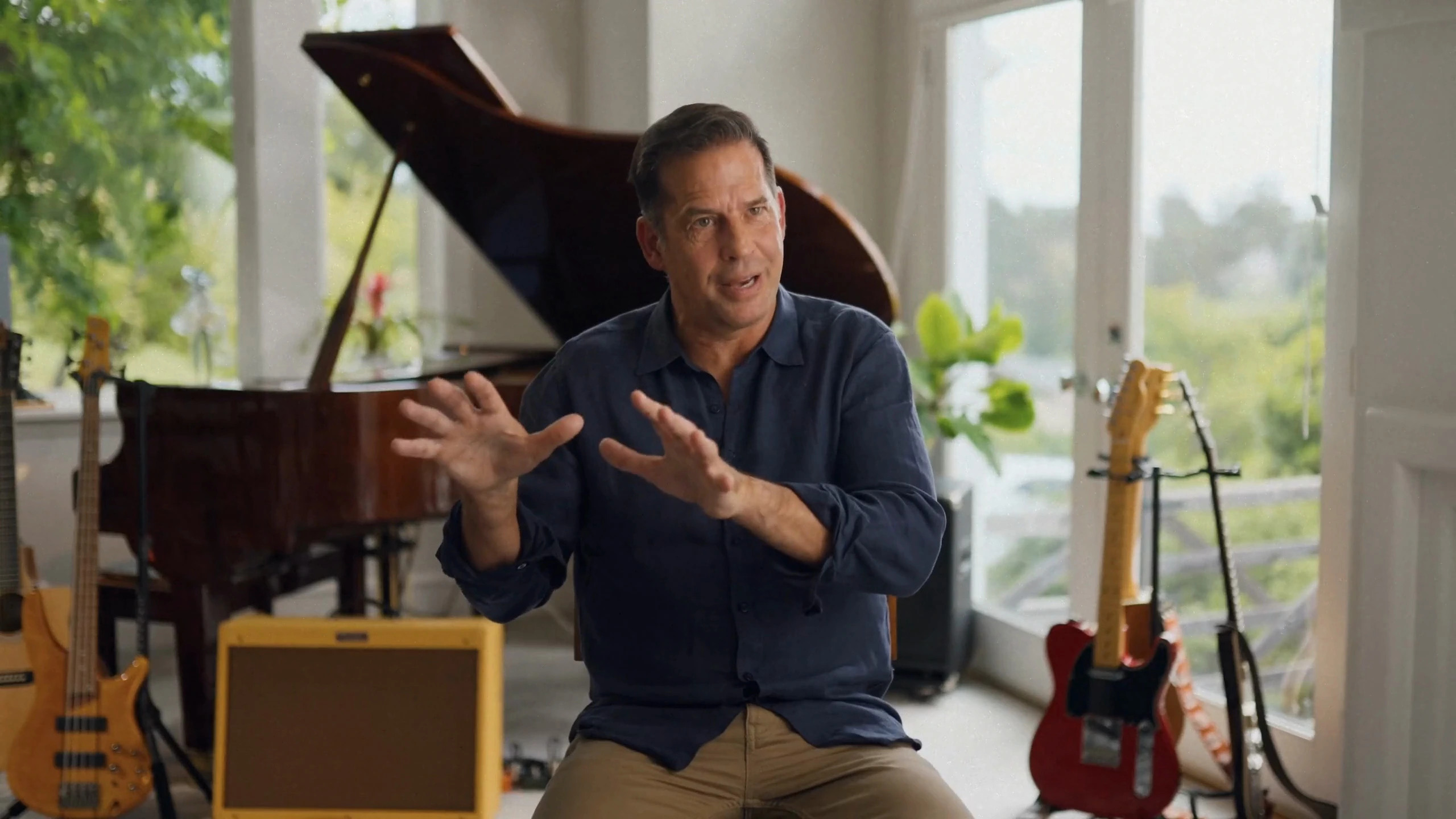
Welch began teaching himself guitar around age 15 and formed a band in high school. He has continued playing in bands through much of his life. He describes the appeal as the absorbing work of making something that did not previously exist. Business gives him a related feeling. There is an idea, a group of people and an outcome that nobody can hear quite clearly at the beginning.
His formal education took a different route into building things. At the University of Pennsylvania, he earned a BSE in systems engineering and a BA in economics. He later earned an MBA at Northwestern University’s Kellogg School of Management. Engineering, economics and music make an interesting combination: one asks how the parts fit, another asks what people value, and the third eventually requires somebody to listen.
Before JamLoop, his career included Cox Digital Solutions, Adify and AdMission. An early business profile identifies him as AdMission’s co-founder and chief revenue officer, and records its sale to the Cobalt Group in 2008. It also lists earlier executive experience at IPIX and AltaVista. He arrived at his own advertising platform with experience of the relationships and commercial arrangements that sit behind an apparently simple ad on a screen.
That background helps explain why his account of entrepreneurship keeps returning to buyers, sellers and the space between them. The technology matters because it changes the terms of the relationship. Can a buyer understand the purchase? Can a seller reach a customer without a bewildering procession of intermediaries? For Welch, a marketplace is also a question about who gets to see the workings.
The evenings belonged to Uber
The lean years occupy a plain place in Welch’s telling. He says he bootstrapped the company without raising money and took Uber shifts on the side for two years. People around him suggested letting the business go. He continued. The detail carries more weight than the usual founder vocabulary because it describes a specific use of time: the hours outside the company went toward keeping the effort possible.
“I actually for two years drove Uber on the side evenings, weekends.”
Leif Welch, on keeping JamLoop going
There is no need to turn those shifts into a motivational poster. Persistence can preserve a mistake as easily as an opportunity. The useful part of Welch’s story is the change in the business he persisted with. The music marketplace did not become successful through repetition. He kept working while the company’s purpose and customer became more precise. Endurance bought time for a different answer.
The local connected-TV platform launched in 2018. Connected TV, usually shortened to CTV, means television delivered through an internet connection; for advertisers, the opportunity lies in reaching viewers inside streaming programming. Welch’s company concentrated on the agencies and businesses that needed to move into that environment without assembling a large advertising technology operation of their own.
An audience hiding in plain sight
By January 2024, roughly 85 percent of JamLoop’s customers were independent agencies serving regional advertisers. Local car dealers, banks and furniture retailers were among the businesses in its orbit. Those customers helped give the company a practical definition of usefulness. A budget had to last across a campaign. Advertising had to reach people within the right geography. A buyer needed to know which app or network carried the ad.
Welch pursued that market with technology developed in-house, including the bidder that makes advertising purchase decisions. JamLoop could break reporting down by ZIP code and streaming destination. At that stage, buying was managed for clients, while reporting was available for them to inspect. The arrangement reflected the customer: somebody who wanted access to streaming audiences, and also wanted help making the purchase work.
The human part of that arrangement is easy to lose in a discussion of software. An agency has its own client to answer to. A platform that provides clearer information helps the agency have a more concrete conversation with that client. Welch’s emphasis on direct relationships with agencies and programmers makes commercial sense in that setting. Removing friction from a transaction does not remove the need for someone to explain it.
By his December 2025 conversation on The Sonic Truth, the discussion had widened to a self-serve platform, performance advertising and the challenge of offering attentive service at scale. Creativity remained part of the equation. A campaign still has to give a viewer something worth noticing. Better targeting cannot supply the idea inside the commercial; it can only improve its chances of finding an audience.
of JamLoop’s customer base was made up of independent agencies serving regional advertisers.
The spreadsheet has to earn its keep
One revealing chapter in Welch’s working life concerns a less glamorous instrument: the reporting dashboard. As JamLoop’s data grew beyond 3.5 billion rows, the company rebuilt its data infrastructure around Snowflake and chose Sigma for analytics. Welch’s team wanted speed, manageable costs and dashboards agencies could present to clients under their own identity. The problem was partly technical and partly the everyday business of showing people what they had bought.
In that implementation, reporting refreshes moved from every 12 to 18 hours to every two hours. Welch estimated Sigma’s cost at about one-third of the previous Domo setup. The sales team also became comfortable opening live dashboards in presentations instead of relying on screenshots. A live demonstration is a modest kind of confidence: the software has to behave while somebody else is watching.
The distinction matters for his broader argument about transparency. A promise to share information means little if obtaining it is expensive, slow or awkward. Reporting becomes useful when customers can reach it, understand it and change a decision because of it. For an advertiser spending a limited budget, yesterday’s elegant explanation can arrive after today’s opportunity has gone.
There was a measurable company milestone, too. JamLoop placed 485th in the 2024 Deloitte Technology Fast 500, with 211 percent revenue growth in the ranking. That is a company result, rather than a personal fortune or a verdict on every campaign. It does put a number beside the distance traveled from the years when Welch was supplementing the business with driving shifts.
Seventy, thirty, and the question afterward
In 2026, Welch’s public argument centered on what television advertising should be asked to prove. His starting point is the advertiser’s objective: a sale, a visit or another useful action. He distinguishes observing an action after an ad from establishing that the advertising helped cause it. That is why his discussions of measurement include comparisons between markets and tests of incremental impact. A sequence of events can be suggestive without settling the question.
He also offers a practical framework: start with roughly 70 percent CTV and 30 percent supporting digital formats. Television creates demand; other formats help carry attention toward action. Online video, display, audio or other placements can supply that second part. Welch presents the split as a starting point for planning, rather than a ratio that every advertiser should obey. The campaign still has to answer to the business using it.
This gives his present work a useful tension. Television is valued for the room it gives a story. Digital buying is valued for the detail it gives an operator. Welch wants both available to businesses that cannot afford an entire department to reconcile the two. The aspiration requires creative judgment alongside measurement, and people alongside the platform. It also invites scrutiny: a business outcome should survive closer inspection than a handsome campaign recap.
CTV
Build attention and demand
Supporting digital
Help turn attention into action
His own stated ambition is personal as well as commercial. He wants to be remembered for facing adversity, remaining persistent and having a positive effect on employees and customers. That is a different kind of accounting from a revenue ranking. It concerns the experience of the people who stayed in the room while the company was still being worked out.
The name JamLoop has now survived a failed marketplace, a move into advertising and the increasingly detailed demands of streaming television. Welch kept it because the idea of connecting people still fitted. There is something pleasingly economical about that choice. After all the changes in audience and equipment, he has allowed himself to keep the band name.