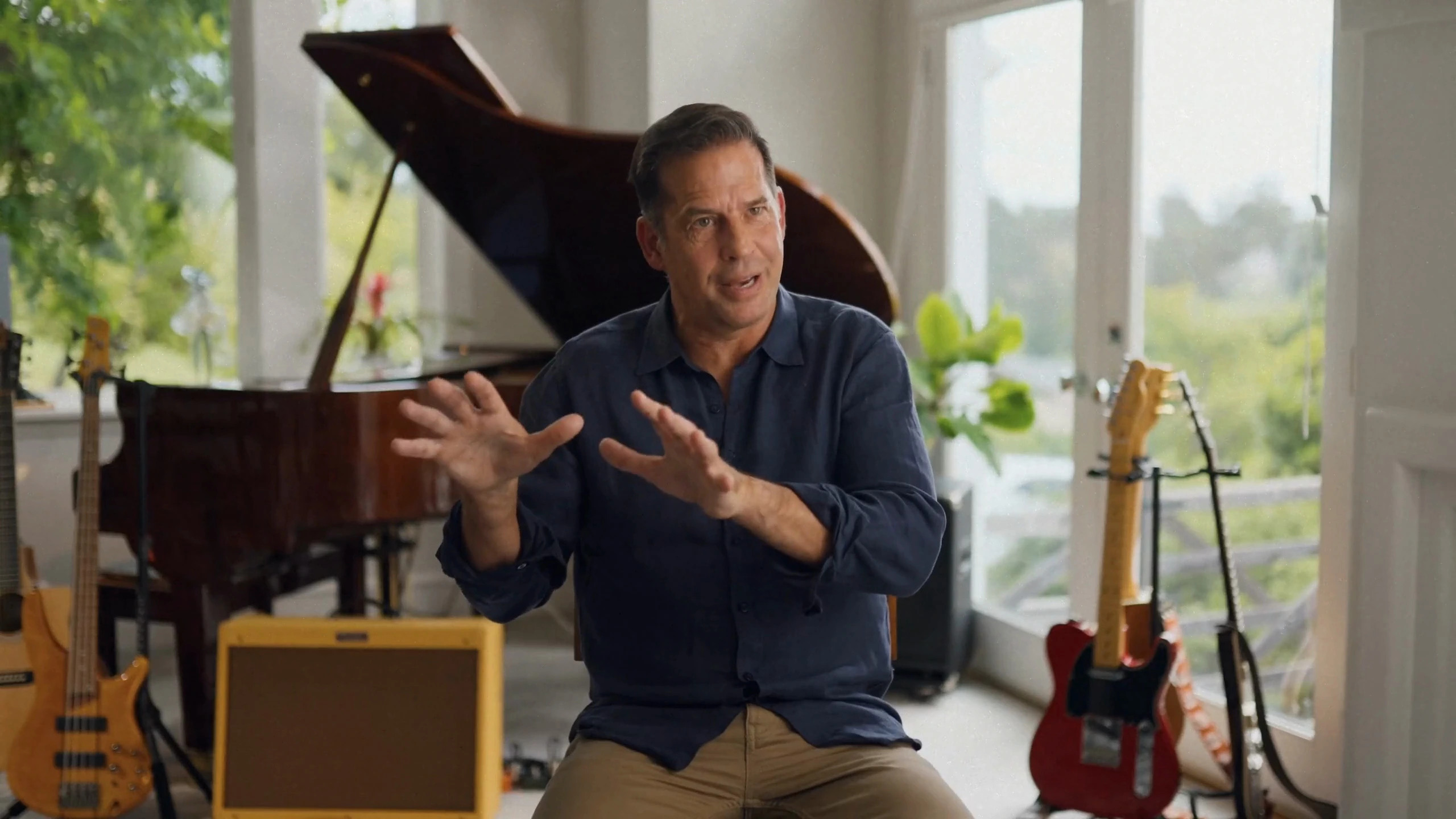
Leif Welch tells the story without sanding down the awkward years. JamLoop was bootstrapped. There was no funding round to refill the tank. People told him it was time to let the dream die. For two years, he drove Uber on evenings and weekends. Then the company caught on.
That version of the origin story is more useful than the polished kind because the thing that caught on was not the original thing. JamLoop began in April 2013 as a broad audience-segmentation and buying platform for ads across smartphones, tablets, desktops and connected televisions. Welch now calls that first version "a very different business." The focused local connected-TV platform arrived in 2018.
The narrowing was the strategy. Instead of fighting every demand-side platform for every advertiser on every screen, JamLoop went after the media buyer whose budget was too small for the traditional television machine and whose team was too lean to run a programmatic desk. Independent agencies, local banks, hospitals, furniture stores, car dealers and regional political campaigns became the wedge.
Act I / The useful failure
From every screen to the biggest one
In 2014, the company described itself as a way to find the same connected consumer across nearly every digital device. It was a reasonable bet for its moment and a brutal one for a bootstrapped startup. Cross-screen identity was crowded, technically expensive and easy for a small vendor to explain badly.
Connected TV offered a cleaner problem. Viewers were leaving scheduled television for streaming, while local advertising budgets had not followed with the same enthusiasm. The big platforms could buy the inventory, but smaller agencies needed different economics and more help. Their campaigns had to pace modest budgets over a full flight instead of spending the money in a caffeinated weekend.
By early 2024, roughly 85 percent of JamLoop's customer base was made up of independent agencies serving regional advertisers. Two-thirds of its media buys ran through private marketplaces, where publishers created deal IDs for JamLoop clients. The rest could flow through preferred supply platforms such as Magnite or FreeWheel. This is not the cheapest way to fling an ad at an unknown television. It is a way to know which inventory entered the room.
What it sells / Four ways into one platform
Buttons, buyers and the bit after the ad
JamLoop is a demand-side platform, or DSP. In plain English, it is software for deciding which streaming-TV ad impressions to bid on, buying them in real time and showing the advertiser what happened. A campaign can target a market, ZIP code or audience instead of purchasing a whole television program. It can run video, online video, display, audio and pause ads, then retarget a site visitor across formats.
The company says its bidder, analytics engine and attribution stack are proprietary rather than rented from another DSP. That ownership is its central competitive argument against general-purpose platforms such as The Trade Desk, Google's DV360 and Yahoo DSP, as well as CTV specialists such as MNTN, Tatari, Madhive, Simpli.fi and Vibe. Owning the pipes can give JamLoop more control over pacing and more freedom to expose impression-level data. The claim that it produces better results still has to be tested campaign by campaign.
The loop, stripped of ad-tech nouns
Customers can choose four doors. Self-serve gives them the controls. Managed service hands execution to JamLoop's media team. White-label lets an agency or software partner put its own name on the infrastructure. The 2026 addition is co-managed CTV: the customer runs the campaign, while JamLoop advisers question the plan, budget and market allocation.
That middle option grew from a practical observation. Teams did not necessarily fear the buttons. They feared being confidently wrong about what to do with them. "The problem was never the buttons," VividFront marketing director Kyle Mollison said of earlier self-serve tools. "It was knowing whether the plan behind them was right."
JamLoop does not publish a standard fee schedule. It says there is no minimum ad spend and no long-term contract, a deliberate break from traditional direct television buys. The Shopify app is free to install, but the advertising itself still costs money. Creative, inventory, audience size, geography, duration and service level all move the bill. In Welch's origin film, a dealer-side voice gives the concrete version of the buyer's question: if $30,000 went out last month, what came back in car sales, service sales, parts and accessories?
Reported growth, indexed
INDEX: 2020 = 100. A reported 211% increase produces a 2023 index of 311. JamLoop ranked No. 485 on Deloitte's 2024 North America Technology Fast 500.
The differentiator / Proof leaves the browser
A dashboard cannot ring the cash register
Most digital attribution follows a comfortable path: someone sees an ad, clicks and buys. Television is less polite. A viewer may see a home-services spot, search the company later, call for an estimate and pay after a technician visits. A patient may book an appointment. A shopper may walk into a store and pay cash. JamLoop's pitch is that performance does not stop where the browser does.
Its measurement toolkit includes pixels for online events, household identity matching, CRM and point-of-sale matchbacks, dynamic phone numbers, store-visit data and holdout tests. In 2026 it expanded incrementality measurement with household-level control groups inside campaign delivery and market-level tests through Recast. Attribution asks which outcomes followed exposure. Incrementality asks which outcomes would not have happened without it.
The company reports that one national home-services campaign influenced $12 million in offline sales across more than 200 franchise markets. A separate published case study says roughly 2,000 offline sales records were matched to CTV-exposed households. Ecommerce company Jacked Up Brands reported two times return on ad spend after using custom audience segments. These are company and customer case studies, not universal benchmarks. Their value is in showing what the system is built to count.
The product is getting more specialized. ActiveVoter, launched with Aristotle in February 2026, removes households from eligible political targeting as state files report that they have voted. The June release added reach forecasts, conversion goals, more than 1,000 Experian-based interest groups and support for advertisers' own video clips. August separated format from strategy, widened site retargeting, added political-district controls, and made audio and pause creative easier to assemble.
The copyable part / Specificity beats scale theater
Borrow the sequence, not the software
JamLoop's most transferable lesson is not to build a bidder. It is to keep narrowing until the product, buyer and proof use the same language. A regional agency worries about a smaller budget, multiple ZIP codes and the client meeting on Friday. So JamLoop built pacing for smaller flights, local controls and reports that can travel into that meeting.
- Choose the ignored buyer. JamLoop targeted independent agencies and regional advertisers that broad platforms could serve technically but not always operationally.
- Own the bottleneck that affects trust. Its bidder and reporting stack matter because buyers want to inspect where ads ran and how budgets moved.
- Attach expertise to the tool. Managed and co-managed service turn campaign judgment into part of the product, not an apology for the interface.
- Measure the customer's real scoreboard. The useful event may be a booked appointment or store sale, not a click.
- Say what the evidence cannot prove. A credible measurement product needs a visible edge, especially when it is assigning credit.
That last point is where this playbook becomes conditional. Offline measurement needs enough scale to produce a meaningful test, clean first-party or transaction data, accurate location boundaries and a control group configured before launch. The attribution window must match the purchase: a restaurant visit may happen in a day; an automobile purchase may take a month.
The laws of attribution physics
A platform cannot prove that one particular person visited because of one particular ad. It cannot recover an anonymous cash purchase that never touches a loyalty system or CRM. A circle drawn around a strip mall may count the neighbor's customer. A tiny campaign may never produce statistical confidence. In those conditions, a clean-looking return number can be worse than no number.
It also will not work for every buyer. A national advertiser with a large in-house programmatic team may prefer the scale and integrations of a general-purpose DSP. A brand without usable creative, enough budget to reach its audience or any way to observe the desired outcome cannot optimize its way out of missing inputs. And direct, premium inventory can favor quality and transparency over the lowest possible CPM.
JamLoop remains privately held and carries its bootstrapped origin into a larger operation. The more useful number is the shape of the bet: from 2013's every-screen ambition to a 2018 local CTV wedge, then into performance tools, AI-assisted creative and several levels of service. The first version tried to connect audiences across devices. The current one has a plainer promise - connect an ad on the largest screen in the house to something a business can count.
Welch likes the phrase "a busier Tuesday." It is funny because it punctures the vocabulary of programmatic advertising. It is also a hard standard. A dashboard can always get busier. The business has to do it too.