The publisher had already tried the obvious answer: add more advertisers. Its programmatic ad rates stayed flat. When AdCellerant examined the machinery underneath, it found more than 600 resellers in the inventory stack. Some buyers had multiple opportunities to purchase the same impression. The business had acquired an impressive number of intermediaries without solving its original problem.
- AdCellerant supplies digital advertising software and people under a partner’s brand.
- Publishers and agencies keep the advertiser relationship while outsourcing specialist delivery.
- The model still requires sales discipline, training, and someone accountable for the client.
The Denver company’s response was practical: clean up the ads.txt file that identifies authorized sellers, eliminate redundant buying paths, and adjust bidding partners. AdCellerant reports a 200% increase in programmatic CPM, the price per thousand impressions, and a 36% increase in programmatic revenue for this unnamed publisher. These are company-reported results from one case, rather than a forecast for the next customer.
There is a useful clue here about what AdCellerant sells. Digital advertising has plenty of tools and plenty of people offering access to audiences. Making those pieces work together is a different purchase.
A familiar face, a borrowed engine
Brock Berry, Shelby Carlson, and John Chamberlin founded AdCellerant in November 2013. Berry’s background included The Denver Post and Digital First Media. Carlson had helped move MediaNews Group beyond print into mobile and social products. They knew the institutions that already had relationships with local advertisers.
A publisher or radio station could understand a business owner’s market and still lack the staff to run paid search, streaming television, display, and social campaigns. Building each capability internally would mean recruiting specialists, connecting software, and keeping pace with changing platforms. AdCellerant offered those organizations a delivery operation they could sell under their own name.
The immediate customer is often the intermediary: a publisher, broadcaster, agency, or franchise organization. The advertiser receives the campaign. AdCellerant’s About page describes a network of more than 500 local media and agency partners across more than five countries. Its product is distributed through other businesses’ trust.


The dashboard comes with operators
Ui.Marketing connects proposal creation, order management, reporting, and training. A partner can prepare a plan, submit the order, and show the advertiser a branded dashboard. Managed services cover channels including programmatic display, video, streaming TV, audio, paid search, social, email, and SEO, alongside website work.
The distinction matters when comparing alternatives. Buying advertising directly through a platform gives a team tools it must operate. Hiring separate channel vendors creates coordination work. AdCellerant combines the software with campaign managers, strategists, and sales support. For an agency, the decision becomes how much of that operation it wants to build and supervise itself.
The expertise is partly technical and partly organizational. AdCellerant identifies The Trade Desk as technology it uses for programmatic display buying. Its training academy supplies product courses and sales materials. A capable buyer is useful; so is a seller who understands what to promise.
The reporting connections make this less of an all-or-nothing decision. Documented external integrations include Amazon DSP, Meta, Google Ad Manager, Microsoft Advertising, StackAdapt, and TikTok. Partners can combine those campaign results with AdCellerant-managed work rather than manually stitching together a client presentation. Availability depends on the platform and the account’s enabled features.
That flexibility has an obvious use: an agency can keep work it already performs well and seek help elsewhere. It should still establish who checks the numbers and resolves discrepancies. A shared reporting screen gives people a common view; it does not choose the business outcome they ought to measure.
The arithmetic of wearing someone else’s label
A public partner webinar deck offers a revealing example: 50,000 targeted-display impressions at $250 wholesale, with a suggested retail price of $500. That leaves a $250 gross spread before the reseller’s selling costs, overhead, and other expenses. It describes one channel offer, not a universal current price or guaranteed profit.
50,000 targeted-display impressions. Illustrative package; selling costs still apply.
The business model gives a media company something beyond a larger menu. It can earn revenue from a campaign without assembling the entire fulfillment team. The trade is dependence on another operator’s delivery. A partner’s name remains on the report, and the advertiser will expect that partner to explain what happened.
AdCellerant also sells optional software upgrades. Its support documentation says pricing depends on the account and setup. Data tools can bring outside campaigns into reporting; an order-management upgrade lets partners manage their own products alongside AdCellerant-managed work. The platform can accommodate a mixed operation.
The homework still has to get done
One of AdCellerant’s partner case studies contains a less glamorous observation. Managers tracked course completion, monitored proposal requests, and required a regular training schedule. The company says similarly sized partners with disengaged management generated revenue at a much lower scale. Access to the same machinery did not produce the same result.
That is the condition a prospective partner should examine first. Outsourcing campaign execution leaves prospecting, product understanding, and client accountability with the seller. A team unwilling to learn the offering or consistently propose campaigns may acquire capacity it never uses. An advertiser with weak economics or an unconvincing offer also needs more than a new dashboard.
“Technology alone isn’t enough. Brands need a partner who can help operationalize it.”Brock Berry, on the Yext partnership, February 2026
More machinery, fewer handoffs
Clearview Capital’s recapitalization closed in December 2023, with Berry and Carlson retaining significant equity. The announcement framed outside capital as support for further growth. That makes the change concrete: new financial backing alongside continued founder ownership.
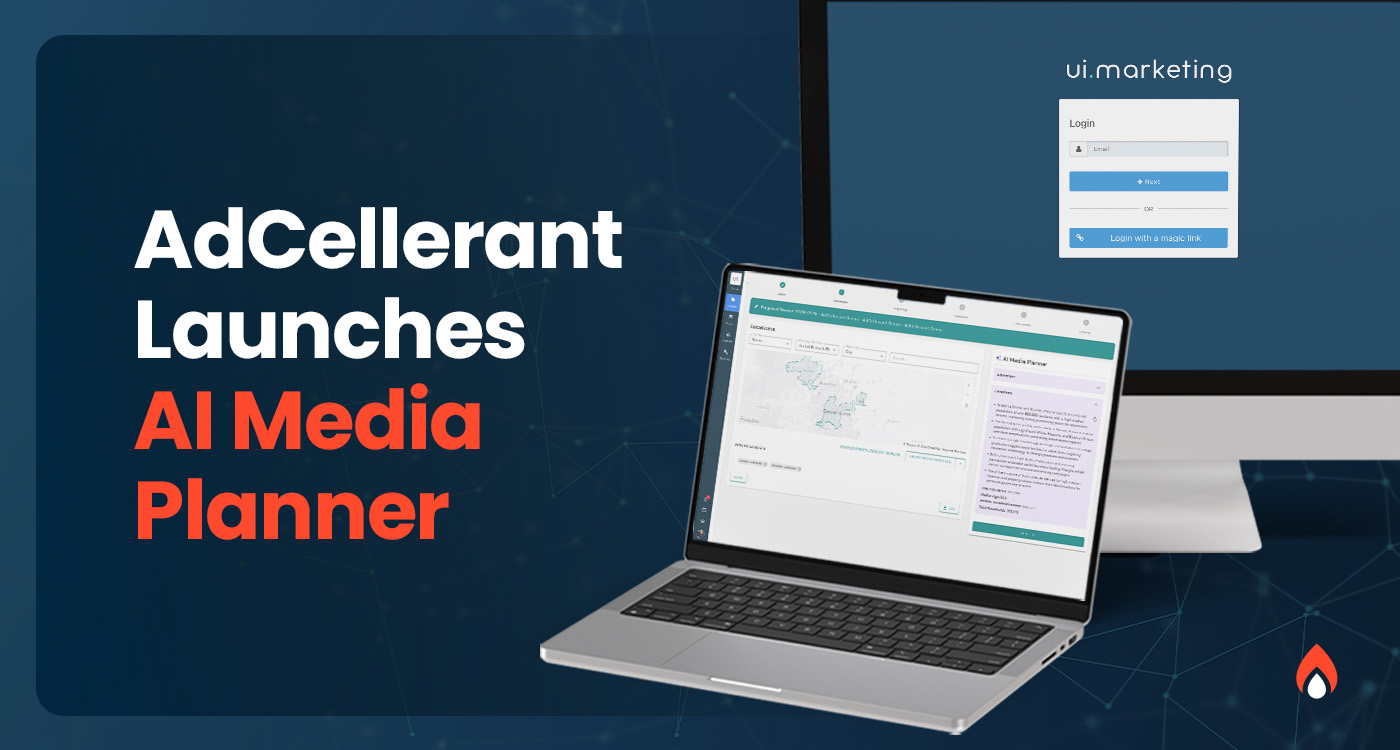
In January 2026, AdCellerant introduced AI Media Planner. Goals, budgets, and timelines become editable audience insights and product recommendations inside Ui.Marketing. Sellers retain control over the finished plan. Business Analytics followed in August, adding partner-performance dashboards included with every partnership.
Partnerships extend the same operating logic. Vendasta’s expanded 2025 alliance broadens distribution for advertising services and business tools. The 2026 Yext relationship combines visibility technology with support and paid-media execution. By August, AdCellerant had made its ninth consecutive Inc. 5000 appearance.
For another business, the transferable idea is to map the handoffs before adding products. Decide who owns the relationship, who delivers, and who explains the outcome. AdCellerant has made those divisions into an offering. Its customers still have to make them work.