Linxin Wen needed one restaurant to believe him. He had been going door to door in Chicago’s Chinatown, offering to bring in food orders. Somewhere around twenty or thirty pitches produced a single willing owner. The others wanted him gone. For a prospective technology founder, it was an admirably direct introduction to customer feedback.
He began with friends sending orders by text. Wen phoned the restaurant, placed the orders and delivered the meals himself. There was little distance between the promise and the person responsible for keeping it. If dinner failed to arrive, the founder was conveniently available for comment.
Years later, Chowbus would announce hundreds of millions of dollars in cumulative funding and billions in payments moving through its systems. Yet the revealing turn in Wen’s career came when he reconsidered the business that had brought him there. He wanted to keep helping restaurant owners. Delivery had become a complicated way to do it.
A dollar, a dish, a reason to return
Wen arrived in the United States from China in 2013 and studied public administration at Illinois Tech’s Stuart School of Business. He completed his master’s in 2015, after undergraduate study at Shanghai University of Finance and Economics. He had ambitions to start a company long before he had a convincing explanation of what that company should do.
Chicago supplied a practical problem. He wanted the Chinese food he knew from home, and the restaurants he liked were poorly represented on delivery apps. Having the food nearby did surprisingly little good if the ordering system made it difficult to get.
By March 2017, Chowbus’s early proposition included a one-dollar delivery fee, meals from twenty-six Asian restaurants and roughly twelve thousand users. Most of those users were Chinese. The attraction extended beyond cheap transport: the service helped people choose particular dishes from menus that could otherwise be bewildering.
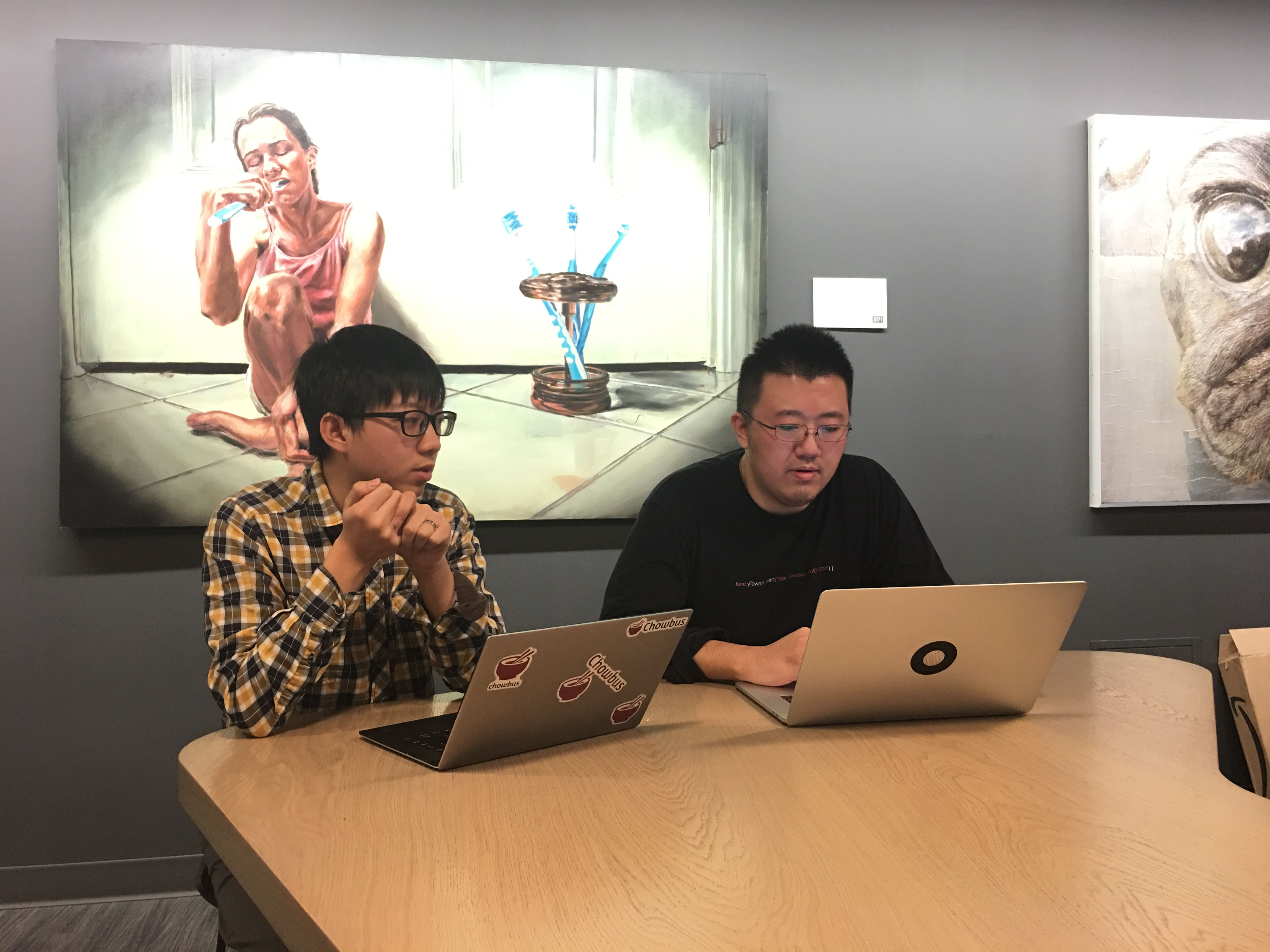
Wen’s account of the first restaurant adds a useful detail. He encouraged friends to order immediately, giving the owner evidence that this unfamiliar young salesman could bring business. The owner then helped introduce him to neighboring restaurants. A pitch had turned into a reference.
The service grew around small acts of assistance. Chowbus helped improve menu presentation, took photographs and sometimes sent employees to help pack food when a restaurant was overwhelmed. Its early advantage depended on knowing enough about the work to notice where help was needed. A menu was a sales tool; a pile of unpacked orders was a service problem.
Even the name came from the customer side. Someone suggested Chowbus, and the matching domain was available. A startup can devote a remarkable amount of money to sounding inevitable. This one benefited from a suggestion and an unclaimed web address.
When growth began asking the wrong questions
By 2020, Wen was describing a service for diners looking specifically for Asian food from independent restaurants. A neighborhood operator without a familiar brand could struggle for attention on a large marketplace. Chowbus offered a more particular reason to open the app.
That distinction mattered to Wen. Discounts could attract an order, but they also trained customers to compare platforms by whichever one happened to be cheaper. The service needed a reason for people to return that belonged to the service itself.
Later, he described a deeper irritation with delivery economics. Growing the platform meant returning to restaurants to ask for higher commissions or additional discounts. His stated purpose was to help those same businesses. The conversations were beginning to pull in different directions.
In a 2025 podcast discussion, he questioned the distinctive value he was creating when diners used several apps and restaurants needed access to several platforms. Leaving delivery, he recalled, brought relief. It is an unusually candid emotion to attach to the departure from a business you founded.
“Just keep talking to customers and iterate fast!”
Linxin Wen, 2024
The tension gives his pivot more weight than the usual story of discovering an adjacent market. He had built relationships through delivery. He was also discovering the limits of what delivery could do for those relationships. Keeping the restaurant owner at the center now required changing the machinery around the owner.
The business on the other side of the counter
Chowbus launched its initial point-of-sale product in March 2022. Wen says about a dozen restaurants tried it. Features were missing, and using it could be awkward. Those owners nevertheless gave the team time to improve it. Their patience was a form of working capital that does not appear on a funding announcement.
The transition carried a human cost. Wen later described four rounds of staff reductions and the departure of people who had been with him from the beginning. The eventual success of the software business does not make those departures disappear from its history.
In January 2024, Fantuan acquired Chowbus’s delivery operation. Chowbus would concentrate on restaurant software and point-of-sale services, while the companies would cooperate around their restaurant networks. The company’s first public identity had been handed to another operator. Wen stayed with the restaurants.
- 2016Delivery app launches
- 2022First POS test
- 2024Delivery operation sold
- 2026Voice ordering partnership
He could point to a more intimate kind of validation than a transaction. One restaurant owner, encountering Chowbus’s POS, told him it felt as though the technology finally understood the business. Wen has singled out that visit as a favorite memory. The pleasure lay in being recognized as useful.
The software now reaches across ordering, kitchen displays, loyalty programs and employee management. These are ordinary words for interdependent jobs. An order entered at the table still has to make sense in the kitchen. A customer reward needs to survive the trip from a screen to a bill. Small failures are liable to become somebody’s evening.
The numbers need different labels
On March 11, 2026, Chowbus announced an eighty-one-million-dollar Series E led by Prysm Capital and Left Lane Capital. The company put its cumulative capital raised at two hundred and nine million dollars, its annual recurring revenue at one hundred and twenty million dollars, and annualized processed transaction volume at four billion dollars.
Each figure describes something different. Funding is money supplied to the business. Recurring revenue describes the company’s revenue base. Processed transaction volume measures the money moving through the platform. A restaurant’s dinner receipts do not all become Chowbus revenue simply because Chowbus helps process them.
For Wen, scale also changes the nature of the promise. The first customer could reach the person who delivered the meal. A restaurant subscribing to a software platform needs support that works when the founder is elsewhere. Building a company around personal attention eventually requires making that attention available through other people and through the product itself.
That makes the long partnership with Zhang consequential. Wen leads the company; Zhang leads its technology. In March 2026, Wen marked eleven years working together and thanked his co-founder publicly. Behind the successive business models is a working relationship that has had to survive each revision. The customer may experience a screen or a printed ticket. The company still has to organize people to make those things dependable.
The announced plan also reached beyond software subscriptions into services such as marketing, accounting and supply ordering. Wen was again broadening the answer to a familiar question: what work could the company take off an independent operator’s hands?
A phone call, in the right language
At Chowbus’s May 2026 launch event in Chicago, Wen and co-founder and chief technology officer Suyu Zhang presented their next direction: AI that could perform restaurant work. Wen described a progression from cash registers to cloud software to systems able to act more proactively.
There is a practical demand underneath the terminology. A restaurant owner who already has many dashboards can reasonably wonder why the answer to being busy should be another dashboard. The ambition is to have the system carry out more of the work those screens describe.
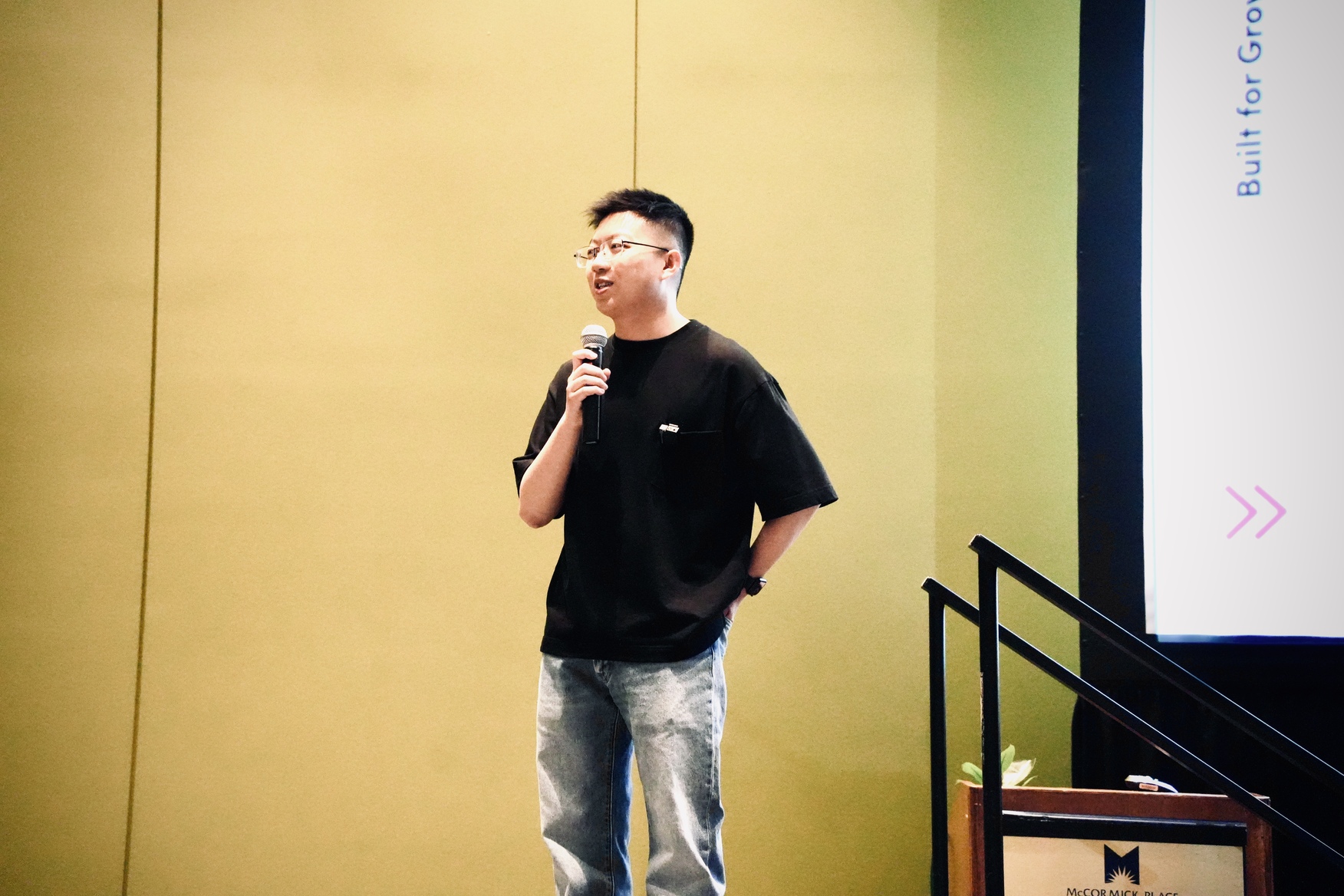
September brought a concrete example through a partnership with Maple. The announced voice-ordering integration supported English, Mandarin, Cantonese and Korean, drawing menu information from Chowbus and sending completed orders into the restaurant’s existing workflow.
Language here has consequences beyond a friendly greeting. The order needs the right items, prices and modifications attached when it reaches the kitchen. Maple’s integration page describes taking those details over the phone and writing them directly into Chowbus. The useful destination for a conversation is a ticket somebody can prepare.
Keep watering
Wen’s public reflections are more interesting when he allows himself a little untidiness. He has acknowledged hiring too quickly after a funding round and trying to pursue too many things. He admires Steve Jobs, keeps returning to Walter Isaacson’s biography and has proudly mentioned that he and his wife were high school sweethearts.
In April 2026, he returned to Illinois Tech as a keynote speaker and pitch competition judge. His subsequent letter recalled the student who lived in an eight-hundred-and-fifty-dollar studio, compared unit prices at Jewel-Osco and slept on a hundred-dollar mattress for six years. An apartment with its own washer and dryer later felt lavish.
He also tells a smaller story about persistence. An office plant lost its leaves after the building staff stopped watering it. Colleagues thought it was finished. Wen kept watering it himself until new leaves appeared. The anecdote suggests how he likes to understand his own stubbornness: keep attending to something long enough for it to answer.
A plant is a forgiving audience for that philosophy. Restaurants have bills, employees and alternatives. Wen’s career has required a harder judgment about what to preserve and what to change. The first restaurant gave him a chance to bring in orders. The businesses he serves today keep asking him to make himself useful again.
Follow the conversation
- Chowbus website ↗
- Linxin Wen on LinkedIn ↗
- Linxin Wen on X ↗
- My Marketplace Strategy: Go Niche ↗
- From the Abyss to $81M New Funding ↗
- A Letter to Future Immigrant Founders ↗
- Gold House founder conversation ↗
- 2025 interview ↗
- Maybe Food, Maybe Tech podcast ↗
- Watch: Chowbus POS product video ↗
- 2017 Chicago reporting ↗
- Illinois Tech alumni feature ↗
- 2024 delivery acquisition announcement ↗
- 2026 financing announcement ↗
- 2026 summer product presentation ↗
- Maple voice ordering announcement ↗
- Maple integration details ↗
- 2020 delivery interview ↗
- Wen’s office plant post ↗
- Illinois Tech pitch competition ↗