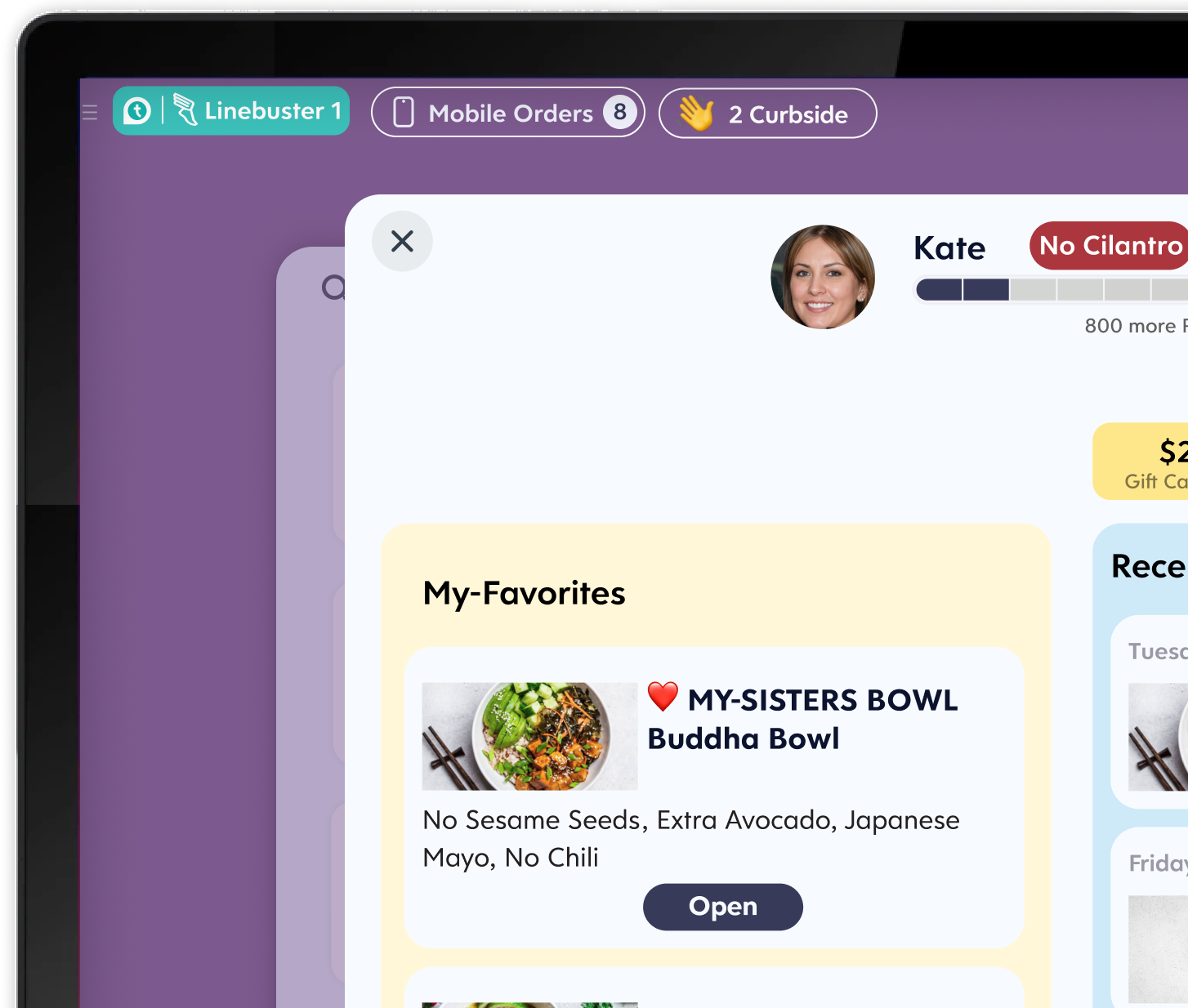
It is the lunch rush. A drive-thru line wraps the building, a kiosk beeps, a phone order lands, and somewhere a kitchen screen lights up with all three at once. Most restaurants run that moment on five vendors who have never met. Touchpoint runs it on one.
Who they are now
A small company with a large opinion about your counter
Touchpoint Restaurant Solutions - legal name Touchpoint Restaurant Innovations, Inc. - is a restaurant technology company based in Palo Alto, California. Roughly twenty-one people. One website, touchpoint.io. And a single, fairly stubborn idea: the modern restaurant has too many systems, and almost none of them talk to each other.
The company sells what it calls OmniFusion, a platform that folds point of sale, kitchen display, drive-thru line-busting, online ordering, gift cards, and loyalty into one place. On top sits OmniLoyalty, the part of the business that gets people in marketing meetings to lean forward. Touchpoint serves enterprise quick-service, coffee, table-service, and pizza chains - the operators running not one location but hundreds.
The revolution is here: simplify your enterprise restaurant tech stack.
- Touchpoint's own pitch, delivered without irony
The problem they saw
Six systems, one cash register, zero conversation
Here is the tension Touchpoint exists to resolve. A typical chain buys a POS from one company, online ordering from another, a loyalty app from a third, a marketing tool from a fourth, and stitches in delivery apps that quietly keep the customer data for themselves. Each works. Together they leak - revenue, hours, and most importantly, the guest relationship.
The painful part is the data. When DoorDash owns the order and the loyalty vendor owns the points, the restaurant ends up renting access to its own customers. Touchpoint's argument is blunt: you should own that. Your guests, your warehouse, your decisions.
Touchpoint was born out of the desire to increase a brand's connection with its customers.
- Company "About" page
The founders' bet
Engineers who'd built hard things before
The bet was placed by people who had shipped infrastructure that could not fail. Israel L'Heureux, founder and CEO, studied Product Design Engineering at Stanford and previously founded Redline Networks - a high-performance load-balancer company that signed more than 300 enterprise customers before its run ended. He co-founded Touchpoint with Philipp Willborn, and the team leaned on a Stanford-trained, deep-tech instinct that treats a restaurant register the way you'd treat a network appliance: it has to stay up.
That background explains the company's least glamorous and most telling promise - 99.95% uptime. When you are the cash register, downtime is not an inconvenience. It is a closed store.
It also explains the pace. Touchpoint spent roughly seven years building the platform before pushing hard on scale. In an industry addicted to launch announcements, that is either patience or stubbornness. Possibly both.
OmniLoyalty ensures every interaction is effortlessly seamless, personalized, and memorable.
- Touchpoint product copy
The slow build
A milestone timeline · dates approximate where noted
2011
Founded in Palo Alto as Touchpoint Restaurant Innovations, Inc. by Stanford-trained entrepreneurs.
2013
Funding reported around this period - roughly $5.2M total, with Samudra Pacific Capital Partners and Linden3 Ventures named among backers.
2011-18
Seven-year build. The unified platform - POS, KDS, drive-thru, ordering, loyalty - takes shape before aggressive scaling.
2024
Lean scale. Third-party trackers estimate ~$1.4M revenue on a roughly 14-person team.
2025
OmniFusion & OmniLoyalty front the product line; revenue estimated near $1.8M with a team spanning North America and Europe.
The product
What you can actually do with it
Strip the branding and Touchpoint is a set of suites that map onto how a restaurant actually runs - from the curb to the back office.
Operations Suite
Counter POS for QSR and coffee, drive-thru LineBusting, Kitchen Display System, and payment processing including pay-at-table.
OmniLoyalty
Personalized loyalty and guest engagement, designed to push participation far past the industry's single-digit norm.
Marketing Suite
Segmentation, automation, multi-channel messaging, and limited-time-offer management built on owned guest data.
Executive Suite
Finance, reporting, real-time analytics, and predictive AI for multi-location operators.
One detail that makes CFOs pause: Touchpoint pitches reusing existing hardware rather than a full rip-and-replace - a rare offer in a category that usually arrives with a forklift. And while the platform is "unified," it still integrates third-party partners, so a chain isn't forced to abandon the delivery app or printer it already depends on.
One platform that treats the drive-thru, the kiosk, the app, and the web as the same order - because to the guest, they are.
- The omnichannel premise, in plain English
The proof
The number that does the arguing
Most loyalty programs are a graveyard of unused apps. Industry participation tends to sit in the low-to-mid teens; category leaders claw toward 30% only after spending heavily on campaigns. Touchpoint says it routinely reaches 80-90% chain-wide. Treat the figure as the company's own claim - but if it holds, the rest of the platform's logic snaps into place: when nearly everyone joins, the data warehouse finally reflects the whole business, not a sliver of it.
Loyalty participation, compared
Share of guests enrolled / active · Touchpoint figure is self-reported
Touchpoint plays in a crowded room. Toast, Olo, Square for Restaurants, Revel, and PAR's Brink/Punchh all want the same counter. The difference Touchpoint sells is not a feature - it's the seam. Or rather, the absence of one. Where rivals integrate, Touchpoint claims to unify, and a small team has bet seven years that those are not the same word.
The mission
Give the restaurant its customers back
Underneath the suites and the acronyms, the mission is unfashionably simple: simplify the stack, own the data, deepen the relationship between a brand and the people who eat its food. It is less a moonshot than a correction - a quiet argument that restaurants gave away too much when they handed their guest data to a dozen vendors, and that taking it back is worth rebuilding the plumbing for.
Your guests, your warehouse, your decisions.
- The thesis, compressed
Why it matters tomorrow
The counter is becoming the company
Restaurants are turning into data businesses that happen to serve food. Drive-thru AI, predictive ordering, hyper-personalized promotions - all of it runs on owning the guest relationship end to end. Touchpoint is small, and its revenue estimates are modest. But it is pointed squarely at the direction the industry is already drifting: fewer vendors, more ownership, one system that knows the whole guest.
Back to the lunch rush. The drive-thru still wraps the building, the kiosk still beeps, the phone order still lands. The difference Touchpoint is selling is that all three now show up on the same screen, in the same record, under the same roof - and when the rush ends, the restaurant still owns everything that just happened. That's the whole pitch. Whether the industry buys it is the part still being written.