A farmer has twenty dollars in an apron pocket. Tom Greenhaw proposes treating that pocket as a cash drawer. Enter the starting amount into the software, record the sales, and the system can say what ought to be there when the day ends. It is a pleasantly undignified image for the future of retail: technology in one hand, a fistful of change in the other.
Greenhaw used the example while explaining mobile point-of-sale systems in 2012. It puts him on familiar ground. His work at CashierLive concerned the things a business needs to remember while its owner is busy doing something else. A sale changes the cash, the stock and the customer’s record. The software has to keep up with all three.
The apron pocket also supplies a useful opening into his wider career. Greenhaw has worked on retail operations, neighborhood information and environmental advocacy. Each involves a practical question about what people can see, count or change. That connection is an interpretation of the work, rather than a claim about a private philosophy. It is nevertheless a revealing way to follow him from a shop floor into public life.
The counter has its reasons
CashierLive’s public web service arrived in early 2010. Greenhaw had worked in operations at Nova Libra, a supply-chain software developer. The background matters: a retailer’s problem continues after the money changes hands. Someone must know what remains, what to order and whether the records agree with the shelves. Checkout is the visible end of a much longer chain of work.
By 2011, he was making a public case for bringing retail management functions together through web-based software. His argument put customer satisfaction and profitability ahead of the equipment itself. A shop owner could buy a system with considerable technical sophistication and still reasonably ask whether the daily routine had become any easier. The sale of technology has always been more agreeable than the chore of making it useful.
Mobile checkout introduced a physical possibility: the employee could stay beside the customer. In a wine shop, a conversation about a bottle might continue in the aisle, all the way through payment. Moving to a fixed register interrupts that exchange. Greenhaw’s interest in mobility included this service encounter, with its questions and recommendations, rather than payment speed alone.
“It depends on a store’s volume.”
Tom Greenhaw on mobile checkout, 2012
That qualification gives his pitch some texture. A supermarket basket and a single bottle ask different things of a checkout. He acknowledged that some operations needed a regular counter. It is a useful admission from someone selling the mobile alternative. Customers are entitled to buy the arrangement that suits the work, even when it makes a less entertaining demonstration.
The delivery note is only a suggestion
His inventory advice has a similar attachment to ordinary circumstances. Schedule the count. Read the reports. Check incoming goods instead of accepting the packing list as a perfect description of reality. A supplier can send too little, send too much or leave an item on back order. The discrepancy has to be discovered somewhere, preferably before it becomes a disappointed customer’s discovery.
There is a particular kind of respect in advice this specific. It assumes that shop owners need workable routines more than ceremonial encouragement. Inventory ties up money and space; an absent item can send a customer elsewhere. Software can preserve the count, but the first count still has to be right. The boxes do not unpack themselves out of admiration for the dashboard.
These are also limits on what a founder can promise. A useful system gives its user a better chance of noticing a problem and responding. It cannot guarantee attention. Greenhaw’s retail writing keeps returning to the habits around the tool, the repeated acts that make its information worth having. This is where the story of a software company becomes a story about how people work.
Receive02
Count03
Review04
Reorder
An illustration of the inventory discipline in Greenhaw’s retail advice. The checking still belongs to a person.
A different kind of stocktaking
In 2014, Greenhaw joined a team building Chicago Green Score for the Center for Neighborhood Technology’s Urban Sustainability Apps Competition. The collaborators included James Hollis, Curtis Witek, Kelsey Pudluck, Joe Clay and Tom Greenhaw Sr. A civic project brought the two Greenhaws together on another software team.
The competition’s design is worth pausing over. Community leaders helped frame the problems that developers would address. That reverses a familiar sequence in which somebody builds an ingenious tool and then searches for a person who might need it. Here, the neighborhood’s question had a place at the beginning. The eventual product would have to answer to more than its own technical cleverness.
Chicago Green Score won first place. It organized information about environmental features into a map and a rating that someone could inspect. A neighborhood contains many overlapping systems; a legible picture can give a resident a place to begin. The project’s usefulness depended on what a person did after looking. A score can start an argument, guide a question or prompt a practical improvement.
Chicago Green Score takes first place at the CNT Urban Sustainability Apps Competition.
That is a delicate ambition. A ranking compresses a place, and a place contains people whose circumstances resist compression. Reading a score responsibly means asking what went into it and what action it might support. The appeal of civic software lies partly in making information available to people who would otherwise need time, specialist knowledge or several separate searches to assemble it.
Greenhaw’s move into this work gives the retail chapter a different scale. A shopkeeper checks a shipment before deciding what to buy next. A community group examines a map before deciding what to ask for. The decisions are quite different, but both require a usable account of what is already there. Information becomes valuable when someone can put it to work.
Rain has no interest in a boundary line
Greenhaw’s environmental interests had a personal starting point. He grew up in suburban Chicago, where his family home flooded repeatedly, and spent four college years in Arizona. He later studied sustainability management at the University of Chicago’s Graham School. In his 2016 campaign for the Metropolitan Water Reclamation District, he connected those experiences to an interest in preventing floods and protecting water.
His proposals included incentives for green infrastructure: surfaces and planting that slow or capture rain before it reaches a sewer. He described an idea taken into an Illinois bill sponsored by Representative Robert Martwick in 2015. The bill did not pass. The distinction matters in a public biography: a proposed intervention deserves to be understood as a proposal, with its merits open to examination.
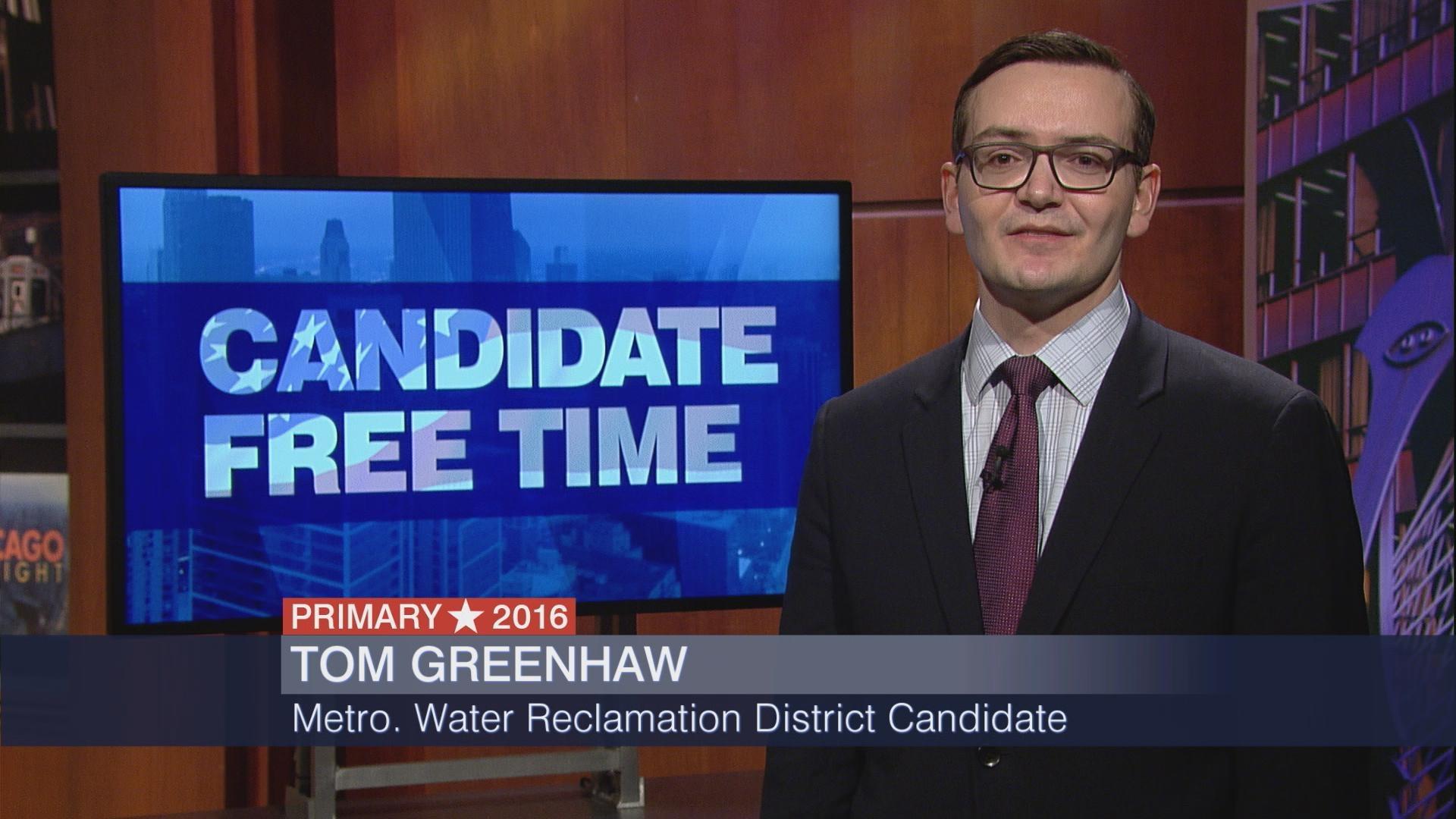
The candidacy placed him in a setting where the users of a system were also voters. A water district has obligations that reach across individual properties, while an owner decides what happens on a particular roof or paved surface. A proposal to change those decisions must make sense at both levels. The engineering and the incentive have to meet somewhere in the actual neighborhood.
His television statement lasts less than two minutes. It is a compact record of the moment a retail technology founder asked for responsibility over public infrastructure. The subjects are different, but the practical questions remain demanding: what should change, who can change it, and how will anyone know whether the change helped?
Leaving a race, keeping a responsibility
In January 2019, another local episode supplied an unusual turn. Greenhaw withdrew from the Glenview village trustee race after the board voted to adopt Cook County labor ordinances. He said that development addressed an issue that had helped bring him into the contest. He also said he would continue advocating for responsive and transparent government as a resident.
Withdrawal is rarely the scene a political biography selects for its ending. Here it makes the purpose of participation worth considering. A campaign asks people to choose a candidate; advocacy can also aim at a decision taken by somebody already in office. Greenhaw’s explanation put the policy outcome into the account of why he stepped away. It deserves to remain his stated explanation, without inventing a private motive.
His public work also includes conservation governance. Friends of the Forest Preserves lists him as board chair and identifies him professionally as a product manager at Facebook; his LinkedIn profile lists Meta. The board’s responsibilities include strategy, financial oversight and support for the organization’s leadership. Such work puts experience to use through decisions that recur, without requiring a launch announcement every time.
The apron pocket remains a good place to leave him. It is a small container with a very definite accounting problem. The map and the rain garden expand the scale, but they preserve the demand for something usable. A record should help its reader decide. A tool should fit the person holding it. And at the end of the day, somebody ought to check the change.