A fleet is an argument with entropy. Tires surrender. Parts disappear. Fuel bills wander. A warning light begins its small, orange campaign for attention. Somewhere between the depot and the dashboard, a person has to decide what matters now. Leslie Henthorn has spent her career on a related problem: when technology grows complicated, how do you make the next decision feel clear?
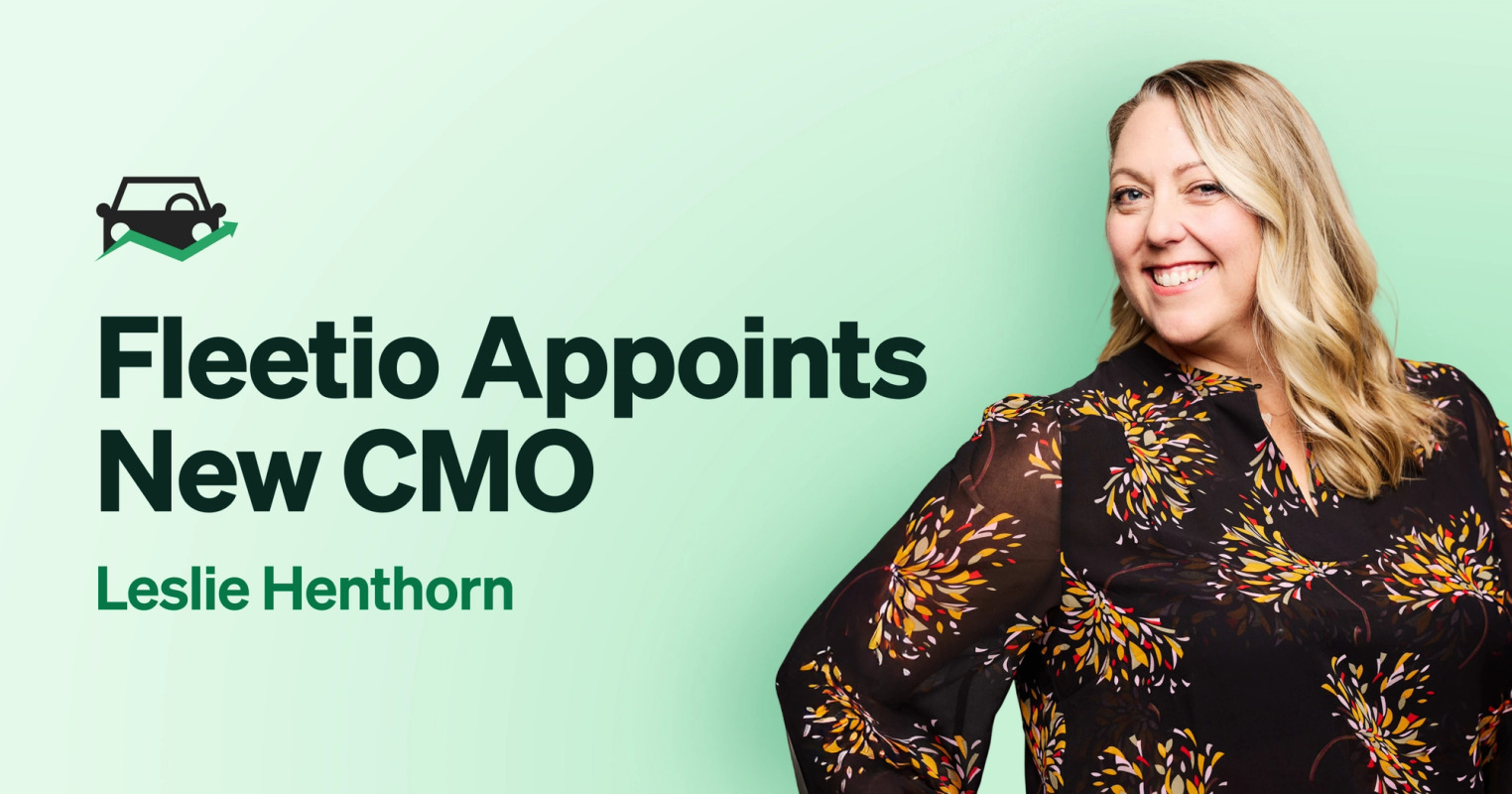
In November 2025, Fleetio named Henthorn its first chief marketing officer. The appointment brought her into a business that connects vehicles, repair shops, partners and maintenance data across more than 100 countries. It also placed a self-described “strategic clarifier” in unusually apt surroundings. Fleet work is gloriously physical, but the modern operating layer is made of signals. The software must translate those signals into action. Marketing must translate the software into a promise people believe.
Henthorn's preferred vocabulary for that work is lean: clarity, connection and trust. It sounds almost too neat until you look at where she learned it. Her route passed through worldwide channel programs at Cisco, eight years of Twilio's hypergrowth, a CMO chapter at contract platform Ironclad and, now, the garages and maintenance bays of Fleetio's customers. Each stop added a different form of complexity. Her response has remained remarkably consistent: understand the system, build the team, meet the audience where it lives and leave room for something memorable.
The education of a clarifier
Before the C-suite, there was instructional design. In 2006 and 2007, Henthorn worked around sales enablement, training and support. At Cisco, she moved from operations and instructional design into worldwide channel programs, eventually managing initiatives whose success depended on rules, incentives, partners and careful communication all agreeing with one another. This is not the glamorous end of marketing. It is where a person learns that a brilliant idea with vague instructions is merely an expensive misunderstanding.
She joined Twilio in 2014, when the communications company had 174 employees. Twilio offered a fine test of translation: APIs are elegant to developers and nearly invisible to everyone else. Yet the things built with them are intimate. A text arrives. A driver calls without exposing a number. A customer reaches a company on the channel they prefer. Henthorn moved through partner marketing, demand, campaigns and field marketing, eventually serving as interim CMO and senior vice president of corporate marketing.
A career in four systems
programs & channels
hypergrowth & field
enterprise pipeline
clarity at scale
The scale is easiest to see in her teams. She wrote that Twilio's field marketing organization grew from seven people to more than 80. The marketing function around it went from roughly 30 to more than 300, while the sales organization expanded from about 50 people to well over 1,000. Twilio itself approached 8,000 employees by the time she left. Growth on that order can make memory look like a spreadsheet. Henthorn remembers the humans, and the occasional appliance casualty.
The blender did not survive
For the launch of Twilio Flex at Enterprise Connect, more than 1,000 attendees encountered light dancers, a phantom invitation to the booth, a microphone that declined to cooperate and a blender that expired onstage. An earlier MMS launch at Oracle OpenWorld featured an app that accepted a visitor's selfie and returned it wearing a splendid 1970s mustache. There is a useful disrespect for corporate beige in both stories. The products were technical. The experiences had a pulse.
Henthorn's telling of these moments matters as much as the moments themselves. In her long farewell to Twilio, she distributed the credit across colleagues, mentors, direct reports and her family. She thanked her husband, Cameron Howard, for absorbing the strain of hundreds of business trips and the distracted evenings when work followed her home. She admitted to mistakes, long nights, weekends and moments when she considered leaving. The essay reads less like a victory lap than a crowded group photograph.
“The Twilio Magic was, is, and always will be, the people.”Leslie Henthorn, reflecting on eight years at Twilio
That is not sentiment pasted over the metrics. It is an operating belief. Field marketing works when people on the ground can read a room. Community works when customers are participants rather than props. A sales relationship works when marketing keeps listening even while inbound demand is healthy. In a 2024 Pipeline Visionaries interview, Henthorn stressed the need to understand the target persona's daily frame of mind, to nurture alignment with sales and to choose influencers who genuinely believe in the product. Affection, in her version of the funnel, must survive contact with incentives.
Pipeline, with a memory
Henthorn joined Ironclad in 2022 and asked the team to become change makers and break down silos. Over nearly three years, the marketing organization grew from 23 to 75. It added analyst capabilities, customer marketing, events, field marketing, project management and outbound business development, while rebuilding product marketing and brand. According to Henthorn's account of the period, inbound pipeline contribution expanded by more than 150 percent annually and shifted from small and midsize demand to a majority enterprise mix. Outbound pipeline goal attainment rose above 80 percent.
The team also helped Ironclad secure Gartner and Forrester Leader status in 2023 and maintain it for two years. They launched roadshows to meet customers face to face. The shape of the work is revealing. One half built the machine: functions, hiring, analyst relations, pipeline. The other half kept the machine near the people it served. Henthorn does not appear interested in choosing between brand and demand. Her argument is that the distinction becomes silly when a buyer has to trust you before agreeing to be measured.
“Brand is the strategy. Pipeline is the outcome.”Leslie Henthorn, “Brand Is the New Moat”
In an essay published shortly after leaving Ironclad, she worried about a buyer journey increasingly mediated by AI. Qualified leads could remain steady while overall engaged traffic fell, a pattern suggesting buyers arrived later with more of their decisions already made. Her response was not to buy a shinier attribution tool. It was to invest earlier in authority: executive ideas, community, persona-specific content, earned media and experiences that give buyers a reason to know the company before they ask for a shortlist.
This is an unfashionably human concern wearing modern clothes. AI can generate an ocean of adequate copy. It cannot manufacture the accumulated feeling that a company has listened, shown up and delivered. Henthorn's strongest formulation is that brand earns the chance to compete. Salespeople recognize the sensation as “air cover.” Buyers experience it as one less risk in a decision crowded with them.
The fleet is the story
Fleetio presents a fresh set of nouns and a familiar set of stakes. Maintenance teams do not need AI theater. They need fewer hours lost to data entry, better repair decisions and more vehicles available for work. After Fleetio's AI Service Advisor won the People's Choice Award at the 2026 NAFA Innovations Showcase, Henthorn emphasized practical intelligence inside workflows fleet teams already run. The choice of words fits her record. Utility first. The fireworks may visit later.
Five weeks into the role, she praised Fleetio's “low egos and high curiosity,” along with experts willing to teach marketing how fleets actually operate. She described a company moving from a system of record toward a platform connecting fleets, shops and partners through data, automation and AI. Her aspiration was specific: turn focused bets into scalable growth, and amplify how Fleetio helps customers turn insight into action.
There is a pleasing symmetry here. Fleetio's product translates maintenance data into decisions. Henthorn's career has translated technical systems into reasons to care. Neither job is complete when the dashboard loads. Someone has to trust what it says, understand what comes next and feel that the tool respects the work already happening.
The marketer's temptation is to make a complicated thing sound simple. Henthorn's better trick is to make it feel navigable without pretending it was simple in the first place. She has learned the rules in channel programs, felt the velocity of hypergrowth, rebuilt a marketing organization around enterprise demand and stood close enough to live events to hear a microphone fail. Now she is telling the story of the people who keep fleets moving.
Somewhere, another warning light has appeared. A maintenance manager is opening Fleetio. The next decision is waiting to be clarified. Henthorn, one suspects, is exactly where she likes to begin.