Ninety square feet is a modest amount of space in which to become an entrepreneur. It is also an excellent way to discover how much room ambition takes up. In 2007, the three-person Techsailor team worked in a university incubator office of that size. Leon CK Leong was part of it. The business would grow beyond Singapore and eventually be acquired. The small room makes a useful starting point because it puts the later job titles back into proportion.
Today, Leon is co-founder and CEO of MindFi. His career includes two startup exits, years in business development, and a body of writing about how companies connect with customers. Those credentials suggest a story with several clean endings. Look closer and the endings become less tidy: a company changes direction; its founders stay after a sale; a marketing campaign needs a different measure of success. Leon’s work has often occupied the space between getting someone’s attention and earning their continued business.
That space is where a career becomes interesting. A launch can be announced in a sentence. A relationship takes longer to explain.
A small room with a regional address book
Leon studied computing at the National University of Singapore. His early professional record includes co-founding WhoLivesNearYou.com, then Wisheus, a venture built around social wishlists. The ideas belonged to the participatory web: people discovering other people, sharing preferences, and making those connections useful. There was also a stint as a wireless network engineer. His résumé was already moving between the technology that connects people and the reasons they might want to connect.
Techsailor brought another set of relationships into the picture. Rex Huang had started the business as a website development company. An overseas entrepreneurial internship programme brought him together with Wayne Chia and Leon, students from different NUS faculties. Computing, science and engineering shared a commercial project. The university gave them more than somewhere to study; its incubator supplied mentorship, networks and infrastructure.
The business itself changed as demand changed. Website development gave way to building online communities, followed by social media marketing and work in mobile and location-based services. An office in Guangzhou and a presence in Malaysia widened its map. Clients included NTUC, LG Electronics and Singapore Airlines. The original office was small enough for a memorable statistic. The customer list required a different scale of thinking.
Techsailor’s incubator workspace. Three people, with considerably more territory ahead.
There is a temptation to make a beginning like this sound inevitable. It becomes more useful when treated as a series of practical changes. What the team sold evolved. Where it worked expanded. A university venture became a regional business by taking on responsibilities that would not fit neatly into a student project.
The customer gets a speaking part
Leon’s public presentations show the questions he brought to that work. In a talk about youth digital marketing, he discussed creating tools that connect people with shared interests, inviting customers to contribute ideas, and working with people who already cared about a brand. The examples moved beyond placing an advertisement in front of an audience. They concerned what an audience could actually do.
That distinction has consequences. A company can purchase exposure and still give people very little reason to return. A useful tool, a place to contribute, or a community organised around an interest creates a more demanding arrangement. The business has to provide something worth participating in. The customer acquires a speaking part, which can be awkward for a brand accustomed to owning the script.
His tourism presentations carried related concerns into another setting: the experience of the customer, the quality of content, and the need to connect and track activity across channels. Travel is a revealing subject for this argument. A trip has many moments and many decisions. Treating each digital encounter as an isolated promotion misses the relationships between them.
In 2014, Leon also published an article on direct marketing in the social age. Its premise gave the modern customer a voice and an expectation of interaction. Read alongside his talks, it suggests a consistent professional interest: how an organisation responds when people can answer back. The internet makes that answer visible. A business still has to decide what to do with it.
The deal was followed by Monday
In July 2013, TO THE NEW acquired Techsailor. The co-founders and a team of 40 stayed with the company. The deal gave the buyer a stronger regional foothold and gave Techsailor access to a broader set of capabilities. Content, analytics, technology and media services were part of the larger picture. For Leon, the transaction led into further business development work.
A sale is an appealing place to end a founder story. It provides a date, a buyer and a moment that looks good in a headline. Staying introduces a more complicated chapter. The people who built the business now have to work inside a larger arrangement. Customers still expect delivery. Expansion still requires someone to turn a promising conversation into work a team can carry out.
Leon described faster expansion in staffing, markets and services after the acquisition. He also reported revenue growth of 50 percent year on year and a move into a larger office. These were observations about Techsailor at that time, rather than predictions about every acquisition. The furniture had changed. So had the capacity of the business.
“At a much faster pace.”
Leon Leong / Techsailor after its acquisition
His subsequent work at TO THE NEW spanned the San Francisco Bay Area, Singapore and Malaysia. He also served as a digital marketing adviser to the Silicon Valley-China Wireless Technology Association. The geographic reach of those roles added another dimension to a career that had already crossed the boundary between technical training and commercial responsibility.
A number needs a job
A useful example from Leon’s work comes from his 2014 writing about social media return on investment. A client initially wanted to build a Facebook following. As the project developed, the emphasis shifted toward leads and engagement, with brand perception and conversions taking greater weight later. The same project needed different questions at different stages.
His argument was straightforward: define the objective, choose measurements that relate to it, and revisit the arrangement. A total can be easy to collect and still be a poor guide to the next decision. Anyone who has watched a meeting orbit a large number will recognise the problem. The number enjoys an impressive entrance. Its job description remains rather vague.
- 01Build the
audience - 02Track engagement
and leads - 03Weigh perception
and conversions
Measurement follows the purpose of the work.
The example makes a useful lens for reading his career. Online communities, marketing campaigns, business development and company leadership all require decisions about what a connection is supposed to accomplish. A relationship might generate an idea, a purchase, a partnership or a continuing customer. Counting its existence is only the beginning of understanding its value.
The patient part of the business
The people who worked with Leon describe a side of that process that a dashboard cannot show. Rex Huang praised his patience with clients and his ability to put together solutions. In a professional recommendation, Rex wrote that Leon had a keen mind to learn and a kind heart to share
. It is a colleague’s assessment, and a revealing one: the commercial skill is accompanied by a description of how he treats other people.
Customer recommendations likewise emphasise work fitted to a particular business rather than a standard package. Wayne Chia’s writing about Techsailor gives the team another small human detail. After a newspaper appearance, he credited his management colleagues, including Leon, rather than accepting the limelight alone. These accounts place the founder inside a group of people doing the work together.
Leon’s own public biography has a less formal register. On Medium, he calls himself a craft beer nerd. The detail does not explain a business strategy, and it need not. It simply gives the professional titles some company. A person is allowed an interest that does not arrive bearing a lesson for entrepreneurs.
The next room is larger
At MindFi, Leon’s earlier responsibilities included business development and client success. The company joined Y Combinator’s Summer 2021 batch. Its current leadership page identifies him as CEO and co-founder, alongside CTO and co-founder Gangeshwar Krishnamurthy. The combination of commercial and technical leadership is familiar territory in a career that began among students from different faculties.
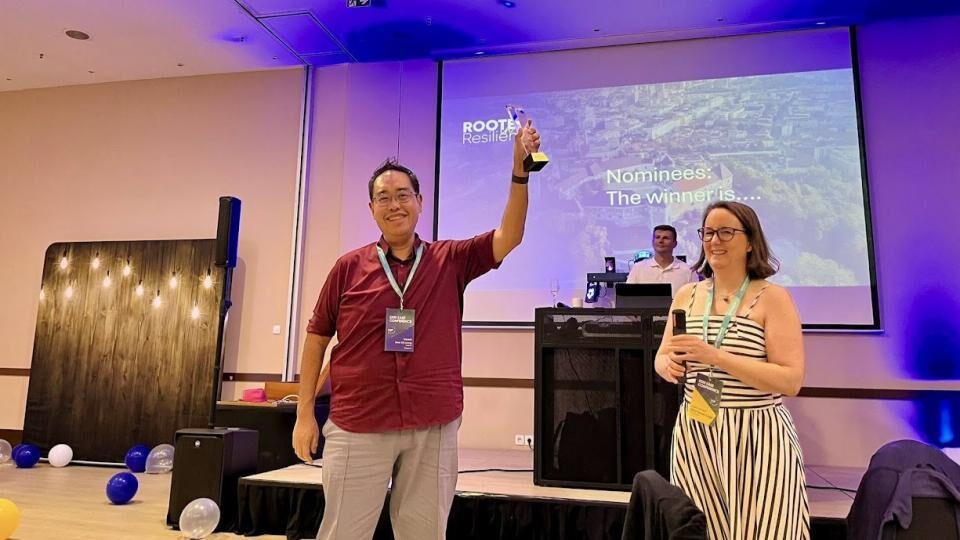
In 2026, Leon appeared at conferences in Seoul and Ljubljana. A September company announcement documented MindFi’s innovation awards from APEAR and EAEF, with photographs of the founders receiving recognition and presenting their work. In Ljubljana, Leon stood before an audience with a diagram separating employees, providers and organisations. The subject was a connected workflow: several groups, with different needs, working through one system.
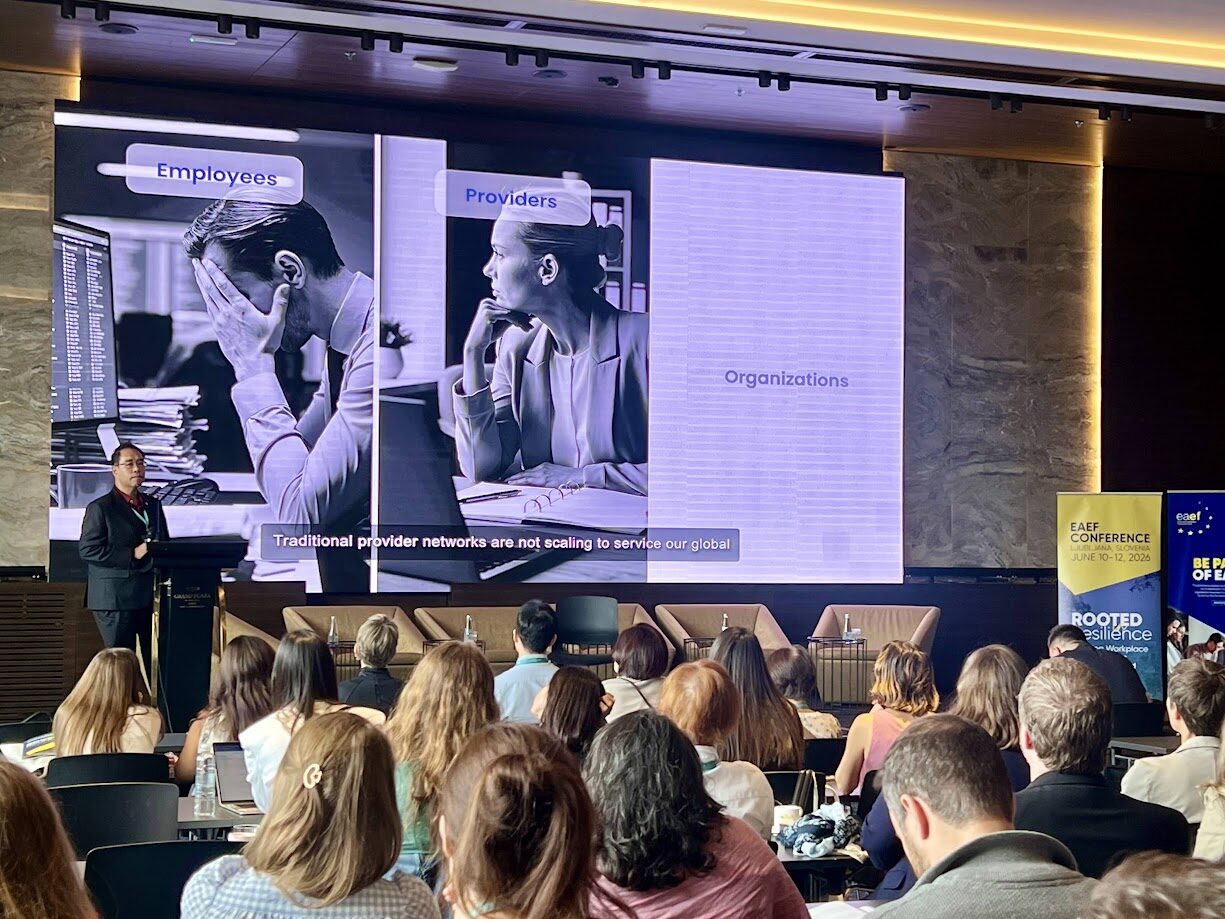
The scene gives this career an apt present-tense ending. Leon is still explaining how different people connect, and what a business must build around those connections. The office grew. The organisations changed. The work now carries the responsibilities of a CEO. Behind the milestones sits a practical concern that has travelled well: once someone has been heard, something useful ought to happen next.
Keep the conversation going
- Leon on LinkedIn PROFESSIONAL PROFILE
- Leon on Medium AUTHOR PROFILE
- Meet the MindFi team CURRENT LEADERSHIP
- MindFi at Y Combinator SUMMER 2021
- Is social media ROI a myth? LEON’S 2014 ESSAY
- Your Passport to Youth Digital Marketing PRESENTATION
- Life after the Techsailor acquisition THE BUSINESS TIMES
- MindFi’s 2026 conference dispatch SEOUL & LJUBLJANA