Asad Jumabhoy has spent much of his working life attending to a distinctly unromantic object: the tourist’s tax-refund form. It accompanies the purchases people actually care about, then demands a little more of their holiday. A signature. A validation. A decision about how to collect the money. Jumabhoy helped turn the machinery behind that form into an international business. His current venture begins with a further question: what else could that money do?
The question has taken him back into an industry he had already helped build and exited. At utu, the Singapore company he co-founded with his son Ameer, a refund can become spending power for another purchase. The receipt acquires a second life. For retailers, it offers another chance to make a sale. For travellers, it offers a reason to look again before leaving.
There is something pleasingly untidy about this career. It crosses serviced apartments, airport retail, payments, rewards and polo. Family runs through it, sometimes as an inheritance to reckon with, sometimes as a loan, sometimes as the teammate standing beside him. The connecting interest is practical: how people, money and opportunities move between places.
A shop of his own
As a child of nine or ten, Jumabhoy remembered telling a sibling that even a newspaper shop would do, provided it was his. He described the attraction as freedom to make decisions and shape the business himself. The scale of the enterprise came second. That is a useful detail about someone whose later career involved companies spread across dozens of countries.
His family name was already attached to Singapore commerce. He began his career in 1986 at Ascott International, part of the family’s business interests in serviced apartments. That gave him a working introduction to travel long before utu: visitors needed places to stay, and somebody had to make the operation work.
When he struck out on his own, his wife lent him S$250,000. He has credited her with making the start possible. In his telling, the loan also created accountability. There was a family to support and a finite amount to work with. The familiar founder story about independence had a rather domestic balance sheet.
Family remained part of his professional world. Years later, Ameer would become his co-founder. But Jumabhoy has also argued that a family business should reward ability and performance regardless of surname. The obligation, as he described it, was to respect what other people contributed and give capable colleagues room to develop.
A loan from his wife to start his independent venture.
Learning the machinery
The move into tourist refunds gave Jumabhoy a business at the intersection of shopping and travel. He established Asia Tax Free Shopping, introducing a private-sector GST-refund operation for tourists in Singapore. A merger in 1999 brought it into Global Refund, the business later known as Global Blue.
Over the following years he helped grow that operation internationally. He also worked on dynamic currency conversion, the payments service that lets someone making a card purchase abroad choose to pay in their home currency. Both activities required attention to the part of a trip most holiday photographs omit: the transaction.
His interest in technology predated the companies. He has recalled spending college summer breaks installing computers in offices, and said he could write a program. The detail makes the later work on payments easier to understand. Technology was something he had handled, as well as something he could put into a business plan.
After exiting Global Blue in 2012, he took a strategic stake in Fintrax Group, including Premier Tax Free, and became vice-chairman in 2013. Another exit followed in November 2015, after 26 months. The company is now known as Planet. He had accumulated experience on both sides of an industry that tourists generally encounter only at the counter.
- 1999Asia Tax Free Shopping joins Global Refund
- 2013Vice-chairman at Fintrax / Premier Tax Free
- 2016utu launches across borders
The customer keeps travelling
utu’s first public proposition was broader than tax refunds. Launched in 2016 by Asad, Ameer and payments specialist Jeremy Tan, it connected loyalty and rewards across borders. Customers could earn and redeem points through their phones. Merchants could reach people coming from another country, including before their journeys began.
That ambition addressed a limitation Jumabhoy had noticed in refunds: the relationship with the customer was brief. People appeared while travelling, did the transaction and went home. Loyalty offered a way to continue the relationship. A person did not stop being a potential customer simply because the aircraft had landed somewhere else.
The early platform brought together interests that often sit in separate departments: the retailer seeking a visit, the card issuer seeking a payment and the traveller seeking useful rewards. Making those interests cooperate was the work. The novelty was less visible than a new suitcase, but potentially more useful than another loyalty card occupying its own small corner of a wallet.
As utu developed, Jumabhoy returned to the refund itself. His argument was that the traveller should have more choice over how to receive its value. Years inside the business had given him knowledge of its incentives. They had also given him reasons to question whether the shopper was receiving enough of the benefit.
A receipt with somewhere else to go
In 2021, Jumabhoy argued for a tourist-centred redesign of tax-free shopping. He saw the refund as a tool for encouraging visitors to spend, with benefits extending beyond the shop to the rest of the destination. If the process consumed time and absorbed too much value, that purpose became harder to fulfil.
“Ending the airport queues alone would make a reform worth doing,” he said. It is an unusually modest-sounding ambition for an industry reformer, and a readily understandable one. Few travellers arrive at an airport wishing for an additional queue. A process can be technically successful and still leave its customer thoroughly unimpressed.
The business subsequently evolved towards adding rewards above existing refund arrangements. The difference matters. The refund operator deals with the base refund. utu supplies an additional proposition, linked to partners willing to offer more value in return for another purchase or an ongoing customer relationship.
That approach connects the refund to a decision the traveller has yet to make. Would they prefer a reward they can use on a later journey, or extra purchasing power while they are still away? The answer affects which partner benefits, and when. A small piece of paperwork starts to influence the next transaction.
One refund. Another decision.
The deal includes the people
In 2023, utu announced the acquisition of CardsPal, a Singapore platform incubated by SC Ventures, alongside a deal with US$33 million in combined transaction value. For Jumabhoy, who had worked on acquisitions in larger organisations, bringing together two startups introduced a different set of demands.
He described helping younger colleagues through the acquisition and the merging of teams. The financial transaction was only one part of the job. People were experiencing events that could shape their careers, and he had to guide them through those changes. “Solving human issues” was how he put the work he was increasingly taking on.
There is a later account of that approach from Ilma Afzal, an early member of utu’s team. In April 2026 she described Jumabhoy as her first business mentor. He had backed her proposal for social and brand marketing aimed at Asian consumers, giving her the opportunity to help build and lead marketing for utu products.
Afzal called him empowering and empathetic. Her account supplies something a list of transactions cannot: a colleague’s view of what his judgement meant in practice. A founder can assemble experienced people. He can also decide that a younger person’s argument deserves a chance before their résumé acquires the conventional reassuring weight.
“Real innovation minimizes the gap between process and people.”
Asad Jumabhoy, at utu’s 2016 launch
Four players, several generations
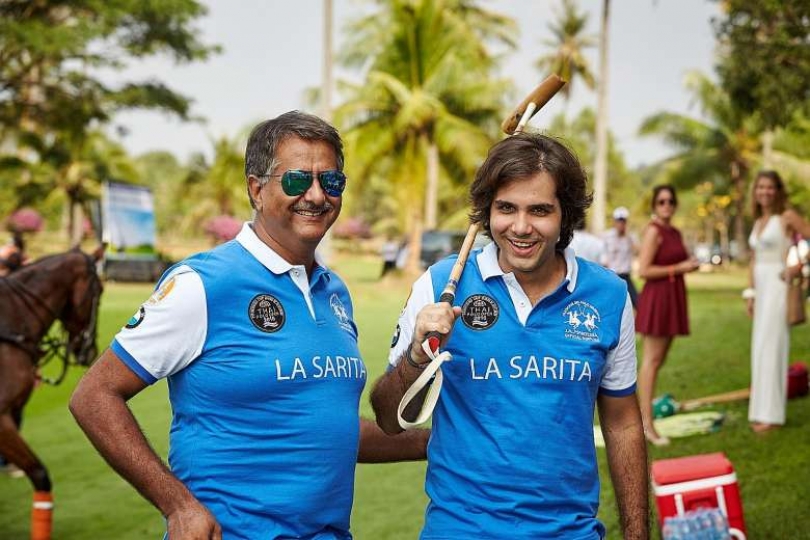
Polo offers another view of Jumabhoy’s attachment to teams. He won a silver medal for Singapore at the 2007 Southeast Asian Games. His La Sarita team has also competed in the regional polo circuit, where he has played alongside his son. Family and competition can occupy the same patch of grass.
The connection stretches back further. A Singapore Polo Club history records Asad, his brothers Iqbal and Rafiq, and their father Ameerali playing together in Kuala Lumpur in 1973. It is a family photograph with a particularly demanding dress code: everybody has to bring a horse.
Polo’s appeal for Jumabhoy includes preparation, the right teammates and keeping a cool head. Those are the features he has compared with business. The analogy has some weight when the speaker has actually represented his country, rather than borrowed a sporting metaphor for a presentation.
The sport has small, memorable distinctions of its own. In the Singapore Polo Club’s Barclays Japan Cup results for 2014, the best playing pony was Paula, belonging to Jumabhoy and looked after by Armugham. The result gives the horse and her carer their own billing. An account of teamwork should probably leave room for both.
For 2026/27, the club lists him as convenor of its polo sub-committee. In its 2026 annual-meeting minutes, he spoke about making polo more inclusive and strengthening its value to the country. The competitive interest now comes with the work of helping the institution around the game endure.
Before the flight home
The latest utu developments place its proposition in specific shops and airports. In April 2025 it launched a tourist refund voucher programme in Dubai’s Gold Souk, with Thangals Jewellery as the anchor partner. The intention was to give tourists extra purchasing power while they were still shopping in the city.
In April 2026, utu announced a Weixin Pay partnership beginning at Milan Malpensa and Milan Linate airports on 1 May. Travellers using the payment platform could access promotional offers and convert processed VAT-refund value into an enhanced shopping benefit at participating duty-free locations.
A June 2026 launch brought the Tourist Privilege programme to TimeVallée by Gübelin in Lucerne. The additional benefit could be tied to purchases made at the boutique or tax-free shopping elsewhere in the city. The standard airport refund process continued separately. Here was another attempt to make a traveller’s earlier spending relevant at the next counter.
For Jumabhoy, the aspiration remains to connect the visitor, the retailer and the destination so that the refund’s value has more uses. It is an idea built from years spent watching the same transaction. The holiday is almost over; the shopping may be finished. He is still interested in what the receipt could make possible before everyone goes home.
Follow the next chapter
Explore his work, conversations and the places utu is taking its proposition.
- utu: products and destinations
- Asad Jumabhoy on LinkedIn
- Listen: Rewire.Rewind.Reeta with Asad Jumabhoy
- His 2023 conversation about building utu
- The early career and polo story
- His case for a different refund experience
- The 2026 Milan airport partnership
- The 2026 Lucerne programme
- Singapore Polo Club committee